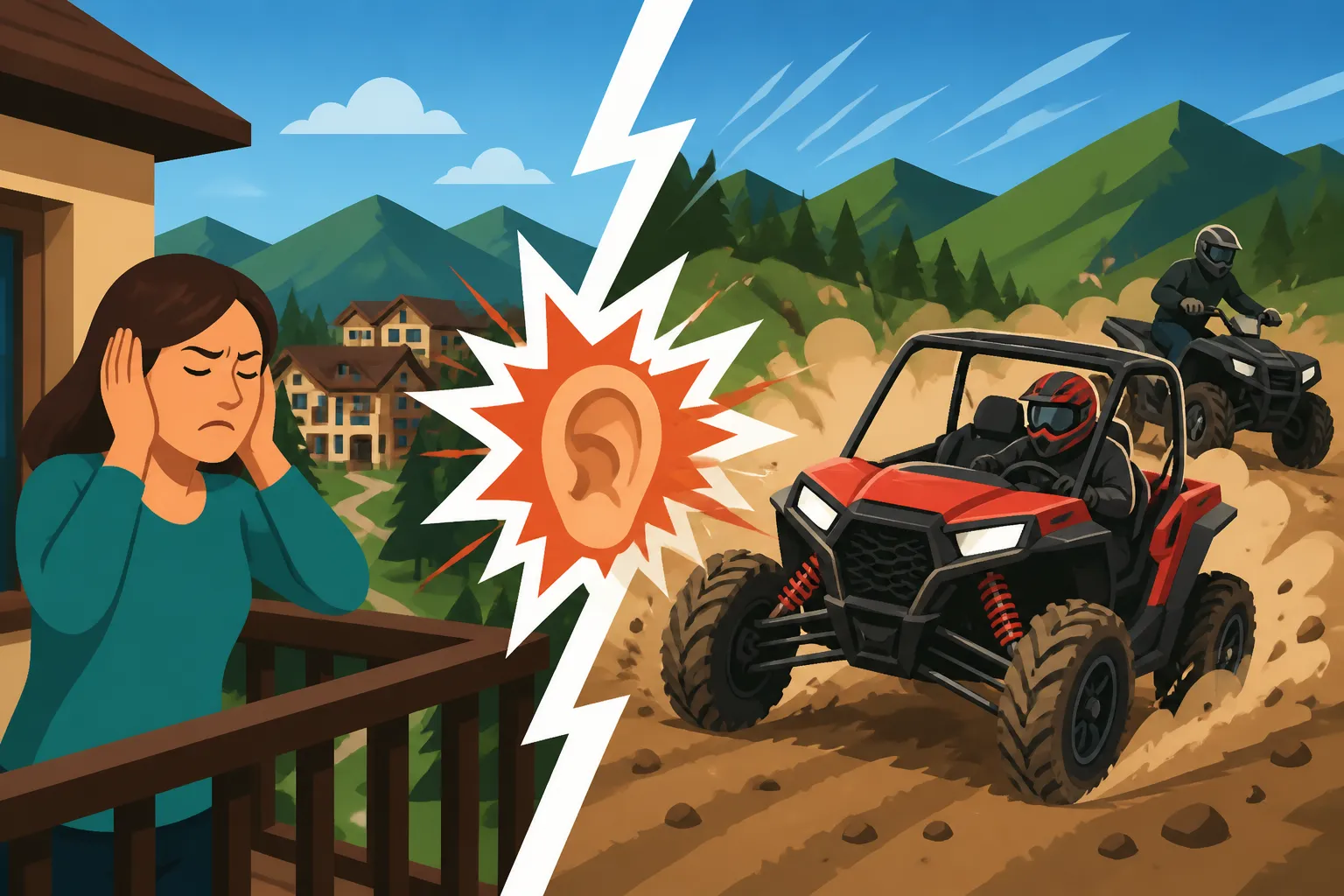
Noise Complaints in a Resort Town
There’s nothing quite like the thrill of exploring Colorado’s stunning backcountry on your ATV or UTV. But let’s be honest, that deep rumble or high-pitched whine from your machine can quickly turn into a headache for folks living in the quaint, often peaceful resort towns that dot our beautiful state. It's a tricky balance between enjoying your passion and respecting the serenity of these communities, and this guide is here to help you navigate the unspoken rules and official regulations to ensure everyone can enjoy the mountain air.
Understanding the "Why" Behind Noise Complaints in Resort Towns
It’s easy to feel targeted when you’re just trying to enjoy a ride, but understanding the perspective of resort town residents can go a long way in fostering better relations. These communities, often nestled in quiet valleys or high mountain areas, thrive on their natural beauty and the tranquility they offer both locals and visitors seeking an escape from city clamor. The soundscape here is often dominated by birdsong, flowing rivers, or the gentle rustle of aspen leaves. Into this peaceful environment, the distinct sound of an off-highway vehicle, especially a modified one, can feel incredibly intrusive.
Think about it from their side: they chose to live in a place specifically for its quietude. While you might hear a car or truck pass their home occasionally, the constant buzz of ATVs or UTVs, particularly if they’re congregating or riding repeatedly through residential areas, stands out. It's not necessarily about the absolute decibel level, but the type of noise and its persistence. A chainsaw might be louder, but it’s often short-lived and understood as work. The sound of an OHV, on the other hand, can sometimes be perceived as recreational noise disrupting their peace and quiet, especially when it echoes through canyons or across open meadows. They might be working from home, trying to enjoy their porch, or simply opening their windows to the fresh mountain air, only to have it filled with engine sounds.
This perception is compounded when several machines are riding together. What sounds like an exciting group ride to you can sound like an invasion of noise to a resident. The unique acoustics of mountain towns, with buildings reflecting sound and valleys channeling it, can also amplify and carry engine noise much further than you might expect. It's a real frustration for many residents, and it's something that, as responsible riders, we need to acknowledge and address to preserve our access to these incredible areas.
Colorado's Existing Noise Regulations and OHV Specifics
When it comes to noise, Colorado has a patchwork of regulations. There are state-level guidelines, but often, the most impactful rules for OHV riders in and around resort towns come from local municipal ordinances. These local rules can be far more stringent than anything the state dictates, and they often target specific types of noise at specific times.
On a statewide level, OHVs operating on public lands managed by agencies like Colorado Parks and Wildlife (CPW), the Forest Service, or BLM are generally expected to comply with federal noise standards. This usually means that your machine must have a functional muffler and a U.S. Forest Service-approved spark arrester. These components are designed to control both noise and fire risk, and while they help, they don't always address the specific concerns of resort town residents about overall volume or tone. If you're running an aftermarket exhaust, make sure it’s still compliant. There are many options, from brands like SuperATV, that focus on performance while also offering solutions designed to keep noise levels manageable. [Muffler Noise Limits in Colorado] are often a point of confusion for riders, so it's worth familiarizing yourself with these general guidelines.
Local ordinances, however, are where things get really specific. Many towns will have explicit noise curfews, often prohibiting "excessive" or "unreasonable" noise during evening and early morning hours. What constitutes "unreasonable" can be subjective, but it often includes sounds that are plainly audible from a certain distance or exceed a specific decibel level (though measuring this on the fly is rarely how complaints are handled). Some towns might ban engine braking in residential areas, or restrict the use of OHVs on certain streets to only provide access to trails, rather than for general cruising. [Colorado County Roads Open to OHVs] or particular town streets may have additional rules about engine noise, especially near homes. It’s crucial to remember that a town has the right to set these rules to protect the quality of life for its residents. Ignoring them can lead to [Colorado Citations for Road Riding] and other penalties.
Here's a quick look at how noise regulations often stack up:
| Regulatory Level | Primary Focus | Common Provisions | Enforcement Agency | Typical Penalty |
|---|---|---|---|---|
| State/Federal | Public Lands Access | Spark arrester, functional muffler, general noise limits | CPW, Forest Service, BLM | Fines, exclusion from trails |
| Municipal/Local | Quality of Life | Noise curfews, "excessive noise" definitions, specific street restrictions, engine braking bans | Local Police, Sheriff, Code Enforcement | Fines, warnings, machine impoundment |
It’s always a good idea to check the specific municipal website for any resort town you plan to visit with your OHV. Ignorance of the law is rarely an excuse, and what's perfectly acceptable on a remote forest road might land you a ticket if you're riding through town.
Proactive Measures for Riders to Reduce Noise and Be Good Neighbors
Being a good steward of the trails and a respectful visitor in resort towns isn't just about avoiding fines; it's about preserving access and building positive relationships with communities. There are several proactive steps you can take to minimize the noise your OHV generates and ensure your presence is welcomed, not just tolerated.
First and foremost, machine maintenance is key. A well-maintained engine, exhaust system, and drivetrain will naturally run quieter than one that’s neglected. Check your muffler for leaks, ensure all exhaust components are securely fastened, and listen for any rattles or unusual noises. A loose heat shield or a crack in the exhaust pipe can significantly increase sound output. Also, ensure your spark arrester isn't clogged, which can sometimes lead to backpressure and different exhaust notes.
Consider your exhaust system and aftermarket modifications. While many aftermarket exhausts are designed for performance, some can dramatically increase noise levels. If you frequently ride near populated areas or resort towns, consider investing in a "quiet core" insert or a silencer designed to reduce decibels without severely impacting performance. Brands like SuperATV offer a range of exhaust solutions, some of which are specifically engineered to provide a quieter ride. You might also look into sound-deadening materials for certain parts of your UTV, which can help absorb engine and drivetrain noise, especially for the occupants, but also reduce outward noise to some extent. It's a small change that can make a big difference in perception.
Your riding style also plays a huge role. Rapid acceleration, high RPMs, and aggressive driving through town amplify noise. When you’re in or near residential areas, slow down, keep your RPMs low, and use a smooth, controlled throttle. Avoid engine braking if you know a town has rules against it, or if you’re simply trying to minimize noise. Coasting through neighborhoods or shifting to a higher gear at lower speeds can significantly reduce the sound footprint. This is especially important when you’re riding in a group; even one loud machine or an overly aggressive rider can sour the experience for everyone, leading to [Colorado Rules Riders Break Most Often] becoming a nuisance.
Respecting quiet hours and designated routes is paramount. Many resort towns will have explicit noise ordinances during early morning and late evening hours. Avoid starting your machine before dawn or riding after dusk if you know you'll be passing through residential areas. Pay attention to signs indicating approved OHV routes within town limits and stick to them. These routes are often chosen to minimize impact on homes and businesses. It’s never a good idea to cut through private property or take shortcuts that might bring you closer to residences. Getting [Written Permission Before Riding Private Land] is not just about trespassing; it’s about respecting boundaries and reducing noise where it’s not wanted.
Finally, think about tire choice. While not directly related to engine noise, aggressive tire treads can generate significant road noise, especially on paved surfaces. If you spend a lot of time on mixed terrain, including paved sections in town, consider a tire that offers a balance of off-road grip and quieter on-road performance. Every little bit helps to reduce the overall sound signature of your machine.
By being mindful of these aspects—your machine, your modifications, and your behavior—you can significantly contribute to a more harmonious relationship between OHV riders and resort town residents, ensuring the trails remain open and welcoming for years to come.
Navigating Local Ordinances and Community Relations
Dealing with noise complaints isn't just about avoiding a fine; it's about being a responsible member of the broader outdoor community. When you ride through a resort town, you're not just representing yourself, but all OHV enthusiasts. Building good community relations starts with understanding and respecting local rules.
The first step is always to do your homework. Before you load up your rig and head to a new mountain town, check their official municipal website. Many towns with significant OHV traffic will have dedicated sections outlining their specific rules regarding off-highway vehicles, including noise ordinances, approved routes, and operating hours. For example, towns like Silverton or Lake City, which embrace OHV tourism, still have specific rules about riding on their streets. Knowing these rules in advance means you won't be caught off guard. Look for sections on "municipal code," "town ordinances," or "OHV access." If you can't find clear information, a quick call to the town clerk's office or the local sheriff's department can save you a lot of trouble. You might even find specific maps showing [San Juan County Roads Open to OHVs] or limitations on where you can ride within town.
Be aware of your surroundings and the time of day. Riding slowly and quietly past homes and businesses is not just polite, it's often legally required. Imagine you're on vacation, enjoying a quiet coffee on a deck, and an OHV rips by at full throttle – it's going to stick with you. If you need to stop and chat with your riding buddies, pull over to a designated staging area or a less populated spot, rather than blocking a street or congregating loudly in front of residences. [Riding Slowly Past Homes on a Route] isn't just about safety; it's about minimizing noise impact.
In the unfortunate event that you do encounter a complaint or are approached by a law enforcement officer, remain polite and cooperative. While it's frustrating to be told your fun is too loud, engaging in an argument will only escalate the situation and reflect poorly on the entire OHV community. Listen to their concerns, acknowledge the issue, and try to adjust your behavior. If you are issued a citation, understand your options for disputing it, but always do so respectfully. [Fighting an OHV Ticket in Colorado] should be done through the proper channels, not by arguing at the roadside.
Lastly, support local initiatives and "Stay The Trail" ethics. Many resort towns and counties have volunteer groups or local OHV clubs that work with residents and government agencies to maintain trails, educate riders, and address community concerns. Getting involved, even if it's just by following their guidelines, shows you care about the areas you ride in. Organizations like Stay The Trail Colorado promote responsible riding practices, and adhering to their principles helps everyone. These practices include things like staying on marked trails, minimizing dust, and being mindful of noise. Even seemingly small issues like [Dust and Neighbors on a County Road] can contribute to negative perceptions of OHV use. By working together, riders and residents can ensure that Colorado’s incredible trail system remains accessible and enjoyable for generations to come.
Disclaimer
This article is for general informational purposes only and does not constitute professional advice. Laws, prices and regulations vary by location and change over time. Consult a qualified professional for guidance on your specific situation.