Riders Under 10 and Colorado Road Rules
Oh, the joy of watching your little ones experience the thrill of the outdoors on a dirt bike or a small ATV! It's a core memory for so many families here in Colorado. But when those adventures bring you close to or onto public roads, a whole new set of worries can pop up. Are they allowed there? What are the rules? What if a sheriff sees us? It's enough to make your head spin, and nobody wants to inadvertently put their child at risk or, worse, get a hefty fine. This guide is here to untangle the specific rules and concerns around riders under the age of 10 operating off-highway vehicles (OHVs) on Colorado's public roads, giving you clarity so you can plan safe, legal family rides.
The Basics: Why Colorado Has Age Restrictions on Roads
Colorado is a paradise for OHV enthusiasts, offering countless miles of trails and open routes. However, when it comes to riding on public roads, especially for our youngest adventurers, there are some very clear lines drawn in the sand. These aren't arbitrary rules; they're in place for some incredibly important reasons that focus on safety and the harmonious use of shared spaces.
Safety First: The Vulnerability of Young Riders
Let's be real, public roads are busy places. Even a quiet gravel county road can see unexpected traffic, dust, and varying conditions. For a rider under 10, these environments present significant challenges. Their physical development—strength, reach, and coordination—is still progressing. A large machine, even a youth model, can be a lot for a small body to control, especially if an emergency maneuver is needed.
Beyond the physical, there's the cognitive aspect. Children are still developing their judgment, peripheral vision, and ability to react quickly and appropriately to complex situations. Imagine a car suddenly appearing around a blind corner, or needing to navigate around an unexpected obstacle. An adult rider instinctively makes split-second decisions based on years of experience, but a young child simply hasn't built up that mental library of responses yet. Putting them in a situation with other vehicles, where speeds can be higher and the environment unpredictable, significantly increases the risk of an accident. Colorado's rules recognize this vulnerability and aim to keep our youngest riders safe by keeping them off these more dangerous surfaces.
The Legal Framework: State Versus Local Control
Understanding where the rules come from is half the battle. In Colorado, the state sets the overarching framework for OHV operation, including age restrictions. This means there's a baseline standard that applies across the board. However, it's also crucial to remember that individual counties and towns have the authority to create their own local ordinances regarding OHV access on their specific roads and streets.
This interplay between state and local rules can sometimes be confusing. The state might say, "no riders under 10 on open roads," but then a specific town might have an ordinance allowing no OHV use on its streets at all, regardless of age. Or, a county might specifically designate certain gravel roads as open to OHVs, in which case the state's age restrictions would apply. The bottom line is that while state law provides the minimum requirements, you always need to check local regulations for the specific area you plan to ride. It's a layered system, designed to balance access with safety and local community needs. [Riding an OHV on the Road in Colorado] is a great resource to get a handle on the broader picture.
Colorado's General Rule for Riders Under 10 on Public Roads
When it comes to where your little ripper can legally operate their OHV, Colorado's rules are quite specific, particularly concerning public roads. This isn't just about getting a permit; it's about fundamental safety for everyone sharing the road.
The Age-Specific Ban: No Under-10 on Opened Roads
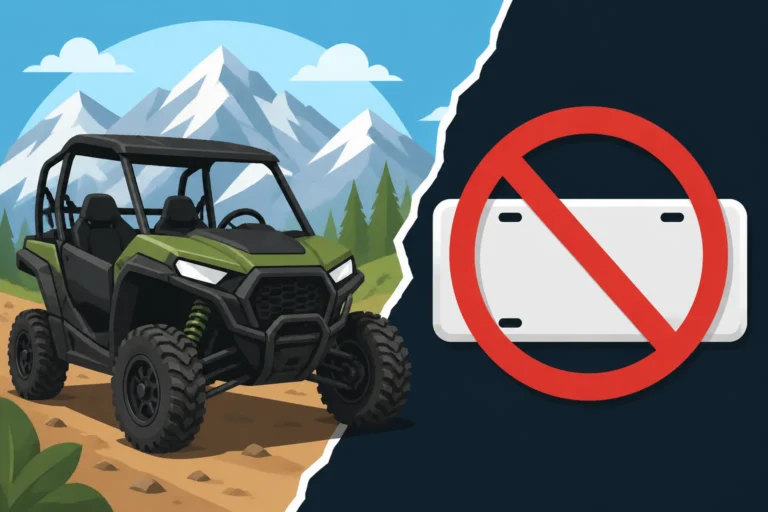
Let's cut right to it: In Colorado, riders under the age of 10 are generally not permitted to operate an OHV on any public road that has been designated as open for OHV use. This is a pretty straightforward rule, and it's one that law enforcement takes seriously. It doesn't matter how skilled your child is on the trails, or how carefully you're supervising them; if that stretch of ground is officially considered a public road open to OHVs, a rider under 10 is typically not allowed to be operating a machine on it.
The intent behind this rule is purely safety. Public roads, even the quiet, scenic ones that wind through our mountains, often have blind corners, varying surfaces, and the potential for encountering other vehicles—cars, trucks, motorcycles, and even bicycles. These are environments that require a high degree of situational awareness, quick reaction times, and the ability to operate a machine in a predictable manner alongside other traffic. As we discussed, these are skills still very much in development for a child under 10. The rule is designed to minimize the risk of accidents and ensure the safety of the young rider and others on the road.
What Constitutes a "Public Road" for OHV Rules?
This is where some of the confusion often lies. What exactly does Colorado consider a "public road" for the purpose of these OHV rules? Generally, this refers to:
- County Roads: Many unpaved, gravel, or dirt county roads in Colorado's mountain communities are designated as open to OHVs. If a county has an ordinance allowing OHV use on these roads (often to connect trails or access trailheads), then the state's age restrictions apply.
- Town Streets: In certain OHV-friendly towns like Lake City or Silverton (with very specific restrictions), some municipal streets might be part of a designated OHV route. Again, if the street is open to OHVs, the age restrictions apply. [Lake City and Hinsdale County Road Access] is a great example of where this applies.
- Forest Service and BLM Roads: While many Forest Service (FS) and Bureau of Land Management (BLM) routes feel like "trails," if they are legally designated as roads and are open to OHVs, the state's rules, including age restrictions, would apply. Always check a Motor Vehicle Use Map (MVUM) for specific designations. [Colorado Rules on Forest Service Roads] can help clarify this further.
The key takeaway is to distinguish between a winding single-track trail and a designated road. If it's a road, even a very rustic one, and it's open to other vehicles (even if those vehicles are primarily other OHVs), the under-10 age restriction generally kicks in.
Exceptions and Nuances: Where a Young Rider Might Still Ride
While the rule against riders under 10 on designated public roads is quite strict, it doesn't mean your youngest family members are completely excluded from the OHV experience. There are specific scenarios and types of terrain where they can still safely and legally enjoy riding. Understanding these distinctions is crucial for responsible family outings.
Private Property: The Family Ranch or Private Land
This is perhaps the most significant "exception" to the public road rules. The age restrictions we've been discussing, and indeed most of Colorado's OHV regulations (like registration requirements), primarily apply to public lands and public roads. When it comes to riding on private property, the rules are fundamentally different.
If you own a large property, a ranch, or have explicit permission to ride on someone else's private land, then the state's age limits for public road operation generally do not apply. On private land, the primary responsibility for safety, supervision, and setting appropriate rules falls entirely on the landowner or the adult supervising the young rider. This means your 8-year-old can absolutely ride their youth ATV on your back forty or a friend's pasture, as long as you're ensuring their safety and have permission. [Riding Only on Your Own Colorado Land] delves deeper into these private land nuances.
However, even on private land, common sense and safety precautions are paramount. Always ensure the child is wearing appropriate safety gear (helmet, eye protection, sturdy clothing), the machine is the right size for them, and they are riding under direct, attentive supervision. The goal is always a safe and enjoyable experience, regardless of the legal setting.
Designated Trails Versus Roads: Understanding the Distinction
Another critical distinction is between a "trail" and a "road." While some Forest Service or BLM roads might feel like trails, if they are officially designated as roads (and are open to OHVs), the under-10 rule applies. However, there are countless miles of dedicated OHV trails in Colorado that are not classified as public roads.
On these designated OHV trails, especially those that are single-track for dirt bikes or narrower routes designed for ATVs and side-by-sides, the age restrictions often focus more on supervision and machine size rather than a blanket age ban. For example, a 9-year-old might be perfectly fine riding a properly sized youth machine on a beginner-rated trail, provided they are under the direct supervision of an adult (usually 18 or older). The key is to check the specific trail designation and any posted rules. Many trail systems are designed with various difficulty levels, including routes suitable for younger riders. [Colorado OHV Rules for Young Riders] can provide more detail on these specific age and supervision requirements for trail riding.
The core difference lies in the intended use and potential for mixed traffic. Trails are generally designed for recreational OHV use and usually don't carry other types of vehicular traffic that roads do. This reduces the complexity and inherent risks that public roads present.
Crossing a Road: Is That Allowed?
This is a frequently asked question, and it's a tricky one! Sometimes, to get from one section of a trail to another, or to access a staging area, you might need to briefly cross a paved or gravel public road. For riders under 10, even this brief crossing can fall under the general prohibition of operating an OHV on a public road.
The safest and most common interpretation is that if a rider under 10 cannot legally ride on a designated public road, they generally cannot operate their machine across it either. In such situations, the adult supervisor would typically need to move the child's machine across the road for them, or find an alternative route that avoids any road crossings for the young rider.
However, local ordinances can sometimes have very specific nuances regarding road crossings versus continuous road travel. Some towns are incredibly strict and prohibit any OHV operation (including crossings) by underage riders on their streets, even if those streets are otherwise open to adult OHV use. Others might have slightly more lenient interpretations for extremely brief, supervised crossings. Your absolute best bet is to inquire with the local sheriff's office or Colorado Parks and Wildlife (CPW) in the specific area you plan to ride. It's always better to be overly cautious than to risk a fine or, worse, an accident. [Crossing a Colorado Highway on an OHV] explores the general rules for crossings for all OHVs.
Supervision and Machine Requirements for Young Riders
Even in the places where younger riders are permitted to operate an OHV – namely, on private land or designated trails not considered public roads – there are still crucial requirements that need to be met. These are all about ensuring their safety and providing them with the best possible riding experience.
The Need for Direct Adult Supervision (Where Permitted)
For any rider under the age of 16, Colorado law generally requires direct adult supervision when operating an OHV on public lands (which includes designated trails, but excludes the public roads where under-10s are typically banned). "Direct supervision" isn't just about knowing they're out there somewhere. It usually means the adult (who must be at least 18 years old) is within sight and sound of the young rider, capable of intervening immediately if needed.
Imagine your child riding a beginner trail. The supervising adult should be close enough to call out instructions, spot potential hazards, or physically assist if the child gets stuck or has a minor mishap. This immediate proximity ensures that developing riders have the guidance and support they need as they learn and gain confidence. Without this constant, vigilant oversight, even a simple trail ride can become dangerous for an inexperienced child.
Machine Size and Type: What's Appropriate for Under 10
Choosing the right machine for a young rider is absolutely critical, irrespective of whether they're on a trail or private property. Colorado's regulations, particularly for public land use, often specify maximum engine displacement (CCs) for riders of different ages. While the "under 10" rule keeps them off public roads, if they're on a trail or private land, these guidelines are still extremely important.
A good rule of thumb is that a child's machine should fit them physically. They should be able to comfortably reach the handlebars/steering wheel and footrests, operate the brakes and throttle, and sit securely. For ATVs, they should be able to shift their weight effectively. Many manufacturers, like Polaris, Honda, and Yamaha, produce youth-specific models with smaller engines, lower top speeds, and safety features like throttle limiters.
For very young or small riders, some parents explore options for making a youth machine even more manageable. This could involve adjusting throttle sensitivity, ensuring the seat allows proper reach, or even installing aftermarket components designed for smaller frames. While SuperATV is well-known for robust aftermarket parts often for larger, more experienced machines, they do offer some universal accessories that might enhance general safety or fit for youth models, such as specific grab handles or smaller grips. However, always prioritize professional advice for any modifications to a youth machine. The goal is a machine that allows the child to be in full, safe control at all times. [Youth Machine Engine Sizes Colorado Families Choose] offers an in-depth look at these guidelines.
Safety Gear: Helmets and Eye Protection
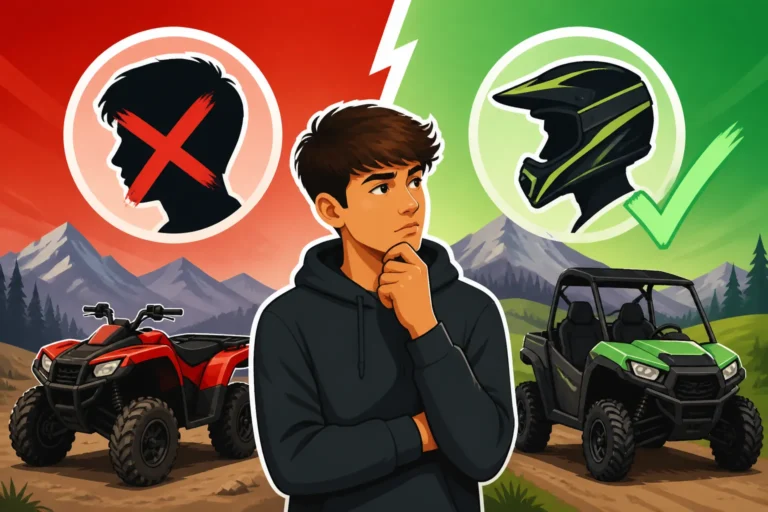
This is non-negotiable, whether your child is 6 or 16, and whether they're on a designated trail, private land, or a public road (if they were allowed). A DOT-approved helmet is an absolute must. Head injuries are one of the most serious risks in OHV riding, and a properly fitted helmet provides vital protection. Don't skimp here; invest in a quality helmet that meets safety standards and fits your child's head snugly.
Beyond the helmet, eye protection is equally important. Goggles or a full-face helmet with a shield protect against dust, flying debris, branches, and insects. These might seem like minor irritants, but a sudden impact to the eye can cause a child to lose control of their machine, leading to a much more serious accident. Sturdy, long-sleeved shirts and pants, gloves, and over-the-ankle boots are also highly recommended to protect against scrapes, burns, and minor impacts. Think of it as investing in their safety and your peace of mind. You can learn more about the specifics in [Colorado Helmet and Eye Protection: What Is Actually Required].
Penalties for Non-Compliance and Enforcement
Breaking Colorado's OHV rules, especially those concerning underage riders on public roads, isn't just a minor oversight. It carries real consequences, both for the supervising adult and for the broader OHV community. Understanding these penalties and how rules are enforced can help you ensure everyone stays safe and legal.
Citations and Fines: What Happens if You Break the Rules
If a law enforcement officer, such as a county sheriff or a Colorado Parks and Wildlife (CPW) ranger, observes a rider under 10 operating an OHV on a public road where it's prohibited, the supervising adult is typically the one who will receive a citation. These aren't minor tickets; fines for OHV violations in Colorado can be substantial, often in the hundreds of dollars for a first offense. And remember, a citation also means a mark on your record, and potentially increased scrutiny if you're ever stopped again.
Beyond the immediate financial hit, repeated offenses could lead to more severe penalties, including potential suspension of OHV privileges or even more serious legal action, depending on the circumstances and the specific local ordinances. Nobody wants to see their family outing end with a costly fine and a stern lecture from a law enforcement officer. It's a clear message from the state: these age restrictions on public roads are in place for serious safety reasons, and they will be enforced. [Penalties for an Unregistered OHV in Colorado] can give you a sense of the gravity of OHV violations in general.
Ranger and Sheriff Enforcement in Trail Towns
Colorado's mountain towns and popular trailheads are well-patrolled, especially during peak riding seasons. Law enforcement, including local sheriffs and CPW rangers, are highly visible in areas known for OHV activity. They conduct regular checks at trailheads, along designated routes, and in towns that allow OHV access on their streets.
Rangers and sheriffs are specifically trained to look for common violations, and age restrictions for road operation are definitely on their radar. They'll be watching to ensure that machines are registered, safety gear is worn, and that no underage riders are operating machines where they shouldn't be, particularly on roads or designated town routes. They're not out to ruin your fun; they're there to ensure the safety of all recreationists and residents. Having a young child illegally operating an OHV on a public road is a clear violation that will almost certainly draw their attention. [Colorado Ranger Checks at a Trailhead] offers a glimpse into what these interactions might be like.
Impact on Future Access: Why Compliance Matters
Beyond the personal penalties, non-compliance with OHV rules, especially those designed for youth safety, has a broader negative impact on the entire riding community. Every time a rider breaks the rules, it contributes to a negative public perception of OHV users. This can lead to increased calls for stricter regulations, fewer roads and trails being opened to OHVs, or even the closure of existing access points.
Many Colorado mountain communities grapple with the balance between welcoming OHV tourism and preserving the quality of life for residents. When riders are seen flouting safety rules, particularly with children, it creates an unfavorable image that makes it harder for advocates to defend and expand OHV access. By ensuring your youngest riders adhere strictly to age restrictions on public roads, you're not just protecting your family; you're contributing to the long-term sustainability of OHV recreation in Colorado for everyone. Responsible riding is crucial for keeping our precious trails and routes open for generations to come.
Here's a quick summary of where riders under 10 generally stand with Colorado's OHV road rules:
| Scenario | Legally Permitted (for under 10) | Key Conditions/Considerations |
|---|---|---|
| Private Land | Yes | Explicit landowner permission, direct adult supervision, appropriate machine size, full safety gear. |
| Designated OHV Trails | Yes | Not classified as a public road, direct adult supervision (18+), machine fits child's size/skill, full safety gear. |
| Designated Public Roads | No | Generally prohibited for continuous operation. This includes county roads, town streets, and many Forest Service/BLM roads designated as public. |
| Crossing a Public Road | Generally No (operating machine) | Adult supervisor may need to move the machine; local rules vary but caution is paramount. Best to avoid or check locally. |
Disclaimer
This article is for general informational purposes only and does not constitute professional advice. Laws, prices and regulations vary by location and change over time. Consult a qualified professional for guidance on your specific situation.