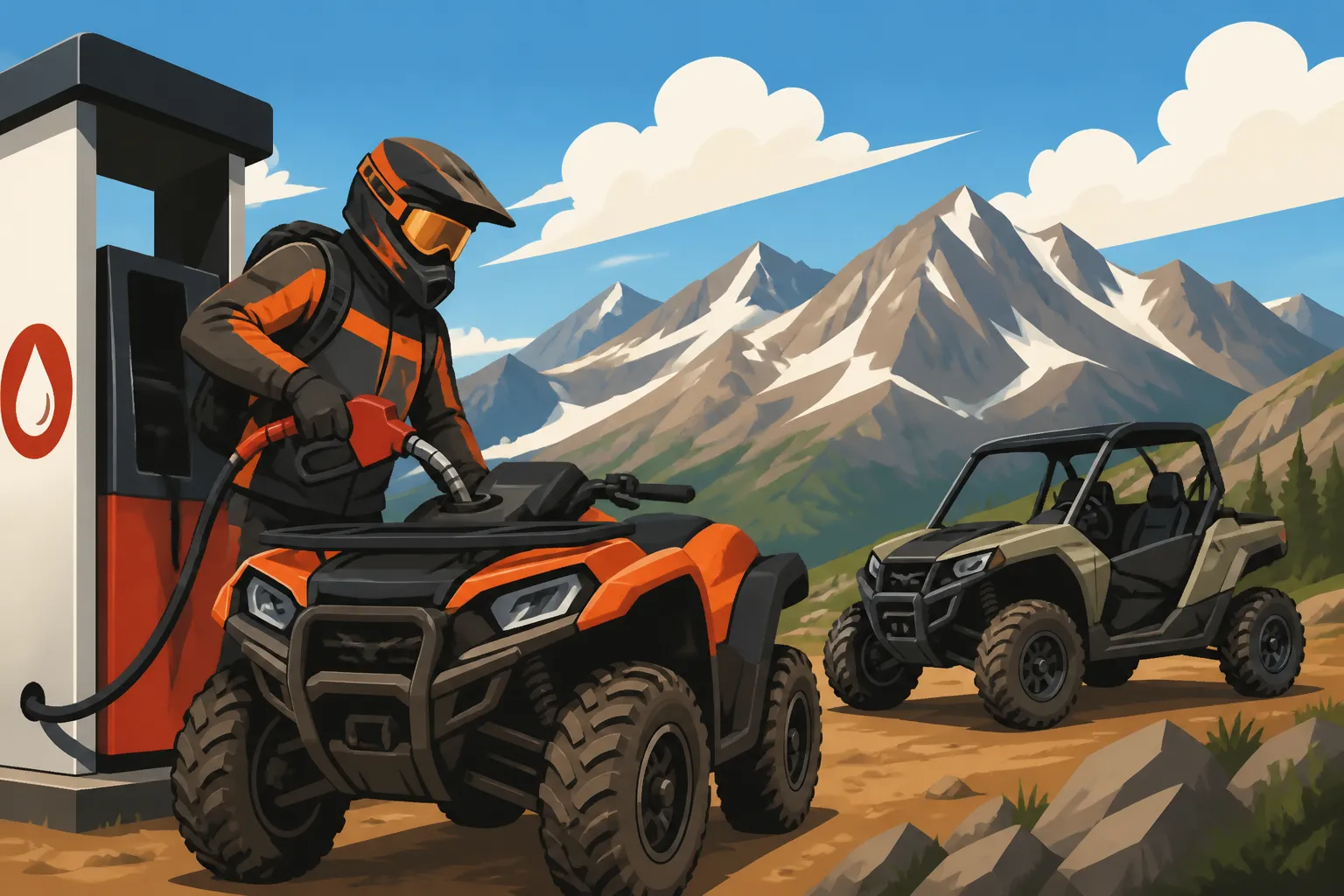
Fueling Up Before a High Pass
There's nothing quite like the incredible views and the thrill of navigating Colorado's high mountain passes on your ATV or UTV. But that feeling can quickly turn to dread if you see your fuel gauge dropping faster than anticipated, miles from the nearest gas station. Many riders experience that heart-sinking moment, wondering if they packed enough, if their machine is guzzling more fuel than usual, or if they misjudged the distance to the next town. This comprehensive guide is here to help you understand the unique challenges of fuel management in the Colorado high country and how to confidently plan your fuel stops so you can focus on the adventure, not the anxiety.
The Unique Fuel Challenges of Colorado's High Passes
Riding an off-highway vehicle (OHV) in Colorado's high country is an experience like no other, but it comes with its own set of considerations, especially when it comes to fuel. It's not like cruising around town where gas stations are plentiful. Up here, everything is magnified: the remoteness, the extreme terrain, and the impact of altitude on your machine.
Altitude's Impact on Fuel Economy and Machine Performance
One of the biggest factors many riders overlook is how altitude affects their ATV or UTV. As you climb to 10,000, 12,000, or even 13,000 feet, the air gets thinner. Thinner air means less oxygen for your engine to burn fuel efficiently. For older, carbureted machines, this can lead to a "rich" condition, where there's too much fuel for the available air, causing them to run poorly and consume more gas than usual. Even modern fuel-injected machines, while better at compensating, still experience a power loss due to less oxygen, meaning you might be working your engine harder, and therefore burning more fuel, to maintain speed on climbs. [Altitude and Carburetor Tuning] is a topic many riders research before heading out.
Think about climbing Engineer Pass or Cinnamon Pass. You're constantly ascending and descending, often in lower gears, which demands more from your engine. That consistent effort, combined with the oxygen-deprived air, can significantly reduce your fuel range compared to flatland riding. It's a double whammy: your machine might be less efficient, and you're asking it to work harder. The unexpected drain on your tank can be a real surprise if you're not prepared.
The Remoteness of Mountain Trails and Limited Fuel Stops
Colorado's high passes often connect incredibly remote areas, sometimes many miles from any paved road or substantial town. You might be riding through vast national forests or Bureau of Land Management (BLM) land for hours without seeing a single sign of civilization, let alone a gas pump. The towns that do exist in these areas, like Lake City, Ouray, or Silverton, are often small and might have only one or two gas stations.
Compounding this is the fact that these stations in small mountain towns might have limited operating hours, especially during the shoulder seasons, or even be completely closed for the winter. Imagine planning your route meticulously, only to arrive in a town at 6 PM on a Sunday to find the only gas station already shut down for the night. This isn't an uncommon scenario, and it can leave you stranded or drastically altering your plans, potentially cutting your trip short. Relying on guesswork for [Fuel Planning for a Colorado Trail Day] simply isn't an option up here.
Estimating Your Fuel Consumption for a High-Country Ride
Accurately predicting how much fuel you'll need is more art than science in the mountains, but with a bit of planning and understanding of the variables, you can make a very educated guess. Don't just assume your machine's stated MPG from flatland riding will hold true.
Factors Affecting Your OHV's Mountain Fuel Economy
Several factors conspire to impact your fuel consumption on high mountain trails:
- Machine Type and Engine Size: A small 300cc ATV will naturally consume less fuel than a large 1000cc side-by-side, especially a turbocharged one, even if they're tackling the same terrain. Bigger engines, particularly when pushed, demand more fuel.
- Riding Style: Are you a cautious rider, maintaining a steady pace, or do you enjoy aggressive climbs and descents? Hard acceleration, constant braking, and high RPMs will guzzle fuel much faster. If you're constantly in four-wheel drive or using differential lock, that also adds to fuel consumption.
- Terrain Difficulty: Rocky, technical trails requiring frequent gear changes and sustained effort will burn more fuel than smooth, graded forest roads. Steep, sustained climbs are notoriously thirsty for fuel.
- Weight and Cargo: The heavier your machine, the more fuel it takes to move it. If you're loaded down with camping gear, extra passengers, a cooler, or even heavy aftermarket accessories from places like SuperATV, your fuel economy will take a hit.
- Elevation Changes: As discussed, sustained climbing against gravity and in thinner air requires more power and, therefore, more fuel. Even long descents can be hard on some machines if you're constantly braking.
Knowing these variables helps you understand why your range might fluctuate. It's not just about how many miles you can go, but how many miles you will go under specific conditions.
Tracking Your OHV's Real-World Mountain Range
The best way to get a realistic sense of your machine's fuel range in the mountains is to track it yourself. After a few rides, you'll start to develop a "feel" for it.
Here's a simple method:
- Start Full: Begin your ride with a completely full tank.
- Reset Trip Meter: Reset your machine's trip odometer (or track it with a GPS app).
- Ride as Normal: Go out and enjoy a typical mountain ride, mimicking the terrain and style you usually use.
- Refuel and Record: When you refuel, note how many gallons it took to fill the tank and what your trip odometer reads.
- Calculate: Divide the miles ridden by the gallons consumed to get your actual miles per gallon (MPG) for that trip.
Do this a few times over different terrains and elevations, and you'll get a much better average for your mountain riding. From there, you can estimate your safe range. For instance, if your UTV has a 9-gallon tank and you average 15 MPG in the mountains, your theoretical range is 135 miles. However, you never want to run on fumes, so a safe operating range might be closer to 100-110 miles, leaving a comfortable reserve. This real-world data is invaluable for planning longer rides like those on the Alpine Loop.
Finding Fuel in Colorado's Backcountry Trail Towns
Successfully navigating the high country means knowing not just how much fuel you need, but also where you can get it. Relying on wishful thinking can lead to a long walk or an even longer wait for help.
Mapping Fuel Stops Along Your Route
Before you even load up your rig, pull out a map – a real paper map is often best, alongside your digital GPS apps – and trace your intended route. Identify any towns or communities you'll pass through and look specifically for gas stations. Remember that some towns are quite small and might not even have a dedicated station; sometimes, it's just a general store that also sells gas.
Here's a list of typical high-country towns and what to expect:
| Trail Town/Area | Typical Fuel Availability | Notes |
|---|---|---|
| Lake City | Limited, usually 1-2 | Essential stop for Alpine Loop. Seasonal hours common. |
| Ouray | Several options | More choices, but still check hours, especially in shoulder season. |
| Silverton | Limited, 1-2 stations | Important stop, but be aware of Silverton's [Silverton's Ban on OHVs in Town] rules for getting to them. |
| Creede | Limited, usually 1 | Crucial for riders in the Rio Grande National Forest. |
| Gunnison | Several options | Good base for Taylor Park, wider selection of services. |
| Salida/Buena Vista | Multiple, larger towns | Reliable stops, good for staging longer trips. |
| Walden | Limited, 1-2 | Important for North Park riding areas. |
Always call ahead to confirm hours, especially if you plan to ride early morning, late evening, or during the off-season. Nothing is worse than arriving thirsty only to find the pumps are closed. [Fueling an OHV in a Colorado Trail Town] requires advance thought.
Navigating Local OHV Ordinances to Access Fuel
Some Colorado mountain towns, while welcoming OHV riders, have specific ordinances about where you can ride your machine on town streets. Silverton, for example, has strict rules about OHV access within its town limits. This means you might need to park your machine outside town and walk, or use a specific designated route to get to a gas station.
It's crucial to understand these local rules before you enter a town. Violating an ordinance can result in a fine, which is a sour note to end an otherwise great ride on. Many towns that allow OHV street access will have clear signage indicating approved routes. Pay attention to these signs. Sometimes, even if you're allowed on certain streets, you might be limited to specific speed limits or times of day. This planning is essential, not just for fuel, but for respecting local communities and ensuring continued access for riders. [Colorado OHV Road Rules for Young Riders] also come into play, as some towns have age restrictions for operating OHVs on their streets.
Safely Carrying Extra Fuel on Your OHV
Even with careful planning, the vastness of Colorado's high country often necessitates carrying extra fuel. Having a reserve can be the difference between a minor inconvenience and a serious problem. But carrying fuel safely is paramount.
Choosing the Right Auxiliary Fuel Containers
Not all fuel containers are created equal, especially for OHV use. You absolutely want durable, purpose-built containers designed for volatile liquids.
- ROTOPAX Fuel Packs: These are incredibly popular with OHV riders for a reason. They're robust, come in various sizes (1 to 4 gallons), and have a unique interlocking design that allows you to stack multiple packs securely. They are UV-resistant and designed to withstand the harsh conditions of off-road riding.
- Fuel Jerry Cans: Traditional metal or heavy-duty plastic jerry cans are another option. Ensure they are certified for fuel storage (look for CARB or EPA compliance). While some larger ones might be bulky, smaller 1-2 gallon versions can be effective.
- Avoid Generic Plastic Cans: Steer clear of cheap, thin-walled plastic containers not specifically rated for fuel storage. They can crack, leak, or degrade with exposure to gasoline and sunlight, creating a dangerous situation.
When considering containers, think about how much extra fuel you actually need. A 1- or 2-gallon reserve can often provide that critical extra 15-30 miles to get you to the next fuel stop or back to camp.
Securely Mounting Fuel Containers to Your ATV or UTV
Once you have your fuel containers, securing them properly is just as important as choosing the right container. A loose fuel can is a massive safety hazard, potentially leading to spills, fires, or loss of your precious reserve.
- Racks and Mounts: Many OHVs come equipped with front or rear cargo racks, or you can add aftermarket racks. Companies like SuperATV offer a wide range of cargo racks, bed extenders, and specific mounting solutions for fuel containers. These can include universal mount plates for Rotopax or sturdy straps and clamps for jerry cans. The key is to ensure the mount is heavy-duty and can withstand constant vibration, bumps, and jostling on rough trails.
- Location, Location, Location: Mount your fuel container in a location that is:
- Secure: No chance of it coming loose.
- Accessible: So you can easily get to it when needed.
- Safe: Away from exhaust pipes or hot engine components. Many riders prefer the rear rack or the bed of a side-by-side.
- Balanced: Avoid placing heavy fuel containers all on one side of your machine, which can affect handling and stability, especially on side slopes.
- Tie-Downs: Use strong, high-quality tie-down straps or specialized locking mounts. Bungee cords are generally not sufficient for securing fuel cans on rough trails. Opt for ratchet straps or cam buckle straps designed for heavy loads. Always double-check your tie-downs before heading out and periodically throughout the ride.
Carrying extra fuel is a smart move for any serious Colorado high-country rider. It provides peace of mind and the freedom to explore more remote trails without constantly worrying about your gauge. Just make sure you do it right. Consider adding a small funnell to your [What to Carry Over a High Pass] kit for easier refueling on the trail.
Disclaimer
This article is for general informational purposes only and does not constitute professional advice. Laws, prices and regulations vary by location and change over time. Consult a qualified professional for guidance on your specific situation.