Golf Carts and Low-Speed Vehicles in Colorado
It’s a common scene in Colorado: you’re at a campground, a lake house, or even in some of our smaller, charming mountain towns, and you see people zipping around on what looks like a golf cart or a small utility vehicle. Immediately, a question sparks: can I use my golf cart or low-speed vehicle (LSV) on public roads here? The answer, unfortunately, isn't a simple "yes" or "no," and it's a source of real frustration for many folks. This guide is here to untangle the spaghetti of Colorado laws, local ordinances, and distinctions between golf carts, LSVs, and traditional off-highway vehicles (OHVs) so you can understand where you can legally ride.
Understanding the Landscape: Colorado's Stance on Golf Carts and LSVs
The dream of effortlessly cruising through a quaint mountain town or heading down a county road in your golf cart or LSV is totally understandable. They offer a certain convenience and open-air enjoyment that’s hard to beat. However, Colorado draws some very clear, albeit sometimes confusing, lines between different types of vehicles, and how they’re allowed to interact with our public road system. The biggest hurdle many people face is understanding that a golf cart is not an OHV, and an LSV is yet another category entirely, each with its own set of rules and limitations.
The Core Distinction: Golf Cart vs. Low-Speed Vehicle
Before we even talk about roads, let's get down to brass tacks: what exactly is the state of Colorado talking about when they say "golf cart" versus "low-speed vehicle"? This distinction is absolutely crucial because it dictates everything from required equipment to where you can legally drive. Many people use these terms interchangeably, but legally speaking, they are very different animals.
A golf cart is generally defined as a motor vehicle designed and manufactured for operation on a golf course. Think about the basics: usually two to four seats, no real trunk space, very basic lighting (if any beyond a simple headlight), and a top speed that rarely exceeds 20 mph. They aren't built for high speeds or serious impacts, and historically, they weren't intended for public road use at all. Because of this, Colorado state law mostly leaves the regulation of golf carts on public roads up to individual municipalities and counties. This local control means what's legal in one small town might be strictly forbidden just a few miles down the road. It's a patchwork quilt of rules that can leave visitors and even long-time residents scratching their heads.
A low-speed vehicle (LSV), on the other hand, is a different beast altogether. Colorado, like many states, has a specific legal definition for LSVs. These are four-wheeled motor vehicles that have a top speed greater than 20 miles per hour but not greater than 25 miles per hour. Critically, they are manufactured to meet specific federal safety standards for low-speed vehicles. This isn't just a golf cart that's been souped up; it's a vehicle built from the ground up to be slightly more robust and street-ready. Because LSVs meet these federal standards, they have a more defined path to street legality at the state level, though still with significant limitations compared to a regular car or truck.
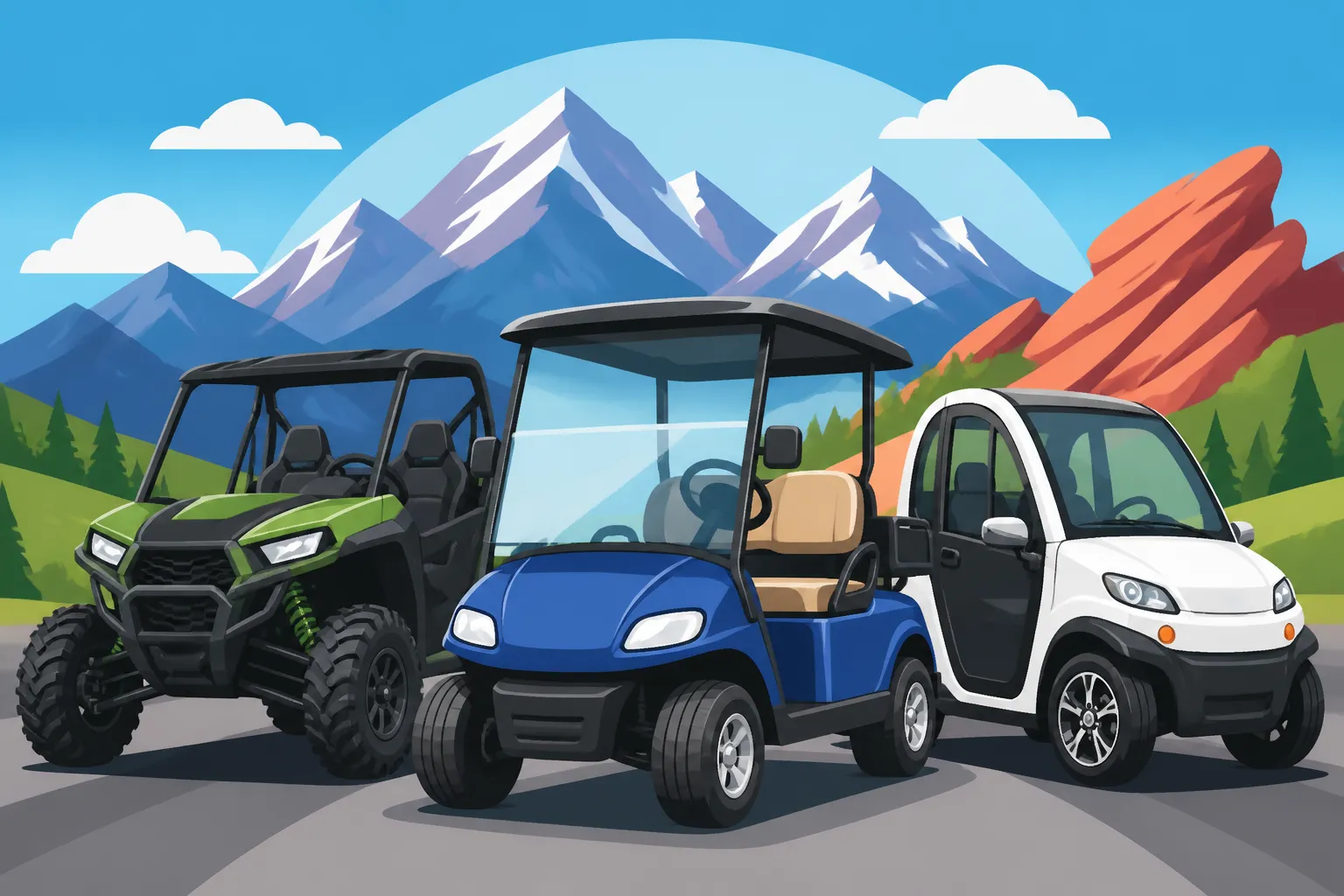
| Feature | Golf Cart | Low-Speed Vehicle (LSV) | Off-Highway Vehicle (OHV) |
|---|---|---|---|
| Primary Design | Golf course, private property | Public roads (low speed), planned communities | Off-road trails, unpaved surfaces |
| Top Speed | Typically under 20 mph | > 20 mph but < 25 mph | Can exceed 25 mph, often much higher |
| Street Legal (State) | No, local ordinances only | Yes, with specific state requirements and limits | No, specific local ordinances only (not statewide) |
| Mandatory Equipment | Minimal, varies by local rule if on road | Headlights, taillights, turn signals, stop lights, windshield, seatbelts, VIN, mirrors | Varies by OHV type (headlights, taillights for night use, spark arrestor) |
| Registration/Title | No state registration/title required (local dependent) | Yes, state title and registration required | State OHV registration/permit (CPW), separate title (DOR) |
| Insurance | Varies by local rule, highly recommended | Mandatory for street use | Recommended, sometimes mandatory for financed machines |
| Where Allowed | Private land, specific local roads | Roads < 35 mph speed limit, no highways | Designated trails, unpaved roads where permitted, private land |
Why They Aren't OHVs (Mostly)
This is where a lot of confusion, and frankly, some disappointment, sets in for many Colorado residents and visitors. When you're looking at your shiny new side-by-side or a beefed-up golf cart, it’s easy to assume that if it's not a car, it must be an OHV. But this isn't the case in Colorado. Golf carts and LSVs are distinctly different from Off-Highway Vehicles (OHVs) like ATVs, UTVs, and dirt bikes, and they don't share the same rules for registration or where they can be operated.
The core of the matter is that OHVs are built specifically for off-road use. They are designed for rugged terrain, trails, and unpaved surfaces. Their [Colorado OHV Registration] system, handled by Colorado Parks and Wildlife (CPW), is entirely geared towards funding and managing trail systems and off-road recreation. Golf carts and LSVs, even those that look robust, are not generally designed for the kind of demanding terrain an ATV or UTV might tackle. You wouldn't take a golf cart on Engineer Pass, for example, nor would you typically want to drive your powerful UTV on a paved street at 15 mph.
This distinction is super important because it means that even if a small Colorado town has an ordinance allowing OHVs on certain town streets (and many do!), that ordinance generally does not extend to golf carts or LSVs unless specifically stated. Similarly, having a valid OHV registration sticker from CPW does nothing to make your golf cart or LSV legal on public roads. It's frustrating when you just want to enjoy your machine, but the state has compartmentalized these vehicles for very specific purposes.
Golf Carts on Colorado Roads: The Local Ordinance Maze
If you're dreaming of tooling around a small Colorado town in your golf cart, you've landed in a bit of a bureaucratic maze. Unlike LSVs, which have a clearer, statewide framework, the legality of golf carts on public roads in Colorado falls almost entirely on local jurisdictions. This means you could be perfectly legal to drive your golf cart down Main Street in one town, only to face a significant fine for doing the exact same thing in the next town over. It’s a classic example of "home rule," and while it allows communities to tailor regulations to their specific needs, it can be incredibly confusing for individuals.
The Local Control Dilemma
The biggest takeaway here is that there is no statewide law in Colorado that generally permits or prohibits golf carts on public streets. Instead, Colorado Revised Statutes grant local governments – cities, towns, and counties – the authority to regulate the operation of golf carts on their roads. This delegation of power means that each municipality or county can, and often does, create its own specific ordinance. This is why you see such a disparity in golf cart use across the state. In some planned communities or resort towns, golf carts might be a primary mode of transportation, integrated into daily life. In others, they're strictly confined to private property.
For residents and visitors alike, this creates a frustrating level of inconsistency. You can't just assume that because you saw golf carts on the street in Granby, it's okay to do the same in Ouray. You might have purchased a golf cart with the intention of using it for short errands in your small community, only to find out that your specific town hasn't passed an ordinance allowing it. It truly puts the onus on you to research the specific rules for every single place you plan to operate your golf cart on public land, and that can feel like a real chore.
What Local Ordinances Typically Allow (and Restrict)
When local governments do pass ordinances allowing golf carts on public roads, they almost always come with a laundry list of specific conditions and restrictions. These aren't just free-for-alls. The primary goal is usually to enhance neighborhood convenience while prioritizing safety for all road users.
Common allowances and restrictions often include:
- Speed Limits: Golf carts are usually only allowed on roads with posted speed limits of 25 mph or 35 mph or less. You definitely won't find them legally cruising on a state highway or anything faster.
- Specific Roadways: Some ordinances might designate only certain streets or sections of streets where golf carts are permitted, perhaps to access a local park, community center, or specific businesses. You might see signs indicating "Golf Cart Route."
- Daylight Hours Only: Many towns restrict golf cart operation to daylight hours unless the cart is equipped with specific lighting (headlights, taillights, brake lights, turn signals) that meets minimum safety standards.
- Driver's License Required: Even if it's a slow-moving golf cart, the person operating it on a public road will almost always be required to hold a valid driver's license. This isn't just for knowing the rules of the road, but also for accountability in case of an incident.
- Insurance: While not always explicitly stated for golf carts, having liability insurance is a smart move if you're driving any vehicle on public roads. Many localities will strongly recommend it, and if you're involved in an accident, you'll be glad you have it.
- Safety Equipment: Even if a golf cart isn't an LSV, local ordinances allowing road use often require basic safety features like working brakes, a horn, a rearview mirror, and sometimes even seatbelts or a slow-moving vehicle (SMV) triangle. These requirements are put in place for everyone's safety, trying to bridge the gap between a golf course machine and a road-worthy vehicle.
Imagine a scenario: you're staying in a small town like Lake City, and you've seen golf carts buzzing around. You decide to use yours to grab some groceries. If Lake City has an ordinance, it might say golf carts are allowed on all municipal streets with a speed limit of 25 mph or less, from sunrise to sunset, provided the driver has a valid license and the cart has a horn and working brakes. This is a very different animal from a [Colorado OHV Rules for Official and Utility Use] that might be used by a rancher on agricultural roads.
How to Find Your Local Rules
So, how do you navigate this patchwork? The best, most reliable way is to go straight to the source. Here's how you can typically find the specific rules for golf carts in any given Colorado town or county:
- Contact the Municipal Clerk's Office or Town Hall: This is usually the first and best stop. The clerk's office is responsible for maintaining all local ordinances, and they should be able to tell you if an ordinance exists regarding golf carts on public roads and what its specific provisions are.
- Check the Local Police Department or Sheriff's Office: Law enforcement agencies are the ones who enforce these rules, so they'll certainly know what's legal and what's not. They can often provide details on citations and common violations.
- Visit the City or County's Official Website: Many municipalities post their full municipal code or specific ordinances online. Look for sections related to "vehicles," "traffic," "motorized vehicles," or "golf carts." Use search terms like "golf cart ordinance [town name] Colorado."
- Community Associations (if applicable): If you're in a specific planned community, homeowners association (HOA), or a resort village, there might be additional rules on top of any municipal ordinance. Your HOA or community management should have this information readily available.
Don't rely on anecdotal evidence or what you see other people doing. Laws can change, and what applies to one person might not apply to another. A quick call or search can save you a lot of trouble and a potential fine.
Low-Speed Vehicles (LSVs) in Colorado: A Different Set of Rules
While golf carts live in a complicated world of local control, Low-Speed Vehicles (LSVs) in Colorado operate under a more unified, statewide framework. This provides a clearer, though still limited, path for road use. If you're looking for something specifically designed and legally permitted for low-speed street driving, an LSV might be closer to what you envision. However, don't confuse this with making your typical ATV or UTV "street legal" across the state—that's a different discussion entirely, and Colorado generally says [Why Colorado Will Not Plate Your UTV] for that purpose.
State-Level Regulations for LSVs
Unlike golf carts, which are largely left to local discretion, LSVs in Colorado are defined and regulated at the state level through the Department of Revenue (DOR), which oversees vehicle titling and registration. The key is that an LSV must meet specific federal safety standards to be classified as such. This isn't just a matter of adding a few accessories to a golf cart; it's about the vehicle's original design and manufacturing.
An LSV, by Colorado statute, is a four-wheeled motor vehicle with a top speed greater than 20 miles per hour but not greater than 25 miles per hour. It must also be capable of being operated on a highway, even if it's restricted from most. This "capable" part refers to its compliance with federal motor vehicle safety standards (FMVSS) for low-speed vehicles, specifically 49 CFR 571.500. These standards dictate everything from braking ability to crash-testing. Because they meet these more stringent requirements, LSVs are treated more like miniature cars than souped-up golf carts when it comes to state regulations.
This clear definition means that if you purchase a vehicle manufactured as an LSV, you have a pretty good idea of what's expected of you, regardless of what small town you're in. While local ordinances can still place further restrictions on LSV use (e.g., specific roads or hours), the core legality and equipment requirements are set by the state. This is a significant relief compared to the ambiguity surrounding golf carts.
Mandatory Equipment for Street-Legal LSVs
Because LSVs are designed for specific road use and must meet federal safety standards, they come equipped with—or must be upgraded to include—a defined set of safety features. This is where the rubber meets the road, so to speak, in differentiating them from simple golf carts or off-road machines. If you're looking to make a golf cart or similar utility vehicle compliant as an LSV, you'll need to ensure it has all these components. Many aftermarket companies, like SuperATV, offer kits and individual parts to help outfit vehicles with the necessary lighting and safety accessories to meet these demanding requirements, whether you're building a custom machine or trying to bring an existing one up to snuff.
Here's a breakdown of the typical mandatory equipment:
- Headlamps: Just like a car, working headlights are a must for visibility, especially during dawn, dusk, or adverse weather.
- Taillamps: Red taillights at the rear for visibility to following vehicles.
- Stop Lamps (Brake Lights): Functional brake lights that illuminate when the brake pedal is pressed, crucial for preventing rear-end collisions.
- Turn Signal Lamps: Front and rear turn signals to indicate intended direction changes.
- Reflex Reflectors: Strategically placed reflectors to enhance visibility, particularly from the side.
- Mirrors: A driver's side rearview mirror and either a passenger's side rearview mirror or an interior rearview mirror.
- Windshield: A safety glass windshield is required, often with a wiper.
- Seat Belts: All seating positions must have seatbelts. This is a non-negotiable safety feature.
- Vehicle Identification Number (VIN): A proper VIN is essential for titling and registration, just like any other motor vehicle.
- Parking Brake: A functioning parking brake to secure the vehicle when stopped.
- Horn: An audible warning device.
Missing even one of these components means your vehicle does not meet the legal definition of an LSV for street use in Colorado. It's not just about having the parts; they must be functional and meet specified design standards. This is why attempting to convert a basic golf cart into a legal LSV can be a complex and sometimes costly endeavor. It's often easier and safer to start with a vehicle already manufactured to LSV standards.
Where LSVs Can and Cannot Go
Even with all the proper equipment and state-level recognition, LSVs are not granted free rein on all public roads in Colorado. Their capabilities, particularly their limited top speed, dictate where they can safely and legally operate. This is another key difference from a standard passenger vehicle or even an OHV that's found its way onto a county road through a specific local ordinance.
In Colorado, LSVs are generally restricted to roads with a posted speed limit of 35 miles per hour or less. This is a critical limitation. You cannot, under any circumstances, operate an LSV on a highway, interstate, or any other road where the speed limit exceeds 35 mph. This restriction is in place for safety reasons, as an LSV traveling at 25 mph on a 55 mph highway would pose a significant hazard to itself and other traffic.
Think about our beautiful mountain passes; while some [Colorado County Roads Open to OHVs], they typically have higher speed limits or are state highways where LSVs are expressly prohibited. The goal of LSVs is local mobility within communities, not inter-city travel or high-speed commuting. They are perfect for trips to the local grocery store, visits to neighbors, or short jaunts within a small town or planned community where traffic speeds are low.
This means that while an LSV offers more road access than a golf cart, it's still a very specific type of vehicle for a very specific type of road environment. If your primary goal is to hit the trails or traverse long distances on faster roads, an LSV is not the right choice.
The Paperwork Trail: Titling, Registration, and Insurance
Once you understand the distinction between golf carts and LSVs, and where each might (or might not) be allowed on Colorado's roads, the next logical step is to address the necessary paperwork. This is where LSVs, because of their state-level definition, start to look a lot more like conventional vehicles in terms of administrative requirements. For golf carts, if local ordinances allow them on roads, they might outline some of these requirements, but it's typically less formal.
Titling an LSV with the Colorado DMV
If you own an LSV, it needs to be titled with the Colorado Department of Revenue (DOR), just like a car, truck, or motorcycle. This is a fundamental step that establishes legal ownership and is separate from any recreational registration an OHV might have with Colorado Parks and Wildlife. The process is handled by your local county motor vehicle office.
To title an LSV, you'll generally need:
- Proof of Ownership: This will typically be the Manufacturer's Statement of Origin (MSO) if it's a new vehicle, or the previous owner's properly assigned title if it's used. Make sure all names, VINs, and signatures are accurate. [Titling an Off-Highway Vehicle in Colorado] is a similar process for OHVs, but LSVs strictly go through the DMV.
- Vehicle Identification Number (VIN) Verification: The VIN will be inspected to ensure it matches the paperwork and that the vehicle isn't stolen.
- Application for Title: You'll fill out the necessary forms provided by the county motor vehicle office.
- Payment for Title Fees: There will be a fee to issue the new title.
It's crucial to understand that LSV titling is handled by the DOR because they are considered motor vehicles intended for limited road use. This differs from the [Colorado OHV Title Versus CPW Registration] where an OHV might have a title from DOR but its recreational use permit comes from CPW. For an LSV, the DOR handles both aspects related to road legality.
Registration Requirements for LSVs
After your LSV is titled, it must also be registered annually with the Colorado Department of Revenue. This is what allows you to obtain a license plate and legally operate the vehicle on public roads where permitted. Again, this is a yearly process similar to registering a car, not the [Colorado OHV Registration Year Runs April to March] system for off-road permits.
When registering your LSV, you will typically need:
- Your Valid Colorado Title: Proof that you are the legal owner.
- Proof of Insurance: As discussed below, insurance is mandatory.
- Emissions Test (if applicable): While less common for LSVs due to their small engines, if you live in a county with emissions testing requirements, you might need to provide proof of compliance. It's always best to check with your local DMV.
- Payment for Registration Fees: Annual fees will apply.
Once registered, you'll receive a license plate for your LSV. This plate must be displayed clearly on the rear of the vehicle, just like any other street-legal vehicle. This visible plate is a clear sign that your LSV has gone through the proper channels and is legally allowed on designated roads.
Insuring Your Golf Cart or LSV
Insurance is one of those things you don't want to think about until you absolutely need it, but it's critically important when operating any vehicle on public roads. For LSVs, it's not just recommended; it's mandatory for registration and legal road use. For golf carts, even if your local ordinance doesn't explicitly require it, having liability insurance is an incredibly wise decision.
For LSVs: Since they are titled and registered motor vehicles, you must carry minimum liability insurance coverage as required by Colorado law. This coverage helps pay for damages and injuries you might cause to others if you're at fault in an accident. Without proof of insurance, you won't be able to register your LSV, and operating it without insurance can lead to significant fines, license suspension, and other penalties. You'll want to discuss options with your insurance provider, as many companies offer specific policies for LSVs. The cost will depend on factors like your driving record, the vehicle's value, and the coverage limits you choose. [Colorado ATV Insurance Cost] can give you a general idea of similar vehicle insurance, but LSV policies might have their own nuances.
For Golf Carts: This is a bit murkier. If a local ordinance allows golf carts on public roads, it might require insurance. Even if it doesn't, consider this: if you hit a pedestrian, another vehicle, or cause property damage while driving your golf cart on a public street, you are personally liable. Your homeowner's policy might offer some limited coverage for golf carts used on your property, but often excludes accidents that occur on public roads. It's far better to have a dedicated policy or an endorsement on your auto or homeowner's policy that specifically covers golf cart use on public roads. Don't leave yourself exposed to a potentially devastating financial loss.
The "Street Legal" Dream vs. Colorado Reality for OHVs, Golf Carts, and LSVs
The desire to have one vehicle that can do it all – hit the trails, run to the store, cruise through a mountain town – is very strong. However, Colorado's legal framework for vehicles on public roads means that the "street legal" dream often comes with significant caveats, or in many cases, simply isn't a statewide reality for the machines we love. Understanding these distinctions is key to avoiding fines and ensuring you're compliant wherever you ride.
Why Colorado Won't Plate Your UTV (for statewide street-legal use)
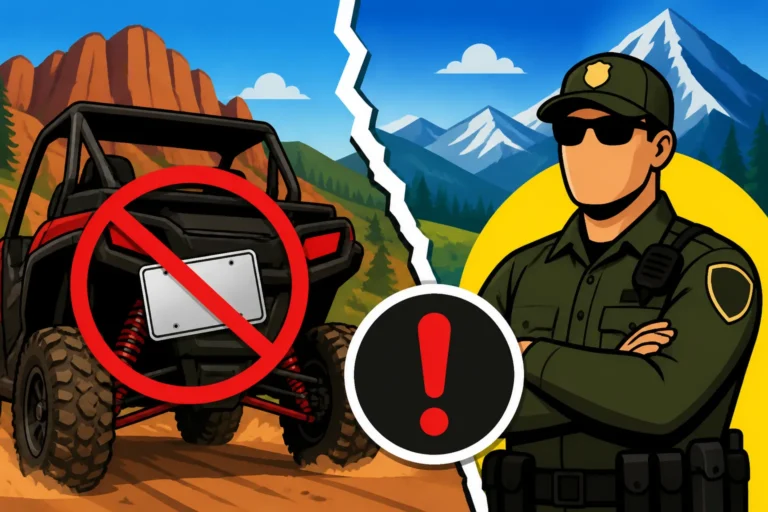
This is one of the most common frustrations among off-road enthusiasts. You've seen videos of people in other states driving their UTVs and ATVs on public roads with a regular license plate. Many assume Colorado must have a similar option. The hard truth is, Colorado does not offer a statewide "street legal" plate for typical off-highway vehicles like UTVs, ATVs, or dirt bikes. Period.
While some vehicles, like dirt bikes, can be made street legal in Colorado if they meet specific motorcycle requirements (headlights, taillights, turn signals, mirrors, horn, etc.) and pass inspection, this generally does not apply to ATVs or UTVs. These machines, as manufactured, do not meet the federal motor vehicle safety standards (FMVSS) required for passenger vehicles to be registered and licensed for general public road use. This is why when people ask [Why Colorado Will Not Plate Your UTV], the answer boils down to fundamental differences in manufacturing and safety standards. They are designed for trails, not highways.
So, if you bring your UTV from Arizona, where it might be street legal, that street-legal status does not automatically transfer to Colorado. Colorado has specific rules regarding [Colorado Rules for Out-of-State Street-Legal Machines], and generally, an out-of-state OHV plate doesn't grant you free access to Colorado's public roads beyond very specific, locally sanctioned routes.
The Limited Overlap: When OHVs Can Use Roads (Locally)
While statewide street legality for OHVs is largely a no-go, there's a very important exception: local ordinances. Many Colorado towns and counties, particularly in popular riding areas, have recognized the economic and recreational benefits of allowing OHVs on certain local roads. These ordinances are specific to the local jurisdiction and do not override the state's general prohibition on OHVs on state highways or county roads without such an ordinance.
For example, towns like Silverton, Lake City, and portions of Hinsdale County have passed ordinances allowing OHV use on designated town streets or county roads. This enables riders to access trailheads from lodging, fuel up, or grab a meal. However, these privileges come with strict rules:
- Designated Routes Only: Riders must stick to clearly marked routes.
- OHV Permit Required: Even on these local roads, your OHV must have a current [Colorado OHV Registration for Machines Kept on Private Land] or non-resident OHV permit displayed.
- Driver's License: The operator must have a valid driver's license.
- Safety Equipment: OHVs often need specific safety equipment like headlights, taillights, and a spark arrestor even on these roads. [Colorado Rules for Out-of-State Street-Legal Machines] will also be subject to these local rules.
- Speed Limits: Enforced local speed limits, usually quite low, must be observed.
This means you can potentially ride your UTV on some town streets, but it's not the same as driving a street-legal vehicle. You're operating under very specific, limited permissions. For example, [Colorado Towns That Let OHVs Use Their Streets] include places like Lake City, which has embraced OHV travel within its limits and on specific sections of Highway 149, while others, like Silverton, have had more complex relationships with OHV access, sometimes restricting in-town riding. Always check the local rules before you assume you can ride your OHV on any given road.
Making the Right Choice for Your Needs
Given all these distinctions, how do you decide what kind of vehicle is right for you in Colorado? It truly boils down to your primary intended use.
-
If you primarily want to explore backcountry trails, mountain passes, and unpaved forest roads, a traditional Off-Highway Vehicle (OHV) like an ATV or UTV is your best bet. You'll need a [Registering an OHV in Colorado] sticker from CPW, and you'll mostly stick to designated trails and roads where OHV use is specifically permitted by the Forest Service, BLM, or local ordinances. Don't expect to use it as your daily driver on paved roads beyond very limited local access. For this kind of riding, a robust machine is critical, and many riders look to brands like SuperATV for heavy-duty suspension, portals, and armor to enhance their off-road performance and durability.
-
If you need a reliable, low-speed vehicle for short trips within a specific community, a planned development, or a large property with some paved access, a Low-Speed Vehicle (LSV) is likely the most compliant and straightforward option. These vehicles are designed for the road, have the necessary safety features, and can be titled and registered. Just remember their 35 mph road speed limit restriction.
-
If you primarily intend to use your vehicle on private property, a golf course, or only occasionally on very specific local roads where you've verified an explicit ordinance allows it, then a golf cart could work. Be aware of the limitations and the extra effort needed to confirm local legality and consider obtaining good insurance even if not strictly required. It’s the least flexible for public road use.
Ultimately, Colorado's approach to vehicle classification on public roads is designed to ensure safety and maintain the intended use of different vehicle types. While it might mean you need more than one type of machine to satisfy all your riding desires, understanding these rules ensures you stay safe and on the right side of the law.
Disclaimer
This article is for general informational purposes only and does not constitute professional advice. Laws, prices and regulations vary by location and change over time. Consult a qualified professional for guidance on your specific situation.