Colorado Alcohol Limits for OHV Operators
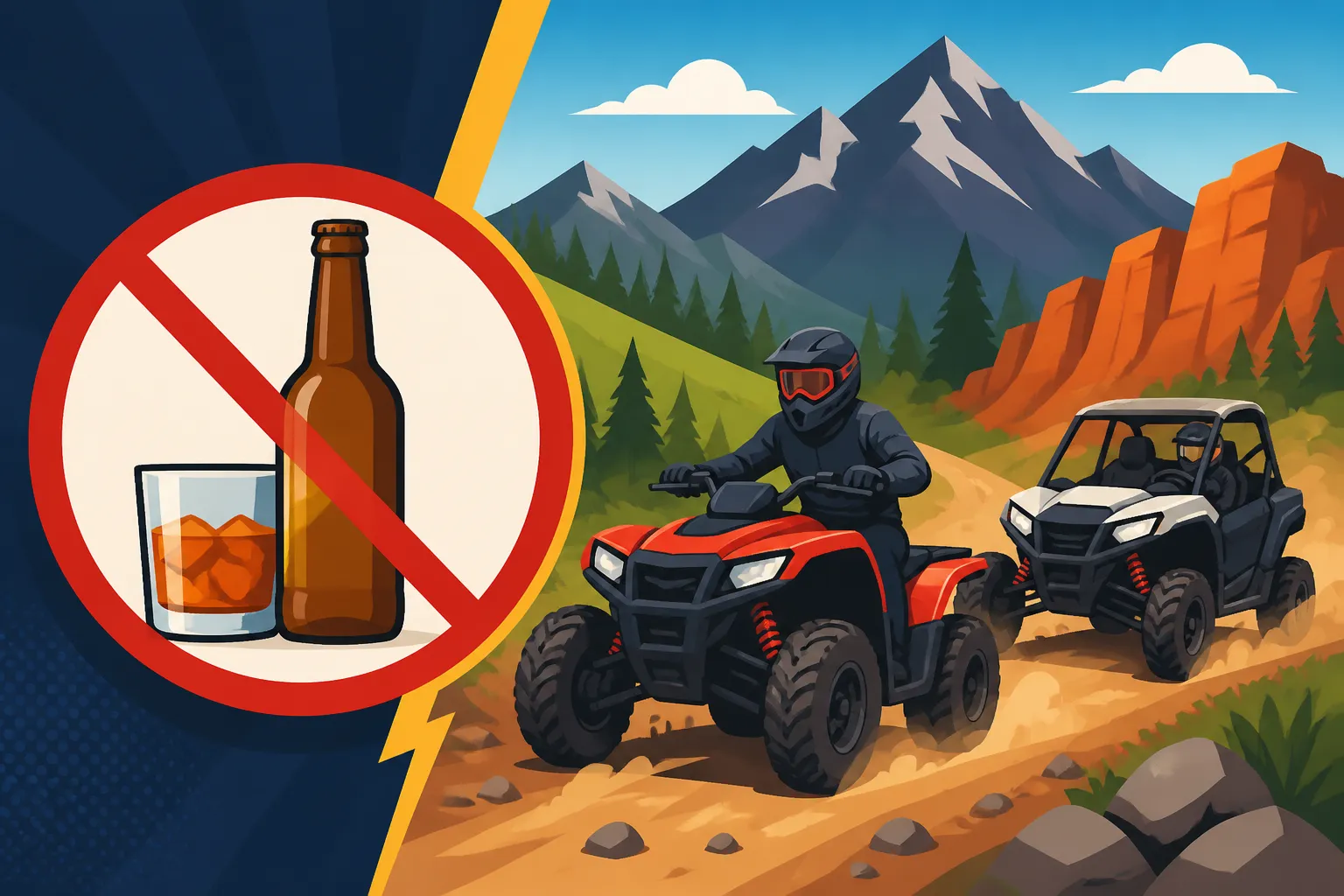
Alright, let's talk about something really important that often gets glossed over in the excitement of hitting the trails: alcohol consumption when you're operating an off-highway vehicle (OHV). It's easy to think a few beers around the campfire won't matter if you're "just" going a short distance back to the cabin, or that the rules for an ATV are different from a car. But the truth is, Colorado takes impaired OHV operation very seriously, and the consequences can be life-altering, not just for you, but for others on the trail. This guide is here to cut through the confusion and lay out exactly what Colorado's alcohol limits mean for ATV and UTV operators, helping you understand the rules so you can make safe, smart choices every time you ride.
Understanding Colorado's Legal Landscape for OHV Alcohol Limits
When you fire up your ATV, side-by-side, or dirt bike and head out on Colorado's incredible network of trails and designated routes, you're not just enjoying a recreational activity; you're operating a motor vehicle. And just like with a car or truck, there are strict laws governing alcohol consumption. Colorado doesn't differentiate much when it comes to impaired driving, whether it's on pavement or dirt.
The Basic "Under the Influence" Standard (DUI/DUID)
The most serious charge you can face is Driving Under the Influence (DUI). In Colorado, this means operating a motor vehicle when your Blood Alcohol Content (BAC) is 0.08% or higher, or when you are substantially incapable, either mentally or physically, to operate the vehicle safely due to alcohol, drugs, or a combination of both. For OHVs, this applies just as rigidly as it would if you were driving your pickup truck down Main Street in Grand Junction. The legal limit of 0.08% BAC is a bright line that, once crossed, immediately puts you in violation of the law.
What's crucial to understand is that even if you feel fine, or you think you've calculated your drinks perfectly to stay under the limit, an officer can still determine you are "under the influence" based on your observable impairment. Imagine trying to navigate a challenging section of the [Riding a Narrow Shelf Road Safely] after a few drinks. Your reaction time, depth perception, and judgment are all compromised, making even familiar terrain perilous. This isn't just about a number on a breathalyzer; it's about your ability to control a powerful machine in an often unpredictable environment. Law enforcement officers, whether it's a local sheriff or a Colorado Parks and Wildlife (CPW) ranger, are trained to spot signs of impairment, and they won't hesitate to intervene to ensure public safety.
"Driving While Ability Impaired" (DWAI) for OHVs
Colorado also has a charge for "Driving While Ability Impaired" (DWAI), which is a step below DUI but still carries significant penalties. This charge applies when your BAC is between 0.05% and 0.08%, or when your ability to operate the vehicle is impaired "to the slightest degree" by alcohol, drugs, or a combination. The "slightest degree" is a lower threshold than "substantially incapable," meaning you don't have to be completely incapacitated to be found guilty of a DWAI.
For OHV operators, DWAI is particularly relevant because the demands of off-road riding can quickly expose even subtle impairments. Steering through loose gravel, reacting to unexpected wildlife, or maintaining balance on a rocky climb all require a keen sense of focus that alcohol erodes. Even a small amount of alcohol can dull your senses enough to make a crucial difference in avoiding an accident. Think about operating your machine on a winding mountain trail—your decision-making needs to be razor-sharp. Even with robust aftermarket parts, an impaired driver can quickly find themselves in trouble, negating the safety benefits of a well-equipped machine. If you're riding in an area where OHVs are allowed on [Colorado County Roads Open to OHVs], you're even more exposed to the same scrutiny a regular driver would face. The intent of these laws is clear: if you're not at your best, you shouldn't be behind the handlebars or wheel.
Why OHVs Are Treated Like Other Vehicles Under DUI Laws
It's a common misconception that OHVs, being "recreational" vehicles, might operate under a different set of rules when it comes to alcohol. Many riders think that because they're off-road, the stakes are lower, or that law enforcement might be more lenient. This couldn't be further from the truth in Colorado. The state's legal framework recognizes OHVs as powerful motor vehicles that pose significant risks if operated negligently or under the influence.
Public Safety on Trails and Roads
One of the primary reasons OHVs are held to the same DUI standards as other vehicles is public safety. Colorado's trail systems are often shared spaces, not exclusive playgrounds. You'll find hikers, mountain bikers, horseback riders, and even other OHV enthusiasts enjoying the same scenic routes. On certain designated county roads, OHVs share the pavement with regular cars, trucks, and motorcycles. An impaired OHV operator isn't just a danger to themselves; they're a severe risk to everyone else using those trails and roads.
Imagine a family with young children hiking a trail, or a group of cyclists descending a mountain pass. An erratic or out-of-control OHV, operated by someone whose judgment is impaired by alcohol, can cause catastrophic accidents. Colorado's law enforcement agencies, including CPW rangers and local sheriffs, actively patrol these areas to enforce safety regulations. They understand that the beautiful, remote settings of many OHV trails don't negate the need for sober operation; in fact, they often amplify it, given the reduced access to immediate medical or emergency services. The rules are in place to protect the fragile ecosystems we ride through and, most importantly, the lives of everyone who ventures into Colorado's backcountry.
The Physical Demands of OHV Operation
Operating an OHV, whether it's a nimble ATV or a powerful side-by-side, requires a unique blend of physical skill, quick decision-making, and constant situational awareness. Unlike driving a car on a paved highway, off-road riding involves navigating uneven terrain, rocks, mud, water crossings, and steep inclines or descents. These conditions demand your full attention and precise control at all times.
Alcohol directly impairs these critical faculties. It slows your reaction time, distorts your perception of speed and distance, reduces your coordination, and dulls your judgment. What might seem like a simple obstacle when sober can become a major hazard after just a few drinks. A moment of hesitation or a slight miscalculation due to impairment can lead to a rollover, a collision, or a serious injury. Even a high-performance machine equipped with top-tier components from brands like SuperATV, designed to handle extreme conditions, cannot compensate for an operator's impaired abilities. These vehicles are built for adventure and capability, but their safety features are only as effective as the clear-headedness of the person at the controls. Colorado's laws recognize that the inherent challenges of off-road riding necessitate a completely sober operator to ensure safety for both the rider and those around them.
Consequences of an OHV DUI/DWAI in Colorado
The excitement of a day on the trails can quickly turn into a nightmare if you're caught operating an OHV under the influence or while impaired. The legal system in Colorado doesn't go easy on those who endanger others through irresponsible choices, and the repercussions extend far beyond just a slap on the wrist. Many riders are shocked to learn just how severe the penalties can be, impacting not only their riding privileges but their entire lives.
Legal Penalties: Fines, Jail Time, and License Suspension
Getting charged with a DUI or DWAI on an OHV in Colorado comes with a cascade of legal penalties that can be daunting. For a first-time DUI offense, you could face significant fines, court costs, and potentially even jail time, ranging from a few days to a year. There's also mandatory alcohol education or therapy, which can be time-consuming and expensive. A DWAI charge, while generally less severe than a DUI, still carries substantial fines and can include jail time, though often less than a DUI. The courts also have the discretion to impose community service.
Perhaps one of the most surprising and impactful consequences for many OHV enthusiasts is the effect on your regular driver's license. Unlike some states, in Colorado, an OHV DUI or DWAI can absolutely lead to the suspension or revocation of your automobile driver's license. This means you could lose the ability to drive your car or truck to work, pick up groceries, or perform daily tasks, even if you were only operating an ATV or UTV at the time of the offense. Imagine facing [Fines for an Unregistered OHV in Colorado] while also having your regular driver's license suspended – the legal entanglements can pile up quickly. It's a stark reminder that the state views impaired operation as a serious offense, regardless of the type of vehicle.
Beyond the Courtroom: Real-World Impacts
The ramifications of an OHV DUI or DWAI don't end when you leave the courtroom. These charges can have long-lasting, far-reaching effects on various aspects of your life. One of the most common and immediate impacts is on your insurance rates. A DUI or DWAI on your record, even if it occurred on an OHV, will almost certainly cause your automobile insurance premiums to skyrocket, sometimes for many years. It could also make it difficult or impossible to secure [Colorado ATV Insurance Cost] in the future, or at least drive those costs up significantly.
Beyond the financial hit, there's the social and personal cost. A DUI/DWAI conviction can create a social stigma, impacting relationships and your standing in the community. For individuals whose jobs require driving, a license suspension or a conviction on their record can lead to loss of employment or difficulty finding new work. There's also the emotional toll of dealing with the legal process, the potential for shame, and the disruption to your personal life. Most tragically, an impaired OHV incident can lead to serious injury or death, for yourself or others, which is a consequence that no legal penalty can ever truly address. Understanding [Colorado OHV Crash Reporting Rules] becomes chillingly relevant when considering the potential for tragedy due to impaired riding.
Open Container Laws and Presumptions of Impairment
Many riders enjoy the social aspect of OHV trips, which sometimes includes adult beverages. However, it's critical to understand that Colorado has specific laws regarding open containers of alcohol in motor vehicles, and these often extend to OHVs when they are being operated on public land or designated routes. Ignoring these laws can lead to additional charges, complicating an already serious situation if you're also suspected of impairment.
Colorado's Open Container Rules for OHVs
In Colorado, open container laws generally prohibit drivers and passengers from having an open container of an alcoholic beverage in the passenger area of a motor vehicle that is on a public highway. While OHVs might not always be on "paved public highways," when they are operating on designated trails, forest service roads, BLM roads, or any other public land accessible to the public, these rules typically apply. The definition of "passenger area" is broad and often includes any area of the vehicle readily accessible to the driver or passengers.
What constitutes an "open container"? It's generally any container of alcohol that has been opened, has a broken seal, or from which some of the contents have been removed. This means that even a half-empty beer can or a wine bottle with the cork removed, sitting in a cup holder or on the floorboard of your side-by-side, can lead to a citation. The penalties for an open container violation are typically fines, but they can quickly escalate if combined with other infractions, especially if you're also suspected of being impaired. These laws are in place to reduce the temptation to drink while driving and to make it easier for law enforcement to address potential impairment before it leads to more serious incidents. For a comprehensive look, see [Open Containers on a Trail Ride].
Field Sobriety Tests and Chemical Tests for OHV Operators
If a Colorado Parks and Wildlife ranger, a county sheriff, or any other law enforcement officer suspects you are operating your OHV under the influence or while impaired, they have the authority to pull you over and conduct an investigation. This investigation typically begins with what are known as Field Sobriety Tests (FSTs). These are a series of standardized tests designed to assess a person's physical and mental impairment.
While FSTs are often performed on flat, paved surfaces for conventional drivers, officers are experienced in adapting these tests to the environment. They might ask you to perform tests like the Horizontal Gaze Nystagmus (HGN, observing involuntary eye jerking), the Walk-and-Turn, or the One-Leg Stand, even on the shoulder of a gravel road or a relatively flat spot on the trail. Keep in mind that the uneven terrain and challenges of the environment themselves can be used as evidence of impairment if an officer observes you struggling to maintain balance or follow instructions. If the officer determines there is probable cause, they will then request a chemical test, such as a breathalyzer test, blood test, or urine test, to determine your BAC. Colorado operates under implied consent laws, meaning that by choosing to operate a vehicle on public roads or lands, you have implicitly consented to take a chemical test if requested by an officer. Refusing a chemical test can lead to immediate and severe penalties, including the automatic suspension of your driver's license, even if you are not ultimately convicted of DUI or DWAI. This is a critical point that many OHV operators overlook, so always be aware that enforcement is real, especially with [Sheriff Enforcement in Colorado Mountain Towns].
Responsible Riding: Tips to Avoid Impairment Charges
Enjoying Colorado's stunning backcountry on an OHV is an incredible experience, and it's one that should always be enjoyed responsibly. Avoiding impairment charges isn't just about sidestepping legal trouble; it's about ensuring your safety, the safety of your passengers, and the safety of everyone else who shares the trails and roads. A little planning and a commitment to sober riding go a very long way in making your adventure memorable for all the right reasons.
Designated Driver or No Alcohol at All
The simplest and most effective way to avoid an OHV impairment charge is to adopt a "zero tolerance" policy for alcohol when you plan to operate your machine. If you know you'll be riding, commit to not drinking any alcoholic beverages. This eliminates all risk and ensures you're at your peak performance for navigating challenging trails and making critical decisions. Many experienced riders choose this path, preferring the clear head needed for the adventure.
If your group does want to enjoy alcoholic beverages at camp or after the ride, designate a completely sober operator. This person is responsible for all machine operation from the moment the first drink is consumed until everyone is safely back at camp and the keys are put away. This means they are not just driving on the main trail, but also moving machines around camp, running quick errands, or any other operation. Remember, even a short trip from your tent to the water spigot in a campground while impaired can lead to a charge, especially if [Riding from a Colorado Campground to the Trail] involves crossing any public access points. It's about making a clear distinction: either you drink, or you ride, but never both.
Planning Ahead for a Safe Experience
Responsible riding starts long before you ever turn the key. Planning ahead is crucial, especially when you consider factors like Colorado's high altitude, which can amplify the effects of alcohol and contribute to fatigue. Ensure you get adequate sleep the night before your ride, stay well-hydrated with plenty of water (especially important when dealing with [Altitude Sickness on a Riding Trip]), and eat regular, nutritious meals. These factors alone can significantly impact your focus and stamina, making you less susceptible to impairment, even without alcohol in the mix.
When packing for your ride, make sure to bring plenty of non-alcoholic beverages – water, juices, sports drinks – to keep everyone refreshed and hydrated throughout the day. It's also a good idea to have snacks on hand. Always double-check your machine before heading out. Make sure all your lights are working, especially if you anticipate riding near dusk, and that you have all the necessary safety gear. Even with high-quality aftermarket components like those from SuperATV that enhance your machine's capabilities and durability, they cannot compensate for impaired judgment or a lack of preparedness. Things like having [What to Carry Over a High Pass] are equally important. A well-maintained machine and a well-prepared rider, fueled by water and good judgment, are the best combination for a safe and enjoyable outing on Colorado's spectacular OHV trails. Remember, rangers perform [Colorado Ranger Checks at a Trailhead], so always be prepared and sober.
| BAC Level (approx.) | Legal Implication in Colorado for OHVs | Potential Effects on Operator | Safety Risk on OHV |
|---|---|---|---|
| 0.00% | Sober | None | Minimal (inherent riding risks still apply) |
| 0.02% – 0.04% | Legal, but may show subtle impairment | Relaxed, mild euphoria, altered judgment | Increased judgment errors, reduced caution |
| 0.05% – 0.07% | Driving While Ability Impaired (DWAI) | Reduced coordination, slower reaction | Significantly impaired ability to navigate complex terrain and react to hazards |
| 0.08% + | Driving Under the Influence (DUI) | Poor coordination, impaired vision, lack of judgment, reduced concentration | Extreme danger to self and others, high likelihood of accident or injury |
Disclaimer
This article is for general informational purposes only and does not constitute professional advice. Laws, prices and regulations vary by location and change over time. Consult a qualified professional for guidance on your specific situation.