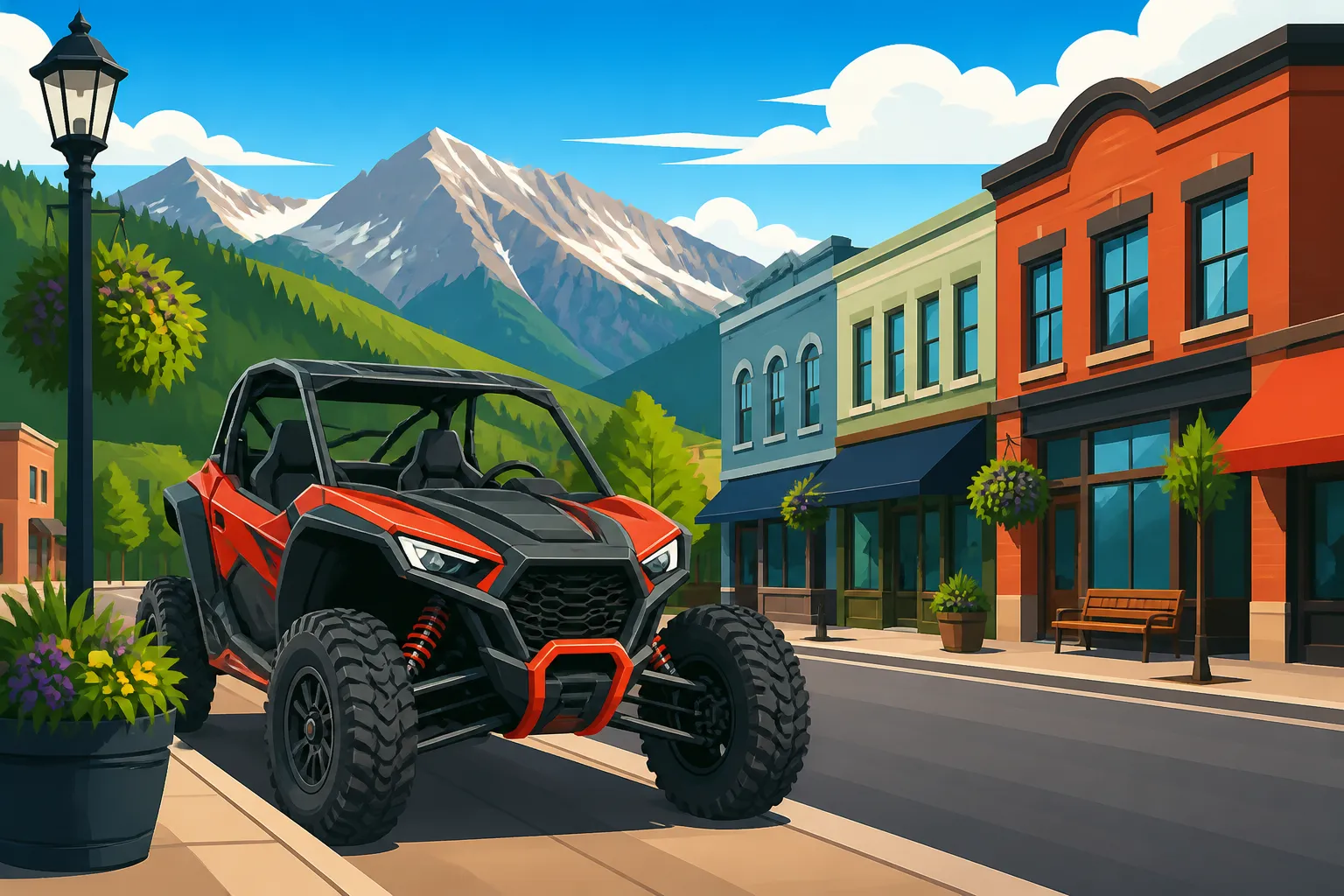
Parking an OHV on a Colorado Main Street
Ah, the dream of rolling into a charming Colorado mountain town on your UTV, parking right on Main Street, and strolling in for a well-deserved lunch or some souvenir shopping. It sounds idyllic, doesn't it? But for many of us, that dream quickly turns into a headache of confusion and frustration, as Colorado's rules for off-highway vehicles (OHVs) on public roads and town streets are anything but straightforward. This guide is here to untangle that knot, helping you understand where you can and can't park your ATV or side-by-side on a Colorado main street, what the rules are, and how to avoid an unwelcome citation.
The Patchwork of Colorado OHV Road Access
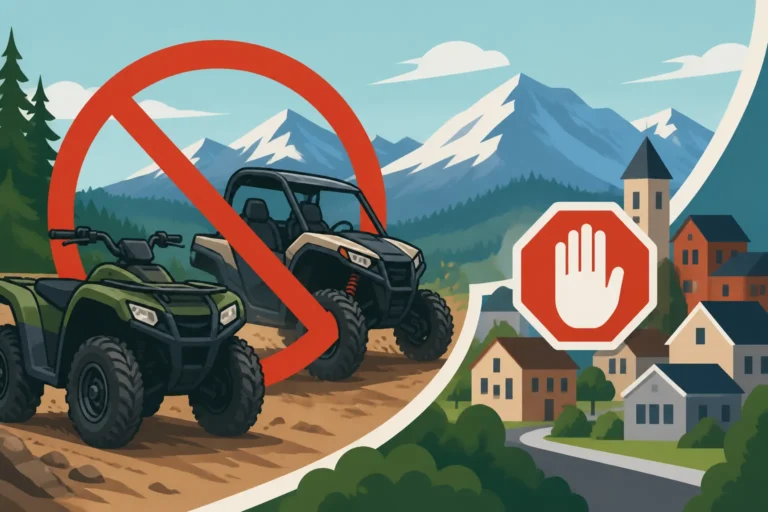
One of the biggest sources of confusion for OHV enthusiasts in Colorado is the varied nature of road access. Unlike some other states that might have blanket "street legal" laws for OHVs, Colorado operates on a more localized system. This means that whether you can legally park your OHV on a main street often depends heavily on which specific town you're in. It's not a "yes" or "no" for the entire state; it's a "maybe, depending on the municipality."
The state gives individual counties and municipalities the authority to create their own ordinances regarding OHV use on public roads within their jurisdiction. This flexibility allows mountain towns to cater to the booming OHV tourism, but it also creates a bewildering array of rules that riders need to navigate. You might be perfectly legal to cruise and park in one town, only to face a stiff fine just a few miles down the road in another. This really puts the onus on us, the riders, to do our homework before we ever load up the trailer.
State Highways Versus County Roads and Town Streets
Before we dive into parking, it's crucial to distinguish between different types of roads in Colorado. State highways (think US-550, US-285, CO-149) are generally off-limits for OHVs, with very few exceptions. These are the major arteries that connect towns and cities, and they are typically high-speed routes where OHVs are not permitted. There are some very specific corridors where this rule is relaxed, such as the [The 3.26-Mile Highway 149 OHV Stretch] near Lake City, but these are rare and clearly marked.
County roads, on the other hand, often present more opportunities for OHV access. Many counties in Colorado have adopted ordinances that allow OHVs on certain county roads, usually for the purpose of connecting trails or allowing access to services within small communities. These are often gravel roads or lower-speed paved roads. When it comes to town streets, this is where the local ordinances become paramount. A "main street" can be a county road, a state highway, or a municipal street, and each will have its own set of rules. It’s like a choose-your-own-adventure book, but with legal consequences if you choose wrong!
The Role of Local Ordinances
The local town council or county commissioners are the ones who decide whether OHVs can operate on their roads and, by extension, where they can be parked. These ordinances will detail specific roads that are open or closed, hours of operation, and any required safety equipment beyond state mandates. Many towns have embraced OHV tourism as a vital part of their local economy, actively inviting riders into town to enjoy restaurants, shops, and lodging. However, even these towns will have specific rules about how you access and park.
You'll often find signs at the entrances to towns indicating whether OHVs are allowed and pointing you to maps or specific routes. Ignoring these signs is a quick way to spoil your day with a citation. It's truly a testament to the diverse communities we have in Colorado, where one town might have embraced OHVs, and a neighboring one might have voted [Colorado Towns That Voted Against OHV Access].
Where Parking is Permitted on Main Streets
For towns that do allow OHV access on their streets, parking regulations usually mirror those for conventional vehicles. This means you can generally park in designated public parking spaces along the main street or in municipal parking lots, provided you follow all posted signs and local traffic laws. These towns have typically set up their infrastructure to accommodate OHV riders, understanding that allowing easy access to businesses is key to a positive rider experience.
When planning your trip, it's always a good idea to check the town's official website or call their local law enforcement or visitor center. They can provide the most current information on OHV routes and parking. Don't rely solely on old forum posts or word-of-mouth; ordinances can change. Many towns will even provide maps, sometimes laminated ones, showing exactly which streets are open to OHVs and where parking is available.
Silverton and Lake City: Examples of OHV-Friendly Towns
Towns like Silverton and Lake City are prime examples of communities that have embraced OHVs, allowing riders to traverse and park on many of their main streets. In Silverton, after some debate and adjustments, [Riding County Roads Around Silverton] and parking is generally permitted in designated areas. You’ll see plenty of side-by-sides lined up along Greene Street, the town’s main thoroughfare, especially during peak summer months. This allows riders to easily access the historic district, grab a bite, or resupply before heading back out onto the [Alpine Loop's 65 Miles of Motorized Road].
Lake City, nestled in Hinsdale County, is another example where OHV access is integrated into the town experience. Riders can drive their machines on most town streets and park to enjoy the local shops and eateries. In fact, Lake City actively promotes itself as an OHV destination, with clear signage and information available for riders. The whole vibe of these towns is that your OHV is just another mode of transport, at least for getting around town and to the trailheads. This really enhances the experience, allowing you to seamlessly transition from trail to town without having to load up your machine on a trailer.
Ouray and Telluride: Towns with Restrictions
On the other end of the spectrum, you have towns like Ouray and Telluride. While Ouray serves as a major gateway to the Alpine Loop, its town proper has stricter rules. You are generally allowed to ride OHVs through Ouray on designated routes to access trails, but parking your OHV on the main street for an extended period to shop or dine can be tricky or even prohibited in some areas. Ouray has very specific staging areas and routes, and you'll want to be familiar with [Ouray and Telluride OHV Town Restrictions] before you arrive. You might ride into Ouray, but then you're expected to use designated parking areas, which might not be right on Main Street.
Telluride is another town that, while incredibly scenic, has largely opted out of allowing OHVs on its main streets. Its historic district and general town layout are not conducive to OHV traffic, and their ordinances reflect a desire to maintain a specific atmosphere. This isn't to say you can't visit these areas, but it means you'll likely be staging your OHV outside of town and using a street-legal vehicle or shuttle to get into the heart of the community. It's a key distinction and a common frustration for riders who expect uniform access across all mountain towns.
Understanding Parking Etiquette and Enforcement
Even in towns where OHV parking is permitted on main streets, there's an unspoken etiquette that helps maintain a positive relationship between riders and residents. It's about being a good visitor and showing respect for the community. Following these unwritten rules, alongside the posted legal ones, ensures that OHV access remains open and welcoming for everyone.
Law enforcement in these towns, usually the local sheriff's department or town marshals, are quite familiar with OHV rules. They are often out patrolling during peak seasons and will enforce parking regulations. A common scenario is getting a ticket for parking in a no-parking zone, blocking a driveway, or exceeding a time limit, just as a regular car would. The penalties can vary, but generally, expect fines similar to those for conventional vehicles, sometimes ranging up to several hundred dollars for serious infractions. Remember, these are small communities, and everyone notices when rules are broken, particularly if it causes inconvenience for locals or other visitors.
Respecting Residential Areas and Noise Ordinances
When you're riding through a town, especially on main streets that might border residential areas, it's crucial to be mindful of noise. Many OHVs, particularly those with aftermarket exhausts, can be quite loud. Even if your machine is equipped with a [Mufflers and Spark Arresters in Colorado] system and meets state noise requirements, excessive revving or loud acceleration in town can quickly become a nuisance. Towns often have local noise ordinances, and repeated complaints can lead to stricter rules or even closures in the future.
Imagine trying to enjoy a quiet morning coffee on your porch, only to have a procession of loud side-by-sides rumble by repeatedly. It's understandable why residents might get frustrated. So, keep the speed down, be gentle on the throttle, and minimize any unnecessary noise when you're on town streets. It's a small concession that goes a long way in ensuring continued access for all of us. Companies like SuperATV offer a range of products, including quieter exhausts, which can be a considerate choice for those who frequently ride through towns.
Avoiding Impeded Traffic Flow and Pedestrian Safety
Main streets in Colorado mountain towns, especially in summer, can be bustling with pedestrians, cyclists, and other vehicles. When parking your OHV, always ensure you are not impeding traffic flow or creating a hazard for pedestrians. Don't park on sidewalks, block crosswalks, or park in a way that makes it difficult for other vehicles to navigate. Pay close attention to parking signs that indicate restricted times, permit-only zones, or loading areas.
For instance, if you're parking a wide side-by-side, make sure it fits completely within the designated parking space and doesn't stick out into the lane of travel. Kids and pets can be unpredictable, and the presence of OHVs, which might be less familiar to some pedestrians, requires extra caution. We want everyone to feel safe and comfortable in these shared spaces. A good rule of thumb is to park your machine as you would a compact car, ensuring it doesn't become an obstacle.
The Pitfalls of "Street Legal" Conversions for Colorado Main Street Parking
Many riders invest in aftermarket parts like turn signals, horns, and mirrors, sometimes from reputable brands like SuperATV, to make their OHV "street legal" in other states. They then arrive in Colorado expecting these modifications to grant them universal access and parking privileges on any main street. This is a common and often costly misconception.
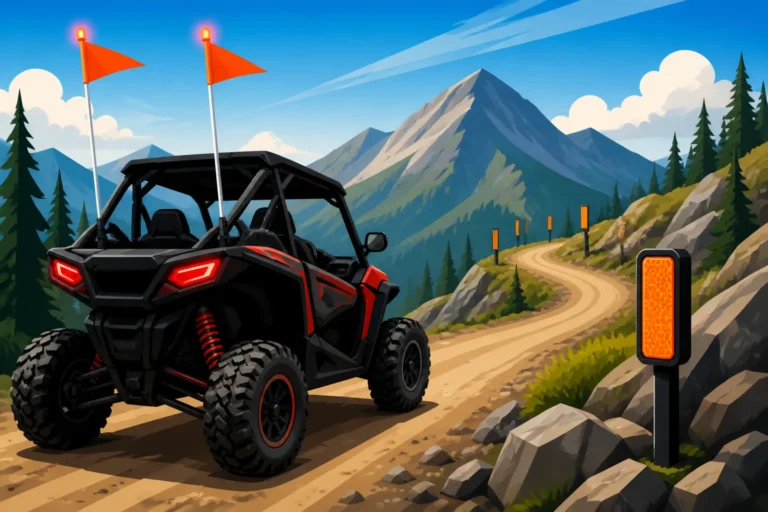
Colorado does not have a statewide law that allows OHVs to be registered as street-legal vehicles in the same way a car or motorcycle is. While you might be able to add a full lighting kit, windshield, and [Whip Flags in an Open Riding Area] for safety and trail visibility, these modifications alone do not magically transform your OHV into a vehicle that can legally operate on all public roads or park universally on main streets across Colorado. [Why Colorado Will Not Plate Your UTV] is a constant source of frustration for riders.
Out-of-State Plates and Colorado Rules
This confusion often deepens for those with OHVs registered as street-legal in other states. If you've got a side-by-side with a Utah or Arizona license plate, you might think you're good to go anywhere. However, Colorado law typically states that OHVs must comply with Colorado OHV laws, regardless of their out-of-state registration. While [Colorado Rules for Out-of-State Street-Legal Machines] can be complex, generally, if a specific Colorado town or county does not permit OHVs on its roads, your out-of-state plate won't override that local ban.
The local ordinance is king here. So, even if your machine is street legal in Texas, when you're in Colorado, you're subject to Colorado's specific OHV regulations and any local ordinances. This means you still need a valid [Colorado OHV Permit for Out-of-State Riders] to ride on designated trails and open county roads, and your ability to park on a main street still comes down to that specific town's rules, not your vehicle's out-of-state registration. It's a bitter pill to swallow for many, but it's the reality of the legal landscape here.
Checking Local Ordinances is Key
Given the complex and varied nature of OHV road access and parking rules in Colorado, the single most important piece of advice is always to check the local ordinances for the specific town or county you plan to visit. Before you even leave home, a quick search for "[Town Name] OHV ordinance" or a call to the local Chamber of Commerce or Sheriff's office can save you a lot of grief.
Many towns that do allow OHVs on their streets will have clear information posted on their websites, often including maps of designated routes and parking areas. Look for this official information, not just anecdotal advice. It's better to be overly cautious than to find a ticket on your windshield after a pleasant lunch. Trust me, paying a fine from across the country is never fun, and it can sour the memory of an otherwise fantastic trip. The Colorado Parks and Wildlife website can also be a good starting point for general statewide rules, but remember, the town-level detail is what you need for main street parking.
Practical Tips for Parking Your OHV on Main Street
So, you've done your homework, and you know you're headed to a town where OHV parking on Main Street is permitted. Great! Now, let's talk about some practical tips to make the experience smooth and enjoyable for everyone. These little considerations can make a big difference in how well OHVs are received in our beloved mountain towns.
Think about how you'd park a car – same rules apply. You want to be visible, safe, and not cause any inconvenience. Having the right gear, like sturdy tie-downs for any cargo and perhaps a cover if you're leaving it for a while, can also be helpful. Some riders even carry a small chain and lock if they are worried about theft, although that’s less of a concern in broad daylight on a busy main street than it might be elsewhere.
Essential Equipment for Town Riding
Even if you're just driving a few blocks down Main Street, ensure your OHV is equipped with all the legally required accessories for road use in that particular jurisdiction. This often includes headlights, taillights, brake lights, and a horn. While a street-legal kit from SuperATV might provide all this, verify that it meets local standards. For example, some towns might require turn signals even if the state's baseline "open road" rules don't explicitly mandate them for OHVs.
Always carry your [Colorado OHV Registration] and permit, along with any necessary identification. Rangers and local law enforcement can and do conduct checks, especially in high-traffic OHV areas. Having your paperwork in order is crucial. It’s a good habit to keep these documents in a waterproof bag in a secure compartment on your machine.
Securing Your Machine While Parked
When you park your OHV, especially if you're going into a restaurant or shop for an hour or more, take a moment to secure it. While theft is not rampant in these small towns, it's always better to be safe than sorry. Lock any storage compartments, remove keys, and consider using a steering wheel or brake lock if you have one.
If you have any valuable gear or accessories, either take them with you or secure them out of sight. Remember, your OHV is open to the elements, and it's easier for someone to quickly grab something from an unsecured machine than from a locked car. This simple act of vigilance helps protect your investment and ensures a stress-free visit. For those with open side-by-sides, removing smaller items like GPS units, phones, or wallets before you head into a shop is just good common sense.
Being a Good Ambassador for OHV Riding
Ultimately, how we park and conduct ourselves on Main Street directly impacts the public perception of OHV riders. Every time you ride courteously, park legally, and are respectful of residents and other visitors, you are being an ambassador for the entire OHV community. Positive interactions can help maintain and even expand access in the future.
Conversely, reckless riding, illegal parking, or excessive noise can quickly lead to resentment and calls for stricter regulations or outright bans. We all want to continue enjoying the incredible riding opportunities Colorado offers, and that means doing our part to be responsible users. So, when you pull up to that coveted Main Street parking spot, remember you're representing all of us.
Disclaimer
This article is for general informational purposes only and does not constitute professional advice. Laws, prices and regulations vary by location and change over time. Consult a qualified professional for guidance on your specific situation.