Who May Supervise a Young Colorado Rider
Navigating the rules for young riders in Colorado can feel like deciphering a cryptic trail map in the dark, especially when you're trying to figure out exactly who needs to be present and what "supervision" actually means. It’s a common source of confusion for families eager to introduce their kids to the incredible world of off-highway vehicle (OHV) riding in our beautiful state. This guide is designed to clear up those ambiguities, helping you understand the specific requirements for supervising young riders on Colorado’s trails and roads, ensuring both safety and legal compliance.
Understanding Colorado's Youth Rider Supervision Rules
Bringing your children into the world of ATV and UTV riding in Colorado is an exciting prospect, filled with visions of shared adventures and breathtaking mountain vistas. However, it's crucial to understand that Colorado Parks and Wildlife (CPW) has specific regulations in place to protect young riders and ensure their safety on public lands and designated routes. These rules aren't just bureaucratic hurdles; they're designed to mitigate risks and teach responsible riding from a young age, preventing tragic accidents that no one wants to experience.
Colorado's Stance on Youth OHV Operation
Colorado recognizes that OHVs can be a fantastic family activity, but it also acknowledges the inherent risks, especially for inexperienced or younger operators. Therefore, the state has established clear guidelines regarding who can ride, where they can ride, and, most importantly, who needs to be watching them. These rules aim to strike a balance between allowing access for families and ensuring the well-being of all trail users. It's not about prohibiting fun; it's about making sure that fun is conducted safely and responsibly, instilling good habits that last a lifetime. Many parents express frustration with these seemingly complex rules, but understanding their intent helps make compliance easier.
For instance, the state distinguishes between operation on private land versus public land, and different rules apply depending on whether a "road" is opened to OHV use by local ordinance. These distinctions are vital because what's permissible on your own ranch might lead to a hefty fine if applied incorrectly on a National Forest trail or a county road. The goal is always the same: protect the child. This is why you'll often see rangers checking for compliance at trailheads, not to ruin anyone's day, but to make sure everyone is set up for a safe ride.
Age-Specific Regulations and Limitations
Colorado's rules for young OHV operators are largely tied to age, establishing a tiered system that reflects varying levels of maturity and physical capability. This isn't just an arbitrary number; it’s based on decades of safety data and injury prevention research. Generally, riders under the age of 10 face the most stringent restrictions, often requiring direct, line-of-sight supervision and being limited to specific types of terrain or non-public areas. As children get older, the rules gradually loosen, granting more autonomy as they gain experience and demonstrate responsible behavior.
For example, a child under 10 generally cannot operate an OHV on a public road or trail even if it's opened to OHVs, regardless of supervision. Once they reach 10 years old, they may be allowed on certain "opened" county roads or trails, but still under strict supervision. The machines they can operate are also often limited by engine size, ensuring they're not on something too powerful for their stature. These limitations are designed to match the child's developmental stage with the demands of operating an OHV, reducing the risk of them being in over their head. You can find more specific details in our guide on [Riders Under 10 and Colorado Road Rules].
The "Opened Road" Distinction for Young Riders
One of the most confusing aspects of Colorado's OHV laws, particularly for families, is the concept of an "opened road." Many mountain towns and counties have passed ordinances allowing OHVs on certain county roads. This is fantastic for linking trails and accessing services, but it comes with its own set of rules, especially for young riders. A common misconception is that if a road is "open" for OHVs, then anyone can ride it, including children. This isn't always the case, and it's a critical point where many well-meaning families can unknowingly run afoul of the law.
For youth riders, the rules on these opened roads are often more restrictive than on designated trails. While a 10-year-old might be allowed on a main OHV trail with supervision, the same child might be prohibited from operating an OHV on an "opened" county road, even with an adult right beside them. It's vital to check the local ordinances for the specific county or town you're riding in, as these rules can vary. Our guide on [Colorado Supervision Rules on a County Road] dives deeper into this, but the general principle is that public roads, even those open to OHVs, carry higher risks due to potential traffic and different types of vehicles.
Defining "Immediate Supervision" in Colorado
The term "immediate supervision" is central to Colorado's youth OHV regulations, but it's often misunderstood. It’s not just about being in the same general area; it implies a much higher degree of attentiveness and proximity. Many parents assume if they're riding a few hundred yards ahead on the same trail, they're supervising. However, Colorado's definition is much more stringent, focusing on the ability to react instantly to a situation. This specific wording is what often trips people up and can lead to misunderstandings with CPW rangers.
Proximity and Visual Contact Requirements
When the state talks about "immediate supervision," it means exactly that: you need to be immediately able to supervise. This generally translates to maintaining visual contact with the young rider at all times. They shouldn't be out of your sight, even for a moment. Furthermore, "proximity" is key. You need to be close enough to communicate effectively, whether that's through verbal commands, hand signals, or even a quick stop to address an issue. This usually means riding directly behind or beside the young operator, not somewhere far off in the distance.
Imagine a situation where a young rider suddenly encounters an unexpected obstacle, like a downed tree or a deep rut. If you're a quarter-mile ahead, you have no way to warn them, guide them, or physically assist them if they get into trouble. That's not "immediate supervision." The intent is for the adult to be a constant, active presence, ready to step in at a moment's notice. It’s about ensuring that the adult can quickly assess and respond to any challenge the young rider faces, rather than just being a distant chaperon. This level of engagement is often a new concept for parents used to letting kids explore a bit more freely in other activities.
The Ability to Intervene Quickly
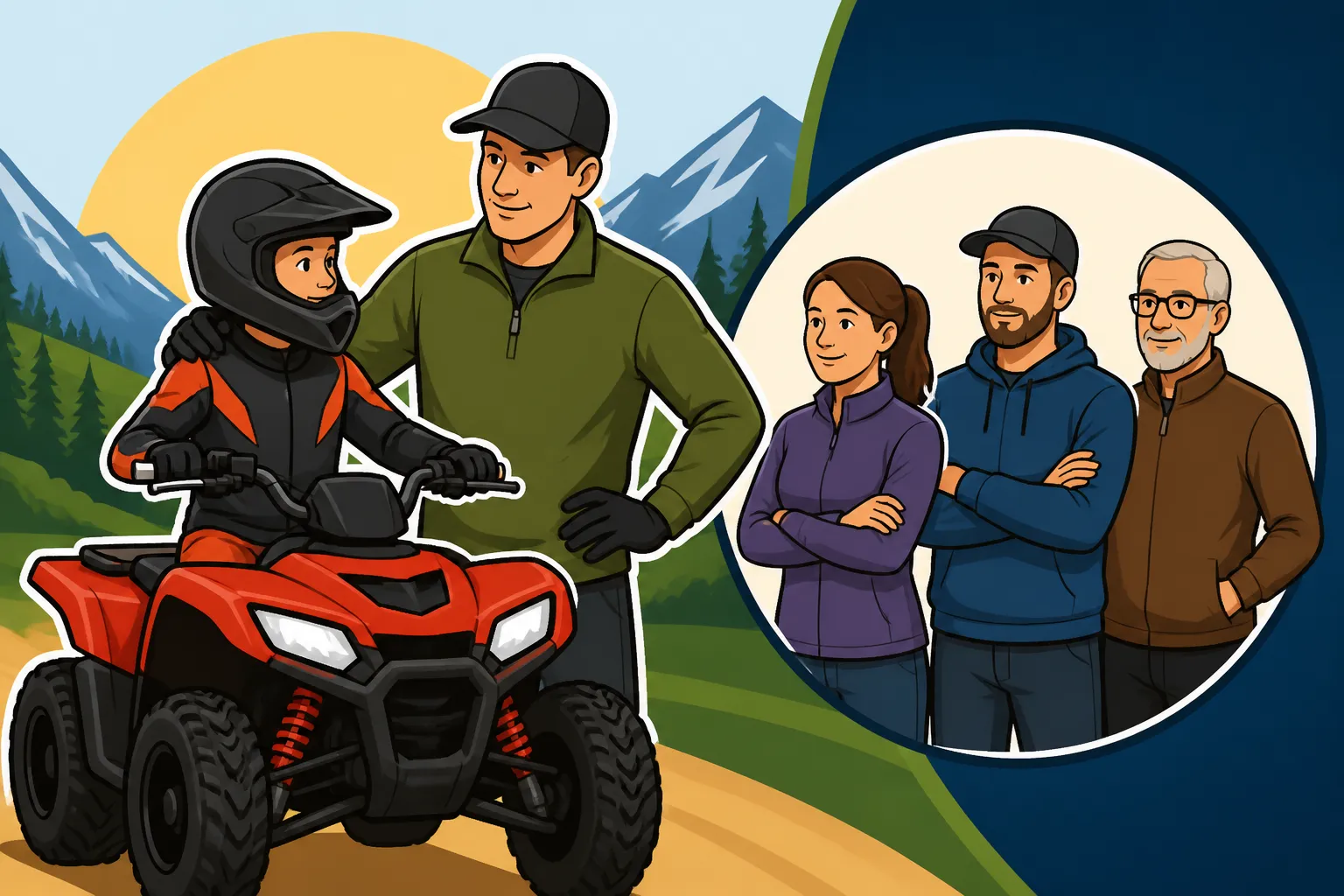
Beyond just seeing the child, true immediate supervision requires the ability to intervene quickly. This means you must be on an OHV yourself, or at least physically capable of reaching the child and their machine without significant delay. If you're walking alongside a child on an ATV while you're on a UTV, you might be visually present, but your ability to quickly intervene if they lose control is limited. The supervisor should be operating a machine that allows them to keep pace with the youth rider and, if necessary, block hazards, guide the machine, or provide direct physical assistance.
Think of it this way: if the young rider suddenly veers off the trail towards a cliff edge or another rider, could you reach them and prevent a disaster within seconds? If the answer is no, you’re likely not providing the "immediate supervision" the state requires. This often means riding at a pace appropriate for the least experienced rider, not setting a speed that only the adults can comfortably maintain. It's a fundamental part of the responsibility that comes with introducing children to OHV riding, and it means putting their safety first, even if it slows down your own ride.
Supervision on Designated Trails vs. Open Areas
The definition and enforcement of "immediate supervision" can subtly shift depending on the riding environment. On a well-defined, designated OHV trail, where hazards are generally marked and traffic is somewhat predictable, immediate supervision still means close proximity and visual contact. However, the dynamics might be different than in an "open riding area" or on an "opened county road." In a wide-open riding area, where riders can spread out more, maintaining visual contact across vast distances becomes impractical and doesn't meet the spirit of the rule.
On an opened county road, where there might be other vehicles (cars, trucks, motorcycles) sharing the route, immediate supervision takes on an even more critical role. The supervisor needs to be acutely aware of traffic, road conditions, and the young rider's responses, ready to intervene instantly. It's not just about what the child is doing, but also what external factors are present. The inherent dangers of shared public roadways often require a more vigilant and hands-on approach to supervision than a closed-loop trail. [What Immediate Supervision Actually Means] offers more clarity on these critical distinctions.
Qualifications for a Supervising Adult
It's not enough to simply be an adult and present. Colorado law also places certain expectations on who can serve as a supervisor for a young OHV operator. This isn't just about age; it's about experience, judgment, and the capacity to effectively manage a dynamic and potentially risky situation. Many families assume any adult can do it, but the law seeks to ensure a competent and responsible individual is at the helm.
Minimum Age and Experience Levels
Colorado law generally requires that a supervising adult be at least 18 years old. This is a baseline, ensuring that the supervisor has reached legal adulthood and, presumably, a certain level of maturity and responsibility. However, age alone isn't the only factor. While the law doesn't explicitly mandate a certain level of riding experience for the supervisor, it's implicitly understood that a supervisor should be competent in operating an OHV themselves and possess a good understanding of trail safety, local regulations, and basic machine operation.
Think about it: how can you effectively supervise a child learning to navigate tricky terrain if you yourself are struggling with your own machine or don't know the proper lines to take? A truly effective supervisor isn't just a warm body; they are a knowledgeable mentor. They should be able to demonstrate correct riding techniques, identify potential hazards before the child encounters them, and provide clear, actionable advice. A supervisor should ideally have enough experience to anticipate common issues young riders face, from stalling on a hill to losing balance in a rut, and guide them through it.
Does the Supervising Adult Need a License in Colorado?
This is a frequently asked question, and thankfully, the answer often simplifies things for supervising parents. In Colorado, the supervising adult does not typically need a specific "OHV license" or a motorcycle endorsement on their driver's license solely for the purpose of supervising a youth OHV operator. As long as the adult is at least 18 years old and competent, they can serve as a supervisor. The state's focus is on the child's safety and the adult's immediate presence, not on specific licensing for the supervisor.
However, there's a critical nuance: if the supervisor is operating their own OHV on a public road or designated trail, they must adhere to all relevant OHV registration and operating laws for their own machine. This includes having a valid [Colorado OHV Registration] sticker displayed on their machine. Furthermore, if the supervisor themselves is operating an OHV on an "opened" county road, they would generally need a valid driver's license, as these roads are considered extensions of the public highway system for OHV use. So while no special license for supervising, general OHV and road rules still apply to the adult's own operation. Our guide [Does the Supervising Adult Need a License in Colorado?] expands on this.
The Role of Responsibility and Judgment
Beyond legal requirements, the most important "qualification" for a supervising adult is a strong sense of responsibility and sound judgment. You are not just monitoring; you are actively ensuring the safety and positive learning experience of a child. This means making judgment calls on the fly: Is this section of trail too difficult for them? Are they getting tired or distracted? Should we turn back because of changing weather?
A good supervisor prioritizes the child's safety over covering ground or sticking to a rigid itinerary. They understand that a child's learning curve isn't linear and that patience and encouragement are paramount. It also involves teaching them good trail etiquette, respect for private property, and environmental stewardship—lessons that extend far beyond just operating a machine. Sometimes, this might even mean deciding not to ride a particular trail or cutting a trip short, even if it's disappointing for the child. That's responsible judgment in action.
Scenarios Where Supervision is Key
Understanding the rules is one thing, but applying them correctly in various riding environments is where the rubber meets the trail. Colorado offers a diverse range of riding opportunities, from winding forest trails to designated open areas and even some county roads. Each scenario presents unique challenges and specific supervisory considerations.
Riding on Public Land and Designated Trails
When you're out on Colorado's vast network of public lands—whether it's National Forests, BLM lands, or State Parks—and utilizing designated OHV trails, "immediate supervision" is non-negotiable for young riders. These trails are often shared with hikers, mountain bikers, horseback riders, and other OHV enthusiasts, increasing the complexity and potential for unexpected encounters. A supervisor's role here is multi-faceted, encompassing not just the child's direct operation but also their awareness of their surroundings.
On these trails, you'll want to ensure the young rider is maintaining a safe speed, staying on the designated path (which prevents resource damage and potential fines), and understanding right-of-way rules. If you encounter a narrow section, a blind corner, or a technical climb, your immediate presence allows you to guide them through it safely, offering real-time instruction and support. Many families enjoy the freedom of trails like those in Taylor Park or on the Grand Mesa, but that freedom comes with the responsibility of careful supervision, especially when teaching the ropes to a beginner. Remember, CPW rangers patrol these areas, and they will enforce the rules.
Navigating Colorado's Opened County Roads
Riding an OHV on an "opened" county road in Colorado adds another layer of complexity to supervision. While exhilarating to connect trail systems or cruise into a small town, these roads introduce elements of traditional vehicle traffic, different speed limits, and specific equipment requirements that don't always apply on a closed trail. As discussed, specific age restrictions often apply to youth riders on these roads, regardless of supervision. Always verify the local county or town ordinance beforehand.
If a young rider is legally permitted to operate on an opened county road, the supervisor's role becomes even more critical. This means being hyper-aware of road signs, speed limits, oncoming vehicles, and potential road hazards like potholes or gravel patches. The supervisor should typically be riding directly behind the young operator, serving as a buffer from any following traffic and being able to signal or instruct the child instantly. This is a high-stakes environment compared to a secluded trail, and the level of vigilance required reflects that. Our article [Colorado's Age Ten Rule for Riding an Opened Road] provides essential information here.
Supervision on Private Land: What Changes?
The rules for OHV operation, including supervision, are significantly different when you're riding on private property that you own or have explicit permission to use. On your own land, Colorado state OHV registration and supervision laws generally do not apply. This is where many families get their start, teaching children the basics in a controlled and familiar environment, far from public traffic and state regulations. This freedom is a huge advantage for learning.
However, even on private land, the spirit of immediate supervision remains paramount for safety. While you won't face legal penalties from CPW for lax supervision on your own property, you're still responsible for the child's well-being. Accidents can happen anywhere, and practicing safe habits, like wearing helmets and eye protection (a good place to mention safety gear from brands like SuperATV, which makes a range of aftermarket safety accessories for OHVs), maintaining visual contact, and intervening quickly, should be standard practice regardless of the legal setting. This is the ideal place for controlled practice before venturing out onto public trails, gradually building skill and confidence without the pressure of regulatory oversight.
Practical Tips for Supervising Young Riders
Simply being present isn't enough; effective supervision involves active engagement, preparation, and continuous communication. As a veteran lifestyle blogger, I've seen countless families on the trails, and the ones who have the smoothest, safest rides are always those who go the extra mile in their supervision. It’s about creating a positive and safe learning environment, not just enforcing rules.
Pre-Ride Briefings and Safety Checks
Before you even turn a key or kick a starter, a thorough pre-ride briefing is essential. This is your chance to set expectations, review rules, and mentally prepare your young rider for the day's adventure. Talk about the specific trail you'll be riding, potential obstacles, and the communication signals you'll use. Emphasize what to do if they get separated or need to stop. Reiterate the importance of staying behind you (or beside you) and maintaining a safe following distance.
Beyond the mental prep, always conduct a physical safety check of both the child's machine and their gear. Are their tires properly inflated? Is the chain tension correct on a dirt bike? Are their brakes functioning? Are their helmet and eye protection properly fitted? Ill-fitting gear is not just uncomfortable; it's a major safety hazard. This routine should become second nature, a habit reinforced every single time you ride. It’s a moment to ensure that the machine is ready for the ride and that the rider is ready for the machine.
Maintaining Constant Communication on the Trail
Once you're moving, maintaining constant communication is vital. This doesn't mean non-stop chatter, but rather a system of clear signals and periodic check-ins. Hand signals are indispensable, especially when engine noise or wind makes verbal communication difficult. Develop signals for "slow down," "stop," "hazard ahead," or "are you okay?" Practice these before you hit the trail. Investing in helmet-to-helmet communicators can be a game-changer, allowing for real-time coaching and encouragement, which can be invaluable for a nervous or learning rider.
Regularly check in with your young rider. Ask them how they're feeling, if they're tired, or if they're finding the trail too challenging. Pay attention to their body language; sometimes a child will try to push through discomfort or fear rather than admitting they're struggling. Your job as a supervisor is to be attuned to these non-verbal cues and make adjustments as needed. Remember, the goal is for them to have a positive experience and build confidence, not to push them beyond their limits.
Teaching Trail Etiquette and Environmental Responsibility
Supervision extends beyond just physical safety; it's also about instilling good values and responsible behavior. Use your time on the trail to teach proper trail etiquette. This includes yielding to uphill traffic, slowing down around hikers and horses, and being courteous to other riders. Explain why these rules exist – to ensure everyone has a safe and enjoyable experience and to preserve access for all.
Environmental responsibility is another huge teaching moment. Explain the importance of staying on designated trails to prevent erosion and protect delicate ecosystems. Discuss "Leave No Trace" principles, teaching them to pack out what they pack in and even pick up litter they might find. Show them how to cross a stream without disturbing the streambed. These lessons turn a fun outing into a valuable educational experience, fostering a lifelong appreciation for Colorado's natural beauty and ensuring these trails remain open for future generations. This is part of the "Stay The Trail" ethic that Colorado Parks and Wildlife promotes.
Consequences of Non-Compliance
Ignoring Colorado's supervision rules for young OHV riders isn't just a matter of principle; it carries real, tangible consequences. These can range from immediate legal penalties to the far more devastating impact of accidents and injuries. No one wants their family adventure to end in a ticket or, worse, a trip to the emergency room, and understanding the risks can help motivate diligent compliance.
Penalties for an Unsupervised Youth Rider
If a Colorado Parks and Wildlife ranger or local law enforcement official encounters a young rider operating an OHV without the required immediate supervision, the consequences can be swift and costly. The supervising adult (or often, the registered owner of the machine) will likely receive a citation. While specific fines can vary, they are often substantial, easily ranging into the hundreds of dollars. This isn't just a slap on the wrist; it's a significant financial penalty that can quickly sour a family outing.
Beyond the initial fine, repeated offenses or particularly egregious violations could lead to more severe penalties, including potential suspension of OHV riding privileges or even impoundment of the machine in extreme cases. The state takes youth safety seriously, and these penalties reflect that commitment. Remember, the rangers aren't out there to ruin your fun; they're there to enforce rules designed to keep everyone safe. It's much easier, and cheaper, to follow the rules than to deal with the aftermath of a citation. For more information, see [Fines for an Unregistered OHV in Colorado], which often covers related violations.
Risk of Accidents and Injuries
The most severe and heartbreaking consequence of inadequate supervision is the increased risk of accidents and injuries. Children, especially those new to OHV riding, lack the experience, judgment, and rapid reaction times of adults. They might misjudge terrain, over-accelerate, lose control, or simply not anticipate hazards. Without an adult immediately present to intervene, guide, or physically prevent an accident, the likelihood of a serious incident skyrockets.
OHV accidents can result in severe injuries, including broken bones, head trauma, and internal injuries, often requiring extensive medical treatment and long-term recovery. These are not just statistics; they are real-life tragedies that can forever alter a child's life and a family's well-being. Investing in quality safety gear, like DOT-approved helmets and sturdy aftermarket protection available from companies like SuperATV, is a good start, but it's no substitute for proper supervision. The rules are in place because OHVs, while incredibly fun, are powerful machines that demand respect and careful handling, especially by young operators.
Impact on Future Riding Privileges and Trail Access
Beyond individual legal and safety consequences, a pattern of non-compliance with youth supervision rules can have broader implications for the OHV community as a whole. When accidents occur, or when regulations are consistently flouted, it provides ammunition for those who advocate for stricter OHV access restrictions or even outright trail closures. Local communities and land managers are constantly weighing the benefits of recreational access against concerns for safety and environmental impact.
Maintaining a good safety record, particularly among youth riders, helps demonstrate that the OHV community is responsible and capable of self-governance. Conversely, a spike in accidents or incidents involving unsupervised youth could lead to increased scrutiny, new regulations, or even the closure of popular riding areas. By diligently supervising young riders, you're not just protecting your own family; you're also helping to preserve access to Colorado's incredible riding opportunities for everyone, ensuring that future generations can continue to enjoy these trails responsibly.
Colorado Youth Rider Supervision Summary
| Age Group | General Rules for Public Lands/Trails (Requires OHV Permit) | Supervision Requirements (Generally) | Notes on Opened County Roads |
|---|---|---|---|
| Under 10 Years Old | Cannot operate OHV on public roads/trails, even if "opened" or supervised. | Strict, direct, line-of-sight supervision required on private land only. | Prohibited on "opened" public roads, even with supervision. |
| 10 – 15 Years Old | May operate OHV on designated public trails and "opened" county roads. | Must be under immediate supervision of an adult 18+. | May ride on "opened" roads with immediate supervision, subject to local ordinance. |
| 16 – 17 Years Old | May operate OHV on designated public trails and "opened" county roads. | Immediate supervision required, unless they hold a valid driver's license. | If licensed, may ride unsupervised on "opened" roads. If not, needs supervision. |
| 18 Years and Older | May operate OHV independently on designated public trails and "opened" county roads. | No supervision required for self. Can supervise younger riders. | Must have valid driver's license to operate on "opened" roads. |
Note: This table summarizes general state-level rules. Always check local county and municipal ordinances, as specific rules for "opened roads" can vary.
Disclaimer
This article is for general informational purposes only and does not constitute professional advice. Laws, prices and regulations vary by location and change over time. Consult a qualified professional for guidance on your specific situation.