Winching on a Narrow Shelf Trail
A UTV can lose traction on a narrow shelf trail in seconds: a tire slips toward the edge, a rock blocks the line, or another vehicle leaves too little room to turn around. Winching may help, but a rushed pull can make a precarious situation worse. This guide explains how to assess the scene, choose a safer recovery plan, and reduce risk on Colorado’s exposed mountain routes.
Decide whether winching is the safest option
Pause before you touch the winch
When a machine is stuck on a shelf, the first instinct is often to pull it forward or backward before it slides farther. Take a moment instead. Keep everyone seated or positioned on stable ground away from the vehicle’s possible path, and avoid sudden steering, throttle, or braking inputs. A tire spinning near an edge can loosen the surface beneath it, while an abrupt tug can shift the machine unexpectedly.
Look at the whole situation, not just the stuck tire. Is the UTV leaning downhill? Is it perched on loose rock, mud, or a crumbling shoulder? Could the vehicle roll if tension changes? Does the cable’s path cross the trail where another rider could walk or drive? If any answer raises concern, stop and reassess. A winch is equipment, not a guarantee that a recovery is safe.
A short, stable trail section may allow a careful self-recovery. A steep sidehill, unstable edge, damaged vehicle, or poor anchor position may call for a different plan, such as clearing loose material, using a suitable recovery point, or waiting for experienced help. For broader planning, Riding a Narrow Shelf Road Safely covers the kind of terrain judgment that matters before a recovery starts.
Check the route and the surroundings
Before choosing a direction, identify where the machine can realistically go. A pull toward the trail’s inside may be safer than pulling toward the drop, but only if the route is clear and the vehicle can move without striking a rock wall, another machine, or a person. Do not assume that reversing is safer simply because it is the shortest option. The reverse route may be narrower, steeper, or less stable than the route ahead.
Also check whether there is room to stage the recovery. On a narrow trail, a second vehicle can block traffic or leave no safe place for people to stand. Keep the area clear of bystanders, and ask other riders to wait at a wider spot rather than bunching up near the recovery. If an oncoming machine is involved, avoid trying to maneuver both vehicles past each other while one is under tension. Passing an Oncoming Jeep on a Shelf Road offers useful context for handling that kind of tight encounter.
A map can help you understand what lies beyond the immediate obstacle, but it cannot tell you whether a particular anchor is sound or a trail edge will hold weight. Use mapping tools such as onX Offroad to review route options and nearby junctions before a trip, then verify access and conditions using official land-manager information. If the trail ahead is closed, blocked, or beyond the group’s capability, recovery should not become a reason to continue into more dangerous terrain.
Set up the recovery with care
Choose a direction, anchor, and attachment point
A recovery plan should have one clear objective: move the machine a short distance onto stable ground, not drag it through the entire obstacle. Before connecting anything, decide where the vehicle needs to end up and whether the pull can stay as straight as practical. A severe sideways pull can increase the chance of tipping or shifting the machine, especially when it is already leaning on a slope.
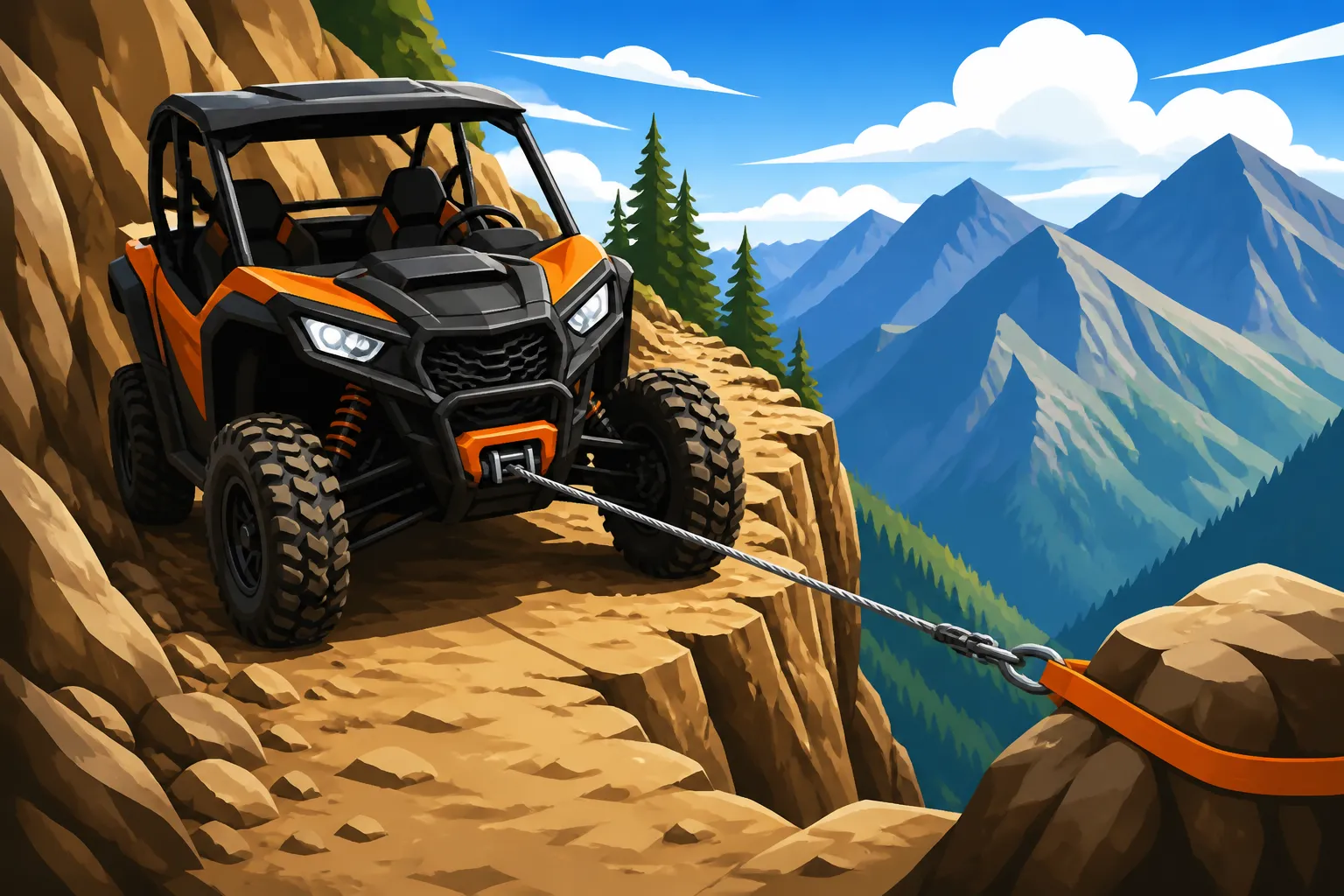
Use only a recovery point intended for winching, and check the vehicle and winch manufacturer’s instructions. A decorative bumper, suspension component, tie-down loop, or improvised attachment may not be designed for recovery loads. If the manufacturer does not identify an appropriate recovery point, do not guess. A sound anchor matters just as much: a tree, if present and permitted for use, must be healthy and substantial enough for the load, with a suitable tree-protector strap. Never wrap a winch line directly around a tree trunk.
On exposed alpine routes, there may be no good natural anchor. Do not attach to a loose boulder, a questionable fence, another vehicle parked on an unstable shoulder, or anything that might pull free. Avoid damaging vegetation or terrain, and follow land-manager rules. If you cannot identify a reliable anchor and recovery path, stop rather than improvising. Recovery Gear for a Shelf Road is a helpful companion when building a kit before you leave home.
Inspect the gear and keep people out of the danger zone
Check the winch line for fraying, kinks, cuts, crushing, or other damage. Inspect the hook, connections, fairlead, and anchor strap too. A worn component can fail under load, and a cable or synthetic line under tension can injure someone if it breaks or releases suddenly. Keep hands clear of the line and use the equipment as directed by its manufacturer.
Before the pull, make sure no one is standing in the line’s path, inside a loop, between the machine and anchor, or downhill of a vehicle that could roll. People should stand well clear of the recovery area, preferably behind a substantial barrier if one is available. A blanket or purpose-made line damper may help reduce the movement of a line if it fails, but it does not make standing nearby safe.
Use a spotter only if that person can stay in a safe position and communicate clearly with the operator. Agree on simple stop signals before tension is applied. If the operator cannot see the spotter, use a reliable communication method rather than relying on shouting over wind, engines, or distance. A recovery should stop immediately if the line shifts, the anchor moves, the machine leans farther, or anyone enters the danger area.
| Recovery choice | When it may make sense | Main concern |
|---|---|---|
| Carefully clear or reposition loose material | The machine is stable and the obstacle is small | People must stay clear of tires and pinch points |
| Short winch pull to stable ground | The anchor, recovery point, and route are sound | Tension can shift the vehicle or damage gear |
| Wait for experienced recovery help | The vehicle is unstable or the setup is uncertain | Avoid making the situation worse while waiting |
| Turn back or stop the trip | The route ahead is unsafe, closed, or beyond the group’s ability | Do not let sunk costs push the group into more risk |
Operate slowly and watch for changing conditions
Keep the pull controlled
Once the recovery is set, remove slack carefully and check that the line is seated correctly. Apply tension gradually, following the winch manufacturer’s instructions. Avoid using high throttle to force the vehicle forward while the winch is pulling; the combined force can make movement harder to control and can overload equipment. The goal is a measured movement onto a stable surface, not a dramatic surge.
Watch the machine’s tires, body angle, anchor, and line throughout the pull. The operator should stop if the tires begin to dig, the vehicle tilts more sharply, the anchor shifts, or the line starts rubbing against a rock or sharp edge. Do not continue simply because the winch is still operating. A changing angle can turn a manageable recovery into a rollover risk.
If the vehicle moves, pause once it reaches stable ground and reassess before disconnecting. Keep tension controlled while the operator follows the equipment’s instructions for releasing the load. Do not reach into a loaded line or stand between the machine and its anchor to remove gear. Afterward, inspect the vehicle and recovery equipment for damage before deciding whether it is safe to ride onward.
Know when to stop and get help
A winch should not be used to overcome every problem. Stop if the vehicle is sliding, if the anchor is moving, if the line or recovery point is damaged, or if the only available pull would drag the machine toward an edge. Also stop if the operator or spotter cannot communicate, the weather is worsening, or the recovery area is becoming crowded.
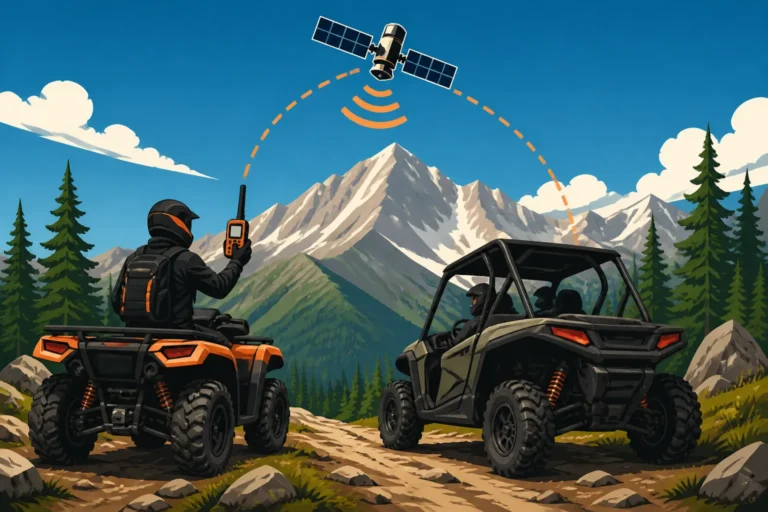
If a rider is injured, a vehicle is at risk of going over an edge, or the machine blocks a route in a way that creates immediate danger, prioritize people’s safety and contact emergency services when appropriate. Do not put another vehicle in an unstable position just to make the recovery faster. If the group needs to wait for assistance, move people to a secure location when it is safe to do so, keep the trail area as clear as possible, and conserve phone or satellite-messenger battery.
On Colorado mountain trails, conditions can change quickly. Loose rock, water, rain, snow, and afternoon storms may affect traction and visibility. A route that looked manageable on the way up may feel very different when you are tired or returning downhill. Check Colorado Trail Conditions Reports and seasonal access information before setting out, and remember that a report cannot guarantee what you will encounter at a particular spot.
Reduce the chances of a shelf-trail recovery
Prepare before the ride
Preparation starts with matching the route to the machine and the group. Consider width, ground clearance, tires, passenger load, driver experience, and whether the route has exposed sections or limited passing areas. Do not assume a vehicle that fits on the trail will have room to turn around once conditions become difficult. Review route information in advance with onX Offroad, and compare it with official maps and posted signs. Reading a Colorado Motor Vehicle Use Map explains why checking designated routes matters.
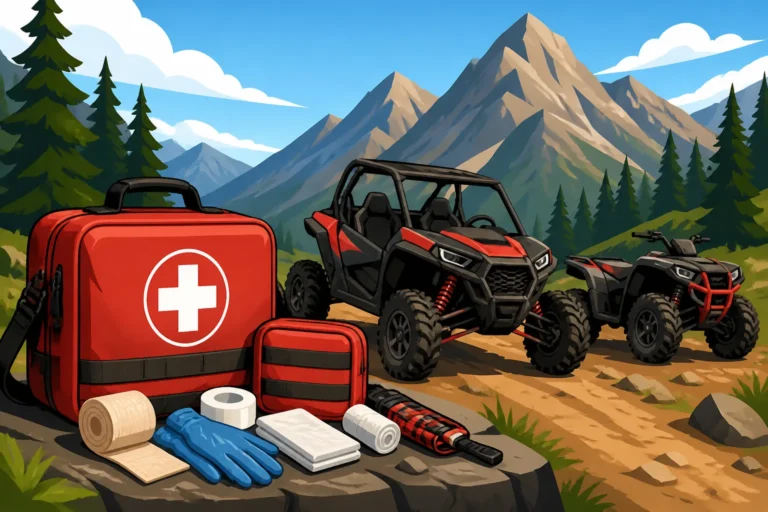
Carry recovery equipment that is compatible with the vehicle and learn how to use it before the trip. Read the winch and vehicle manuals, inspect gear at home, and practice basic procedures in a flat, open area with an experienced person. A recovery kit may include suitable gloves and rated recovery accessories, but gear should be selected and used according to the manufacturers’ directions. A kit is only useful if the group knows its limits and can identify when not to use it.
Plan for communication and changing weather as well. Tell someone where you intend to ride and when you expect to return. Carry navigation that does not depend entirely on cell service; onX Offroad can help with route planning, but download or prepare the information you need before entering a dead zone. Bring warm layers, water, food, and a way to call for help. What to Carry Over a High Pass can help you think through the rest of a remote-day kit.
Protect the trail and make the call to turn around
Repeated wheelspin, dragging a machine sideways, or pulling an anchor across fragile ground can damage a trail. Stay on the designated route, avoid widening the track to make room, and do not cut switchbacks or detour around an obstacle onto vegetation. Colorado trail access depends on responsible use, and a quick recovery that scars the hillside can create problems for other riders and land managers. Colorado Trail Damage and Resource Protection covers the broader reasons to keep recovery work on the established route.
Before continuing after a recovery, check whether the original cause has been addressed. If a tire slipped because of mud, loose rock, snow, or a steep off-camber line, the next section may present the same problem. A small change in approach may help, but only if the route remains safe and legal. If the machine is damaged, the weather is deteriorating, or the group is fatigued, turn around when there is a safe opportunity.
Using onX Offroad to review alternate routes before the ride can help a group avoid being surprised by a dead end or difficult connection. Still, a mapped route is not permission to leave a designated trail, and a line on a screen cannot replace an on-the-ground assessment. When the safest choice is to stop, backtrack carefully, or seek help, that is a sound decision—not a failed ride.
Disclaimer
This article is for general informational purposes only and does not constitute professional advice. Laws, prices and regulations vary by location and change over time. Consult a qualified professional for guidance on your specific situation.