Riding Rabbit Valley in Spring
Rabbit Valley’s desert trails near the Utah line can look inviting in spring, but a sunny morning does not guarantee firm ground or open routes. Rain, lingering snow, wind, and changing trail conditions can turn a fun ride into a muddy recovery job. This guide explains how to plan a safer spring ride, choose suitable routes, check access, and protect the landscape.
Plan for changing spring conditions
Expect a mix of weather and trail surfaces
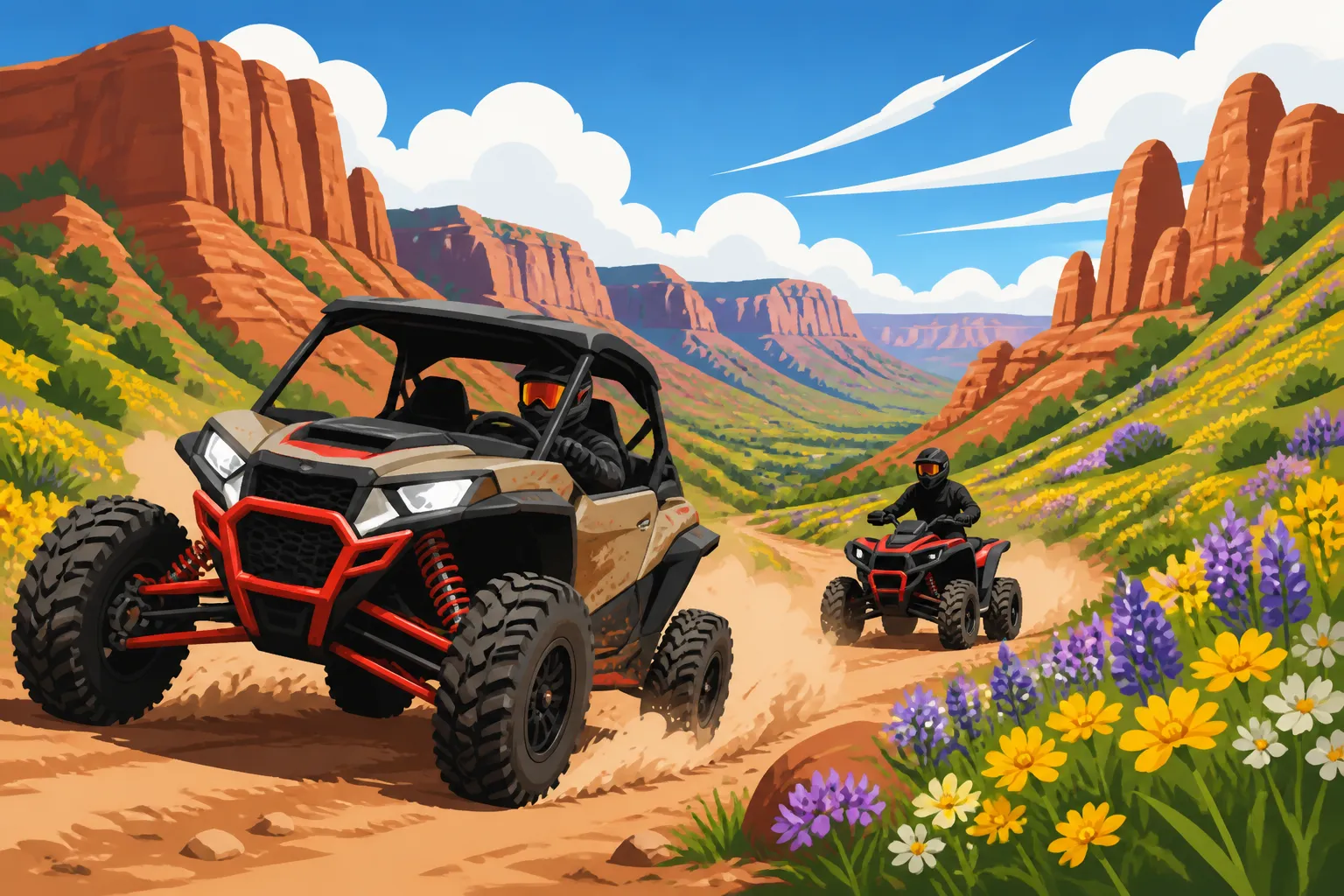
Rabbit Valley sits in western Colorado’s high-desert country near Mack and the Utah border. Spring can bring comfortable riding weather, but conditions are changeable: a warm, dry afternoon may follow a cold night, and a passing storm can leave some routes slick or muddy. Wind and blowing dust can also affect visibility, especially on exposed stretches.
The main planning mistake is judging the entire area by the weather at the trailhead. Shaded dips, washes, and north-facing slopes can hold moisture or snow longer than nearby open ground. A route that felt manageable on a dry day may become harder after rain, with clay-like mud collecting on tires and making it difficult to steer or stop.
Check the forecast for the area you intend to ride, not only for Grand Junction. Before unloading, look at the surface around the staging area and ask whether recent precipitation has affected the routes. If the ground is soft enough that tires are leaving deep ruts, turn back or choose another activity. Waiting for the surface to dry is often safer than trying to push through.
Choose a route that fits the conditions
Start with a conservative loop, particularly if you have not ridden Rabbit Valley before or are bringing a new machine. A short ride gives you a chance to see how the ground, wind, and visibility are behaving before committing to a longer outing. Keep enough fuel and daylight in reserve to return by the route you planned, rather than relying on an untested shortcut.
Route difficulty is only part of the decision. Consider your machine’s width, ground clearance, tires, and the experience of everyone riding with you. A trail that seems simple on a map can feel very different when it is narrow, rutted, rocky, or wet. If someone in the group is unsure, agree in advance that turning around is a normal option—not a failure.
For background on the area’s riding character and route planning, see [Rabbit Valley Desert Trail Riding]. If you are considering camping as part of the trip, review [Rabbit Valley Camping Near the Utah Line] as well, and confirm that your chosen campsite and route are allowed and accessible.
Check access, maps, and permits before unloading
Confirm that your route is open and designated
Do not assume that a road or visible tire track is open to motorized use. In public-land areas, access can depend on designated routes, seasonal restrictions, resource-protection measures, and temporary closures. A route appearing on an old map—or in a navigation app—does not by itself establish that it is currently open to your vehicle.
Review the applicable Bureau of Land Management information and posted signs before riding. Check for temporary closures or other notices close to your departure, then follow signs at the trailhead and along the route. If signs conflict with a saved track or app display, follow the posted restriction and verify the route with the land manager. [Colorado Trail Closures and Where They Are Posted] offers a useful reminder to check for changes before heading out.
A navigation app such as onX Offroad can help you plan and follow routes, but use it as one part of your preparation—not as permission to ride every line shown. Download maps before leaving reliable cell coverage, confirm that your selected routes are designated for motorized use, and carry a backup map or offline navigation option. [Reading a Colorado Motor Vehicle Use Map] can help you understand how to check route designations.
Sort out permits and staging
Before the trip, check which registration or permit applies to each machine and the land where you plan to ride. Requirements can differ depending on whether a machine is Colorado-registered, from another state, or plated for road use. Do not assume that a plate or an out-of-state sticker automatically meets every Colorado requirement. See [Colorado OHV Permits for Out-of-State Riders] if you are visiting with a machine registered elsewhere.
Plan where you will park, unload, and turn around with your trailer. A tight staging area or crowded access point can make the first and last part of a ride stressful, especially when several machines arrive together. Use established parking areas, avoid blocking roads or gates, and do not create a new pullout by driving over nearby vegetation. For more preparation, see [Colorado Trailhead Parking and Staging].
| Before you go | What to confirm | Why it matters |
|---|---|---|
| Route access | The route is designated for your machine and is not closed | Maps and saved tracks may not reflect every restriction |
| Ground conditions | Recent rain, snow, mud, or soft surfaces | Wet ground can increase slipping and trail damage |
| Permit or registration | Requirements for each machine and rider | Registration and permit rules may vary by situation |
| Navigation | Offline map, backup route information, and return plan | Cell coverage may be limited away from main roads |
| Staging | Legal parking, unloading space, and trailer turnaround | Helps prevent blocked access and damage near trailheads |
| Fuel and supplies | Enough fuel, water, food, and basic recovery items | Services may be a drive away from the riding area |
Ride with desert conditions in mind
Protect the ground when it is wet or fragile
The simplest rule for spring riding is to avoid making a bad surface worse. If tires are digging in, spinning, or leaving deep tracks, stop and reassess. Continuing can widen ruts, damage vegetation, and make the route more difficult for other riders. Mud also clings to tires and chassis, so a small amount of slipping can quickly become a traction and control problem.
Stay on designated routes rather than riding around a muddy section. Going around an obstacle may appear harmless, but repeated detours can create new tracks and disturb land outside the route. If a section is too wet or difficult to cross without causing damage, turn around where it is safe and choose a different route or another day.
Pack out food wrappers, bottles, broken parts, and other waste. Keep noise considerate near other visitors and avoid disturbing wildlife. Spring is a sensitive time in many natural areas, and giving animals room is part of responsible riding. [Colorado Trail Damage and Resource Protection] has more on minimizing the impact of a ride.
Prepare for remote stretches and changing visibility
Rabbit Valley is not a place to count on uninterrupted phone service. Tell someone where you plan to ride and when you expect to return. Keep your route plan simple enough that you can explain it, and agree on a regrouping point if riders become separated. If the group’s pace changes or the weather turns, shorten the ride rather than trying to complete the original plan at all costs.
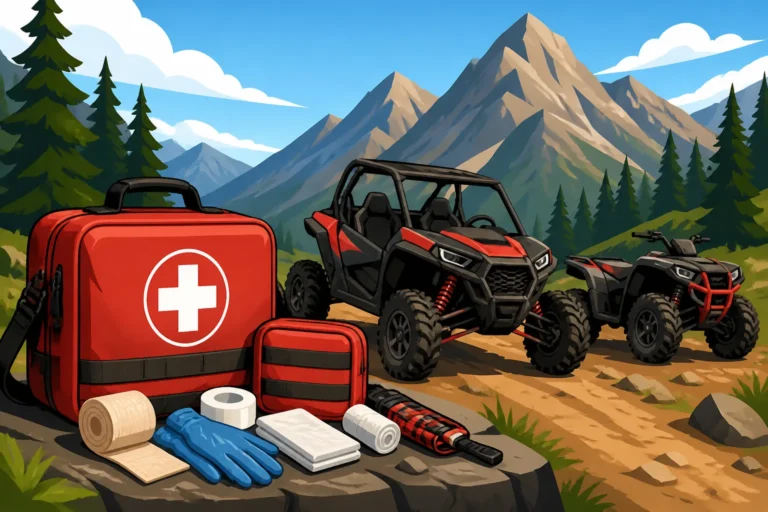
Bring water even when the day feels cool. Desert air, sun, wind, and the physical effort of riding can leave people dehydrated before they notice it. Sunglasses or goggles help with dust, and an extra layer is useful when a warm afternoon gives way to a chilly ride back. Carry basic tools suited to your machine, a first-aid kit, and recovery gear you know how to use.
Fuel planning matters because an improvised detour or slow, slippery route can use more fuel than expected. Start with a full tank where practical, account for the planned distance and machine, and do not treat the last reserve as part of the route plan. [Fuel Planning for a Colorado Trail Day] covers the same useful habit for rides farther from services.
Build a flexible spring itinerary
Use a conservative first-day plan
If this is your first visit, leave room in the schedule for checking conditions and getting oriented. Arriving early can make it easier to park, unload, review signs, and choose a route without feeling rushed. Begin with an easier ride, then decide whether conditions and the group’s comfort level support going farther.
Keep the plan flexible. If you find wet ground, a closure, strong wind, or a route that is beyond the group’s ability, change course. You can still have a good day by riding a shorter open route, taking a break, or returning when conditions improve. A spring itinerary should have a clear turnaround point and a realistic finish time, not just a destination.
If you are traveling from outside the area, leave time to check local updates shortly before departure. Spring access can change with weather and land-management decisions, so an itinerary planned well in advance may need adjustment. [Colorado Trails Open in June] is useful if you are weighing whether to postpone a ride until later in the season.
Make the trip easier for everyone in the group
Before leaving the staging area, confirm that each rider knows the route, expected pace, and regrouping plan. Ask whether anyone is uncomfortable with a particular section. A beginner may be happy to ride a shorter loop while more experienced riders take a longer route, but only if the group has a clear way to communicate and reconnect.
Keep riders within sight or agree on regular stops where the group can check in. Avoid pressuring someone to follow a line they do not feel confident taking. In a UTV, make sure passengers understand how to use seat belts and follow the driver’s instructions; on an ATV, consider whether the rider’s skill and the route are a sensible match.
When you return, check the machine for mud buildup, loose parts, or damage before towing out. Clean it without washing debris into a sensitive area, and make a note of any route conditions you want to remember. That small debrief helps you plan the next visit—and helps keep a spring ride at Rabbit Valley enjoyable without treating the desert as indestructible.
Disclaimer
This article is for general informational purposes only and does not constitute professional advice. Laws, prices and regulations vary by location and change over time. Consult a qualified professional for guidance on your specific situation.