The Montana LLC Route and What Colorado Owners Risk
It's no secret that owning an ATV or UTV in Colorado comes with certain costs, and chief among them is the sales tax. For many enthusiasts, that initial sticker shock, coupled with ongoing registration fees, can make them start looking for creative ways to minimize expenses. One strategy that often surfaces in online forums and informal conversations is the "Montana LLC route." It sounds appealing on the surface – avoiding Colorado sales tax by registering your machine in Montana, a state famously without sales tax. But before you dive headfirst into this seemingly clever workaround, it's crucial to understand the significant risks and potential pitfalls involved, especially for Colorado residents. This guide will meticulously unpack what the Montana LLC strategy entails, the specific dangers it poses, and why taking the proper, legal Colorado path is almost always the safer, less stressful option.
Understanding the Montana LLC Strategy
The idea of setting up a Montana LLC to register your off-highway vehicle (OHV) can sound like a brilliant move to save some serious cash, particularly on sales tax. Let's dig into what this strategy actually involves and why it's often more illusion than legitimate loophole for Colorado residents.
What is a Montana LLC, and How Does it Relate to OHVs?
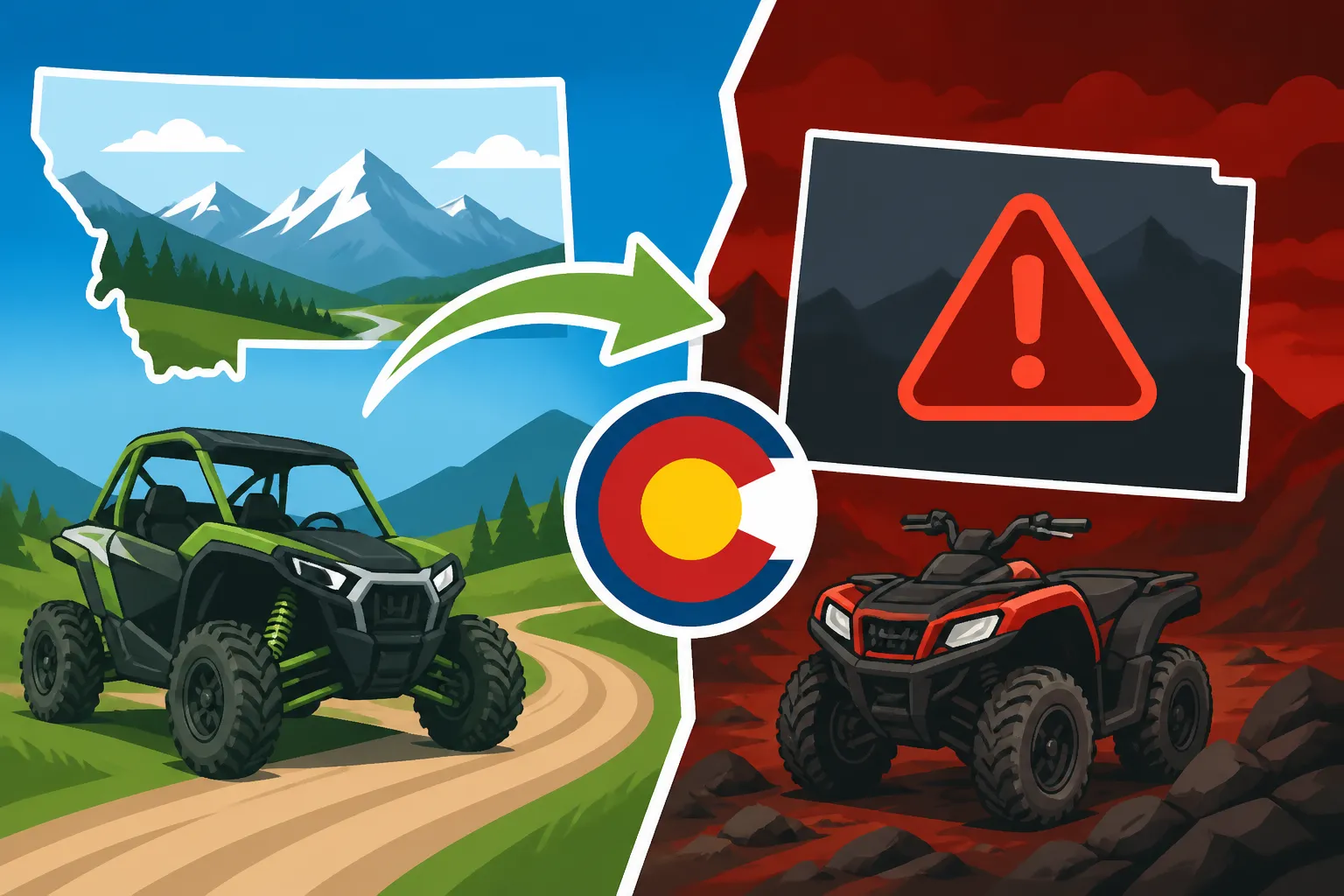
At its core, a Montana Limited Liability Company (LLC) is a business entity formed under Montana law. The appeal of Montana for vehicle owners, particularly those from states with high sales tax, is simple: Montana does not have a statewide sales tax. This means that if you purchase a vehicle, including an ATV or UTV, in Montana and register it in Montana through a Montana-based LLC, you technically don't pay sales tax at the point of sale.
The strategy, as typically promoted, goes something like this: A Colorado resident forms an LLC in Montana. They then purchase their ATV or UTV, but the bill of sale lists the Montana LLC as the buyer, not the individual. The OHV is then titled and registered in Montana under the LLC's name. Because the LLC is a Montana entity, and Montana has no sales tax, the argument is that no sales tax is owed on the purchase. Furthermore, Montana's annual registration fees are often lower than those in many other states, adding to the perceived savings. This also creates a layer of perceived privacy, as the vehicle's ownership is tied to the LLC rather than directly to the individual.
The "Non-Resident" Loophole Illusion
The entire premise of the Montana LLC strategy for out-of-state residents hinges on the idea that if the vehicle is legally owned by a Montana business entity, it is therefore a "Montana vehicle," and the owner (even if they are the sole member of the LLC and live elsewhere) is simply using a company asset. This often creates the illusion of a legitimate loophole for non-residents. However, this is where the strategy often runs into significant trouble, especially with states like Colorado that have robust laws regarding sales tax and vehicle registration.
The critical fallacy lies in the distinction between legal ownership by an LLC and the actual "situs" or primary location and use of the vehicle. While the Montana LLC might be the legal owner on paper, if the individual who owns and operates that LLC is a resident of Colorado, and the OHV is primarily stored, used, and operated within Colorado, then Colorado's laws generally apply. State tax authorities and vehicle registration agencies are not oblivious to these tactics. They often look beyond the name on the title to determine where the vehicle genuinely belongs and where its primary user resides. If it’s determined that the Montana LLC was formed solely for the purpose of avoiding taxes in your home state, rather than for a legitimate business purpose in Montana, you could face severe repercussions. This isn't just a matter of avoiding sales tax; it's about navigating the complex legal landscape of multi-state tax and registration requirements, which can quickly turn into a headache.
The Specific Risks for Colorado OHV Owners
For Colorado residents considering the Montana LLC route for their ATV or UTV, the perceived benefits often dramatically outweigh the very real and substantial risks. Colorado takes its tax and registration laws seriously, and attempts to circumvent them can lead to significant financial penalties and legal trouble.
Colorado Sales Tax and Use Tax Scrutiny
Colorado has a statewide sales tax that applies to the purchase of vehicles, including ATVs and UTVs. When you buy a machine from a dealer within Colorado, they're typically responsible for collecting this sales tax at the time of purchase. However, the Montana LLC scheme tries to bypass this by making the purchase through a Montana entity, where sales tax is not collected.
This is where Colorado's "use tax" comes into play, and it's a huge trap for the Montana LLC strategy. Colorado's use tax is essentially a sales tax by another name, applied when you purchase an item outside of Colorado but bring it into the state for use, storage, or consumption, and no equivalent sales tax was paid at the time of purchase. If you, a Colorado resident, operate an OHV in Colorado that is owned by a Montana LLC, Colorado's Department of Revenue (CDOR) will almost certainly consider that machine to be primarily "used" in Colorado. The CDOR often scrutinizes these arrangements, viewing the individual (the sole member of the Montana LLC) as the true beneficial owner and the OHV's primary situs as Colorado. This means you could be on the hook not only for the full Colorado sales/use tax amount – which can be substantial given state and local rates – but also for interest and penalties stretching back to the date of purchase. For anyone hoping to save money, the potential back taxes, penalties, and interest can quickly erase any perceived savings and then some. For more on what you'd typically pay, check out [Colorado Sales Tax on an ATV Purchase] and [Colorado Sales Tax Rate on an ATV].
Registration and Titling Requirements in Colorado
Beyond sales tax, Colorado has clear requirements for titling and registering OHVs that are primarily operated within the state. Colorado Parks and Wildlife (CPW) requires that all OHVs operated on public lands in Colorado, or on private lands for public recreational use, have a valid Colorado OHV registration sticker. This requirement applies to all OHVs, regardless of where they are titled or registered if their primary use is in Colorado.
If your OHV is owned by a Montana LLC but you, a Colorado resident, are primarily using it for recreation on Colorado's extensive trail system, then you are expected to have a current Colorado OHV registration. The fact that the OHV is titled in Montana under an LLC does not exempt you from Colorado's registration laws. CPW rangers and local law enforcement are well aware of the Montana LLC strategy and are increasingly vigilant. An OHV with Montana plates being operated regularly by a Colorado resident on Colorado trails is a red flag. While the concept of a title versus a registration can be confusing, it’s important to remember that Colorado has distinct requirements for each. You can learn more about this nuance in [Colorado OHV Title Versus CPW Registration]. Furthermore, bringing an out-of-state machine into Colorado requires you to understand [Registering an Out-of-State Machine in Colorado].
Legal Consequences and Penalties
The risks associated with the Montana LLC strategy extend far beyond simply having to pay back taxes. You could face a range of severe legal consequences and penalties.
Firstly, if the Colorado Department of Revenue determines you intentionally avoided paying sales or use tax, you could be subject to significant fines and penalties. This isn't just an oversight; it could be interpreted as tax evasion, which carries much more serious implications. These penalties can include a percentage of the unpaid tax, plus interest accruing from the original due date. Imagine buying a high-end side-by-side for $30,000. Depending on your local sales tax rates, the combined state and local tax could easily be 5-8%, meaning $1,500 to $2,400. If an audit uncovers this years later, with penalties and interest, that figure could easily double or triple. For more about the typical costs, refer to [Colorado OHV Registration Fee This Season].
Secondly, operating an OHV that is not properly registered in Colorado (even if it has a Montana registration) can lead to citations and fines. Colorado Parks and Wildlife officers regularly patrol trailheads and public lands. If they encounter an OHV with out-of-state registration being operated by a Colorado resident, they may investigate. The penalties for an unregistered OHV in Colorado can quickly add up. A first offense might be a warning or a relatively modest fine, but repeat offenses can escalate, potentially leading to more substantial penalties or even the impoundment of your vehicle. The state has an interest in ensuring that all trail users contribute to the upkeep and maintenance of the very trails they enjoy, which is why [Where Colorado OHV Registration Money Goes] is a crucial point.
Lastly, there's the risk of the "corporate veil" being pierced. This is a legal term meaning that a court or tax authority can disregard the LLC's separate legal identity and hold the individual owner personally responsible for the LLC's debts and liabilities. If the Montana LLC is found to be a shell company created solely to avoid taxes, without any legitimate business purpose in Montana, a court could decide it's not a real business entity, thus stripping away the protections an LLC typically provides. This could mean you're personally liable for all back taxes, penalties, and any other legal issues the LLC was supposedly protecting you from. It’s a gamble that often doesn’t pay off.
Practical Headaches and Hidden Costs
Beyond the legal and financial risks of tax evasion and penalties, the Montana LLC route often introduces a slew of practical headaches and hidden costs that erode any perceived savings. What looks like a simple way to save money can quickly become an administrative nightmare.
Ongoing LLC Maintenance and Costs
Forming a Montana LLC isn't a one-and-done deal. To keep the entity in good standing, you'll incur annual expenses that can quietly eat into your savings. First, there are the annual fees for maintaining the LLC with the Montana Secretary of State. These fees, while not exorbitant, are recurring.
Then, unless you are a bona fide resident of Montana and have a physical address there, you'll almost certainly need to hire a registered agent service. This is a person or company legally designated to accept service of process (legal documents) on behalf of your LLC. These services charge annual fees, typically ranging from $50 to $200 or more per year. While services like LawDepot can help you form the LLC initially with the necessary documents like an operating agreement and articles of organization, they don't typically manage the ongoing registered agent requirement or remind you about annual state filings. Neglecting these annual requirements can lead to your LLC losing its good standing or even being administratively dissolved by the state of Montana, further complicating your vehicle's ownership. The administrative burden of tracking these dates and ensuring compliance for a vehicle you just want to ride on the weekends quickly outweighs the convenience.
Insurance Complications
Insuring an OHV owned by an out-of-state LLC but primarily operated by a Colorado resident presents another significant hurdle. Insurance companies assess risk based on several factors, including the primary location of the vehicle and the residence of its primary operator. If your OHV is titled to a Montana LLC but you live in Colorado, insurance companies may become wary.
Some insurers might refuse to provide coverage at all, or they might offer a policy but charge significantly higher premiums due to the unusual ownership structure. More critically, if you ever need to file a claim – say, after an accident on a Colorado trail or if your side-by-side is stolen – the insurance company could investigate the ownership structure. If they discover that the Montana LLC was primarily set up to avoid taxes in Colorado and that the vehicle's true "situs" is not Montana, they might deny your claim entirely. This could leave you on the hook for thousands of dollars in repairs or replacement costs, completely negating any perceived tax savings. It's a risk that many riders aren't willing to take, especially when comprehensive [Insuring an ATV in Colorado] is readily available through conventional means.
Resale Value and Transfer Issues
When the time comes to sell your ATV or UTV, a Montana LLC title can throw a wrench into the process, especially if your buyer is also a Colorado resident. For a Colorado buyer, purchasing an OHV from a Montana LLC essentially means they are buying a machine that has not had Colorado sales tax paid on it. This means the buyer will then be responsible for paying Colorado sales tax when they register the OHV in their own name.
This added burden can make your OHV less attractive to potential buyers, or it might force you to lower your asking price significantly to compensate for the tax burden the buyer will face. Furthermore, transferring ownership from an LLC, even if it's a single-member LLC, can add administrative steps for both the seller and the buyer. The process might involve ensuring the LLC is in good standing, properly executing a bill of sale on behalf of the LLC, and potentially navigating questions from the Colorado DMV or CPW about the vehicle's history. Financing can also become complicated; lenders might be hesitant to finance a vehicle with an out-of-state LLC title for a Colorado resident, adding another layer of difficulty to your sale. These are just some of the reasons why understanding [Buying a Used ATV in Colorado: The Paperwork] is so vital for both parties.
Legitimate Reasons for a Montana LLC and When It Makes Sense
While the Montana LLC route is fraught with peril for Colorado residents trying to avoid sales tax on personal OHVs, it's important to clarify that Montana LLCs are not inherently illegal or improper. There are perfectly legitimate business reasons why someone might establish an LLC in Montana and title vehicles under it. The key distinction lies in the intent and the primary use of the vehicle and the business.
Business Operations and Commercial Use
A Montana LLC makes perfect sense for businesses that genuinely operate in Montana. For example, if you own and operate an ATV/UTV rental fleet based in West Yellowstone, Montana, or if you run a guided hunting and fishing outfitting service out of a Montana lodge, then forming a Montana LLC to own and register your fleet of OHVs is a completely legitimate business decision. In such cases, the LLC is truly part of a Montana-based commercial enterprise, and the vehicles' primary situs and use are within Montana.
Similarly, if a company is headquartered in Montana and its operations (whether in agriculture, construction, or tourism) require a fleet of OHVs, then owning and registering those vehicles under a Montana LLC is a standard and appropriate business practice. The sales tax benefit in this scenario is a natural consequence of conducting legitimate business within a state that has no sales tax, not an attempt to evade taxes in another state.
True Montana Residency or Business Domicile
The crucial element that separates a legitimate Montana LLC vehicle registration from a tax evasion scheme is genuine connection to the state of Montana. If you are a bona fide resident of Montana, or if your primary business operations and physical presence are truly located in Montana, then forming an LLC there and registering vehicles under it is entirely proper. For instance, a full-time resident of Bozeman, Montana, who purchases an ATV for personal recreational use, would naturally register it in Montana, potentially under an LLC if they choose, and benefit from Montana's tax laws.
The problem arises when individuals who are clearly residents of another state (like Colorado) try to leverage a Montana LLC as a fiction to avoid their home state's taxes and regulations. Authorities in states like Colorado are very sophisticated in determining a vehicle's true domicile and primary operator's residency. They look at where the OHV is garaged, where it's primarily ridden, where the owner lives, and whether the LLC has any actual business operations in Montana beyond simply holding vehicle titles. If there's no genuine business purpose or true residency connection to Montana, the arrangement will likely be scrutinized and found to be in violation of Colorado's tax and registration laws. It's about respecting the legal framework of your home state rather than trying to outsmart it with a thinly veiled corporate structure.
The Simpler, Legal Colorado Path
After weighing the significant risks and complex headaches of the Montana LLC route, it becomes clear that the simplest and safest approach for Colorado OHV owners is to follow the established legal path within Colorado. It might involve paying sales tax and registration fees, but it comes with peace of mind and contributes directly to the trails you enjoy.
Understanding Colorado Sales and Use Tax
In Colorado, paying sales tax on your OHV purchase is a fundamental part of responsible ownership. When you buy a new or used ATV or UTV from a licensed dealer in Colorado, the dealer will typically collect state and local sales taxes at the point of sale. This process is straightforward and ensures you're compliant from day one. You'll receive proper documentation that sales tax has been paid, which simplifies future interactions with the DMV or CPW.
For those who purchase an OHV from a private seller or from a dealer out-of-state, Colorado's use tax comes into play. If you buy a machine from a private party in Colorado, or if you bring an OHV into Colorado from another state where no sales tax was paid (or a lower amount was paid than Colorado's rate), you are generally responsible for self-reporting and paying the applicable use tax to the Colorado Department of Revenue. This is a critical step, often overlooked in private sales, but it's essential for legal compliance. Ensuring these taxes are paid means you won't face surprises down the road. For more details, you can refer to [Colorado Sales Tax on a Private ATV Sale in Colorado] and [Use Tax on a Machine Brought Into Colorado]. Services like LawDepot can assist with creating a proper [Colorado ATV Bill of Sale Template] which can help document the transaction, but they don't absolve you of the tax responsibility.
Proper Colorado Registration and Titling
Once your sales or use tax obligations are met, the next step is to properly title and register your OHV in Colorado. This process is relatively straightforward and ensures you can legally enjoy Colorado's vast network of trails.
Titling your OHV is done through the Colorado Department of Revenue, typically at your local county motor vehicle office. This establishes legal ownership of your machine. You'll need proof of purchase, payment of taxes, and identification. The title provides definitive proof of who owns the vehicle, which is crucial for resale, insurance, or in case of theft. For a deeper dive into this, see [Titling an OHV Through the Colorado Department of Revenue].
After titling, or sometimes concurrently, you'll register your OHV with Colorado Parks and Wildlife (CPW). This is what provides you with the annual OHV sticker, which is required for riding on public lands. The registration fees collected by CPW are vital; they go directly towards maintaining and improving Colorado's OHV trails, staging areas, and educational programs. When you pay your registration fee, you're not just getting a sticker; you're actively contributing to the very trails you and others enjoy. You can register online, by mail, or through various vendors across the state. The process is designed to be accessible. You can find more information about the process in [Registering an OHV in Colorado] and [Colorado Parks and Wildlife OHV Registration Explained]. By choosing the legal Colorado path, you avoid the looming threat of audits, fines, and legal battles, allowing you to focus on what truly matters: enjoying the stunning Colorado backcountry safely and responsibly.
Here's a comparison to help illustrate the differences:
| Feature | Montana LLC (for Colorado Resident) | Colorado Registration (Properly Done) |
|---|---|---|
| Sales Tax Payment | Attempted Evasion (High Risk of CO Use Tax) | Paid at Purchase (Required, Clear) |
| Use Tax Obligation | Highly Likely Due in CO (with penalties) | Paid if Purchased Out-of-State (Clear) |
| Registration Validity | Montana (Questionable for CO use) | Colorado (Valid for CO Public Lands) |
| Legal Risks | High (Tax evasion, fines, corporate veil) | Low (Compliance with all state laws) |
| Insurance Issues | Potential denial of claims, higher premiums | Standard coverage available, clear claims |
| Resale Complications | High (Buyer faces CO tax burden) | Low (Clear title, tax paid by original owner) |
| Administrative Burden | High (LLC fees, annual filings, registered agent) | Low (Annual renewal) |
| Contribution to Trails | None to Colorado's trail system | Yes (Fees fund CO OHV trails and programs) |
| Peace of Mind | Low (Constant worry of discovery) | High (Full compliance) |
Disclaimer
This article is for general informational purposes only and does not constitute professional advice. Laws, prices and regulations vary by location and change over time. Consult a qualified professional for guidance on your specific situation.