Lodging in Ouray for OHV Trips
Finding lodging in Ouray for an OHV trip is about more than choosing a comfortable room. You also need somewhere to park a trailer, a realistic plan for reaching legal riding routes, and a backup for weather or trail closures. This guide walks through lodging options, the questions to ask before booking, and how to plan a smoother Ouray riding stay.
Choose lodging around your riding setup
Ouray is a scenic base in the San Juan Mountains, but the best place to stay depends on what you’re bringing. A couple arriving in a car with a rented machine has different needs from a family towing a wide side-by-side and trailer. Sorting out those practical details before you reserve can prevent a frustrating arrival in a tight parking lot.
Compare hotels, cabins, vacation rentals, and campgrounds
Hotels and motels can be convenient if you want a simple place to sleep, shower, and walk into town for dinner. They may be a good fit if you’re renting locally or transporting your machine to a designated staging area. The tradeoff is that parking can be limited, and a standard space may not accommodate a truck, trailer, and OHV together.
Cabins and vacation rentals can offer more room for families, groups, and riders staying several nights. A kitchen is useful when you want to pack trail lunches, make an early breakfast, or avoid finding a restaurant after a long day outside. But don’t assume a private driveway means there is enough room to turn around or park a trailer. Ask for measurements or a clear description of the parking layout.
Campgrounds and RV parks suit travelers who already have a trailer, camper, or motorhome and prefer to keep their trip flexible. Before booking, ask whether OHV trailers can remain on site, whether there is a designated staging area, and what the rules are for loading, unloading, and cleaning equipment. A campground may be close to town but still require you to haul your machine to the route you plan to ride.
| Lodging option | Often works well for | Check before booking |
|---|---|---|
| Hotel or motel | Short stays, couples, and riders renting locally | Trailer parking, vehicle height limits, and whether you can leave a truck parked during the ride |
| Cabin or vacation rental | Families, groups, and multi-night stays | Driveway dimensions, turning room, outdoor equipment rules, and access on steep or narrow streets |
| Campground or RV park | Travelers with a camper or trailer | Trailer storage, unloading rules, electrical hookups, and access for larger rigs |
| Lodging outside central Ouray | Travelers prioritizing space or a quieter setting | Drive time to town, road conditions, and whether the location changes your daily staging plan |
If you’re comparing Ouray with another riding base, Lodging in Lake City for riders can help you think through the practical differences between the two towns. Your route plan, not just the room rate or view, should guide that decision.
Match the property to your trailer and machine
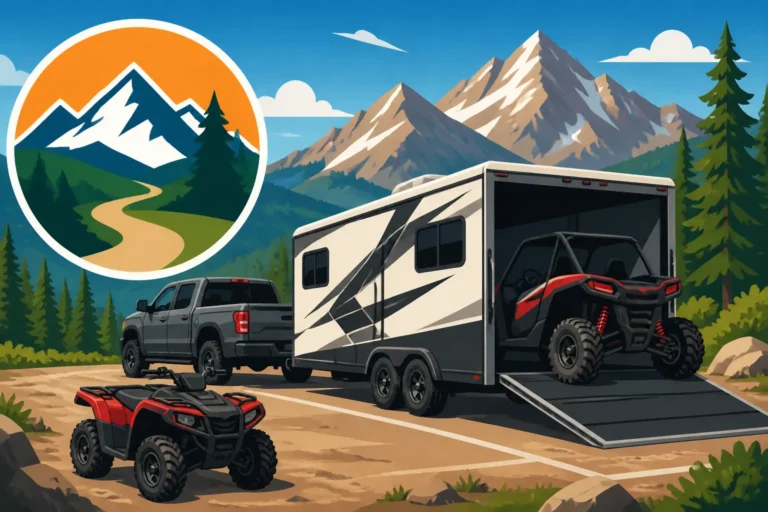
A lodging listing that says “parking available” may mean one ordinary vehicle space. If you’re towing, ask whether the property can fit the truck and trailer as a single combination, or whether you’ll need to detach the trailer and park separately. For a larger side-by-side, confirm that the access road, driveway entrance, and parking surface can handle the full setup.
Describe your equipment clearly when you contact a host or front desk. For example: “We’ll arrive with a pickup, a two-seat side-by-side, and a trailer. Is there a level space where we can park overnight without blocking other guests?” That question is more useful than asking whether the property is “OHV friendly,” which can mean different things to different operators.
Also ask about practical details that can affect your stay: whether there is a secure place for helmets and riding gear, whether muddy boots are an issue indoors, and whether guests may use an outdoor hose. Don’t assume you can wash a machine on site. Some properties prohibit it, and local water or drainage considerations may make washing inappropriate.
If parking at your lodging is cramped, look into staging options before your trip rather than improvising after arrival. The guide to Alpine Loop Parking at Ouray is a useful companion, as is Where to Stage a Trailer for the Alpine Loop. These logistics matter especially when several vehicles are traveling together or when a trailer is difficult to maneuver in a tight space.
Plan your lodging around legal access and daily routes
One of the easiest assumptions to make is that staying near a trail means you can ride directly from your lodging. In Ouray, don’t treat that as a given. Town rules, road restrictions, machine requirements, and the route you intend to use all affect whether a particular connection is legal. Confirm the details before planning a ride through town.
Don’t assume you can ride from your room to the trail
A machine’s ability to operate on a public road is not the same as permission to use every road in town. Some routes may be open to certain vehicles under specific conditions, while others may be restricted. A machine with an out-of-state plate does not automatically have permission to ride wherever it likes.
Before booking a property because it appears close to a route, ask the lodging operator where guests typically stage their machines and whether riding from the property is allowed. Then verify the route using the relevant local rules and current land-management information. For a broader look at route limitations, read Ouray and Telluride OHV Town Restrictions and Riding an OHV on the Road in Colorado.
If your machine is not eligible for a road connection, you may need to trailer it to an approved starting point. That can change your morning routine: allow time to load, secure the machine, reach the staging area, and find parking. A centrally located room may be handy for dinner but not necessarily ideal for launching a ride.
The same caution applies to street-legal machines. Road registration, local access rules, and public-land requirements are separate considerations. Check each one rather than relying on a seller’s description or another rider’s past experience.
Build your stay around the route you want to ride
Ouray is a popular base for exploring high-country routes, including parts of the Alpine Loop area. But route conditions, open dates, and permitted vehicle types can vary. Engineer Pass, for instance, has its own access considerations; review Engineer Pass From Ouray and Lake City before deciding how many nights to book or whether your machine and experience suit your plan.
A useful lodging question is not simply “How close are you to the trail?” Try asking, “Where do guests with trailers usually stage, and how long should we allow to reach our planned route?” The answer can reveal whether the property fits your actual trip, not just the map.
Use a navigation app such as onX Offroad to study the general route network and save useful map information before heading into areas with unreliable reception. Treat it as a planning aid, not as final permission to travel a route. Confirm closures, designated routes, and vehicle-width rules with the appropriate official maps and local notices. A route that appears connected on a screen may not be open to your machine.
If your group is deciding between several towns or wants to split nights between bases, Colorado Trail Towns Worth a Base Camp offers another perspective on making lodging part of the route plan. Riders combining Ouray with the Lake City side of the region can also review Riding From Lake City to the Alpine Loop to consider how location affects the day’s logistics.
Book and prepare for the realities of a mountain stay
A mountain trip can feel effortless when the weather cooperates and every route is open. It can also change quickly if a storm rolls in, a road is closed, or your group realizes the lodging parking cannot handle the trailer. A little preparation helps you make decisions calmly rather than trying to solve everything from the property’s front steps.
Ask the right questions before you reserve
Send the property a short message with your arrival date, vehicle setup, and riding plans. Keep the questions specific. Ask whether trailer parking is allowed, whether it is included with the reservation, if there is room to maneuver, and whether you must reserve that space in advance. If your group has multiple machines, ask about all vehicles rather than assuming the first answer covers everyone.
Clarify what the property means by “secure parking.” It might mean a well-lit lot, a locked gate, or simply a space on the premises. If you are carrying expensive equipment, plan to lock machines and store smaller gear appropriately. A lodging provider can explain its facilities, but you should make your own decisions about security and insurance.
Ask about check-in timing too. A late arrival can be stressful if the entrance is narrow or the parking instructions are complicated. If your route or travel day could run long, find out how to access the property after the office closes and where to leave a trailer without blocking traffic.
Finally, review cancellation and change policies before committing. Weather and access conditions can affect mountain trips, but policies differ between properties. Don’t assume you can move a reservation without cost or that a closure automatically changes the booking terms.
Plan for elevation, weather, and limited connectivity
Ouray sits in high mountain country, so conditions can feel different from home even if the forecast looks mild. A sunny morning can turn cold or wet later in the day, and higher routes may have different conditions from town. Pack layers, gloves, rain protection, water, and sun protection rather than relying on a single warm afternoon forecast.
Give your first day room to adjust. If you’ve traveled from a lower elevation, consider an easier outing or a shorter ride before committing to a demanding route. Fatigue, dehydration, and altitude can make a long day feel harder than expected. A comfortable lodging base helps, but it does not replace pacing yourself and carrying essentials.
Connectivity can be spotty in mountain terrain. Save maps and key trip details before leaving town, and tell someone where you expect to ride. onX Offroad can be useful for viewing downloaded map information when cellular service is absent, but don’t rely on a phone alone. Carry a backup navigation option and know how to use it. See Cell Service on Colorado Mountain Trails for more on preparing for dead zones.
Before you leave lodging each morning, check route and closure information, fuel plans, and the day’s weather. Make sure the group agrees on a turnaround point and what to do if someone has a mechanical issue. A plan that gives you time to return before afternoon weather or darkness is usually more enjoyable than squeezing in one extra spur.
Decide whether camping or a rental changes the equation
Not every OHV trip requires staying in town. If your group is comfortable camping and the rules and facilities fit your needs, a campsite near a riding area may shorten the morning drive. That option comes with its own planning: confirm access, water availability, waste rules, and whether the site accommodates your trailer. The guide to Camping Beside Colorado OHV Trails can help you compare that approach with a town stay.
Renting locally can simplify the trailer question, especially if you are traveling in a regular vehicle. But a rental does not automatically mean every route is permitted or suitable. Ask the rental provider which routes are allowed, what equipment is included, and where you may take the machine. For a closer look at location-specific choices, see Colorado Rentals in Ouray and Lake City.
Whether you bring your own machine or rent, make the lodging and riding plans work together. A room with less parking may be perfectly comfortable if the rental shop handles the vehicle logistics. A large vacation home may be a better fit for a group hauling its own machines, even if it adds a drive to the staging area.
The most reliable booking process is simple: identify the route area, confirm that your machine can legally access it, choose a lodging type, and verify parking details in writing. Then keep a flexible plan for weather and closures. When lodging, staging, and route expectations line up, you can spend less time sorting out logistics and more time enjoying the San Juan Mountains.
Disclaimer
This article is for general informational purposes only and does not constitute professional advice. Laws, prices and regulations vary by location and change over time. Consult a qualified professional for guidance on your specific situation.