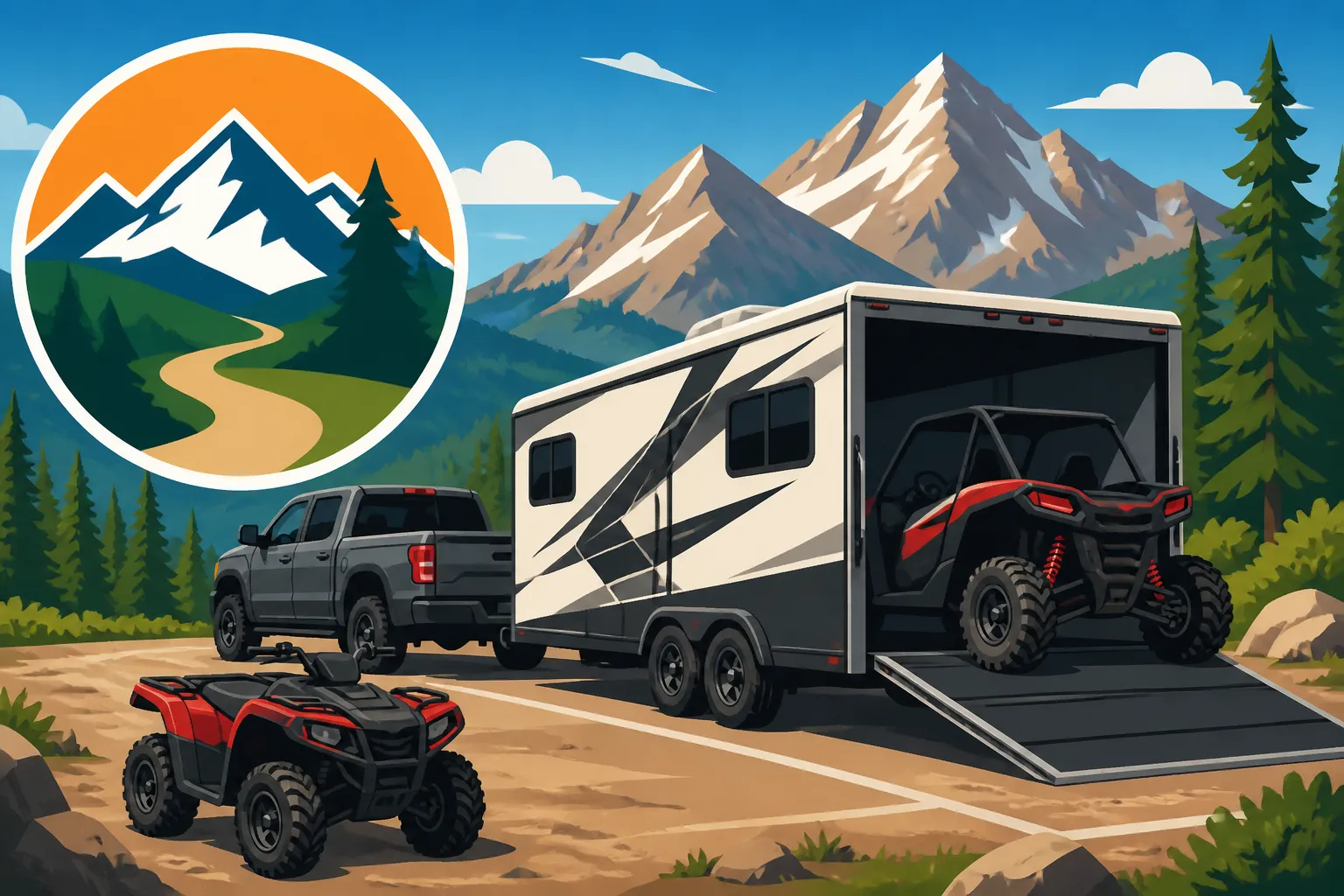
Colorado Trailhead Parking That Fits a Toy Hauler
A toy hauler can turn a Colorado riding trip into a parking puzzle: the entrance may be tight, the lot may be busy, or the only apparent space may be too soft or sloped for a long trailer. This guide explains how to assess trailhead access, choose a sensible staging plan, and avoid committing your rig to a spot it cannot safely leave.
What makes a trailhead suitable for a toy hauler
A trailhead that works for a pickup and small utility trailer may be a poor fit for a long toy hauler. You need room not only to park, but also to turn, back up, and pull out without blocking traffic or damaging the site. The length and width of your entire rig matter, along with its height, weight, turning radius, and ground clearance.
Check more than the parking-space dimensions
Start by measuring your truck and trailer together, including the hitch, any rear-mounted equipment, and the space needed to make a turn. Compare that total with the available parking area, but do not treat a rough measurement as a guarantee. A lot can look spacious in a map view and still have a narrow entrance, a tight bend, a steep approach, or vehicles parked across the maneuvering area.
Pay attention to the surface, too. A toy hauler can sink into soft shoulders or churn up wet ground, and a sloping space may make it difficult to unhitch or safely load and unload machines. Gravel does not automatically mean firm, level parking. After rain or during spring runoff, a site that was manageable on a dry day may be a poor choice.
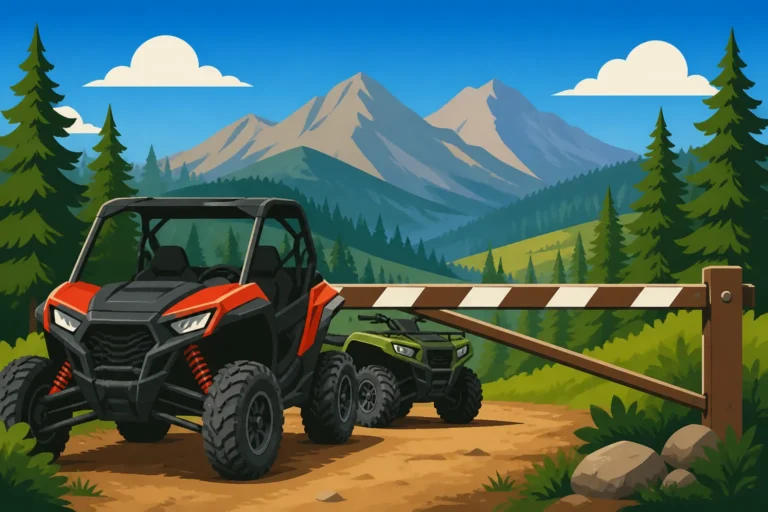
Also look for signs and barriers before you pull in. Posts, gates, drainage ditches, low branches, and boulders can limit access even when the parking area itself seems large enough. If you cannot see a clear path through the entrance, do not assume your trailer will fit because a smaller vehicle has made it through.
Plan for the whole combination, not just the trailer
The tow vehicle needs enough space to maneuver with the trailer attached. A spot that can hold the trailer may not leave room to turn the truck into position or get back onto the road. Backing a long rig around parked vehicles is stressful, especially when other visitors are arriving and leaving.
Think about your exit before you enter. If the lot is crowded, can you turn around without reversing a long distance? Is there a safe, legal place to wait while another vehicle moves? Will your rig need to cross a ditch or make a tight turn onto a narrow road? If the answer is uncertain, stop in a safe place before reaching the entrance and take a closer look on foot.
The basic advice in Colorado Trailhead Parking and Staging applies especially well to larger rigs: staging is part of trip planning, not an afterthought. A quick walk-through can reveal a steep crown, a tight corner, or a turnaround that is hard to see from the driver’s seat.
How to research access before you tow
Online maps, satellite imagery, and local information can help narrow your options, but none can promise that a trailhead will be open, empty, or suitable when you arrive. Use them to identify questions and potential alternatives, then confirm conditions with the land manager or another reliable local source before making a long tow.
Use maps to identify constraints
Start with the route to the riding area, not just the final parking spot. A wide trailhead lot does not help if the access road has a narrow section, a sharp hairpin, a low clearance, a weight restriction, or no safe place to pass. Review the full route from the paved road to the staging area, including the final approach.
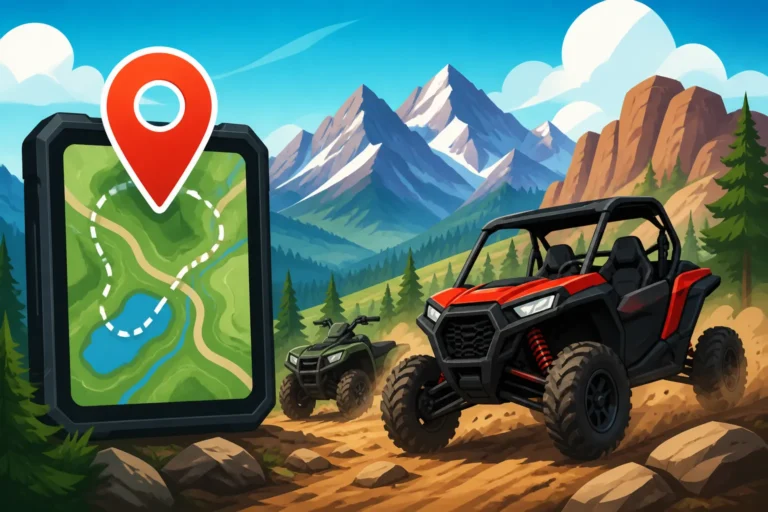
Tools such as onX Offroad can help you explore route lines, terrain, and nearby riding access before the trip. Use the map as a planning aid rather than proof that a road is appropriate for your particular trailer. Map imagery may not show a newly placed gate, a seasonal closure, a washed-out section, or how much room is available to turn around.
Look for several possible staging areas instead of relying on one destination. The trailhead nearest your chosen route may be the most convenient, but an alternative with a larger approach or less constrained parking can be a better fit. In the Taylor Park area, for example, access points and roads vary; investigate the specific route and staging location you intend to use rather than assuming all nearby lots accommodate a large trailer.
Confirm current rules and conditions
Check the relevant land manager’s information for closures, seasonal access, parking restrictions, and any limits on vehicle size or use. Forest Service roads and trailheads can have different conditions from one another, even within the same general riding area. A route shown on a map may be closed to motorized travel or subject to seasonal restrictions, so verify road and trail access separately.
When practical, contact a local visitor center, ranger district, campground, or rental shop that knows the area. Ask specific questions: Is there a designated lot for trucks with long trailers? Is there room to turn around? Are overnight parking or trailer storage allowed? Are there gates or tight turns on the approach? General reassurance that “people take trailers there” may refer to a much smaller trailer than yours.
The same careful route-checking is useful when planning destinations such as Grand Mesa or Rampart Range, where conditions and parking arrangements can vary by access point. The guide Reading a Colorado Motor Vehicle Use Map can help you understand route designations, while Colorado Trail Closures and Where They Are Posted is a useful reminder to check for restrictions before setting out. Do not use a riding map alone to decide where you may park.
Choosing a practical staging strategy
Sometimes the best plan is not to tow the toy hauler all the way to the trailhead. A nearby campground, a larger designated staging area, or a separate parking arrangement may reduce risk and make the riding day more relaxed. The right choice depends on local rules, your rig, and how far you are willing to travel between camp and trail.
Compare common parking options
| Option | Potential advantages | Important checks |
|---|---|---|
| Designated trailhead lot | Direct access to the riding area | Space, turning room, surface, posted limits, and crowding |
| Larger staging area | Often easier to maneuver and organize | Distance to the route, permission to park, and road connections |
| Campground with trailer parking | A more predictable place to leave the rig | Site dimensions, vehicle limits, fees, and whether machines may be hauled to the trail |
| Town or business parking | May offer a practical alternative when permitted | Explicit permission, time limits, security, and local rules |
| Roadside pullout | Can appear convenient | Do not use unless parking is clearly legal, safe, and large enough without obstructing travel |
A designated lot is usually the simplest option when it is genuinely large enough, but avoid blocking access lanes or occupying multiple spaces in a way that prevents other visitors from parking. Do not park on vegetation, in a travel lane, or beyond a barrier simply because the trailer does not fit in the marked area.
A campground may offer more room, but ask about the exact length of the truck-and-trailer combination and whether there is a suitable turning path. A site that fits the trailer on paper may still be difficult to reach if the internal road is narrow or the turning radius is limited. Confirm whether you can leave the hauler there while taking machines elsewhere, and whether the campground permits that use.
Do not assume a business or private lot is available just because it appears empty. Get permission before leaving a trailer there, and clarify how long it may remain and whether the lot closes. For more detailed trip planning around access and staging, Planning a Colorado Riding Trip can help you think through travel, riding, and overnight arrangements as one plan.
Build a backup plan before arrival
Pick a primary staging location and at least one alternative before towing into a remote area. If the first lot is full, closed, muddy, or too tight, you should know where you can safely turn around and go next. This matters on narrow mountain roads, where backing up for a long distance can create hazards for you and other road users.
For areas such as Lake City, Ouray, or Taylor Park, distances between access points can feel short on a map but take longer with a trailer on winding roads. Confirm the alternative route is appropriate for your rig rather than choosing the nearest visible pullout. If you are unsure whether the road surface or grade will suit your trailer, stop before the challenging section and reassess.
A simple arrival routine helps. Have one person check the entrance and parking area on foot while the driver waits in a safe place. Agree on hand signals or phone communication before moving. If the lot is crowded, wait for a clear opening rather than squeezing into a spot that leaves no room for other visitors or for your own exit.
Arriving safely and protecting access
A large trailer affects more than your own convenience. Poor parking can block emergency access, damage the site, or make it harder for other riders to use the trailhead. A little patience at arrival helps protect the area and can prevent a manageable outing from becoming a recovery problem.
Make the final approach deliberately
Slow down before the entrance and look for posted signs, gates, soft ground, low obstacles, and traffic coming from the opposite direction. Do not follow another rig through automatically; its trailer may be shorter, lighter, or better suited to the turn. If the entrance looks marginal, stop where it is safe and inspect the full maneuver before committing.
Avoid turning around on fragile ground or pushing past a closure barrier. If the site is unsuitable, use your planned alternative. In mountain areas, a steep or narrow road can make a last-minute reversal difficult, so it is much better to make the decision before the trailer is committed to a tight space.
Once parked, keep the combination within designated areas and leave room for other vehicles to pass. Secure the trailer and equipment, and avoid unloading machines where people or vehicles need to move. Keep the access lane clear for land managers, emergency vehicles, and other visitors.
Leave the site in good condition
Colorado riding areas depend on visitors respecting parking boundaries and closures. Do not widen a lot by driving over plants or creating a new pullout. Soft shoulders and alpine vegetation can take a long time to recover, and a set of tire tracks can encourage others to treat the same area as overflow parking.
Pack out trash and avoid washing vehicles or equipment where runoff could carry mud, fuel, or cleaning products into nearby water. If you notice a damaged sign, blocked access, or unsafe parking condition, report it through the appropriate land manager rather than attempting to move barriers yourself.
Before pulling out, check that your route is clear, secure all equipment, and take a moment to inspect the ground around the rig. A spot that was easy to enter may be harder to leave if other vehicles have parked behind you. For broader preparation, What to Carry Over a High Pass and Colorado Trailhead Parking That Fits a Toy Hauler are relevant planning references for riders taking a large rig into remote terrain. Use onX Offroad to help review possible routes, then verify access details and parking rules through the appropriate local sources. A map and a backup plan work best together.
Disclaimer
This article is for general informational purposes only and does not constitute professional advice. Laws, prices and regulations vary by location and change over time. Consult a qualified professional for guidance on your specific situation.