Colorado OHV Registration in Two Names
Sharing an off-highway vehicle (OHV) with a spouse, a family member, or even a good friend can be an amazing way to split costs and double the fun on Colorado's incredible trails. But let's be honest, figuring out the paperwork when more than one name needs to be on the registration can feel like trying to navigate a rocky mountain pass with a flat tire. This guide is here to help you understand exactly how to register your ATV or UTV in two names in Colorado, ensuring everyone's on the same page and your adventures stay hassle-free.
Why Registering an OHV in Two Names Makes All the Difference
You’ve got your eye on that perfect side-by-side, or maybe you and your partner are splitting the cost of a new quad. It feels natural to put both names on everything, right? But sometimes, people decide to just put one name on the official paperwork, thinking it's simpler. Let me tell you, while it might seem like a shortcut initially, taking the time to understand dual-name registration can save you a world of headaches down the trail. It’s all about protecting everyone involved and making sure ownership is crystal clear, no matter what bumps come up.
Common Scenarios for Co-Ownership
Think about the various ways people share an OHV. The most common scenario is definitely a married couple. You’re building a life together, sharing assets, and an ATV or UTV often falls right into that category. It makes sense that both of you would want your names officially tied to such a significant purchase, especially if you’re both contributing to the cost and usage. It’s not just about marital bliss, though.
Sometimes, it’s a parent and an adult child. Maybe the child is old enough to ride but the parent is helping with the initial purchase, or they plan to use it together on family trips. Friends might go in on a machine to enjoy Colorado's backcountry, splitting the financial burden and the riding opportunities. In all these cases, the machine isn't just "mine" or "yours"; it's "ours."
Benefits of Formalizing Dual Ownership
So, why bother with the extra step? Well, formalizing dual ownership through registration brings a huge wave of clarity and legal protection. When both names are on the registration, it unequivocally states that two people have a legal interest in the machine. This can be vital for insurance purposes, for instance. If only one name is on the registration and the other co-owner is involved in an incident, it could complicate claims or even raise questions about who truly had permission to operate the vehicle.
Beyond insurance, clear dual ownership simplifies things if one owner needs to act on behalf of the machine – perhaps ordering a replacement part, or dealing with a repair shop. It helps ensure both parties have an equal say and responsibility, reducing the potential for misunderstandings down the line. It's about establishing a foundation of shared commitment and mutual respect for your investment.
Potential Pitfalls of Single-Name Registration for Shared Machines
Imagine this: you and your best riding buddy go halfsies on a sweet UTV. For simplicity, you decide to put only his name on the registration, thinking "we trust each other, it'll be fine." Then, life happens. Your buddy gets into financial trouble, or maybe he moves out of state and suddenly isn't as accessible. What if he decides he wants to sell the UTV without your full agreement, or he simply disappears with it? Because his name is the only one on the official documents, proving your ownership share becomes incredibly difficult, if not impossible.
Even in a marriage, if only one spouse’s name is on the registration, it can lead to complications during a divorce or if the registered owner passes away. The OHV might be considered solely property of the registered individual, making it harder for the other spouse to claim their rightful interest without clear legal battles. Taking the time to properly register your OHV with both names upfront avoids these painful and potentially costly disputes, ensuring your shared adventures don't turn into a legal headache.
The Mechanics of Dual-Name OHV Registration in Colorado
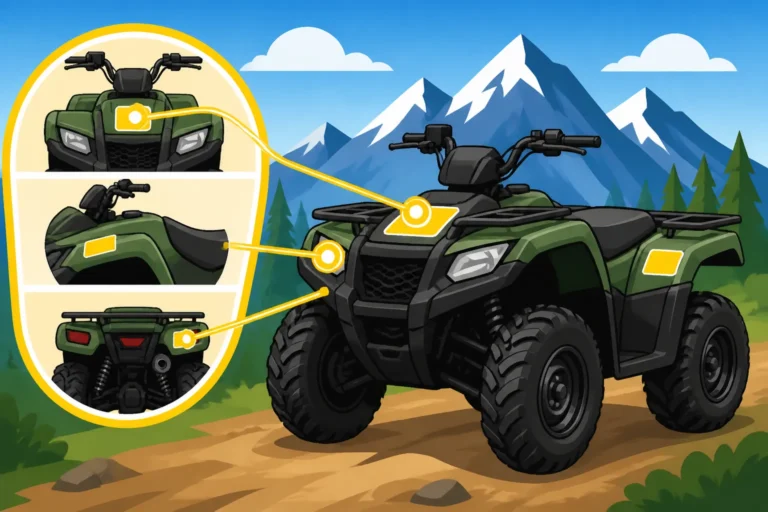
Now that we’ve established why it's so important, let’s talk about the how. Registering an OHV in two names in Colorado primarily involves Colorado Parks and Wildlife (CPW). They are the agency responsible for issuing those green OHV registration stickers that allow you to ride on designated trails and public lands. Understanding their process for multiple owners is key to getting your machine legal and ready for adventure.
Documents and Information Required
When you head to register your OHV with CPW, whether it’s in one name or two, you’ll need a few essential pieces of documentation. First and foremost is proof of ownership. This typically means a Manufacturer’s Statement of Origin (MSO) for a brand new machine, or a bill of sale if you purchased it privately. If you're buying a used machine, make sure that [Buying a Used ATV in Colorado: The Paperwork] is in order. If there's an existing Colorado title, that can also serve as proof of ownership. Make sure the VIN (Vehicle Identification Number) on all your documents matches exactly.
For dual registration, you'll need the full legal names, addresses, and other identifying information (like a driver's license number) for both owners. Both individuals should ideally be present, especially if there’s any question about signatures. If one owner can't be there, they might need to provide a notarized power of attorney or similar document, but checking with CPW directly on their specific requirements is always best. This ensures that both parties officially agree to the registration.
The Process with Colorado Parks and Wildlife CPW
The actual registration process with CPW is fairly straightforward, even with two names. You'll complete the OHV registration application form, making sure to clearly list both owners where prompted. Most forms have specific sections for multiple owners or joint registration. You'll submit this form along with your proof of ownership and the required fee. The CPW office or vendor will process your application, and once approved, you’ll receive your OHV registration card and the coveted green sticker.
When it comes to two names on the registration, CPW generally processes it in a way that reflects joint ownership. This means either "John Doe AND Jane Doe" or "John Doe OR Jane Doe." The distinction matters, particularly for future actions like selling the machine or if one owner passes away. "AND" usually means both signatures are required for any future transactions, while "OR" allows either owner to act independently. Be sure to confirm with the CPW agent how the names are being listed and what the implications are.
When the DMV is Involved for Titling
While CPW handles the registration of your OHV for trail use, the Colorado Department of Revenue (DRIVES system, often via your local county DMV) is responsible for titling your machine. It’s a common point of confusion for many riders: [Colorado OHV Title Versus CPW Registration]. A title is essentially the legal document proving ownership, much like a title for your car. Registration, on the other hand, is your permit to operate on public lands. You might not always need a title for older machines, but for newer ones or those that you finance, you absolutely will.
When titling an OHV in two names, the county DMV will also follow similar principles of "AND" or "OR" ownership. This decision, made at the time of titling, has significant legal weight. If you list ownership as "John Doe AND Jane Doe," both parties must sign any future title transfers. If it's "John Doe OR Jane Doe," either party can sign to transfer ownership. It's crucial to discuss this at the time of purchase or titling to align with your intentions for shared ownership. Many financial institutions will require both names on the title if both are on the loan. For details, you can refer to [Titling an OHV at the Colorado DMV].
Navigating Joint Ownership Challenges
Okay, so you’ve successfully registered and titled your OHV in both names – congratulations! Now comes the ongoing partnership of owning and enjoying it together. While it might seem straightforward, shared ownership sometimes brings practical challenges. Addressing these proactively can prevent minor disagreements from becoming major issues, ensuring your time on the trails remains enjoyable and your investment is protected.
Defining Responsibilities and Costs
When two people own an OHV, it’s not just about splitting the purchase price. There are ongoing costs and responsibilities that need to be clearly defined. Who’s responsible for routine maintenance, like oil changes and tire rotations? What about bigger repairs if something breaks? Who will pay for the annual [Colorado OHV Registration Fee This Season] and other fees? Then there's storage, fuel, and gear. Will you split all costs 50/50, or will one person handle certain expenses in exchange for other contributions?
Having an open conversation about these responsibilities from the start is absolutely vital. You might decide that one owner takes care of all maintenance costs, while the other covers insurance and registration. Or maybe you'll set up a joint account just for OHV expenses. The clearer you are about these details, the less likely you are to have simmering resentment or misunderstandings when a bill arrives or a task needs doing. A simple written agreement, even an informal one, can be immensely helpful here.
Selling a Jointly Owned OHV
The time eventually comes to upgrade, or perhaps one owner decides they no longer want to participate. Selling a jointly owned OHV requires the cooperation of both parties. If the title and registration were set up with "AND" between the names, then both owners' signatures will be required on the bill of sale and the title transfer documents. This offers a layer of protection, as one owner cannot sell the machine without the other's consent. [Wording a Colorado ATV Sale Agreement] will be critical here to clearly indicate both sellers.
If the ownership was set up with "OR," then technically, either owner could sell the machine independently. While this offers flexibility, it also means one owner could potentially sell the OHV without the other's full knowledge or agreement, which could lead to significant trust issues and legal disputes. Always consider your personal situation and the level of trust between co-owners when deciding how the names appear on official documents. Make sure you understand the implications before committing.
What Happens if an Owner Passes Away
This is one of those sensitive topics no one likes to think about, but it’s incredibly important for joint ownership. If one of the registered or titled owners of an OHV passes away, the process for transferring or securing the remaining ownership depends heavily on how the names were listed. If the title specifies "Joint Tenancy with Right of Survivorship," then ownership automatically transfers to the surviving owner upon the death of the other, often without needing to go through probate. This is usually specified on the title itself.
However, if the title simply lists both names with an "AND" or "OR" and no specific survivorship clause, the deceased owner's share of the OHV may become part of their estate. This means it could be subject to probate and distributed according to their will or state intestacy laws, which can be a lengthy and complex process. The surviving owner might need to work with the estate, often involving lawyers and court documents, to fully gain ownership. This is why discussing these possibilities and setting up ownership correctly from the start is paramount. For more on this, check out [Transferring a Colorado OHV After an Owner Dies].
Key Considerations for Co-Owners
Beyond the official paperwork and potential future scenarios, there are practical aspects of co-ownership that truly make a difference in your riding experience. It’s about more than just legalities; it’s about a functional partnership that allows everyone to enjoy the machine to its fullest potential without unnecessary friction. Thinking through these points upfront can save a lot of grief down the road.
The Importance of a Written Agreement
While Colorado Parks and Wildlife and the DMV will handle the legal registration and titling, they don't dictate the specific terms of your co-ownership agreement. This is where a separate, written agreement between co-owners becomes incredibly valuable. Think of it as a pre-nup for your OHV. It doesn't have to be overly complex, but it should cover the key points we've discussed:
- Cost sharing: How will the purchase price, registration fees, insurance premiums, maintenance, and upgrades be split?
- Usage: Who gets to use the OHV when? How will scheduling conflicts be resolved?
- Maintenance responsibilities: Who is in charge of regular upkeep and unexpected repairs?
- Decision-making: How will major decisions, like selling or making significant modifications, be made? Will it require mutual consent?
- Dissolution: What happens if one owner wants out, or if you both decide to sell? How will the proceeds be divided?
- Death or disability: What specific actions should be taken if one owner becomes unable to participate?
Having this document, signed by all parties, provides a clear roadmap and a reference point if any disagreements arise. Online legal template services, like LawDepot, often offer co-ownership agreements or partnership templates that can be customized for your specific OHV situation. It's a small investment in time that provides immense peace of mind.
Insurance Implications for Multiple Owners
Insurance is a critical piece of the OHV ownership puzzle, and it's especially important for co-owned machines. When you get [Insuring an ATV in Colorado], you'll need to inform your insurance provider about all registered owners. Most insurance companies prefer to list all legal owners on the policy. This ensures that everyone with a vested interest in the machine is covered. If only one owner is listed on the policy, and the other owner has an accident while operating the OHV, there could be significant coverage issues or even a denial of the claim.
Discuss with your co-owner whether you'll get a single policy covering both of you, or if you'll each maintain separate policies that acknowledge joint ownership. The simplest approach is usually a single comprehensive policy with both names listed as insured parties. This avoids gaps in coverage and simplifies the claims process. Always be upfront and transparent with your insurance agent about the co-ownership arrangement to ensure you have adequate protection.
Resolving Disputes and Moving Forward
Even with the best intentions and a solid written agreement, disputes can still arise. Maybe one owner feels they're contributing more, or there's a disagreement about a costly repair. The best first step is always open and honest communication. Refer back to your written agreement; often, the answer is already there.
If direct communication doesn't resolve the issue, consider mediation. A neutral third party can help facilitate a discussion and find common ground without resorting to legal action. For situations where the dispute is significant and unresolved, legal counsel might be necessary, especially if the partnership needs to be dissolved. While this is certainly a last resort, having clear registration and a written agreement will provide a solid foundation for any legal proceedings, saving time and potential legal fees. LawDepot's legal resources might also offer guidance on mediation or dispute resolution clauses you could add to your initial agreement.
Remember, the goal of co-ownership is to enhance your enjoyment of Colorado's incredible OHV opportunities. Taking these steps to formalize and clarify your shared responsibilities will contribute greatly to a smooth, fun, and long-lasting partnership on the trails.
| Aspect of Co-Ownership | "AND" Ownership (e.g., John AND Jane) | "OR" Ownership (e.g., John OR Jane) | Recommendation for Co-Owners |
|---|---|---|---|
| Title Transfer | Both signatures required | Either signature sufficient | "AND" for maximum protection/control |
| Registration Renewal | Either can typically renew | Either can typically renew | Either works, but keep track of who |
| Selling the OHV | Both signatures required on Bill of Sale | Either can sell independently | "AND" to prevent unauthorized sale |
| Insurance Policy | Both names ideally listed as insured | Both names ideally listed as insured | Both on policy for full coverage |
| Death of an Owner | Estate involvement likely (unless "JTWROS") | Estate involvement likely (unless "JTWROS") | Consider "JTWROS" for direct transfer |
| Written Agreement | Highly Recommended | Highly Recommended | Essential for all co-ownership |
| Dispute Resolution | Agreement aids resolution | Agreement aids resolution | Proactive communication & agreement |
Disclaimer
This article is for general informational purposes only and does not constitute professional advice. Laws, prices and regulations vary by location and change over time. Consult a qualified professional for guidance on your specific situation.