Black Bear Pass and Who Should Attempt It
Black Bear Pass is not a casual scenic detour: the route is known for exposed terrain, steep switchbacks and little room to correct a mistake. For ATV and UTV riders, the key question is not simply whether the machine can climb to the pass, but whether the route is legal for it, fits its dimensions and matches the driver’s experience. This guide helps you make that call.
What Makes Black Bear Pass So Demanding
The route combines exposure, steep grades and tight turns
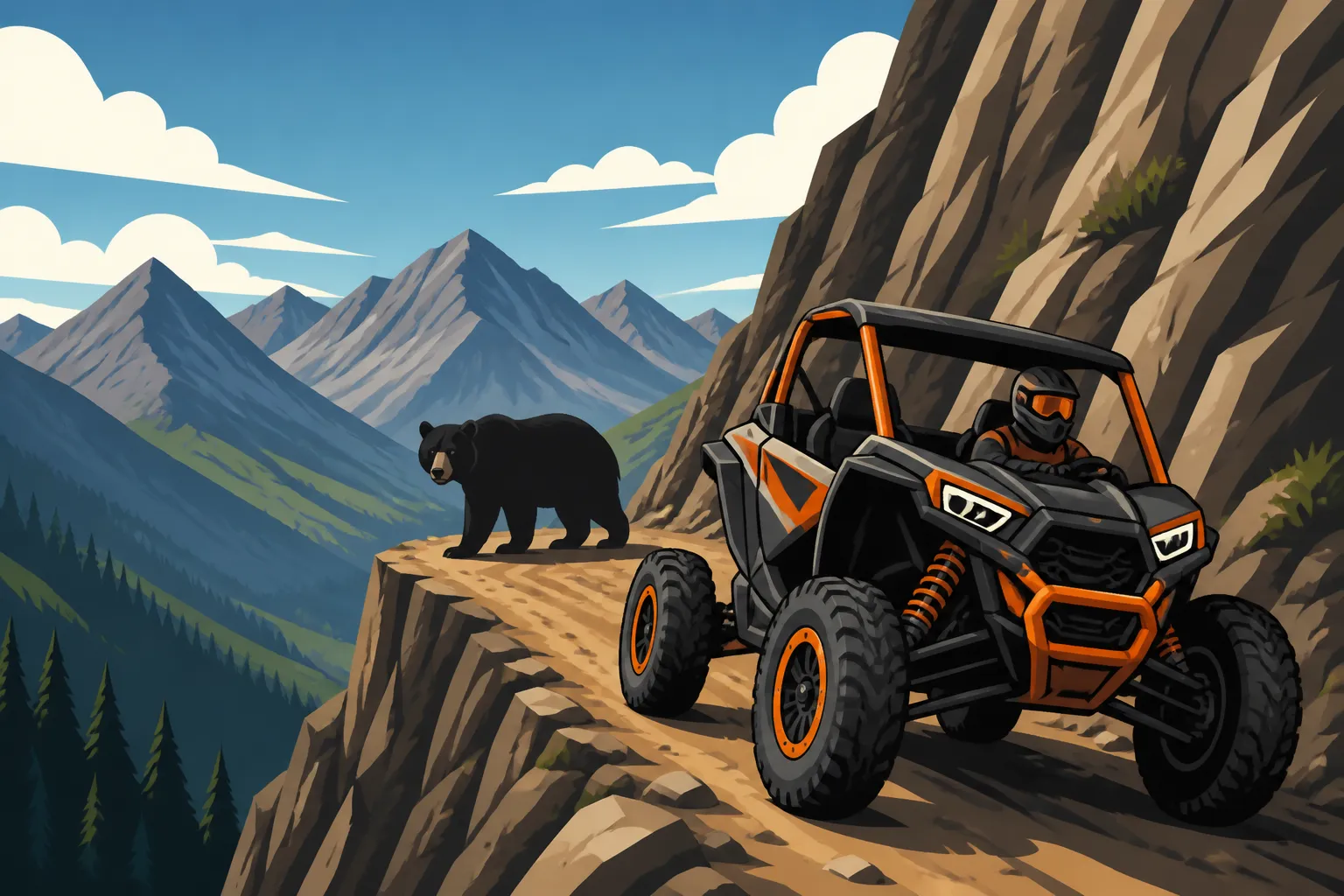
Black Bear Pass is a high-country route in the San Juan Mountains, commonly traveled from the Red Mountain Pass side toward Telluride. The steep, tight switchbacks below the pass are a major reason the route has a serious reputation. Sections can feel especially intimidating when the ground drops away beside the track and there is little space to stop, turn around or pass another vehicle.
The challenge is not just getting uphill. A machine that feels controlled on a broad dirt road may behave differently on a steep descent, where loose rock, uneven surfaces and braking technique matter. On a narrow bend, a driver may need to make a deliberate, controlled turn without letting a tire slip toward the edge. That is a very different ride from an open trail where there is room to pause and regroup.
Altitude adds another layer. The pass is well above treeline, where weather can change quickly and sun, wind and cold can all feel more intense than they did in town. An engine may also feel less responsive at elevation, while a rider who is tired, dehydrated or affected by altitude may have a harder time concentrating. For a broader look at preparation at elevation, see [Riding Above Treeline in Colorado].
An ATV or UTV can face different challenges than a conventional 4×4
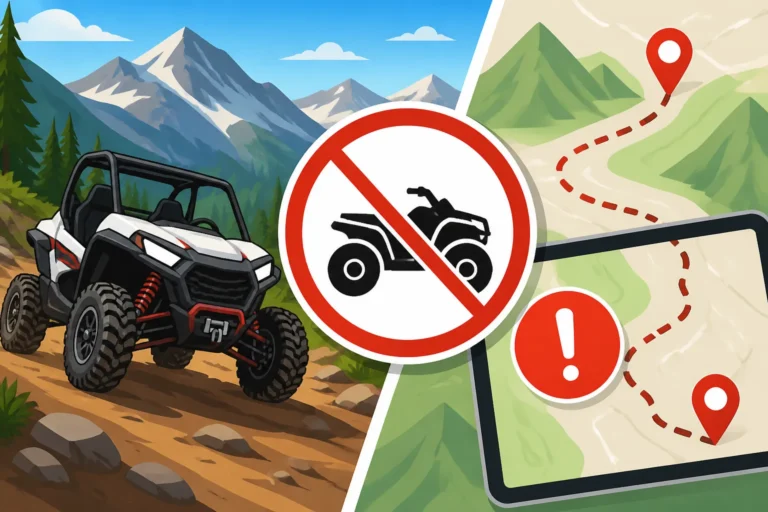
A route’s reputation as a 4×4 road does not automatically tell you whether your particular ATV or UTV is allowed, or whether it can safely manage the turns. Check current route rules and posted signs before setting out. Some areas have vehicle-use restrictions, and permitted use can vary by route segment or change with closures. Do not rely on a social media post, an old GPS track or a vehicle listing that says “trail ready” as proof of access.
Machine size matters too. A long or wide UTV may have difficulty negotiating a tight switchback, especially if the turn requires multiple adjustments. A shorter ATV may fit more easily but can bring its own concerns: stability on uneven side slopes, limited protection for the rider and the challenge of controlling speed on a long descent. A machine that physically fits is not necessarily a good choice if its driver cannot control it smoothly in exposed terrain.
Before you commit, compare your machine’s width, wheelbase, turning radius and ground clearance with the route’s actual conditions. [Narrow Trails and Machine Width] explains why posted width ratings and real-world maneuvering room are not always the same thing. If you are unsure whether your machine is appropriate, the safer decision is to choose a route with more space rather than treating Black Bear Pass as a test.
| Factor | More suitable for the route | Reason to reconsider |
|---|---|---|
| Driver experience | Confident on steep, narrow, exposed trails | Little experience with tight turns or controlled descents |
| Machine fit | Dimensions and turning ability suit the route | Wide or long machine with limited turning room |
| Conditions | Dry, visible route with no active closure | Snow, mud, storms, poor visibility or uncertain access |
| Group plan | Small, coordinated group with recovery options | Large convoy, rushed schedule or no plan for a breakdown |
Who Should Attempt Black Bear Pass
A careful, experienced driver may be a candidate
Black Bear Pass is best considered by drivers who already have substantial experience on steep, narrow mountain routes—not by someone hoping to gain that experience during the ride. A suitable driver can maintain a controlled pace, judge tire placement, use the machine’s braking system appropriately and stop without panic when conditions change. They also know when to pause and reassess instead of continuing because the group has already started.
A good candidate is familiar with their own machine on challenging terrain. They know how it responds on loose rock, how much room it needs to turn, and how it behaves during a sustained descent. That familiarity matters more than a machine’s horsepower or the driver’s confidence on easy trails. If you have not practiced controlled climbs and descents elsewhere, start with routes that give you more room to learn.
It helps to compare Black Bear with other well-known mountain routes, but treat comparisons as planning aids rather than guarantees. [Which Alpine Loop Pass Is Harder] and [What to Expect on Imogene Pass] can help you think through differences in terrain and exposure. A route that felt manageable in a different area does not automatically prepare you for Black Bear’s particular switchbacks and conditions.
Some riders should choose a different route
Black Bear Pass is a poor choice for a first mountain ride, a first trip at altitude or a group that includes a driver who feels uneasy around steep drop-offs. It is also a poor place to find out that your UTV has a turning problem, that a passenger is frightened by exposure or that a rider is not comfortable controlling a descent. Those are useful discoveries to make on a lower-consequence route.
Consider postponing the trip if your group includes an inexperienced driver, a machine you have not tested on comparable terrain, or anyone who is already tired or unwell. The same goes for uncertain weather, poor visibility, recent precipitation that may have made the surface slick, or a machine that is carrying more passengers or gear than usual. Pressure to keep up with friends is not a sound reason to continue.
There is no shame in turning around or changing the plan. If your group wants a more forgiving introduction, browse [Colorado Trails Suited to Beginners] or consider a route whose width and difficulty ratings better fit your machines. [Colorado Trails Rated for Full-Size Vehicles] can also help UTV owners screen options, although a rating does not replace checking current conditions and access rules.
How to Prepare Before You Go
Confirm access, route direction and current conditions
Check current land-manager or local road information before leaving town, and read signs at the route entrance. Black Bear Pass is commonly traveled one way from the Red Mountain Pass and US 550 side toward Telluride, but you should confirm the current route direction and any restrictions before your trip. Never assume a route is open because it was open on your last visit or because a mapping app shows a line through it.
A mapping tool can help you understand the area, identify the route and prepare for limited cell service. For example, onX Offroad can be useful for reviewing a planned track and saving map information for offline use where available. It is a planning aid, not the authority on closures, permitted machine types or temporary restrictions. Compare any app information with current official notices and posted signs.
Check the forecast for the route itself, not just the weather in Silverton or Telluride. Conditions can differ sharply at higher elevations, and a clear morning does not guarantee an easy afternoon. [Colorado Trail Conditions Reports] and [Reading a Colorado Motor Vehicle Use Map] offer useful planning context; still, verify the specific road status before you depart.
Prepare the machine and the group
Inspect tires, brakes, steering, suspension, belts or chains, lights and fluid levels before the ride. Pay particular attention to braking performance and tire condition because a small mechanical problem can become much harder to handle on a steep, narrow descent. Carry the tools and recovery equipment you know how to use, and do not count on another group arriving at the right moment to help.
A group should discuss a simple plan before entering the difficult section: who leads, who follows, where to stop safely, what to do if a machine cannot continue and how to communicate if riders become separated. Keep enough space between machines to avoid crowding a driver who needs to negotiate a turn. Do not stop in a blind or narrow section just to take a photograph.
Pack water, warm layers, food, first-aid supplies and a way to navigate if your phone loses service. Download offline information before leaving coverage; onX Offroad may help you keep a planned map available, but carry a backup plan rather than relying on one phone. Recovery gear is only useful if the group understands how to use it safely. [Recovery Gear for a Shelf Road] covers the planning side of carrying equipment for exposed terrain.
Making the Go or No-Go Decision
Use a clear decision check at the trailhead
Before starting, pause and confirm four things: the route is open to your vehicle type, the group understands the direction and restrictions, the machine fits the terrain, and the weather and surface conditions are acceptable. If any answer is unclear, get reliable information before proceeding. A rushed departure can turn a manageable uncertainty into a stressful situation once there is no convenient place to turn around.
At the trailhead, be honest about how everyone is feeling. A driver who is anxious, exhausted or affected by altitude may not make good decisions under pressure. Ask whether each person is comfortable with the exposure and the plan—not just whether they are willing to go along. If someone hesitates, take that seriously. The group can choose another ride and still have a good day.
Also think about your exit plan. Know where you can safely stop, what options exist if a machine develops a problem and how you will contact help if needed. Cellular service can be unreliable in the mountains, so do not make a phone call your only contingency. Recheck your offline route information, but remember that an app such as onX Offroad cannot tell you that every bend is safe to negotiate in your specific machine.
Ride deliberately and be willing to stop
If you proceed, keep your pace controlled and leave room for the driver ahead. Avoid sudden steering or braking inputs, and do not let a line of vehicles pressure you into a turn before you have assessed it. Passengers should stay seated and follow the machine manufacturer’s safety guidance; riders should not lean or shift unpredictably while the driver is working through a tight section.
Stop only where there is enough room to do so safely, and do not block the route. If you encounter a vehicle coming from an unexpected direction, follow posted rules and communicate calmly rather than trying to squeeze past in a place with no margin. Never leave the designated route to get around an obstacle or to make room unless directed by an authorized official.
If the surface, weather or your confidence changes, reassess. Turning back may not be practical on every section, which is another reason to evaluate conditions before entering the most committed terrain. The most experienced choice is not always to finish the route; it is to make decisions early, while you still have safe options.
Black Bear Pass is a demanding mountain route, not a universal must-do for every Colorado ATV or UTV rider. It may suit a highly experienced driver with an appropriate machine, verified access and favorable conditions. For anyone else, choosing a wider, less exposed trail is a smart way to protect the group and keep the day enjoyable.
Disclaimer
This article is for general informational purposes only and does not constitute professional advice. Laws, prices and regulations vary by location and change over time. Consult a qualified professional for guidance on your specific situation.