Weekday Riding on Colorado Passes
A weekday ride can mean fewer vehicles, easier staging, and more room to take in Colorado’s high-country scenery. It can also mean arriving to a closed gate, a work crew, or a trailhead with limited services. This guide explains how to plan a weekday ride on Colorado passes, choose a sensible route, and handle the details that matter once you leave town.
Why weekday riding can feel different
Fewer crowds do not mean an empty trail
Riding on a Tuesday or Wednesday may reduce the pressure of weekend traffic, especially near popular routes and staging areas. On the Alpine Loop, for example, starting outside the busiest weekend window can make it easier to pause for photos or let an oncoming group pass without feeling hurried. But weekday traffic can still build during the heart of the riding season. Vacation schedules, guided tours, work vehicles, and other travelers all use the same narrow roads.
A quieter trail can also make other users less obvious. Watch for cyclists, hikers, campers backing out of sites, and vehicles approaching around blind corners. On a shelf road, don’t assume you’ll have the next turn to yourself just because it’s a weekday. Ease off the throttle where sightlines are short, and be ready to yield or pull into a safe, wide spot rather than stopping somewhere exposed.
The style of traffic may change, too. A weekday route can include road-maintenance crews, logging trucks, or local residents traveling for work. Give them extra space and follow signs or directions from authorized workers. If you want a refresher on sharing narrow routes respectfully, Sharing a Mountain Road With Cyclists covers some of the situations that catch riders off guard.
Weekday logistics can be a tradeoff
A less crowded trailhead is a real advantage, but don’t assume every service will be open or easy to reach. A small mountain town may have limited weekday hours at fuel stations, repair shops, restaurants, or rental businesses. If a machine develops a problem, the help you expected to find nearby may not be available when you need it.
Build your ride around what you can reliably manage yourself. Start with a full tank, carry water and basic repair supplies, and know where you can turn around if the route takes longer than expected. If you’re hauling a machine, plan where the trailer will fit before you arrive. A popular staging area can still be tight on a weekday, and some parking areas are not suitable for long trailers.
It’s also worth checking whether your chosen route has access restrictions that affect your plan. A town street, county road, Forest Service road, and designated OHV trail are not necessarily governed by the same rules. Don’t treat a pass name as permission to ride every connecting road. Use current official maps and posted signs to confirm where motorized travel is allowed. Where Colorado Riders Take a Voluntary Safety Course is useful background if you’re riding with someone who is new to off-highway travel.
Choose the pass and timing with care
Match the route to the group
A weekday ride works best when the route fits the least experienced person in the group, not just the most confident driver. The Alpine Loop connects high-country routes in the San Juan Mountains, while Engineer Pass and Cinnamon Pass each bring their own terrain, exposure, and changing conditions. Imogene Pass and Ophir Pass can also demand careful driving and steady attention. Before committing, think about vehicle width, ground clearance, passenger comfort, and how each rider handles narrow roads and steep grades.
Be honest about the machine’s limits as well as your own. A route that seems manageable in a capable, well-prepared side-by-side may feel very different in a machine with less clearance or a driver who has little experience on uneven mountain roads. If the group has mixed experience, agree beforehand that anyone can call for a pause or turn-around without having to defend the decision. A planned shorter ride is better than pushing a tired driver through a difficult section late in the day.
An app such as onX Offroad can help you review mapped routes and orient yourself, but don’t rely on a screen alone. Download needed map information before leaving service, compare your route with official travel maps, and pay attention to signs on the ground. A digital route line does not override a closure or establish that a road is open to your vehicle.
| Planning factor | Why it matters on a weekday | Practical approach |
|---|---|---|
| Route difficulty | Fewer vehicles do not make a steep or narrow road easier to drive | Choose based on the least experienced rider and the machine’s capabilities |
| Gate and closure status | Seasonal restrictions or temporary work can affect access on any day | Check official notices before leaving and obey posted signs |
| Fuel and repairs | Some services may have limited weekday availability | Top off in town and carry basic repair and recovery items |
| Cell coverage | Mountain routes can have long stretches without reliable service | Save maps offline and tell someone your plan |
| Return time | A small delay can become significant when conditions change | Set a turnaround time and leave room for an unhurried return |
Start early, but stay flexible
An early start gives you more daylight for a route that takes longer than expected. It can also help you avoid arriving at a trailhead after convenient parking has filled. But “early” should not mean driving into unsafe conditions just to beat other riders. Check the forecast for the route’s elevation, not only the weather in the town where you’re staying. Conditions can change quickly at high elevations, and clouds, wind, rain, or cold can make a pass feel very different from the trailhead.
Set a firm turnaround time before you ride. If you haven’t reached a planned point by then, turn back rather than hoping the rest of the route will go faster. On a weekday, there may be fewer riders nearby to notice if your group is delayed or needs assistance. Leave your route and expected return time with someone who is not riding with you, and agree on what they should do if they don’t hear from you.
Keep your plan flexible if a road is closed, weather deteriorates, or a vehicle starts acting up. Do not bypass a gate or ride around a closure marker because a route looks passable. A short alternative ride, a scenic stop, or an earlier return is a sensible outcome—not a failed trip. For broader trip preparation, Planning a Colorado Riding Trip can help you organize the route, gear, and staging details.
Prepare for mountain conditions and shared roads
Check access before you leave town
Colorado mountain routes can be affected by seasonal openings, temporary closures, weather, maintenance, or land-management decisions. A route shown on an older map or saved in your phone may not reflect today’s access. Check the current official travel information for the roads and trails you plan to use, then confirm that motorized travel is permitted for your type of vehicle. Pay attention to signs at junctions and gates, even if they differ from what you expected.
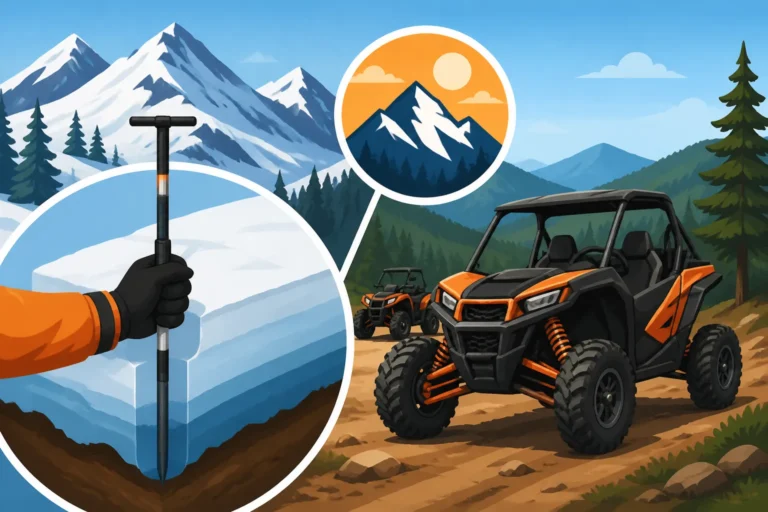
Snow and mud can linger at higher elevations after lower roads have dried out. A sunny forecast in Ouray or Lake City does not guarantee clear conditions farther up a pass. Recent snow, runoff, or a storm can change traction and visibility. Review Checking Snowpack Before a Colorado Trip and Colorado Trail Conditions Reports as part of your planning, and verify any important closure details through the appropriate land manager before setting out.
A map app can be helpful for finding junctions and avoiding accidental detours. onX Offroad may be useful for reviewing mapped routes in advance, especially when your group wants a shared navigation reference. Still, map layers can be misunderstood, and no app should be treated as final confirmation of access. Cross-check your planned route against current official maps, including Reading Seasonal Dates on an MVUM, and follow signs in the field.
Pack for a slower, more self-reliant day
Mountain routes often take longer than their mileage suggests. A short distance can include rough surfaces, steep climbs, tight turns, traffic delays, or stops to let another vehicle pass. Pack enough food and water for the whole group, along with warm layers and rain protection. Sun exposure can be intense at elevation, while shade and wind can make temperatures drop quickly.
Carry equipment suited to your machine and route. That may include a tire repair kit, tools, a first-aid kit, a flashlight, extra water, and recovery gear you know how to use. Secure loose items before leaving the staging area. If you are traveling with multiple vehicles, establish a regrouping point before the ride and make sure every driver knows how to reach it without cell service. Fuel Planning for a Colorado Trail Day and Cell Dead Zones in the San Juans address two easy-to-overlook parts of that preparation.
Use onX Offroad or another navigation tool as one layer of preparation, not your only safety net. Save maps for offline use, carry a backup navigation option where appropriate, and write down key junctions or the return route if that helps your group stay oriented. Let someone outside the group know your plan, including the route you expect to take and when you expect to be back.
Make the ride safer and more enjoyable
Agree on group habits before moving
A weekday group may encounter fewer other riders, but it still needs a clear plan for communication. Decide who will lead and who will sweep, how the group will handle junctions, and where everyone will stop if someone falls behind. Keep enough distance to see and respond to the vehicle ahead without creating a long gap that separates the group.
Talk through the ride’s expectations before leaving the parking area. Agree that drivers will slow down for blind corners, avoid kicking up unnecessary dust near homes or campsites, and stop only in places where the whole group can safely get off the traveled way. If someone feels uncomfortable, the group should pause and reassess rather than pressuring them to continue.
Be courteous in small towns, too. Avoid blocking driveways or fueling areas, keep noise down near residences, and follow local rules about where OHVs may travel. A weekday route can pass through working communities, not just scenic terrain. Treating local residents and other road users well helps preserve the welcome riders receive.
Know when to change the plan
A good ride is not measured by how many passes you complete. Turn around if visibility drops, thunder approaches, snow or mud makes the route unsafe, a vehicle develops a problem, or a rider is becoming fatigued. On exposed terrain, waiting to see whether conditions improve can leave your group with fewer options later in the day. Start back while everyone still has energy and daylight.
If you encounter a closed route or a vehicle that cannot continue safely, don’t improvise in a way that risks damage or violates access rules. Move only where it is safe and permitted, communicate with your group, and seek appropriate help. If you are stuck, avoid spinning the tires or attempting a recovery maneuver you have not practiced. A careful pause can prevent a manageable problem from becoming a damaged machine or an injured rider.
After the ride, take a few minutes to check the machine and note anything you would change next time: fuel use, route timing, gear, or a confusing junction. If you used onX Offroad, review the track afterward alongside your official map notes so you can recognize where the ride differed from the plan. That habit makes your next weekday trip easier to prepare—and helps you make better decisions when conditions change.
Disclaimer
This article is for general informational purposes only and does not constitute professional advice. Laws, prices and regulations vary by location and change over time. Consult a qualified professional for guidance on your specific situation.