Water Crossings on Colorado Trails
A shallow-looking stream can hide a soft bottom, a deep hole, or a current strong enough to push an ATV or UTV sideways. On Colorado trails, snowmelt, afternoon storms, and changing water levels make crossings especially hard to judge. This guide explains how to assess a crossing, protect your machine and passengers, and know when turning around is the safest choice.
Before You Reach the Water
Check the route and conditions in advance
Water crossings are not all alike. A trail may cross a small drainage, a creek, or a wide, fast-moving stream, and conditions can change between the trailhead and the crossing. Snowmelt can raise water levels, while rain may turn a previously manageable channel into a fast, muddy flow. A route that was passable earlier in the day may not be safe on your return.
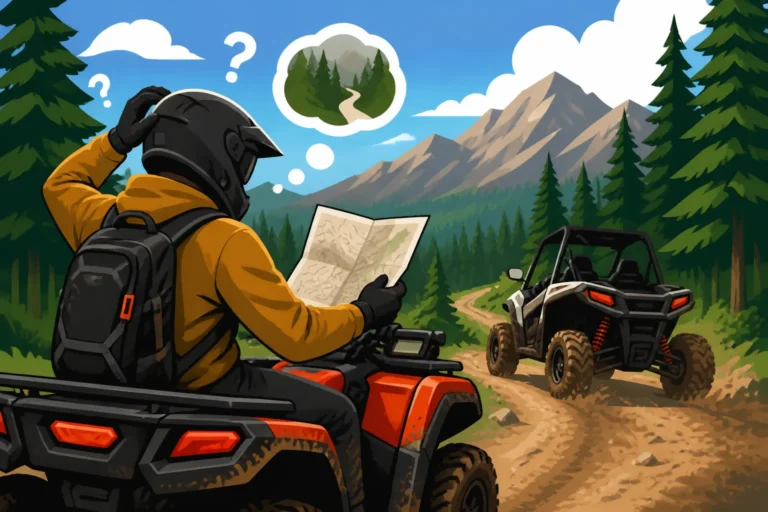
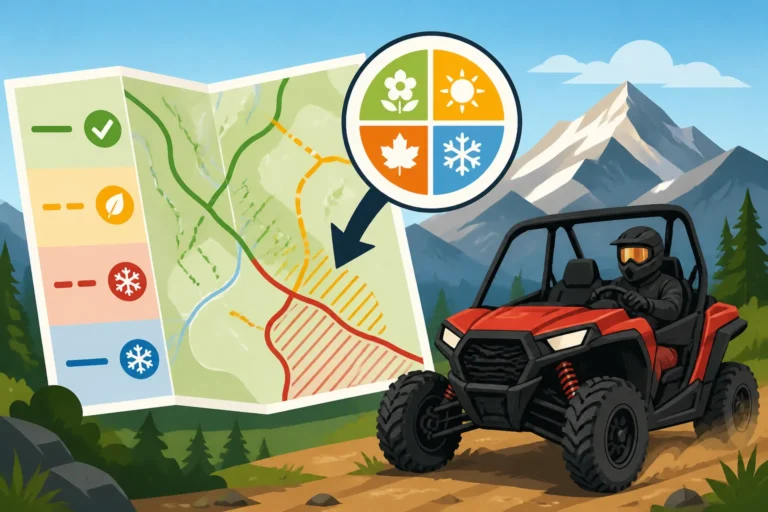
Before you leave, check current trail conditions and seasonal restrictions. Review the official motor vehicle use map for the area and confirm that your planned route is open to your machine. Apps such as onX Offroad can help you plan and keep track of a route, but don’t rely on any app alone to confirm that a crossing is open or safe. Cross-check your route with official maps and posted signs. Reading a Colorado Motor Vehicle Use Map and Colorado Trail Conditions Reports can help you plan what to verify.
Build flexibility into the day. If a creek is too high, the trail is washed out, or a closure blocks your route, you may need to retrace your path or choose another ride. That can be frustrating when you’ve driven a long way to reach a trail, but a planned turnaround is much easier than a flooded machine, an injured passenger, or a difficult recovery in a remote area. Pack for the possibility of spending longer on the trail than expected; What to Carry Over a High Pass covers useful preparation for a remote Colorado ride.
Know your machine and the crossing rules
Check your owner’s manual for the manufacturer’s water-crossing guidance, including any stated depth limits and instructions for preparing the machine. These limits vary by model, and a depth rating does not mean that every crossing below that depth is safe. The current, bottom, approach, and exit can matter just as much as the water level.
A crossing is only an option if the route is open and the crossing is part of the designated trail. Don’t create a new line through a stream, ride along a bank to avoid a blocked trail, or drive off-route to find a different way across. That can damage vegetation and streambanks, and may violate land-management rules. Review Colorado Trail Damage and Resource Protection and Colorado Rules on Forest Service Roads before your trip, especially if the route passes through public land.
| What to check | Why it matters | Safer response if you’re unsure |
|---|---|---|
| Trail status and posted signs | The route may be closed or restricted | Don’t pass a closure; find an open route |
| Water speed and level | Current can move a machine or hide a dangerous drop | Turn around if the water is fast, rising, or hard to judge |
| Bottom and exit | Mud, rocks, holes, or a steep bank can trap a vehicle | Don’t enter if you can’t identify a safe exit |
| Machine guidance | Different models have different limits and intake locations | Follow the manual, not another rider’s experience |
| Group and daylight | A slow crossing or recovery can delay the ride | Keep a turnaround option and enough time to return |
Assessing a Crossing From the Bank
Look for current, depth, and a safe exit
Stop well back from the water and look at the whole crossing, not just the first few feet. Watch the surface for fast flow, standing waves, debris, or water moving around rocks. A calm-looking patch can still conceal a deeper channel or a slippery bottom. If the water is muddy or opaque, you may not be able to see what the tires would meet.
Pay attention to the far bank. A machine that can enter the water may still be unable to climb out if the exit is steep, undercut, muddy, or blocked by loose rocks. Check whether the intended path follows the marked trail and whether there is room to stop safely on the other side. If you cannot see a clear exit, don’t assume it will become obvious once you are in the water.
Never judge the crossing only by what another rider managed earlier. Water can rise quickly after rain or during the day as snowmelt continues. The size and setup of a vehicle also change what it can safely handle. A crossing that a light dirt bike passed may not be suitable for a heavier side-by-side, and a confident driver’s success doesn’t make the same line safe for your machine.
Use a conservative decision process
Take time to assess the crossing from a safe, stable spot. If it is lawful and safe to do so, look for signs of changing water or damage to the trail. Don’t wade into moving or unknown water to measure depth. Cold, fast water can knock a person off balance, and a submerged hole or unstable bottom can make a simple inspection dangerous.
If you have a capable, experienced group, discuss the decision before anyone enters. Make sure every rider understands the plan and the turnaround point. A spotter should remain on stable ground and away from the water’s path, not stand in front of a vehicle or on a slippery bank. If nobody can clearly explain why the crossing is within the machine’s limits and how the vehicle will exit, treat that uncertainty as a reason not to proceed.
There is no shame in turning around. A missed destination, a shorter ride, or a changed route is a manageable inconvenience. A machine swept sideways, water entering the engine, or a passenger exposed to cold water can turn a recreational ride into an emergency. If conditions appear unsafe, head back while you still have daylight, fuel, and a clear route.
Crossing Safely When Conditions Are Suitable
Prepare the driver, passengers, and machine
Only consider crossing when the trail is open, the water is manageable, the route through it is clear, and the exit is safe. Follow your vehicle’s manual for any water-related preparation. Don’t assume a snorkel, raised intake, or another modification makes a machine safe in deep or moving water; other parts can still be damaged, and the vehicle may lose traction or stability.
Secure loose gear and keep passengers seated with seat belts fastened in a side-by-side. Everyone should know not to lean out, jump off, or approach the machine while it is moving. On an ATV, the rider should maintain a stable riding position and avoid sudden movements. If someone in the group is uncomfortable with the crossing, pause and reassess instead of pressuring them to continue.
Before entering, settle on a slow, controlled approach that follows the designated route. Avoid abrupt steering, sudden acceleration, or stopping in the current. The right pace depends on the machine and conditions, so follow the manufacturer’s guidance and the driver’s training rather than copying a technique from a different vehicle. If the tires begin to lose grip, the machine starts drifting, or the water is deeper or faster than expected, don’t try to force the crossing.
Keep people clear and protect the streambank
Keep bystanders well away from the water and from the vehicle’s likely path. A machine can slide, stall, or be pushed off line, and a person standing beside it may have nowhere safe to move. Don’t have anyone try to push a vehicle through moving water. Avoid placing a spotter downstream, where a slipping machine or loose equipment could reach them.
Stay within the established crossing. Driving around a difficult entry or exit can widen the trail, crush plants, and cut into the bank. Avoid spinning the tires or repeatedly attempting a line that is causing damage. If you can’t cross without tearing up the route, stop and turn back. Colorado Trail Damage and Resource Protection is a useful reminder that protecting the trail is part of riding responsibly, not an optional extra.
After a suitable crossing, move to a safe place off the trail and check the vehicle for obvious problems. Pay attention to unusual noises, warning lights, water where it should not be, or changes in braking and steering. Don’t continue as though everything is normal if the machine stalled or was submerged beyond the guidance in its manual. If water may have entered the engine or another critical component, follow the manufacturer’s instructions and seek appropriate mechanical help rather than repeatedly trying to start it.
When to Turn Around and What to Do After a Problem
Treat these conditions as a no-go
Turn around if water is moving quickly, rising, carrying debris, or hiding the bottom. The same applies when you cannot see a stable exit, the approach is eroding, or the trail sign indicates a closure. High water and damaged crossings can be especially difficult to evaluate in a group, because the pressure to keep moving can make a risky choice feel like the convenient one.
A crossing is also a no-go if it exceeds your machine’s instructions, your driving ability, or the comfort level of anyone riding with you. That includes a crossing that might be technically possible but leaves no safe margin for a slippery surface, a stalled vehicle, or a change in water level. A high-clearance machine is not a substitute for sound judgment, and added equipment does not eliminate current, traction, or exposure risks.
If weather is worsening, think about the return crossing as well as the one in front of you. A stream that seems manageable on the way out may be higher when you come back. Don’t cross a rising channel simply because the group already crossed it earlier. On remote routes, a cautious turnaround is a practical safety decision, particularly when cell service is limited. Cell Dead Zones in the San Juans and First Aid Far From a Trailhead offer useful context for planning beyond the crossing itself.
Respond carefully if a vehicle stalls or gets stuck
If a machine stalls near or in water, keep people away from the current and do not rush in to push, pull, or attach a recovery line. Moving water can make a vehicle unstable, and a line under tension can create additional hazards. The driver and group should prioritize getting people to secure ground and calling for help if anyone is injured or the situation cannot be managed safely.
Do not use a winch or tow strap without a suitable anchor, a clear recovery plan, and people positioned away from the line. Never attach recovery equipment to an unapproved point on the vehicle, and don’t risk damaging trees or streambanks to get a machine moving. A recovery attempt that damages the trail or places someone in the water can make the incident worse. For broader recovery planning, see Winching on a Narrow Shelf Trail.
Once the machine is on stable ground, follow its manual before attempting to restart it. Water exposure can affect the engine, electrical system, brakes, and other components. If there is a concern that water entered the engine, repeated starting attempts can cause further damage. When in doubt, stop and arrange for qualified help or a safe tow. If a person has been immersed in cold water, treat continued shivering, confusion, unusual drowsiness, or poor coordination seriously and seek emergency assistance.
Good planning does not mean you can predict every change in a Colorado creek. It means you know what to check, keep your route flexible, and make turning around an acceptable outcome. A safe crossing is one that fits the machine, the conditions, and the designated trail. If any of those pieces are uncertain, leave the water where it is and choose another way to spend the day.
Disclaimer
This article is for general informational purposes only and does not constitute professional advice. Laws, prices and regulations vary by location and change over time. Consult a qualified professional for guidance on your specific situation.