Staying in Gunnison for Taylor Park
Gunnison can be a comfortable base for a Taylor Park ATV or UTV trip, but it is not right beside the trails. The drive, changing mountain conditions, limited services once you leave town, and the distance between riding areas can make an unplanned day feel rushed. This guide explains how to use Gunnison as a base, plan your ride days, and prepare for the trip.
Is Gunnison a practical base for Taylor Park
Gunnison works well if you want lodging, food, and services in town and are willing to drive to your riding area each day. It is less convenient if your priority is rolling straight from your campsite onto a trail or spending several days exploring Taylor Park without returning to town.
The route generally follows Colorado 135 north from Gunnison toward Almont, then County Road 742 toward Taylor Park. The drive is part of the day, not just a quick hop between town and the trailhead. Allow extra time for slower mountain-road travel, stops, traffic, and changing conditions. If your group includes riders with different skill levels, build in time for a relaxed start rather than planning around the earliest possible departure.
What Gunnison offers riders
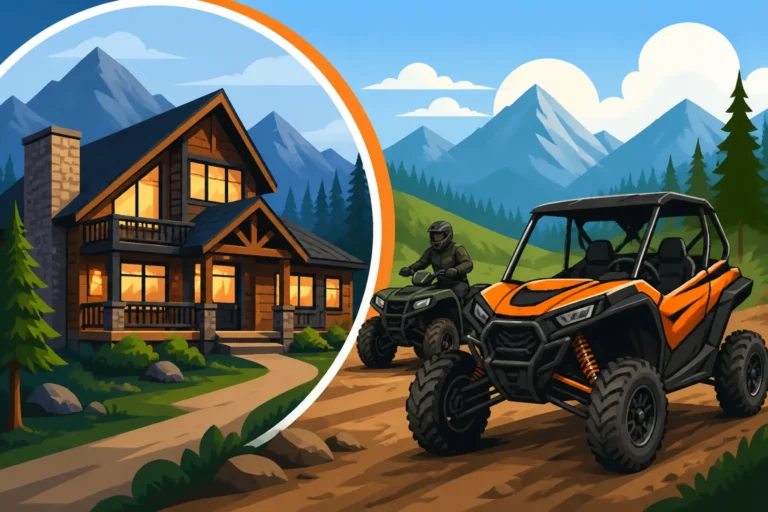
Gunnison gives you a town base with places to eat, lodging choices, fuel and other everyday services. That can be a real advantage for families or mixed groups: you can sleep indoors, restock supplies, and have options if the weather changes or somebody needs a break from camping.
The trade-off is that you need to transport your OHV to the riding area. If you are bringing your own machine, that may mean towing a trailer on mountain roads and finding appropriate places to park and unload. Confirm parking arrangements with your lodging before you book, especially if you are bringing a large truck, a long trailer, or more than one machine. A room that fits your group does not automatically come with space for a trailer.
Gunnison is also a useful base if your trip includes more than one kind of activity. Some visitors want to combine a Taylor Park ride with time in town or other nearby stops. That flexibility can be welcome if a pass is closed, a storm moves in, or a rider in the group wants a lower-key day. For a broader look at the riding area, see Taylor Park in the Gunnison National Forest.
When another base may suit you better
If your main goal is to spend long days exploring Taylor Park, staying closer to the riding area can reduce the daily drive. Camping or lodging nearer the trails may make early starts easier, though it can mean fewer services close at hand. Compare the experience you want, not just the distance on a map: a remote stay can be convenient for riding but less convenient for supplies, meals, and backup plans.
Gunnison may be the better choice when your group prefers a town stay, needs more lodging options, or wants to keep a comfortable fallback if the weather turns. It may be less appealing if you plan to head out before dawn, return late, and ride several consecutive days in the same area. The right base depends on how much driving your group is happy to do and whether you value town amenities more than trail proximity.
| Base style | Most useful for | Main trade-off |
|---|---|---|
| Gunnison lodging | Town services, indoor rest, and flexible plans | Daily drive and trailer logistics |
| Camping closer to Taylor Park | Faster access to riding and early starts | Fewer nearby services and more self-reliance |
| A split stay | Combining town comfort with trail-area access | Packing up and changing locations |
Before settling on a base, sketch out a typical day from breakfast through the return drive. If the schedule feels tight on paper, it will probably feel tighter after a long ride.
Plan the drive and your riding day
A successful Taylor Park day starts before you reach the trailhead. Check your route, fuel needs, parking plan, and riding objectives while you still have reliable services in town. The farther you travel into the mountains, the less sensible it becomes to count on finding an open shop, a convenient place to fuel, or a quick solution to a forgotten item.
Map the route and identify your staging plan
Use a dependable map to understand how you will reach the riding area and where you plan to unload. Do not assume that a road shown on a map is open to OHVs, or that every parking area can accommodate a truck and trailer. Route permissions, seasonal closures, and staging conditions can change. Check current information before you leave, and follow posted signs on the ground.
Digital navigation can help you stay oriented, but it is wise to prepare for patchy or absent cell service. Save maps for offline use and carry a backup you know how to read. Riders planning a wider trip can use Reading a Colorado Motor Vehicle Use Map to understand why route designations matter. Apps such as onX Offroad can help with advance route planning, but always compare the route you intend to ride with official land-manager information and posted closures.
Parking deserves its own check. A cramped staging area can create a stressful start, especially when several trailers arrive together or a group is trying to unload at once. Read Colorado Trailhead Parking and Staging before deciding where to leave your truck and trailer, and make a clear plan with your group about where you will meet if anyone arrives separately.
Match the day to your group and conditions
Taylor Park offers a range of riding opportunities, but a long route is not automatically the best route. Choose a realistic objective based on the least-experienced rider, the machine’s capabilities, the weather, and how much time you have before the drive back to Gunnison. A group can always add distance if the day is going well; it is harder to shorten a route once everyone is far from the staging area.
Think about the whole day rather than just the time spent moving. Riders may need stops to check directions, deal with a minor repair, take a break, or wait for a slower machine. High elevation and rough terrain can make a ride feel more tiring than the same distance at home. Build in enough daylight for the return to the trailer and the drive back to town.
For route ideas and access considerations, Taylor Park Reservoir Trail Access is a useful related topic. Before you go, review Colorado Trail Conditions Reports and any relevant closure information. Conditions on mountain routes can change quickly, so a route that looked manageable during trip planning may not be a good choice on the day you arrive.
Prepare for fuel, permits, and mountain conditions
A town base can make resupply easier, but it does not remove the need to prepare for a remote ride. Carry what your group needs for the planned day, know where your fuel stops are, and check the rules that apply to each machine and rider.
Plan fuel and essential supplies before leaving town
Estimate fuel needs using your own machine, the route, elevation, load, and riding style. A side-by-side carrying passengers and gear may use fuel differently from a lighter ATV ridden at a moderate pace. Do not plan a route that depends on finding fuel at a particular location unless you have confirmed that it is available for your trip.
Fill up before leaving town when practical, and carry fuel only in approved containers and in a way that is safe for your vehicle and trailer. Bring water, snacks, basic first-aid supplies, warm layers, rain protection, and the tools or recovery equipment appropriate for your machine. Even a sunny morning in Gunnison can lead to a colder, wetter afternoon at elevation.
It helps to divide supplies between the truck and the machine. Keep items you may need during the ride accessible without unpacking the trailer, and leave a simple return-day kit in the vehicle. For a more detailed checklist, see Fuel Planning for a Colorado Trail Day. If your group is unfamiliar with the area, Cell Service on Colorado Mountain Trails can help set realistic expectations about communication.
Check permit and access requirements
Make sure each machine has the required registration or permit for the places where you plan to ride. The rules depend on the machine, where it is used, and whether the rider is a Colorado resident or a visitor. Do not assume that a plate or permit from another state automatically covers every type of Colorado riding. Review Colorado OHV Permits for Out-of-State Riders if you are bringing a machine from elsewhere.
Carry required documentation in the way the applicable rules specify, and make sure the group understands where riding is allowed. A route on a digital map is not permission to travel on a closed road or leave a designated route. Respect signs, gates, private property boundaries, and land-manager directions.
If your trip includes camping, check the rules for the specific site or area rather than assuming that every place near a trail is available for overnight use. Camping Beside Colorado OHV Trails covers the practical distinction between finding a convenient place to stay and camping where it is permitted. A little preparation can prevent a frustrating end to the day when a group discovers that its intended campsite or route is not available.
Make Gunnison work for your trip
Book with the trailer and return drive in mind
When comparing places to stay, ask direct questions about trailer parking, outdoor storage, unloading, and whether your vehicle can remain parked while you ride. If several machines are involved, confirm whether the parking arrangement can handle the full group. These details may feel minor while you are booking from home, but they matter after a mountain drive when everyone is ready to unload.
Also consider the ride back. A full day on rough trails can leave drivers tired, and the return drive may take longer than expected. Keep the final ride objective flexible, leave room for delays, and avoid building an evening plan that depends on arriving back at an exact time. If you have a mixed group, agree in advance on a turnaround time so nobody feels pressured to push farther than they want.
Gunnison can make the trip feel easier when you treat it as a practical home base rather than a trailhead. Use town for the things it does well, such as rest, meals, and resupply, and prepare for the fact that the riding itself takes place away from those conveniences.
Have a backup plan for closures or weather
Mountain weather, road conditions, and seasonal access can change your plan. Check conditions before departure and again locally if possible. Keep at least one lower-commitment option in mind, and be willing to change plans if a road is closed, weather deteriorates, or the group is not feeling up to the intended route.
A backup plan does not need to be complicated. It could mean choosing a shorter ride, spending the day in town, or changing the order of your activities. Tell someone outside the riding group where you intend to go and when you expect to return. If your plan changes, update them when you have a reliable chance to do so.
Use onX Offroad or another mapping tool to prepare and save your intended routes, but do not let a device make the decision for you. Check land-management information, signs, and conditions on the ground. If the route is unclear, stopping to confirm is usually better than continuing until the group is committed to a difficult or unsuitable stretch.
A Gunnison stay can be a good fit for a Taylor Park ATV or UTV trip when you plan around the daily drive, confirm parking and access details, and keep your riding day realistic. The more self-sufficient your group is once it leaves town, the more comfortable and flexible the trip is likely to feel.
Disclaimer
This article is for general informational purposes only and does not constitute professional advice. Laws, prices and regulations vary by location and change over time. Consult a qualified professional for guidance on your specific situation.