Colorado Trail Damage and Resource Protection
A Colorado trail can look durable until one shortcut turns into a braided track, a wet meadow becomes a set of deep ruts, or dust and noise sour a nearby community’s support for riding. This guide explains how ATV and UTV riders can prevent trail damage, protect water and wildlife, and make responsible choices when conditions change.
How ATV and UTV Riding Affects Colorado Trails
Erosion starts with small choices
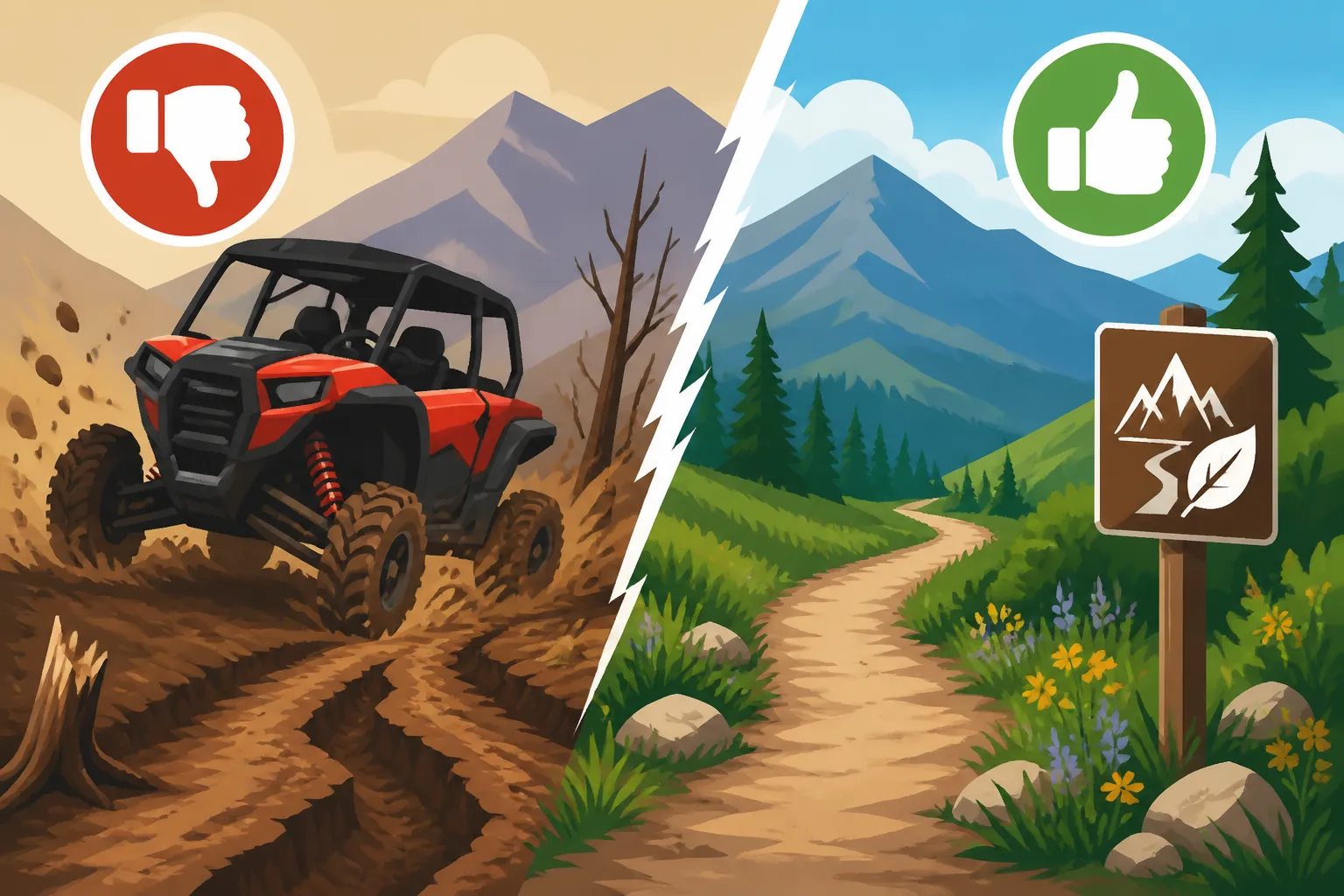
A tire spinning on a steep, loose climb can dislodge soil that rain and snowmelt then carry downhill. The damage may begin with one rider trying to get past a rock or avoid a rut, but repeated use of the same line can deepen it. Water follows the easiest path, and a trail that begins shedding soil can become harder to maintain and more difficult for other riders to use safely.
Shortcuts create a similar problem. Cutting a switchback or riding around a muddy section may seem like a harmless way to protect a machine, but each new line widens the disturbed area. Once riders see tracks leading off the route, some may assume the ground is open for travel. Those tracks can eventually become unofficial routes that are difficult to close and restore.
The most helpful habit is also the simplest: keep your tires on the designated route, including when the route is rocky, rutted, or slower than you would like. If a section feels beyond your machine’s ability or your comfort level, stop somewhere safe and reassess rather than cutting around it. Route difficulty guidance in [Trail Difficulty Ratings and What They Mean] can help riders choose a route that better fits their experience and equipment.
Wet ground is especially vulnerable
Colorado’s high country can be dry and dusty in one spot and soft or waterlogged just around the next bend. Snowmelt, recent rain, shaded terrain, and areas with poor drainage can all leave soil vulnerable. A heavy machine may sink, spin, or push water and mud out of the trail. That can turn a short wet patch into deep ruts that collect more water and become harder to pass.
When a route is muddy, avoid creating a new line around it. If you can proceed without leaving the designated route or causing additional damage, move carefully and smoothly; spinning tires usually make conditions worse. If the trail is too soft or blocked, turning around may be the more responsible choice. That can be frustrating after a long drive to a trailhead, but it is preferable to turning a temporary wet spot into lasting damage.
Conditions can vary within the same area, so do not rely only on what the trail looked like the last time you visited. Check seasonal access information and local notices before leaving home. For a broader look at how temporary conditions affect access, see [Colorado's Mud Season Closure Order] and [Colorado Trail Closures and Where They Are Posted].
Protecting Water, Plants, and Wildlife
Keep machines out of meadows and waterways
Alpine meadows and other soft, low-lying areas can be damaged quickly by repeated tire traffic. Plants may be crushed, soil can compact, and tire marks can redirect water. A route that skirts a meadow is not an invitation to cross it, even if the ground looks firm or another set of tracks is visible. Stay on the signed and designated route, and do not widen it to avoid a puddle, a parked vehicle, or an obstacle.
Water crossings deserve the same care. Do not assume a stream, wetland, or drainage is open to motorized travel because it is easy to reach. Follow route signs and land-manager directions, and avoid splashing through water or driving along a bank unless that travel is clearly part of the designated route. If a crossing appears unsafe or unusually high, stop and consider turning around instead of attempting it.
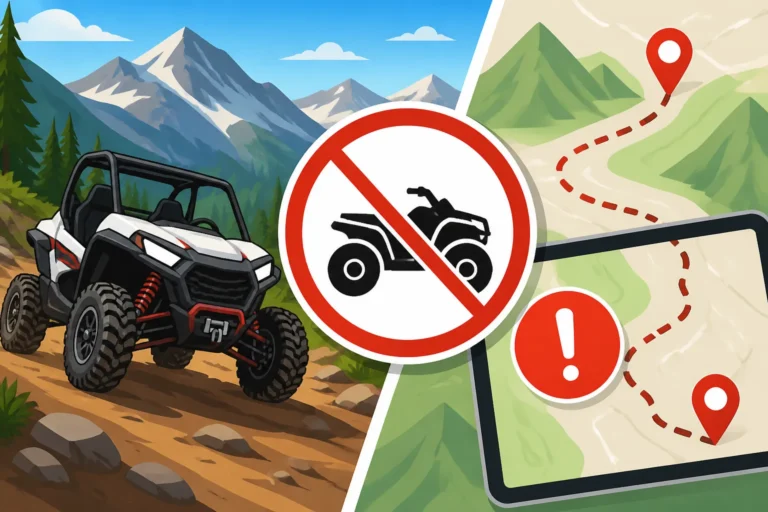
A route map can help riders distinguish the intended line from nearby open ground, but it does not replace signs, gates, or current closure notices. Tools such as onX Offroad can help with route planning and orientation; check the map’s details against current official information and what you encounter on the ground. A mapped line is not, by itself, proof that a road or trail is open to motorized use.
Give wildlife room and avoid unnecessary disturbance
Wildlife may use the same landscape riders visit, and encounters can happen quickly around a blind corner, in a meadow, or near water. Slow down when visibility is limited, stay alert for animals near or on the route, and give them room to move away. Do not chase, crowd, feed, or approach wildlife for a closer look or a photograph.
Noise and repeated disturbance can matter even when no animal is visible. Keep your machine in good working order, avoid unnecessary revving, and respect posted restrictions. In areas with seasonal closures or other wildlife-related rules, follow the signs and local guidance rather than assuming the route is open because it was accessible on a previous trip.
The same considerate approach applies to livestock and working land. Colorado routes may pass through open range, and animals can move unpredictably. Reduce speed when approaching cattle or other livestock, follow gates and signs, and leave gates as you find them. If a route crosses private property or a working area, respect posted conditions and access permissions rather than treating the route as an opportunity to explore beyond its boundaries.
Prevent litter, spills, and trailhead impacts
Small pieces of trash can travel far from where they are dropped. Secure food wrappers, drink containers, straps, and loose gear before riding, then pack out everything you bring in. If you notice litter at a stop, taking a moment to collect it can help keep the area usable for everyone, provided it is safe to do so.
Fuel, oil, and other vehicle fluids should stay out of soil and water. Check your machine before the trip for leaks, and carry it securely on the trailer so fluid does not drip along the route. If a spill happens, move away from the immediate hazard if needed and follow the relevant site or land-manager instructions. Avoid washing machines or dumping waste at a trailhead unless an appropriate facility is clearly provided.
Impacts begin before the ride, too. Park in designated staging areas, keep trailers and machines out of vegetation, and do not block gates, emergency access, or other users. If an area is crowded, wait for a suitable space or choose another staging location rather than creating a new parking spot on soft ground.
Riding Responsibly in Different Colorado Conditions
Adjust your approach to altitude and terrain
Colorado routes can climb from forested slopes to exposed high-country terrain, with changing surfaces and weather along the way. At elevation, a steep climb may feel more demanding for both the rider and the machine. Trying to power through a difficult section can lead to wheel spin, poor control, and damage to the route. Use smooth throttle and avoid sudden acceleration, especially on loose or wet ground.
Plan for the machine you have, not the machine you wish you had. A wide side-by-side may not fit a narrow route, and a route that suits a smaller vehicle may not be appropriate for a full-size machine. Confirm route restrictions, width limits, and surface conditions before setting out. [Colorado Trails Rated for Full-Size Vehicles] and [Wide Side-by-Sides on Narrow Mountain Trails] are useful starting points when matching equipment to terrain.
If you are riding above treeline or on an exposed pass, conditions can change quickly. A trail that was manageable on the way up may be less comfortable on the return, especially if rain, wind, or reduced visibility sets in. Leave room to stop safely, keep a sensible distance from other machines, and do not let a group’s momentum pressure anyone into taking a route they are not comfortable riding.
Treat closures and seasonal signs as part of the route
A closed gate or sign is not a suggestion to find a way around. Closures may protect vulnerable soil, allow repairs, reduce conflict with wildlife, or address unsafe conditions. Going around a barrier can cause fresh damage and may create consequences beyond the immediate trail. Check current access information before departure and obey signs on the ground, even if an online map or older trip report suggests the route is open.
Seasonal timing matters across the state. A trail may be open in one month and closed in another, or conditions may prompt a temporary restriction. Riders planning trips in places such as the Grand Mesa, Taylor Park, or the Alpine Loop should check the applicable route information rather than assume that a familiar trail is available. [When Colorado OHV Trails Open Each Summer] offers related seasonal planning context.
Apps and downloaded maps are useful when cell service drops, but information can become outdated or show routes that are not open to motorized use. Download what you need before leaving, then confirm the route with current agency information and local signs. onX Offroad can support offline navigation and route awareness, but riders should still verify access rules instead of treating a digital track as permission to ride.
Practical Habits That Reduce Trail Damage
Prepare your machine and group before departure
A pre-ride check helps prevent breakdowns that can leave riders stopped in a narrow or fragile area. Check tires, brakes, steering, lights, and fluid leaks. Bring recovery gear appropriate for the route, and know how to use it without attaching equipment to vegetation or damaging surrounding ground. A poorly planned recovery can create more impact than the original problem.
Set expectations with your group before the machines start moving. Agree to stay on route, keep a safe distance, avoid racing, and stop in durable areas rather than spreading out into vegetation. Riders should also know how to communicate if someone wants to slow down or turn back. A group that plans for different comfort levels is less likely to take a risky shortcut under pressure.
Use a route map to identify the intended trail, staging areas, and possible turnarounds. onX Offroad may help riders keep track of their position when service is unavailable, but map information should be checked against official sources and posted signs. For a more complete trip-planning approach, see [Planning a Colorado Riding Trip] and [Reading a Colorado Motor Vehicle Use Map].
Ride in a way that limits repeated disturbance
Smooth riding usually causes less damage than abrupt throttle, hard braking, and repeated wheel spin. On loose climbs, use controlled momentum rather than surging the throttle. On descents, keep a steady pace and avoid skidding or dragging tires across soft terrain. If you are unsure how to proceed, pause in a stable spot and choose a line within the designated route.
Spacing matters, too. Following too closely can force riders to brake or accelerate suddenly, especially on a narrow trail. Leave enough room to see the route ahead and respond to changing conditions. At a dusty section, a little more distance can also improve visibility for everyone behind you. In a group, let the person at the back know if the line is slowing or stopping.
Be especially thoughtful when passing other users. Hikers, cyclists, equestrians, and other motorized riders may have limited room to move aside. Slow down, communicate calmly, and wait until there is a safe place to pass. A few seconds of patience can prevent a startled animal, a damaged trail edge, or a conflict that makes future access harder to maintain.
Make a responsible call when conditions are poor
There is no shame in changing plans. If a route is too wet, too crowded, beyond the group’s ability, or affected by a closure, choose a suitable alternative or end the ride. The decision can feel disappointing when everyone has taken time off and traveled a long way, but continuing at any cost can put riders and the landscape at risk.
A useful rule is to ask whether the next move keeps the machine on the designated route and avoids making conditions worse. If the answer is uncertain, stop somewhere safe, check signs and maps, and discuss options. If turning around is the safest choice, do so carefully and only where the route allows. Avoid reversing blindly on a narrow trail or creating a new turnaround area in vegetation.
For planning alternatives, look at routes suited to your machine and experience rather than choosing solely by scenery or popularity. [Colorado Trails Suited to Beginners] can help newer riders find a better match, while [Stay The Trail Ethics in Colorado] covers responsible use principles that apply across different riding areas.
Trail Damage Response and Shared Responsibility
Know what to do if you encounter damage
If you come across a washed-out section, a fallen tree, deep new ruts, or a damaged sign, do not make the problem worse by riding around it through vegetation. Stop where it is safe, assess whether the route remains passable, and follow any posted direction. If the route is unsafe or blocked, turn back rather than attempting an improvised detour.
When reporting a problem, share practical details: the route or area, a nearby landmark, the type of damage, and whether the route seems passable. A clear description can help land managers or trail groups understand what needs attention. Avoid posting a suggested detour that could lead other riders onto an unauthorized route.
Riders can also support maintenance through local clubs, volunteer days, and responsible trail use. Repair work should be coordinated with the relevant land manager; well-intended digging, cutting, or sign changes can cause additional harm or conflict with management plans. [Colorado Trail Adoption and Volunteer Days] provides a useful place to learn about organized ways to contribute.
Why individual choices affect future access
Trail access depends in part on whether routes can be used without unacceptable damage or conflict. Repeated off-route riding, litter, noise complaints, and disregard for closures can undermine relationships with land managers and nearby communities. One rider may not see an immediate consequence from a shortcut, but many shortcuts can change how an area is viewed and managed.
Responsible riding also makes the experience better for other users. Staying on route keeps trails clearer and reduces confusion about where motorized travel is allowed. Slowing near homes, trailheads, and shared-use areas helps reduce dust and noise. Respecting other visitors makes it easier for different kinds of recreation to coexist.
A helpful quick-reference table can make decisions easier during trip planning:
| Situation | Lower-impact choice | Avoid |
|---|---|---|
| A muddy or soft section | Stay on the designated route if it is safely passable, or turn back | Cutting a new line through vegetation |
| A blocked or damaged trail | Stop, check signs, and report the location when practical | Riding around a closure or barrier |
| A steep, loose climb | Use controlled throttle and a suitable route | Spinning tires or racing up the slope |
| A water crossing | Follow route directions and avoid unauthorized crossings | Driving along banks or through wetlands |
| Wildlife or livestock nearby | Slow down and give animals room | Chasing, crowding, or revving close to them |
| A crowded trailhead | Use designated parking and staging | Parking trailers or machines on vegetation |
The best trail-protection habits are often ordinary ones: choose an appropriate route, stay on it, ride smoothly, pack out what you bring in, and turn around when conditions call for it. Practiced consistently, those choices help keep Colorado riding areas in better shape for the next trip and the people who share the landscape.
Disclaimer
This article is for general informational purposes only and does not constitute professional advice. Laws, prices and regulations vary by location and change over time. Consult a qualified professional for guidance on your specific situation.