Riding in Colorado Above 12,000 Feet
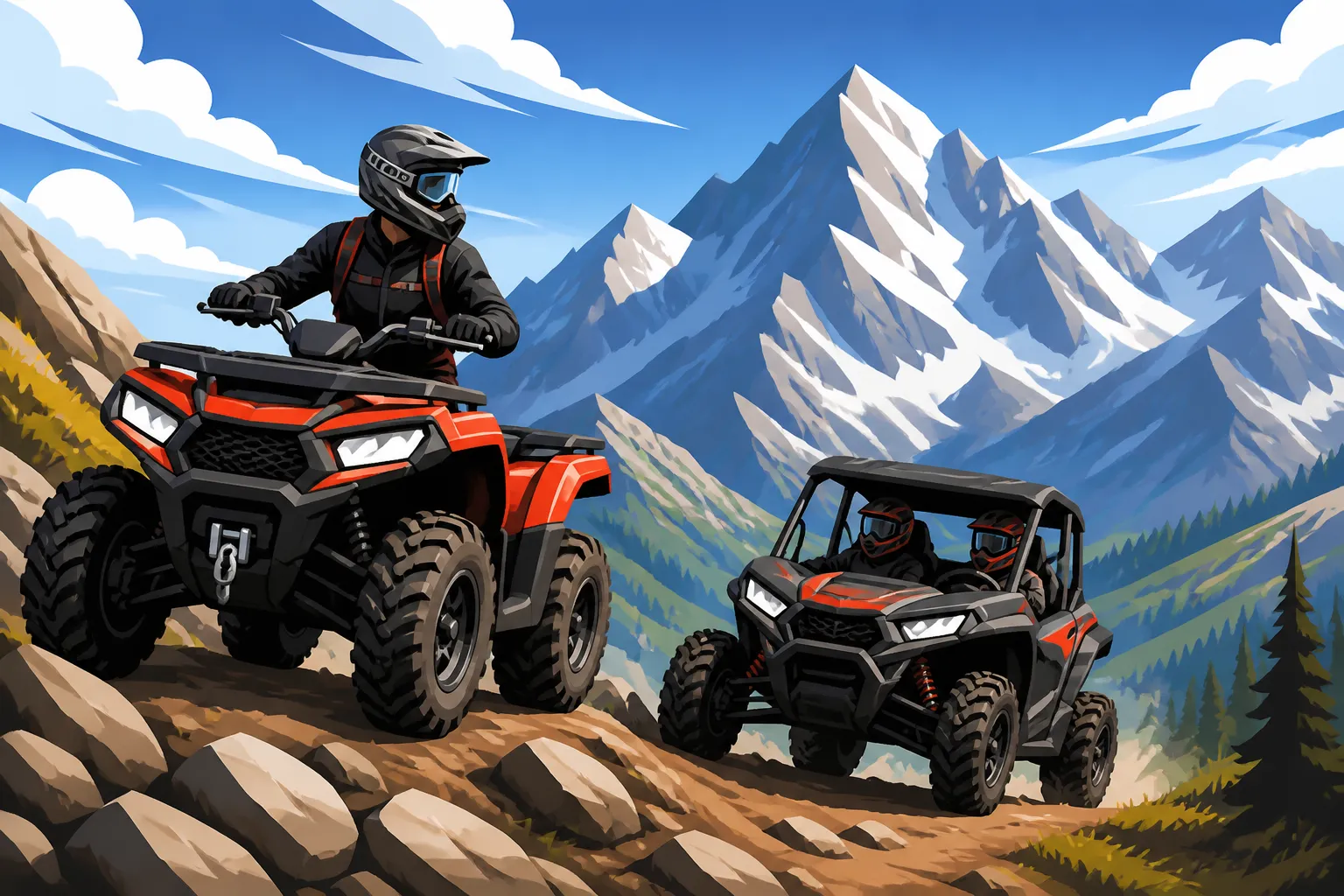
There's nothing quite like the exhilaration of riding your ATV or UTV high above the treeline in Colorado, gazing out at a panorama that stretches for what feels like forever. But that breathtaking beauty comes with a unique set of challenges that can quickly turn a dream ride into a harrowing experience if you're not prepared. Whether it's your machine sputtering under the thin air, a sudden hailstorm appearing out of nowhere, or the unsettling feeling of being miles from civilization with no cell service, the high country demands respect. This guide is here to walk you through everything you need to know to safely and confidently conquer Colorado's trails above 12,000 feet, ensuring your high-altitude adventure is one for the memory books, not the emergency log.
The Unique Challenges of High-Altitude Riding in Colorado
Riding above 12,000 feet in Colorado isn't just a matter of gaining elevation; it's entering an entirely different environment. The air is thinner, the weather is more extreme, and the landscapes are often incredibly remote. These factors combine to create a set of challenges that can impact both your machine's performance and your personal safety. Ignoring these realities is a recipe for trouble, which is why understanding them is the first step toward a successful high-altitude adventure.
How Altitude Affects Your Machine's Performance
The biggest immediate impact you'll notice when you climb above 10,000 or 12,000 feet is how your machine responds. That roaring engine that pulls hard at home might feel sluggish and breathless up here. The primary culprit is the reduced oxygen in the air. Engines, especially internal combustion ones, need oxygen to burn fuel efficiently. With less oxygen, they can't create as much power. This power loss can be significant, often reducing your engine's output by 3% for every 1,000 feet of elevation gain above sea level. So, a machine that's a beast at 5,000 feet will feel noticeably weaker at 12,000 feet, losing a quarter or more of its power. This isn't just an inconvenience; it can affect your ability to climb steep grades, pull out of sticky situations, or maintain momentum on challenging terrain.
For older, carbureted machines, this thin air can also lead to a "rich" fuel mixture, as the carburetor is still delivering the same amount of fuel but there's less air to mix it with. This can cause sputtering, poor idle, and even fouling spark plugs. While most modern ATVs and UTVs come with electronic fuel injection (EFI) systems that can automatically adjust to changes in altitude, even these systems have their limits. They can compensate to a degree, but they can't magically create oxygen that isn't there. You might still experience a noticeable decrease in throttle response and overall power. It's not uncommon for riders to feel their powerful side-by-side struggle more than usual on a long, sustained climb on passes like Engineer or Cinnamon. Keeping up with your machine's maintenance is crucial, especially ensuring your air filter is clean, as a restricted filter will only exacerbate the problem. Many riders even consider performance upgrades, perhaps from a brand like SuperATV, to help their machines better handle these conditions, though no modification can fully overcome the lack of oxygen. For more specific tuning tips, check out [Altitude and Carburetor Tuning].
Beyond power, cooling can also become a concern. Engines work harder in the thin air, and the air itself is less dense, meaning it carries less heat away from the radiator. This combination can push your machine closer to overheating, especially on sustained climbs or during slow, technical riding. Keep a close eye on your temperature gauge, and don't be afraid to pull over and let your machine cool down if it starts to run hot. It's better to take a break than to risk a full engine shutdown miles from anywhere.
The Unpredictable Nature of Mountain Weather
If there's one constant in Colorado's high country, it's that the weather is anything but constant. You can start your morning under clear, sunny skies and be caught in a violent thunderstorm, hail, or even snow just a few hours later, even in the middle of summer. This rapid changeability is a serious threat when you're exposed above treeline. A warm, pleasant ride can transform into a freezing, miserable experience in minutes, leading to hypothermia risks, slick trails, and reduced visibility. I've personally seen riders caught unprepared, shivering violently and risking serious exposure because they thought a bright July morning meant short sleeves all day. It’s a common misconception, especially for those new to mountain riding, but the reality is that the higher you go, the more extreme and unpredictable the conditions become.
Lightning is another major concern when you're high up. Treeline, typically around 11,000 to 11,500 feet in Colorado, offers some protection, but once you're above it, you become one of the tallest objects around. Lightning strikes are a very real danger during summer thunderstorms. These storms often build rapidly in the early afternoon, making an early start to your ride crucial. Trying to outrun a storm once it's overhead is rarely successful, especially if you're navigating challenging terrain. Being aware of the forecast, but also constantly scanning the skies, is paramount. [Afternoon Thunderstorms on a Pass] and [Lightning Above Treeline on an OHV] offer more detailed advice on handling these specific threats.
Snow isn't just a winter phenomenon either. It's not uncommon to see snow flurries on high passes in June or September, and a significant dump can close trails unexpectedly. [Checking Snowpack Before a Colorado Trip] is a vital resource for early-season planning. These weather shifts can also make trails incredibly muddy and treacherous, even if they were dry just hours before. This means your riding strategy needs to be flexible, and your gear selection must account for a wide range of possibilities, from scorching sun to freezing rain.
Navigating the Remote Colorado Backcountry
One of the biggest draws of Colorado's high-altitude trails is the feeling of being truly out in the wilderness, away from it all. But that same remoteness poses significant challenges when it comes to navigation and emergency preparedness. Cell service is virtually non-existent in many of these areas, especially in deep canyons or high passes. Don't count on your smartphone to guide you or call for help. Getting lost above treeline can quickly become a serious situation, as landmarks can be subtle, and visibility can be compromised by weather.
Beyond navigation, the sheer distance from paved roads and emergency services means that self-reliance is not just a good idea, it's an absolute necessity. A minor mechanical issue that would be a quick fix closer to town can become a major ordeal when you're 20 miles down a rocky trail with no one else around. Similarly, an injury that might be easily handled with quick professional medical attention can be life-threatening if it takes hours for rescuers to reach you. This isn't meant to scare you, but to impress upon you the importance of thorough planning, carrying the right gear, and understanding your own limits and your machine's capabilities. Knowing who to call and how to communicate when you have no signal is a crucial piece of the puzzle, so researching satellite communication devices is highly recommended. For more on communication challenges, refer to [Cell Service on Colorado Mountain Trails].
Preparing Yourself and Your Machine for High-Altitude Adventures
Successfully tackling Colorado's high country isn't something you can just wing. It requires diligent preparation, both for yourself and your off-road vehicle. This isn't just about packing a lunch; it's about anticipating every potential challenge and having a plan to address it. From ensuring your machine is in peak condition to understanding how your own body will react to the thin air, smart preparation is your best defense against the unexpected.
Essential Gear for Rider Comfort and Safety
When you're packing for a high-altitude ride, think "layers" and "contingency." Even on a seemingly warm summer day, temperatures can drop rapidly with elevation gain or when a cloud moves in. Start with a moisture-wicking base layer, add insulating layers like fleece, and always, always have a waterproof and windproof outer shell. This isn't just for rain; it's vital protection against biting winds above treeline. I've been on rides where it was 70 degrees in town and 40 degrees with driving rain on the pass. Gloves, a warm hat that fits under your helmet, and sturdy waterproof boots are also non-negotiable. Don't forget eye protection, whether goggles or sunglasses, to shield against dust, wind, and sun glare, which is much more intense at altitude.
Beyond personal clothing, a comprehensive toolkit and recovery gear are paramount. Imagine getting a flat tire on a shelf road or needing to winch your machine out of a ditch. You'll be grateful for a tire repair kit, a small air compressor, and a basic set of tools for minor repairs. For safety and peace of mind, a powerful winch, perhaps a model from SuperATV, is an invaluable piece of equipment, especially if you're tackling challenging trails alone or with a small group. A recovery strap and shackles are also a must.
For personal safety and emergencies, a well-stocked first-aid kit is critical. Include essentials like bandages, antiseptic wipes, pain relievers, and any personal medications. Hydration is also incredibly important at altitude, so carry much more water than you think you'll need, along with high-energy snacks. A satellite messenger or personal locator beacon (PLB) is strongly advised, as it can be a lifesaver when cell service is gone. These devices allow you to send emergency messages or check in with loved ones. Finally, always carry a physical map of the area and a compass, and know how to use them – batteries die, and electronics fail. For a more comprehensive list, check out [What to Carry Over a High Pass].
Pre-Trip Machine Checks and Adjustments
Before you even load your ATV or UTV onto the trailer, give it a thorough once-over. This isn't just about basic maintenance; it's about making sure your machine is ready for the added stress of high-altitude riding. Start with the basics: check all fluid levels (oil, coolant, brake fluid), and ensure they are topped off and clean. Pay close attention to your cooling system – a properly functioning radiator and fan are critical to prevent [Overheating on a Colorado Climb]. Inspect all hoses and connections for leaks or cracks.
Tires are your only point of contact with the trail, so ensure they are in good condition with adequate tread. Check tire pressure and adjust it according to your machine's specifications and the terrain you expect to encounter. Overinflated tires can lead to a harsh ride and reduced traction on rocky trails, while underinflated tires can risk rim damage or bead separation. Test your brakes thoroughly – you'll be relying on them heavily for controlled descents.
For fuel-injected machines, ensure your fuel filter is clean, and for older carbureted models, consider carrying spare spark plugs and potentially adjusting your jetting for altitude if you'll be spending a lot of time above 10,000 feet. If you've recently installed aftermarket accessories, like a lift kit or new suspension components from SuperATV, double-check all bolts and connections. Finally, make sure your spark arrestor is properly installed and clean. This is not just good practice but a legal requirement on all public lands in Colorado to prevent wildfires, and rangers will check. A pre-ride inspection can save you from a breakdown far from help, making the difference between a minor inconvenience and a significant problem.
Understanding Altitude Sickness and Prevention
It's not just your machine that struggles with thin air; your body does too. Altitude sickness, or acute mountain sickness (AMS), is a very real concern when you rapidly ascend to high elevations. Symptoms can range from mild headaches and nausea to severe disorientation and fluid in the lungs or brain, which can be life-threatening. Recognizing these symptoms early and knowing how to respond is crucial for your safety and the safety of your riding partners. The key to prevention is acclimatization. If you're coming from sea level, try to spend a day or two at a moderate elevation (around 7,000-9,000 feet) before heading up to 12,000 feet. This gives your body a chance to adjust to the lower oxygen levels.
Hydration is also paramount. Drink plenty of water throughout the days leading up to your ride and continuously during your time at altitude. Avoid alcohol and caffeine, as they can contribute to dehydration. Eating light, high-carbohydrate meals can also help. Most importantly, listen to your body. If you start feeling symptoms like a persistent headache, fatigue, dizziness, or nausea, do not ignore them. The best course of action is to descend to a lower elevation immediately. Often, even a few thousand feet of descent can make a significant difference. Pushing through severe symptoms can be incredibly dangerous.
It's important to distinguish between the common signs of altitude sickness and simple dehydration or exhaustion, though they can often overlap. Here's a quick comparison:
| Symptom | Common with Altitude Sickness | Common with Dehydration |
|---|---|---|
| Headache | Often throbbing, persistent, worse at night | Dull, generalized, can improve with water |
| Nausea/Vomiting | Can be severe, often accompanied by appetite loss | Mild to moderate, feeling unwell, dry mouth |
| Fatigue | Profound, disproportionate to activity level | Tiredness, muscle cramps |
| Dizziness | Lightheadedness, difficulty with balance | Lightheadedness, especially when standing |
| Shortness of Breath | At rest or with minimal exertion | During strenuous activity, usually resolves with rest |
| Urination | Often reduced | Reduced, dark urine |
| Sleep Issues | Difficulty sleeping, frequent waking | Can occur, but less distinct than AMS |
If you suspect severe altitude sickness, especially if symptoms like confusion, severe shortness of breath, or a persistent cough develop, seek medical attention immediately. Even mild symptoms should be taken seriously, as they can progress quickly.
On the Trail: Strategies for Riding Above 12,000 Feet
Once you're actually out on the trails, high above treeline, the real adventure begins. But the challenges don't stop just because you've arrived. Knowing how to manage your machine, navigate the ever-changing weather, and stay oriented in the vastness of the high country are critical skills for a safe and enjoyable ride. These aren't just tips; they're strategies for survival and success.
Managing Your Machine on Steep Climbs and Descents
Riding above 12,000 feet often means tackling steep, rocky climbs and equally challenging descents. The reduced power of your machine at altitude means you'll need to be more deliberate with your throttle control. Instead of relying on brute force, maintain a steady, consistent pace, and choose your lines carefully. Avoid sudden bursts of throttle, as this can lead to loss of traction and unnecessary strain on your engine and drivetrain. If your machine is struggling on a climb, it's better to back down and try a different line or a slightly different approach than to push it to its breaking point. Remember, momentum is your friend, but reckless speed is not.
On descents, utilize your machine's engine braking to control your speed. Modern ATVs and UTVs with engine braking systems are invaluable here, as they help prevent your brakes from overheating and fading, which can be a serious issue on long, steep grades. Feather your brakes judiciously, but primarily rely on engine braking to maintain a controlled, slow descent. For specific techniques on this, consult [Engine Braking on a Steep Pass]. Many riders also opt for upgraded brake pads or stronger suspension components, some of which are available from SuperATV, to handle the demanding conditions and the weight of their machines and gear. Always descend in a low gear, allowing your engine to assist in slowing you down. This not only saves your brakes but also provides more stability and control on loose or technical terrain. Keeping your speed in check is the golden rule, allowing you time to react to unexpected obstacles or trail changes.
Recognizing and Responding to Weather Changes
As discussed, mountain weather can change in an instant, and being prepared to react is non-negotiable. The moment you see dark clouds building, especially to the west, or hear distant thunder, start making a plan. Don't wait until the first raindrop hits. Your first priority should always be to descend to a lower elevation, ideally below treeline, if a lightning storm is brewing. Being exposed on an open ridge during a lightning strike is incredibly dangerous. If descent isn't immediately possible, look for sheltered areas, like a dense patch of stunted pines, but stay away from isolated tall trees, which can attract lightning.
Carry your waterproof and windproof layers on your person, not buried in a storage box. When the weather turns, you need to be able to don them quickly. If heavy rain or hail starts, consider pulling over to a safe spot, preferably under a natural overhang or a large rock outcropping, and wait it out. Visibility can drop dramatically in a mountain storm, making navigation treacherous. Turning back is always an option, and often the smartest one. There's no shame in rescheduling a high-country ride if the weather turns genuinely nasty. It’s far better to ride another day than to push your luck and risk an accident or exposure. Always remember, the mountain doesn't care about your plans.
Navigating and Staying Found Above Treeline
The vast, open landscapes above treeline are stunning, but they can also be disorienting. With fewer trees, distinct trail markers can become scarce, and faint two-track roads can easily blend into the tundra. This is where your navigation tools become critical. Do not rely solely on a single device. Carry a GPS unit with pre-loaded maps, and critically, a paper map and compass as a backup. Knowing how to read a [Motor Vehicle Use Map] (MVUM) is also essential, as these show designated routes and closed areas. Many riders find apps like [onX Offroad for Colorado Trails] incredibly useful, but remember that phone batteries can die, and signal is often absent.
Before you even start your ride, study your route. Identify key landmarks, junctions, and potential bailout points. As you ride, periodically check your map or GPS to confirm your position and direction of travel. Pay attention to the subtle cues of the landscape – the direction of drainages, the shape of peaks, the general orientation of ridges. If you find yourself in whiteout conditions due to fog or a snowstorm, the safest course of action is often to stay put if you cannot clearly determine your direction of travel. Blowing snow can quickly cover tracks, making it impossible to retrace your steps. A group leader should always have a plan for what to do if someone gets separated or lost. Whistles can be useful for communication within a group in limited visibility. Being prepared to spend an unexpected night out is also a sobering but necessary consideration for any high-country adventurer, reinforcing the need for emergency supplies.
Disclaimer
This article is for general informational purposes only and does not constitute professional advice. Laws, prices and regulations vary by location and change over time. Consult a qualified professional for guidance on your specific situation.