Reflectors and Flags on a Mountain Road
Riding Colorado’s incredible mountain roads and trails on your ATV or UTV is an experience like no other, but let’s be real – those winding, often narrow, and sometimes dusty routes come with their own set of challenges. One of the biggest worries, especially on shared county roads or when heading out early or coming back late, is simply being seen. It's not just about what you can see; it's crucially about making sure everyone else can see you. This guide is all about helping you understand and implement essential visibility aids like reflectors and flags, ensuring your adventures are as safe as they are exhilarating.
Why Visibility is Your Best Friend on Colorado Mountain Roads
When you’re out on the trails or county roads in Colorado, the landscape is constantly shifting, and so are the conditions. Being easily visible isn't just a suggestion; it’s a critical component of your safety strategy. It’s about more than just avoiding a ticket; it's about coming home safe.
The Unpredictable Nature of Mountain Terrain
Colorado’s mountains are breathtaking, but they're also masters of disguise when it comes to what's around the next bend. Imagine cresting a hill only to find a sharp drop-off and a tight curve, or navigating a dusty section where visibility drops to mere feet. These aren’t just scenic elements; they’re potential hazards if you’re not prepared. Blind corners are a constant companion on mountain roads, and the undulating terrain means you can quickly disappear from sight, only to reappear just as unexpectedly. Dust, especially during dry spells or on heavily trafficked routes, can create a thick, opaque cloud that makes it incredibly difficult for oncoming traffic to see you, and vice-versa. And let’s not forget the sheer unpredictability of encountering wildlife – a deer or elk might dart out without warning, requiring immediate braking from everyone involved.
In these conditions, relying solely on your headlights or taillights might not be enough. Passive visibility aids like reflectors start working before headlights can fully illuminate your machine. They catch ambient light, even from a distance, giving others that crucial extra second of warning. This early detection can be the difference between a close call and a serious incident, allowing other drivers or riders to adjust their speed or position. The importance of these simple tools can't be overstated when you're dealing with such dynamic and often demanding environments.
Sharing the Road with Diverse Traffic
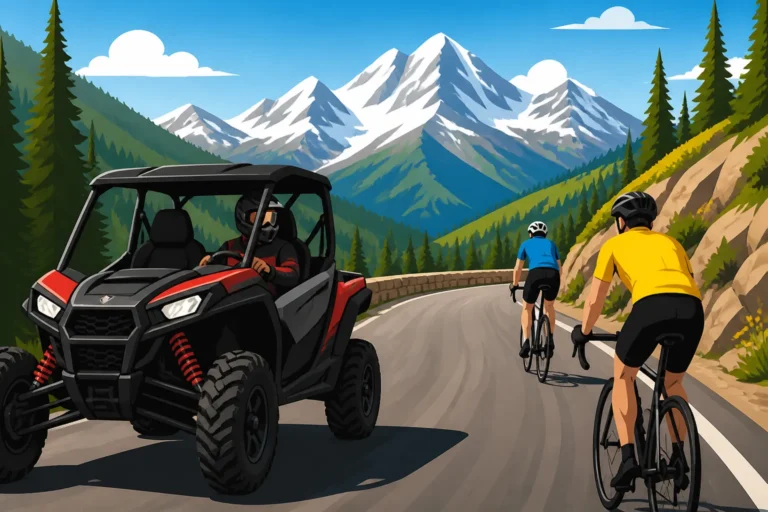
It’s easy to think of mountain roads as purely for OHVs, but that's rarely the case. These routes are shared by an incredibly diverse mix of users, each with different speeds, sizes, and levels of attention. You’ll encounter everything from heavy-duty Jeeps and full-size pickup trucks hauling trailers, to families in SUVs, dedicated hikers, mountain bikers silently climbing ascents, and even horseback riders. And, of course, other OHVs, some much larger or faster than your own. The speed differentials alone are a significant factor; a large truck moving at a legal limit on a gravel road might be closing in on your UTV much faster than you anticipate, especially if they haven't seen you yet.
Each of these road users represents a different visual profile, and not everyone is actively looking for an ATV or UTV. A bicyclist coming around a bend might not expect an OHV, and a hiker stepping out from a trailhead might be focused on the scenery rather than traffic. Your goal is to stand out, to make your presence undeniable to all these different eyes and intentions. Reflectors and flags work tirelessly to achieve this, providing a distinct visual cue that shouts, "I'm here!" no matter the size or type of vehicle you're sharing the road with. This shared responsibility for safety means doing everything you can to make yourself known, minimizing surprises for everyone.
Essential Reflectors for Your Colorado OHV
Reflectors are your silent, ever-vigilant guardians, working 24/7 to catch and bounce back any light that hits them. They don't need power, they don't burn out, and they are incredibly effective at making your machine more noticeable.
Where to Place Reflectors for Maximum Impact
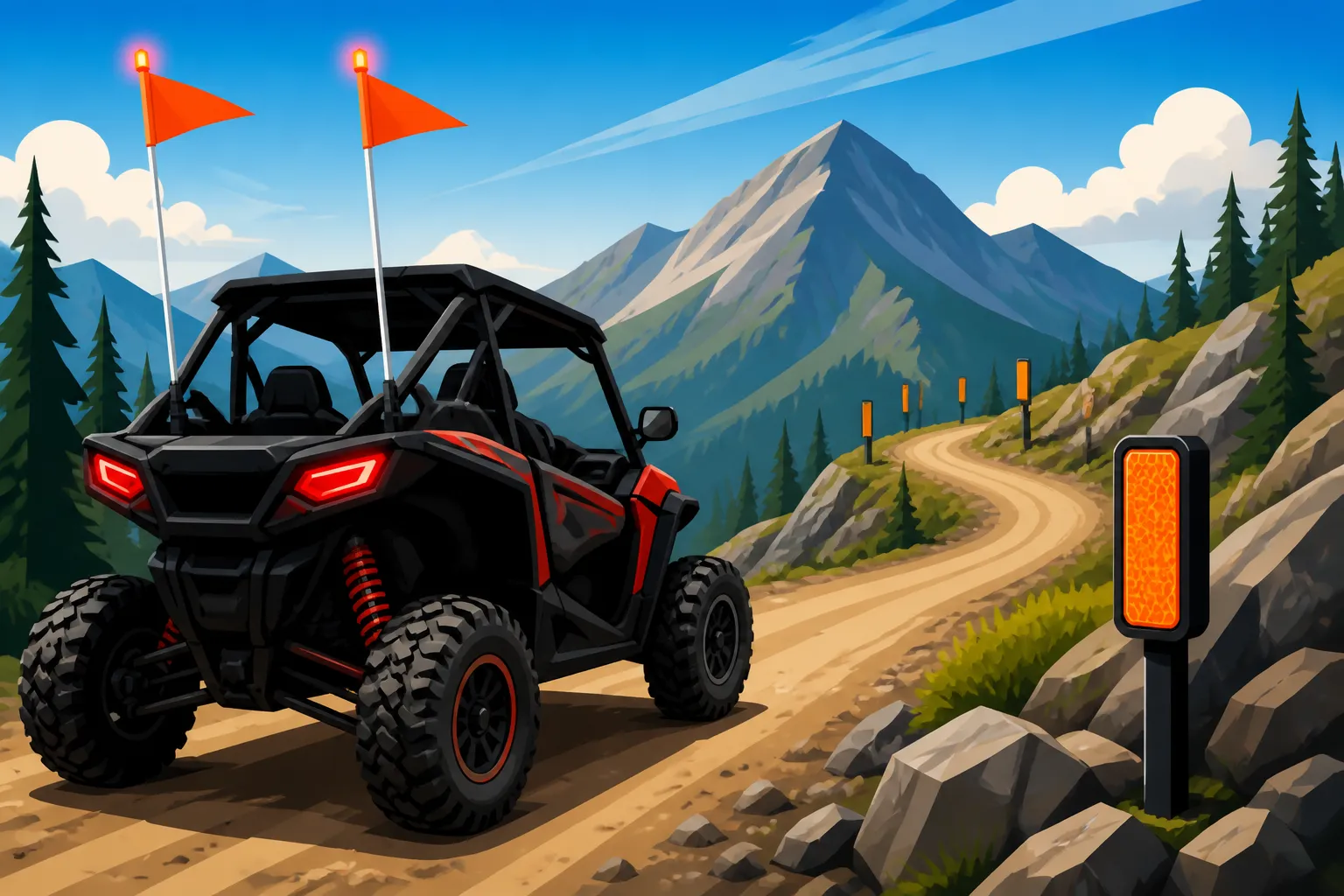
Strategic placement of reflectors is key to maximizing their effectiveness. Think about how other vehicles will approach your machine from all angles: front, rear, and sides. Red reflectors are universally recognized for the rear, mimicking taillights and indicating the back of your vehicle. Amber or yellow reflectors are best for the sides, helping delineate the length of your OHV, especially useful for larger side-by-sides. While white reflectors aren't as commonly mandated for OHVs, they can be useful on the front in certain situations, complementing your headlights. The science behind reflectors is simple yet brilliant: they use tiny retroreflective surfaces to bounce light directly back to the source, meaning the light from an oncoming vehicle’s headlights will be reflected straight back to that driver, making your machine glow even in dim conditions. This provides a clear, unmistakable outline of your presence, even before your actual lights are clearly visible.
Many aftermarket accessories and components, like those from SuperATV, often come with designated mounting points or even integrated reflectors, making it easier to add these crucial safety features. Consider not just the body of your machine, but also parts of your roll cage, bumper extensions, or even storage boxes. The goal is to create a visible "halo" around your OHV that can be seen from any approach angle. Don't just stick them on; think about the sightlines, the typical heights of other vehicle headlights, and where they will do the most good. A little thought in placement can make a huge difference in how well you're seen.
The Importance of Reflective Tape and Decals
Beyond rigid, mounted reflectors, don't underestimate the power of reflective tape and decals. These flexible, adhesive materials offer a versatile way to add visibility to almost any surface of your OHV. Think about outlining the edges of your roll cage, adding strips to your front and rear bumpers, or even accenting the side panels of your machine. This tape is particularly effective on irregular surfaces where a rigid reflector might not fit, and it allows for a larger, more continuous reflective area. It's a fantastic solution for customizing your visibility.
Reflective tape isn't just for nighttime, either. At dawn and dusk, when light conditions are tricky and shadows play tricks on perception, reflective tape can catch even the slightest ambient light, making your OHV stand out. This is often when many accidents occur, as people's eyes are still adjusting to changing light. Furthermore, consider adding reflective decals to your helmet or riding gear. This provides an additional layer of personal visibility, ensuring that even if you're dismounted from your machine, you remain visible to others. In the rugged Colorado environment, it's wise to choose high-quality, durable reflective tape that can withstand exposure to sun, rain, dust, and mud, ensuring its effectiveness ride after ride.
The Role of Whip Flags in Colorado's Open Riding Areas and Roads
Whip flags might seem like a bit of a flair, but they serve a very practical and important safety function, especially in certain riding conditions and areas. They are designed to project your presence above your machine, making you visible even when your OHV itself might be obscured.
When and Why Whip Flags Are Required or Recommended
While Colorado county roads don't universally mandate whip flags, many designated open riding areas, such as specific dune environments or OHV parks, do require them. These requirements are usually in place for very good reasons: in areas with significant elevation changes, such as sand dunes or rocky trails with blind rises, a flag extending several feet above your machine allows other riders to see you approaching from a distance, even if your machine is still hidden by a dune crest or a rock outcrop. This early warning can prevent head-on collisions or surprising encounters in areas where vision is extremely limited.
But even where not legally required, a whip flag offers an undeniable safety benefit on any Colorado mountain road, particularly on trails where you might be following other machines, riding in a group, or navigating through brush. It provides a visual marker that is often visible above dust clouds or dense foliage, helping to keep track of your group and signaling your presence to others who might not immediately see your OHV itself. For smaller ATVs or dirt bikes, which have a lower profile, a whip flag significantly increases their overall visibility, bringing them into the sightlines of larger vehicles like side-by-sides or Jeeps. [Colorado OHV Road Rules for Young Riders] might also include recommendations or requirements for increased visibility for youth machines, and a flag certainly helps here.
Choosing the Right Whip Flag and Mounting It Securely
Selecting the right whip flag involves a few considerations. First, check local regulations for any specific height requirements; often, flags need to extend 8 to 10 feet from the ground to ensure they are visible over terrain. You’ll find flags in various styles – solid colors, checkered patterns, or even lighted whips. Lighted whips are fantastic for night riding, adding active illumination and making your flag visible in the dark, truly turning your machine into a beacon. Companies like SuperATV offer a wide array of whip flags, mounts, and even lighted options to suit different preferences and conditions, so you can find something both functional and stylish.
Secure mounting is paramount. A flimsy mount or an improperly secured flag can quickly detach or break on rough trails or in high winds. Look for robust mounting solutions that attach directly to your roll cage, cargo rack, or rear bumper. Many riders opt for quick-release mounts, allowing them to easily remove the flag when transporting the OHV or when it's not needed. Ensure the pole of the whip is durable enough to withstand trail abuse – branches, bumps, and continuous vibration. A flag that's constantly snapping or falling off isn't just ineffective; it's a nuisance that distracts from your ride. Taking the time to choose a quality flag and mount, and installing it correctly, ensures it will serve its purpose reliably. You can often find great options for mounting, including those with [Where the Colorado OHV Sticker Goes] for registration decals, right on quality aftermarket websites.
Integrating Visibility Gear into Your Overall Safety Strategy
Reflectors and flags are powerful tools, but they are most effective when they're part of a broader, comprehensive approach to safety. Think of them as essential layers in your personal safety onion.
Combining Reflectors and Flags with Proper Lighting
It's crucial to understand that reflectors and flags are complements, not substitutes, for your OHV's active lighting system. Your headlights, taillights, and brake lights are your primary means of signaling your presence and intentions, especially during low-light conditions, dusk, dawn, and at night. Reflectors amplify the effectiveness of these lights by catching and returning light from other sources. When your taillights are on, the red reflectors around them make that red glow even more expansive and noticeable. During the day, flags and bright colors stand out, but as soon as the sun starts to dip, your lights become paramount.
Before every ride, especially if you plan to be on any county roads or trails where others might be present, it's absolutely vital to perform a quick check of all your lights. Ensure your headlights are clean and working, your taillights are shining brightly, and your brake lights activate immediately when you press the pedal. Mud, dust, and even simple vibration can cause lights to fail or become obscured. The combination of well-maintained active lighting and strategically placed passive reflectors, along with a high-flying whip flag, creates a multi-faceted visibility profile that significantly reduces your chances of going unnoticed. Remember, [Lighting Requirements for a Colorado Road Ride] are strict for a reason, and meeting them fully is your responsibility.
Regular Maintenance and Pre-Ride Checks
Just like any other component on your OHV, reflectors and flags require a bit of attention to remain effective. Dust, mud, and trail grime are notorious for coating reflective surfaces and dulling the bright colors of flags. A quick wipe-down before and after each ride ensures your reflectors are shining their brightest. Take a moment to check that they are still securely attached and haven't been damaged by branches or impacts. A cracked or missing reflector is a lost safety opportunity.
For your whip flag, inspect the flag material for tears or fraying, especially after a particularly windy or brushy ride. Ensure the pole is intact and that the mounting system hasn't worked loose. The constant vibration and movement on mountain trails can gradually loosen bolts or wear down materials, so a quick snugging of nuts and bolts might be necessary. Integrating these checks into your routine pre-ride inspection, alongside checking tire pressure and fluid levels, ensures that your visibility aids are always in top working order. A comprehensive pre-ride check should include these small but mighty safety elements. After all, a quick check now can prevent a major headache later, possibly even avoiding [Penalties for an Unregistered OHV in Colorado] if a ranger checks your overall compliance at a trailhead.
| Feature | Purpose | Typical Placement | When Used Most Effectively | Benefits |
|---|---|---|---|---|
| Reflectors | Passive light reflection to show presence | Front, Rear, Sides of OHV | Day, Night, Dawn, Dusk | Always active, no power needed, outlines machine |
| Whip Flags | Active vertical marker to indicate presence | Mounted high on rear of OHV | Day (especially over terrain/dust) | Visible over obstacles, in dust, for smaller machines |
Disclaimer
This article is for general informational purposes only and does not constitute professional advice. Laws, prices and regulations vary by location and change over time. Consult a qualified professional for guidance on your specific situation.