Colorado Counties With OHV Road Ordinances
It's incredibly frustrating, isn't it? You've got your side-by-side or ATV loaded up, ready to explore Colorado's breathtaking backcountry, only to pull up to a county road sign and wonder, "Can I actually ride my machine on this road to get to the trailhead, or am I going to get a ticket?" This guide is here to untangle the often-confusing web of local rules and help you understand which Colorado counties have opened their roads to off-highway vehicles, and what you need to know to ride legally and responsibly.
The Patchwork Quilt of Colorado OHV Road Access
Riding an off-highway vehicle (OHV) in Colorado is an incredible experience, but navigating where you can and cannot legally ride on public roads can feel like trying to solve a jigsaw puzzle with missing pieces. Unlike some states with blanket rules, Colorado has a unique, localized approach, making it crucial for riders to understand the specific ordinances of each county they plan to visit. It’s not just about hitting the trails; it's about getting to those trails, or even using an OHV to get around in a mountain town that welcomes them.
Why County Ordinances Are Key and Confusing
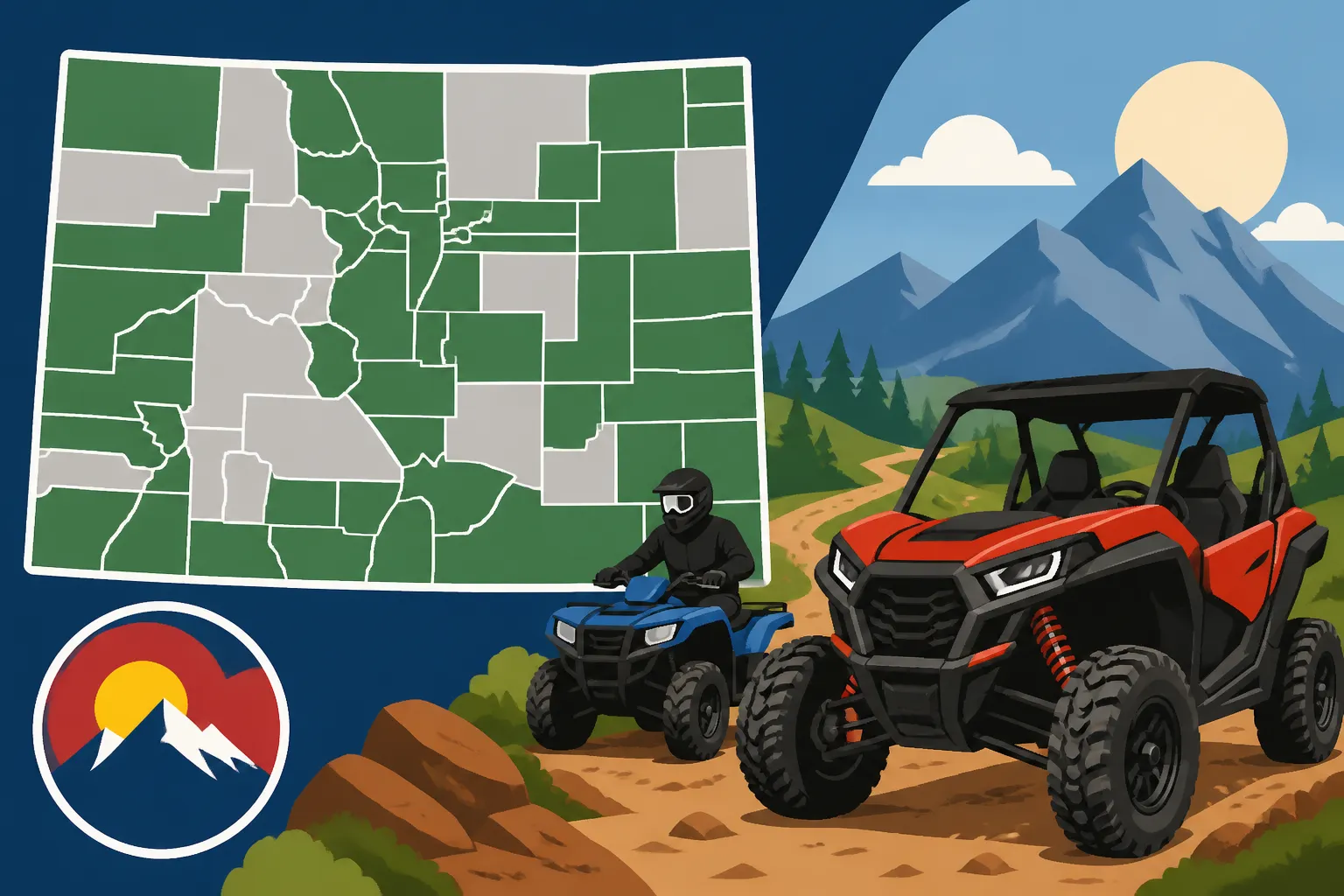
The core of the matter lies in Colorado state law, which gives individual counties and municipalities the authority to decide if and where OHVs can operate on their local roads. This means that as you drive from one county into another, the rules can change drastically, sometimes without a clear sign or demarcation. One minute you might be legally cruising down a gravel county road, and the next you could be in a neighboring county where OHV use on the same type of road is strictly prohibited. This inconsistency is a major source of confusion and frustration for riders, especially those new to Colorado or visiting from out of state.
Imagine planning a multi-day trip that traverses several counties. Without knowing each county's specific ordinances, you could inadvertently find yourself breaking the law. This local control means there's no single statewide map for OHV road access; instead, riders need to research specific areas. It’s a pain point many of us have felt, trying to piece together information from various county websites or word-of-mouth recommendations that might not be entirely accurate or up-to-date. Understanding these localized rules is key to a smooth and citation-free adventure.
State Highways Versus County Roads: A Critical Difference
One of the most important distinctions to grasp is the difference between state highways and county roads. Generally speaking, state highways (those marked with a CO or US highway number, like Highway 550 or Highway 149) are off-limits to OHVs in Colorado, with very few, highly specific exceptions, such as designated corridors within certain towns or short crossings. You simply cannot expect to ride your ATV or side-by-side on a major paved state highway. Attempting to do so will almost certainly result in a citation and could be extremely dangerous. For more details, you can read up on [Colorado Rules on State Highways].
County roads, however, are a different story. These are the roads maintained by the individual counties, and they are where the majority of local OHV ordinances apply. These can range from paved residential streets in small towns to remote, high-alpine dirt roads connecting to vast trail networks. When a county passes an ordinance, it's typically addressing OHV use on these roads. Knowing this distinction is paramount. When you hear about a town or county allowing OHVs, it's almost always referring to their local county or municipal roads, not the main state or federal highways that pass through them. This focus on county roads is what opens up many of the incredible riding opportunities we cherish in Colorado.
How Colorado Counties Decide on OHV Road Access
The decision-making process for opening county roads to OHVs isn't always straightforward. It's often a blend of local politics, economic considerations, public safety concerns, and the passionate advocacy of both riders and residents. When a county considers an OHV road ordinance, it’s not a quick snap decision; it involves a series of steps and community input.
The Process: Public Hearings and Local Input
The journey to an OHV road ordinance typically begins with a proposal, often initiated by local businesses, resident groups, or OHV clubs who see the potential benefits of expanded access. This proposal then usually goes before the county commissioners – the elected officials responsible for governing the county. Their first step is often to gauge public sentiment, which they do through public hearings. These meetings are critical because they allow residents, business owners, and OHV enthusiasts to voice their opinions, concerns, and support.
During these hearings, you'll hear arguments for and against. Proponents often highlight the economic boost that OHV tourism can bring to small mountain towns, filling hotels, restaurants, and gas stations. Riders advocate for convenient access to trailheads, reducing the need for extensive trailering. On the other hand, opponents might raise concerns about noise pollution, dust, safety for other road users, and potential environmental impacts. The commissioners weigh all this input, often commissioning studies on traffic impact or economic projections before drafting or approving an ordinance. It’s a democratic, albeit sometimes slow, process that truly reflects the priorities and values of the local community.
Factors Influencing County Decisions
Several key factors heavily influence whether a county decides to open its roads to OHVs. Economic impact is often a significant driver. Many rural Colorado counties rely heavily on tourism, and outdoor recreation, including OHV riding, can be a huge draw. Towns like Lake City or Silverton have seen firsthand how welcoming OHVs can revitalize their local economies. Businesses that cater to riders, from rental shops to parts suppliers, also play a role. A strong local OHV community or advocacy group can also be instrumental in pushing for and supporting these changes.
However, public safety is always a paramount concern. Commissioners will look at traffic volumes on specific roads, speed limits, sightlines, and whether designated routes can safely integrate OHVs with cars, bicycles, and pedestrians. Environmental concerns like dust control, erosion, and impacts on wildlife are also considered, often leading to specific rules about speed or road maintenance. Finally, local resident sentiment plays a huge role. Some communities enthusiastically embrace OHVs, while others express concerns about noise, dust, and maintaining a quiet mountain atmosphere. The delicate balance between these competing interests often shapes the final ordinance. Knowing [How a Colorado Town Opens Roads to OHVs] gives insight into the process.
Notable Colorado Counties With OHV Road Access
While many counties have some level of OHV road access, a few stand out as prime examples of embracing OHV-friendly policies, creating hubs for riders to explore. These areas have often seen significant economic benefits from their welcoming stances.
San Juan County (Silverton Area) and the Alpine Loop
San Juan County, home to the historic mining town of Silverton, is a cornerstone of Colorado's OHV culture, primarily due to its pivotal role in accessing the iconic Alpine Loop. This area is renowned for its vast network of high-country trails and scenic passes like Engineer and Cinnamon. The county has long recognized the economic importance of OHV tourism, and its dirt and gravel county roads serve as vital links for riders to reach these trail systems directly from town or nearby staging areas. The ability to ride from your lodging in Silverton directly to a trail without trailering for miles is a huge convenience and draws thousands of visitors annually.
However, it's critical to note the specific local nuances. While the county roads around Silverton generally welcome OHVs, the town of Silverton itself has specific restrictions on OHV use within its corporate limits. Riders must be acutely aware of designated entry and exit routes and areas where OHV use is prohibited. This is a classic example of the "patchwork" approach, where county-level access is broad, but municipal rules can be much tighter. Understanding these boundaries, often marked by clear signage, is essential to avoid fines. Be sure to look into [Silverton's Ban on OHVs in Town] before your visit to ensure a smooth trip.
Hinsdale County (Lake City) and the Alpine Loop's Eastern Side
Just over Engineer Pass from Silverton lies Lake City, nestled in Hinsdale County. This town is perhaps one of the most OHV-welcoming communities in Colorado. Hinsdale County has actively embraced OHV tourism, recognizing it as a primary driver for its local economy. Their ordinances allow OHVs on many county roads, making it incredibly convenient for riders to use their machines to get around town, access restaurants, fuel up, and, most importantly, connect directly to the eastern side of the Alpine Loop and other incredible trails.
Lake City's approach has made it a favorite base camp for many OHV enthusiasts. The town serves as a fantastic staging area, with rentals, lodging, and services all readily available for riders. A key element of this access is [The Highway 149 OHV Corridor at Lake City], a specific section of state highway that has been specially designated for OHV use, providing a crucial link for riders to access different trail networks. This level of integration makes Lake City an exceptionally user-friendly destination for anyone looking to fully immerse themselves in the OHV experience, both on and off the trail.
Ouray County (Ouray) and the "Jeep Capital" Legacy
Ouray, often called the "Switzerland of America" and known as a "Jeep Capital," also sits at the doorstep of some of Colorado's most challenging and scenic high-country trails, including Engineer Pass and Imogene Pass. Ouray County has a long history of motorized recreation, and its local roads are integral to accessing these world-famous routes. Similar to San Juan County, the county roads in Ouray County generally allow OHV access, providing critical connections from town to the trailheads. This is especially true for the dirt and gravel roads that wind up into the surrounding mountains.
However, just like Silverton, the town of Ouray itself has specific regulations regarding OHV operation within its town limits. While you can typically ride your OHV on designated routes to exit town and hit the trails, there are often restrictions on riding on certain paved streets or through specific commercial zones. Visitors must pay close attention to local signage and maps provided by the town to understand the permitted routes. This balance allows Ouray to maintain its charming historic atmosphere while still serving as a major hub for high-country exploration. For more on this, check out [Riding Into Ouray on a Side-by-Side].
Gunnison County (Taylor Park) and Extensive Trail Networks
Gunnison County, a vast and diverse region of central Colorado, is home to the renowned Taylor Park area, another Mecca for OHV enthusiasts. Taylor Park boasts an immense network of trails, forest roads, and high-altitude passes, and Gunnison County's ordinances play a significant role in facilitating access. Many county roads in the Taylor Park area are open to OHVs, allowing riders to connect between trails, access campgrounds, or even ride into the small communities within the region. This interconnectedness truly enhances the riding experience, allowing for multi-day adventures without needing to constantly load and unload machines.
The expansive nature of Gunnison County means that riders can spend days, even weeks, exploring the various routes accessible via their OHVs. The county's approach helps to distribute riders across a wider area, reducing congestion on any single trail and providing diverse experiences. Whether you're heading to Italian Creek, Tincup Pass, or simply exploring the hundreds of miles of forest roads, the ability to legally use county roads means more time riding and less time trailering. The area around Taylor Park is a prime example of how county-level access can unlock massive recreational opportunities. For more information, refer to [Taylor Park and Colorado's High-Country Trail Network].
Grand County (Kremmling, Granby Area)
Further north, Grand County, encompassing towns like Kremmling and Granby, has also begun to embrace OHV access on its county roads. While not as historically rooted in OHV tourism as the San Juans, these communities are increasingly recognizing the economic benefits that responsible OHV use can bring. Kremmling, for example, has opened certain town and county roads to OHVs, providing access to nearby riding areas and allowing riders to utilize local services.
This shift reflects a broader trend in Colorado, where more counties and towns are considering how to integrate OHV recreation into their local economies. For riders, it means more options and opportunities to explore different parts of the state. These newer ordinances often come with specific rules and designated routes, so it's always important to check the latest information. Grand County's move demonstrates how local initiatives can expand the map for OHV enthusiasts, offering new landscapes to discover. You can learn more about [Kremmling's OHV Street Rules].
Understanding the Rules: What to Look For in an Ordinance
Once you know a county has an OHV road ordinance, the work isn't over. You still need to dig into the details, because not all ordinances are created equal. They can vary significantly in their scope, restrictions, and requirements. Just knowing "OHVs are allowed" isn't enough; you need to understand how they are allowed.
Permitted Roads and Prohibited Areas
The very first thing to look for in any county OHV ordinance is a clear definition of where OHVs are permitted. Some ordinances will list specific county roads by name or number where OHV operation is allowed. Others might define zones or districts within the county where OHVs are permitted, often distinguishing between paved and unpaved roads. Conversely, the ordinance will also explicitly state prohibited areas, which commonly include state highways (as discussed), certain high-traffic areas, or sensitive residential zones.
It's crucial to understand these boundaries. Riding a mile past the designated "OHV permitted" area can quickly land you a ticket. Many counties and towns provide maps, either online or at local visitor centers, that clearly delineate these routes. Don't rely on assumptions; always confirm the exact roads and areas where you can legally operate your OHV. Remember that even in OHV-friendly towns, there are often specific routes you must take to enter or exit, rather than having free rein on every street.
Required Equipment for Road Riding
Even if a county road is open to OHVs, your machine needs to be properly equipped to ride on it. This is where many riders get caught off guard. While your ATV or side-by-side might be perfectly suited for the trail, operating it on a public road usually requires specific safety and compliance features. These commonly include:
- Headlights and Taillights: Operational during daylight hours as well, not just at dusk or night.
- Brake Lights: Functioning properly.
- Horn: An audible warning device.
- Mirrors: Typically at least one rear-view mirror, often two, providing a clear view of traffic behind you.
- Turn Signals: Required for indicating turns, just like a car.
- Muffler and Spark Arrestor: Essential for noise control and fire prevention. Many aftermarket exhausts for performance might not meet noise limits or include spark arrestors, so ensure yours is compliant.
- Tires: DOT-approved tires might be required on paved surfaces in some areas.
Before hitting those county roads, it's a good idea to ensure your machine is outfitted with all the necessary components. Companies like SuperATV offer a wide range of accessories, from mirrors and turn signal kits to full street-legal kits, that can help you bring your OHV up to snuff for road use. Investing in quality, compliant equipment not only keeps you legal but also enhances your safety and the safety of others sharing the road. Always check [What Colorado Requires on an OHV Road Ride] before you head out.
Speed Limits and Operating Hours
Another critical detail found in many county ordinances involves speed limits and operating hours. It's a common misconception that if OHVs are allowed on a county road, you can simply drive at the posted speed limit for cars. This is often not the case. Many ordinances set lower maximum speed limits for OHVs on county roads, sometimes as low as 15 or 20 miles per hour, especially in residential or congested areas. These reduced speeds are implemented for safety reasons, accounting for the different handling characteristics of OHVs compared to traditional vehicles. You'll want to pay close attention to these specific limits, as exceeding them can lead to tickets and create safety hazards. Learn more about [Colorado OHV Speed on a County Road].
Additionally, some ordinances include restrictions on operating hours. For example, OHV use on certain roads might be prohibited between dusk and dawn, or during specific late-night hours. These restrictions are often in place to address noise concerns from local residents. Always verify the operating hours to ensure your ride doesn't turn into an unexpected late-night violation. Being a responsible rider means respecting these rules, which in turn helps maintain positive community relations and continued access for all OHV enthusiasts.
Navigating the Legal Landscape as a Rider
The sheer variety of local OHV road ordinances can feel overwhelming, but with a bit of preparation and respect for the rules, you can confidently and legally explore Colorado's incredible landscapes. It really comes down to doing your homework and being a considerate operator.
How to Research County Ordinances Before You Go
Before you even load up your rig, the best course of action is to research the specific county or municipality you plan to visit. Here’s how you can find the most accurate information:
- County and Town Websites: Start with the official website for the county or town. Look for sections on "County Ordinances," "Motorized Recreation," or "Off-Highway Vehicles." Many will have dedicated pages or downloadable PDFs outlining the rules, often with maps.
- Sheriff's Office or Local Police Department: If the website is unclear, a quick call to the local sheriff's office or police department can often yield precise answers. They are the ones enforcing the rules, so they know them intimately.
- Visitor Centers and Chambers of Commerce: In many mountain towns that welcome OHVs, the local visitor center or Chamber of Commerce will have printed maps, brochures, or staff knowledgeable about OHV access.
- Local OHV Clubs and Forums: These groups are often on the front lines of advocating for access and can be excellent resources for up-to-date information and local nuances. They might even have shared maps or summaries of ordinances.
- CPW Website: While not specific to county roads, the Colorado Parks and Wildlife (CPW) website provides general information and often links to other resources.
Never rely solely on word-of-mouth or outdated information. Rules can change, and what was allowed last year might not be allowed this year. For a deeper dive into this, you might find [Finding Your Colorado County's OHV Ordinance] useful.
The Importance of a Colorado OHV Registration
Regardless of whether you're riding on an open county road or a designated trail, every OHV operating on public land or public roads in Colorado must have a current Colorado OHV registration sticker issued by Colorado Parks and Wildlife (CPW). This sticker helps fund trail maintenance, signage, and enforcement efforts across the state. It's a non-negotiable requirement. While some out-of-state machines might have reciprocity for a limited time on trails, if you're riding on any public road, you need that Colorado sticker.
It's crucial to understand that this CPW registration is not the same as a street-legal license plate for a car. Colorado does not offer a street-legal plate for most OHVs that would allow them unlimited access to paved roads. The CPW registration is specifically for off-highway use and for use on designated county roads where OHVs are permitted by local ordinance. Without it, you are subject to fines, even if you are on an otherwise legal road. For comprehensive information on how this works, check out [Colorado Parks and Wildlife OHV Registration Explained].
Respecting Local Rules and Residents
Operating an OHV on county roads, especially those passing through residential areas or small towns, comes with a significant responsibility: being a good neighbor. The future of OHV access in many areas depends heavily on how riders behave.
- Dust Control: On gravel roads, keep your speed down, especially when passing homes or other vehicles, to minimize dust. Excessive dust can be a major nuisance for residents and lead to complaints.
- Noise Levels: While many OHVs are louder than cars, respecting noise ordinances and keeping your RPMs down in populated areas goes a long way. Ensure your machine has a compliant muffler and spark arrestor. Companies like SuperATV offer exhaust systems designed to meet various regulations while still providing performance. Remember, loud pipes might impress some, but they often annoy residents, leading to calls for stricter regulations.
- Speed: Adhere strictly to posted speed limits, and even consider going slower if conditions warrant, such as near children or pets.
- Yielding: Always yield to pedestrians, cyclists, and horse riders, and give them plenty of space.
- Stay on Designated Routes: Never venture off the permitted roads onto private property or closed areas. Trespassing damages the reputation of all riders and can lead to trail closures.
Being a responsible and courteous rider is the best way to ensure that communities continue to welcome OHVs and that these valuable access points remain open for years to come. Ignoring these common courtesies can quickly lead to local backlash and the closure of access points. Read more about [Colorado Noise Rules in Mountain Towns].
Key Colorado Counties and Their OHV Road Access
To give you a clearer picture, here's a table summarizing some of the notable Colorado counties and their general approach to OHV road access. Remember, this is a general overview, and specific routes and restrictions apply. Always check current local ordinances before you ride.
| County | Primary Town(s) | General OHV Road Access | Specific Considerations |
|---|---|---|---|
| San Juan | Silverton | Extensive on County Roads | Major access to Alpine Loop. Strict restrictions within Silverton town limits. Designated routes for entry/exit only. Requires research of specific town ordinances. |
| Hinsdale | Lake City | Extensive on County Roads | Very OHV-friendly. Allows use on many town streets and county roads. Key access to Alpine Loop. Includes designated [The Highway 149 OHV Corridor at Lake City] for crucial links. |
| Ouray | Ouray | Extensive on County Roads | Great access to Engineer Pass, Imogene Pass via county roads. Restrictions within Ouray town limits, designated routes for passage through town. Known for high-clearance vehicle access. |
| Gunnison | Taylor Park, Gunnison | Extensive on County Roads | Large network of county roads connecting to vast trail systems around Taylor Park and beyond. Generally very welcoming, but always confirm local rules, especially in populated areas like Gunnison city itself. |
| Grand | Kremmling, Granby | Growing on County Roads | Kremmling has opened some town and county roads to OHVs, providing access to nearby riding areas. Represents a newer trend in OHV access. Specific designated routes apply. |
| Chaffee | Buena Vista, Salida | Some on County Roads | Limited access on specific county roads, primarily to connect to trail systems or around campgrounds. Buena Vista has an ordinance allowing OHVs on certain town streets for access to routes. |
| Montezuma | Dolores, Mancos | Some on County Roads | Some county roads provide access to forest service and BLM trails. Less extensive town access than dedicated OHV towns. |
| San Miguel | Telluride, Ophir | Limited to Specific Routes | Telluride has very strict OHV rules, largely banning them from town. Ophir has specific routes through town to access trails like Ophir Pass. High sensitivity to OHV impacts in resort areas. |
Disclaimer
This article is for general informational purposes only and does not constitute professional advice. Laws, prices and regulations vary by location and change over time. Consult a qualified professional for guidance on your specific situation.