Blaze Orange on a Fall Ride
Fall rides in Colorado can put OHV users on the same public-land roads as hunters, often in changing light and around blind corners. Blaze orange can make a rider easier to spot, but it does not replace hunting gear required by law or permission to ride a route. Here’s how to think about visibility, clothing and route planning.
Does an OHV rider need blaze orange in fall?
There isn’t one simple answer that applies to every fall ride. Requirements can depend on whether you are hunting, what you are hunting, the method you are using and the current rules for that season. A person riding an ATV or UTV who is not hunting should not assume that a blaze-orange vest is legally required just because it is hunting season. Nor should a hunter assume that ordinary riding gear meets the legal clothing requirement.
If you plan to hunt from an OHV, travel to an elk camp, or ride where hunting activity is expected, check the current Colorado hunting regulations for the species and season involved. Confirm what the rules require hunters to wear and whether any exceptions apply. Rules can change, and a bright panel on a machine may not count as required clothing worn by a person.
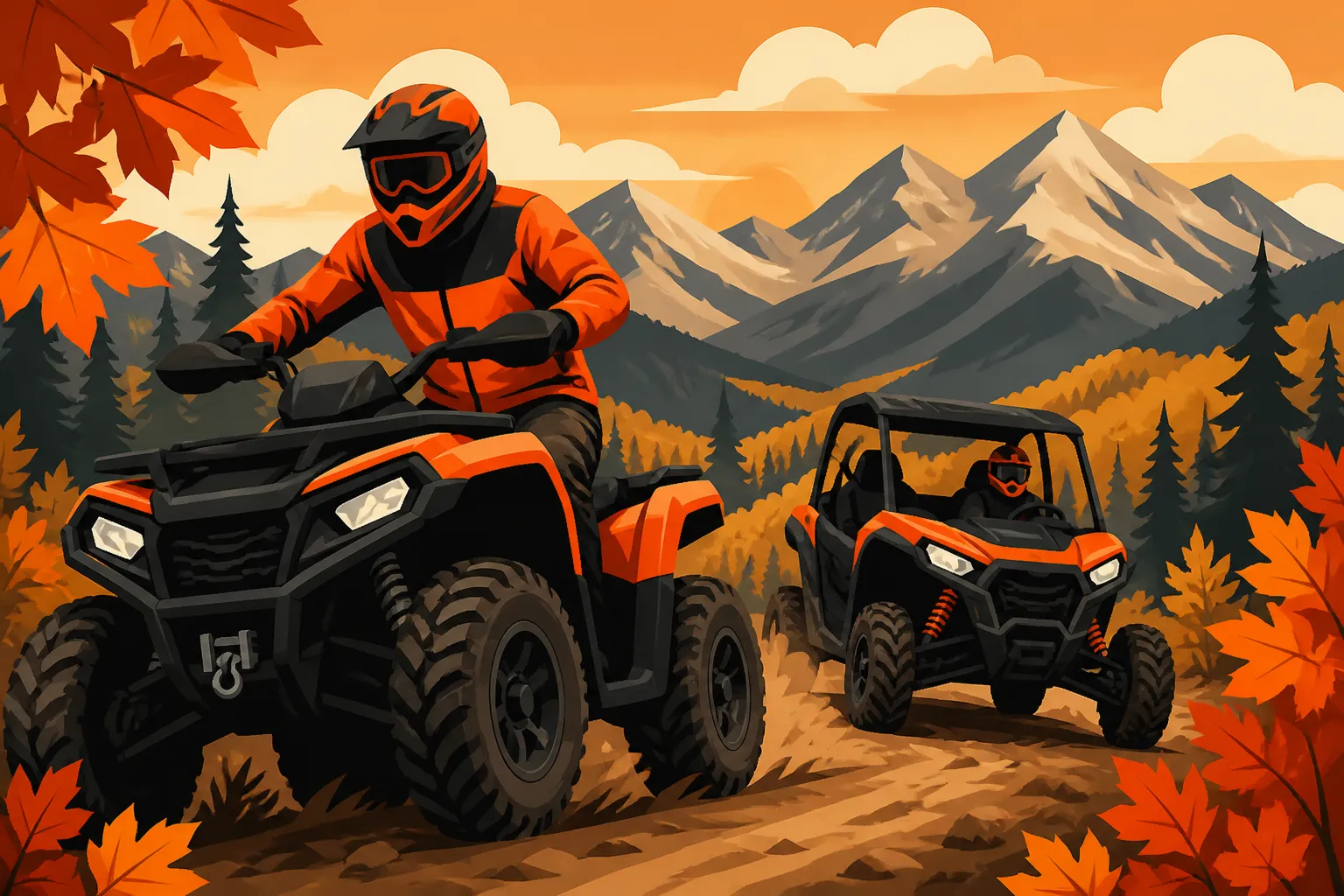
For non-hunting riders, orange is best treated as a visibility choice. A bright vest, jacket, hat or pack cover can make it easier for another trail user to notice you through trees, dust or dim light. It is especially useful when riding slowly, stopping near a road, or walking around a parked machine. But it cannot make a closed route legal, guarantee that other users will see you, or compensate for riding too fast for conditions.
Before combining a ride and a hunt, read Colorado OHV Rules During Hunting Season and Colorado Permits for Hunting Access. The rules for reaching a hunting area and the rules for pursuing game are separate questions. An OHV permit does not itself grant hunting access, open a closed road, or authorize travel off a designated route.
When you are hunting and riding
A rider who is also hunting has two sets of rules to consider: the rules for operating the OHV and the rules for the hunt. Check both before departure. For example, make sure the intended route is open to your vehicle, that your permit or registration is appropriate, and that your hunting license and equipment meet current requirements.
If the machine is carrying hunting gear, keep it secured and avoid blocking the driver’s view, lights, reflectors or controls. A required orange garment should be worn as directed by the current hunting regulations; attaching orange fabric to a rack or cargo box is not a safe substitute for checking those requirements.
If you are riding with a hunting party but are not hunting, ask the group what visibility rules they are following and wear a conspicuous outer layer where practical. That helps the group keep track of one another, especially when people separate briefly at a trailhead or stop.
Permits and access still come first
Fall access can be complicated by seasonal closures, land boundaries and local restrictions. A valid permit does not mean every road or trail is open. Check the rules for the land manager and route you intend to use, including any posted closure orders. Colorado Permit Rules on Public Land is a useful starting point for understanding why the permit and access questions are distinct.
If you are visiting from another state, verify which Colorado permit applies to your machine and where it must be displayed. A permit issued elsewhere does not automatically settle Colorado access requirements. See Colorado OHV Permit Reciprocity With Other States and Out-of-State Machines on Colorado Trails before assuming that registration or a permit from home is enough.
What to wear for visibility on a fall ride
Fall conditions can change quickly in Colorado. A sunny trailhead may give way to shade, cloud, dust or early snow higher up. Wear clothing that keeps you visible and comfortable without interfering with safe operation.
A practical approach is to add a bright outer layer over your riding clothes. A vest or jacket is easy for other people to see and can be removed if conditions warm up. A bright helmet cover or hat can help when you are outside the machine, but it should not interfere with a properly fitted helmet, goggles or other protective equipment. Choose gear that stays secure in wind and does not flap into controls or snag on branches.
| Gear choice | Where it helps | What to check |
|---|---|---|
| Bright vest or jacket | Makes the rider easier to see while seated or standing beside the machine | It fits over protective layers without restricting movement |
| Bright helmet or helmet cover | Adds visibility at a distance and when walking around | It does not affect helmet fit, vents, retention or eye protection |
| Orange hat or cap | Helps other members of a group spot you during stops | It is not assumed to replace any required hunting garment |
| Bright pack cover | Makes a person on foot easier to distinguish from the background | It is secured and does not catch on brush |
| Machine flag or bright machine panel | Can help identify a vehicle in a group or at a staging area | It does not replace rider clothing, lights or route requirements |
Blaze orange is useful, but it is not the only visibility measure. Keep headlights and taillights in working order, use any required equipment, and avoid dark or low-contrast clothing as your only outer layer if you expect to be around hunters or other trail users. If your clothing is wet, dusty or covered by a dark shell, an orange layer may be less effective than you expect.
Visibility works both ways. Wear eye protection suitable for dust and changing light, and use a clear or appropriate lens when a dark tint makes it hard to read the trail in shade. A bright garment does not help much if the rider cannot see an oncoming vehicle, a person on foot or a turn in time to react.
Keep orange separate from safety and legal equipment
Do not cover required reflectors, lamps, registration decals or other markings with fabric or accessories. Keep loose material away from the wheels, drivetrain, exhaust and hot engine components. On a UTV, make sure clothing and gear do not interfere with seat belts, doors, nets or controls.
If you are hunting, check the official regulations rather than relying on a general rule of thumb about how much orange to wear or which body area it must cover. Requirements can differ by hunt and season. A garment that looks bright enough to a riding companion may still fail to meet a hunting requirement.
Plan the route around hunting activity and fall conditions
A visible rider still needs a safe, legal route. Before leaving, check the land manager’s current maps and closure information. Seasonal gates may close roads, and a route shown on an older map may not reflect current conditions. Start with Where Colorado Closure Orders Are Posted and Colorado Trail Conditions Reports, then confirm the specific road or trail with the relevant land manager.
Hunting activity can change how busy an area feels. A road that is quiet in summer may have parked trucks, people on foot, pack animals or hunters moving between access points in fall. Ride at a speed that leaves room to stop, especially near trail intersections, bends, pullouts and places where sightlines are short. Slow down when you see people, vehicles or fresh activity, and give others plenty of room.
If your ride involves reaching an elk camp or hunting access point, check the route carefully rather than assuming the machine can travel all the way in. Riding an OHV to an Elk Camp by OHV can help frame that planning question. Stay on routes open to your vehicle and avoid creating new tracks around a gate, mud or a blocked section. Going around an obstacle can damage land and may put you in an area where motorized travel is prohibited.
Fall weather deserves its own plan. Daylight is shorter, temperatures can drop quickly, and a pass or forest road may have snow or ice even when lower elevations are dry. Check the forecast for the route’s elevation, not just the nearest town. Leave enough daylight to return, carry warm layers and food, and tell someone where you plan to ride. For seasonal planning, see Riding Colorado Trails in October and Colorado’s High-Altitude Riding Season.
Do not rely on a phone map alone in areas with weak service. Carry an up-to-date map or saved navigation information, and know how to identify route signs and closure notices. If conditions change, turning around is often safer than pushing on to a pass or trying an unfamiliar detour.
Be predictable around other trail users
A rider who is easy to see is not necessarily easy to predict. Keep to the appropriate side of the route, avoid sudden stops in blind spots, and use a safe pullout before regrouping. When another vehicle approaches, reduce speed and communicate clearly. If you need to stop, move fully out of the traveled path when possible.
At a trailhead, orange clothing can also help distinguish your group from people unloading machines or walking between trailers. Keep children and passengers close during loading and unloading, and do not let them wander into the road because they are wearing bright clothing. Visibility supports good habits; it does not replace supervision.
When approaching a person on foot, a horse, or a group of hunters, slow down well in advance and give them time to respond. Avoid sudden acceleration, unnecessary revving or passing close by. Dust can hide a rider even in bright clothing, so leave space and wait for visibility to improve before moving through a dusty section.
A practical checklist before you leave
Use this checklist for a fall ride, especially if hunting activity is likely:
- Confirm the route is open. Check current maps and closure orders for the exact road or trail, including seasonal restrictions.
- Check permit and access requirements. Make sure the machine has the required Colorado permit or registration and that the route allows that type of vehicle.
- Check hunting rules if anyone in your group is hunting. Confirm current clothing requirements, hunt dates, access conditions and any limits that apply.
- Wear a visible outer layer. Choose orange or another bright color that is easy to see, and make sure it does not interfere with protective equipment or controls.
- Inspect the machine. Check lights, tires, brakes, fuel and required safety equipment before heading out.
- Plan for the weather and daylight. Pack layers, water and basic emergency supplies, and set a turnaround time that leaves room to get back before dark.
- Tell someone your plan. Share the route, expected return time and what they should do if you do not check in.
- Ride cautiously near people and vehicles. Slow down early, stay on the route and leave room for others to move safely.
Blaze orange is a simple way to improve your visibility on a fall ride, particularly when hunters and OHV users share an area. Treat it as one part of a larger plan: verify the rules, choose an open route, wear protective gear and ride at a speed that gives everyone time to react.
Disclaimer
This article is for general informational purposes only and does not constitute professional advice. Laws, prices and regulations vary by location and change over time. Consult a qualified professional for guidance on your specific situation.