Permits for a Colorado Guided Tour
A guided ATV or UTV tour can make route planning easier, but it does not automatically settle every permit question. The tour company may supply the machine and handle its paperwork, while you still need to confirm which permits cover the vehicle and route. Here’s how to separate those responsibilities, what to ask before booking, and what to verify on ride day.
What “permit” means on a Colorado guided tour
The word permit can refer to several different things in Colorado. Before a tour, it helps to separate the paperwork for the machine from the authorization needed to run a commercial tour and any pass or access requirement for the route.
The machine’s Colorado OHV registration or permit
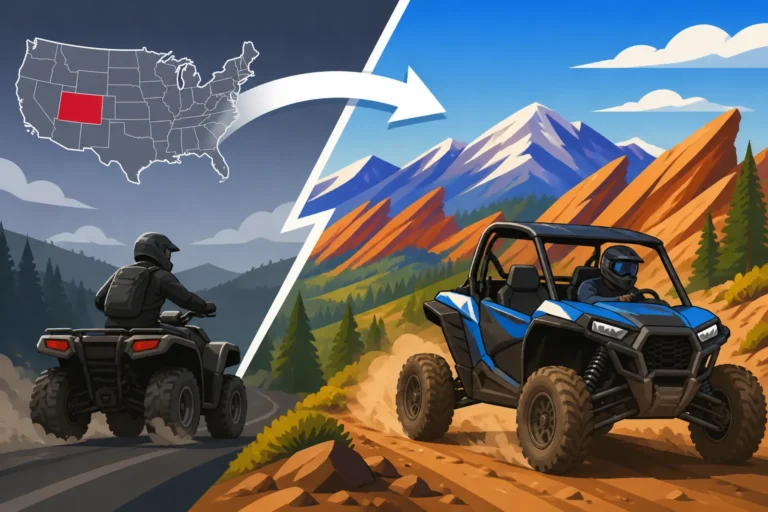
Colorado uses different OHV paperwork depending on the machine’s status and owner. A Colorado-based off-highway vehicle generally needs the applicable Colorado registration. An eligible out-of-state machine may need a Colorado nonresident OHV permit when it is used on public lands where that permit is required. This paperwork is associated with the vehicle, not simply with the person driving it.
For a customer riding a tour company’s ATV or UTV, the first question is whether the vehicle already has the right current paperwork for the planned use. If it does, the tour may not require you to buy a separate permit for that same machine. But don’t infer that from the fact that the ride is guided, paid, or advertised as an all-inclusive package. Ask the operator directly what the machine carries and whether anything is included in your booking.
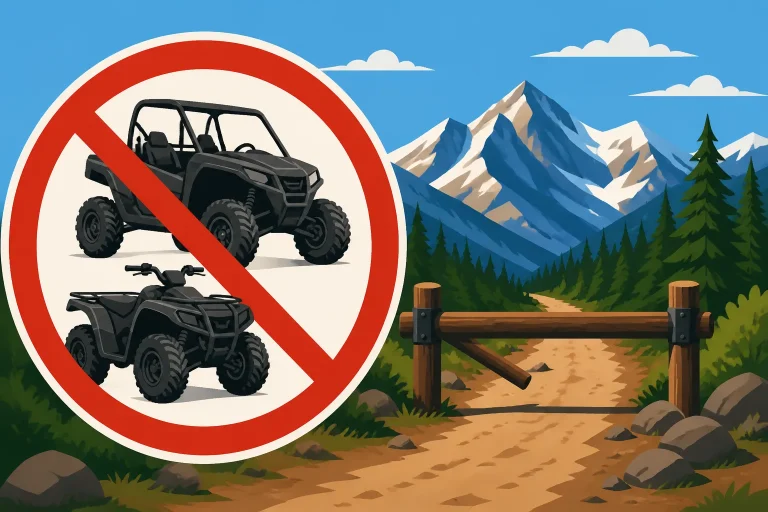
A Colorado permit is not a universal pass to ride anywhere. It does not override a closure, make a private road public, or authorize travel on a route where that type of vehicle is prohibited. For an overview of the nonresident permit and how it differs from registration, see Colorado Non-Resident OHV Permit Explained.
The operator’s commercial authorization
A tour company may also need permission or authorization from the land manager to conduct commercial activity on a public route or property. Depending on the route and the agency that manages it, that could involve a commercial use authorization, special recreation permit, or another form of land-use approval.
That is the operator’s responsibility, not a permit for each customer to buy. A tour company’s commercial authorization also does not take the place of the vehicle’s registration or OHV permit. These are separate requirements: one addresses the business’s use of the land, while the other addresses the machine.
The rules and procedures can differ between federal, state, local, and private land. The operator should know which land managers oversee the tour and should be able to explain the authorization that applies to its activity. For background, see Colorado Outfitter Permits and Guided Rides and Special Use Permits on Colorado Forest Land. A route involving Bureau of Land Management land may raise a different set of questions, covered in BLM Special Recreation Permits in Colorado.
Other passes, permissions, and route rules
A ride may also cross land with its own entry or access requirements. A parks pass, for example, is not interchangeable with a machine’s OHV registration or nonresident permit. A county or town may have local rules for OHVs on certain roads, and a landowner may require permission for access across private property.
Ask the tour company where the route goes, not just what it is called. “Mountain tour” or “trail ride” does not tell you whether the route uses a public OHV trail, a forest road, a county road, or private land. The route determines which rules apply. If a tour includes a state park, clarify whether the required park access is included; Do You Need a Parks Pass and an OHV Permit? explains why those can be separate questions.
| Paperwork or requirement | What it generally covers | Who should clarify it |
|---|---|---|
| Colorado OHV registration or nonresident permit | The machine’s required OHV paperwork for applicable use | Tour operator, with current requirements confirmed through the relevant official source |
| Commercial land-use authorization | The operator’s permission to conduct a commercial activity on managed land | Tour operator |
| Park pass or other site access | Entry or access requirements at a particular location | Tour operator and the site or land manager |
| Local road or route rules | Where and how an OHV may travel on a particular road or route | Tour operator and the relevant local authority |
| Private-land permission | The landowner’s consent for access | Tour operator |
Who is responsible for the machine’s permit
A guided tour usually puts the machine in the operator’s hands, but the booking agreement may divide responsibilities in different ways. The safest approach is to get a plain answer before paying: is the machine’s required Colorado OHV paperwork valid and included, or does the customer have to arrange something separately?
When the tour company supplies the ATV or UTV
If the company provides the vehicle, it should be prepared to explain what registration or permit the machine has for the planned route. Ask whether the vehicle is registered in Colorado or carries the required nonresident permit, and whether that paperwork covers the entire itinerary.
Do not assume that the word “rental” resolves the issue. Some tour packages include a machine whose paperwork is handled by the company; some may require the customer to meet an additional condition. Get the answer for the exact machine and tour you booked. The distinction is discussed in Does a Colorado Rental Include the OHV Permit? and Who Buys the Permit on a Rented Machine.
If you are expected to purchase or carry a permit yourself, ask which type applies, where to obtain it, and whether it must be displayed on the vehicle. A sticker or permit issued for one machine should not be treated as transferable to another vehicle unless the issuing authority expressly allows it.
When you bring your own machine
If you bring your own ATV or UTV, you are more likely to be responsible for its registration or permit. A Colorado resident should check that the vehicle’s Colorado paperwork is current for the planned use. A visitor should ask whether the tour route requires a Colorado nonresident permit even if the machine is registered in another state.
A registration or permit from another state does not necessarily settle Colorado requirements. Reciprocity depends on the applicable rules and the kind of use. Check Colorado OHV Permit Reciprocity With Other States before relying on an out-of-state document.
Also tell the operator what you plan to bring. A tour may have restrictions based on vehicle dimensions, seating, equipment, or the route’s surface and difficulty. The guide may refuse a machine that is unsuitable or lacks paperwork needed for the itinerary, even if you have already paid. Get any acceptance requirements in writing.
When the machine has a street-legal plate
A plate does not automatically mean a machine can ride every OHV route without an additional permit. A plated Jeep, truck, motorcycle, or side-by-side may be subject to different rules from an unplated OHV, and the answer can depend on the land manager and the route.
If the tour uses a plated machine, ask whether the route requires a separate OHV permit, a parks pass, or any other access document. Avoid treating a plate as a blanket exemption. The related questions are covered in Colorado Permits for a Plated Jeep and Do Licensed Vehicles Need a Colorado OHV Permit?.
What to confirm before booking
A short conversation with the operator can prevent a last-minute paperwork problem. Ask questions that connect the paperwork to the actual machine, route, and date of your tour, rather than accepting a general assurance that “everything is covered.”
Ask for a clear answer about the machine
Use direct questions:
- Who supplies the ATV or UTV? If you are bringing your own, confirm that it meets the tour’s requirements.
- What Colorado OHV registration or permit does the machine carry? Ask whether it is current and appropriate for the planned route.
- Is any permit or registration cost separate from the booking? Ask whether you must buy anything before arrival.
- Will you show me where the permit or registration is displayed? This is especially useful if you have not ridden a permitted machine before.
- Does this answer change if I bring an out-of-state machine or use a plated vehicle?
A vague answer such as “we take care of permits” may mean the operator handles only its commercial authorization, not the vehicle’s OHV paperwork or the site’s entry requirements. Ask what “permits” specifically refers to.
Ask where the tour goes
Request a route description that identifies the main land types and access points. You may not need a turn-by-turn itinerary, but you should understand whether the tour uses public OHV trails, agency-managed roads, local roads, private property, or a mix.
The distinction matters because an OHV registration or permit does not grant permission to use every route. Routes can close seasonally, have vehicle-width restrictions, or prohibit certain machine types. A tour company should adjust its itinerary when a route is closed or unsuitable rather than treating a permit as permission to ignore restrictions.
If the operator advertises a destination or scenic route, ask whether the advertised trip is a guided ride on an approved route or simply a general area where riding is allowed. For tours that involve hunting access or another specialized purpose, ask about any additional authorization; Colorado Permits for a Guided Hunting Trip covers that separate situation.
Ask what happens if the route changes
Weather, closures, road conditions, and land-management decisions can force a tour to change plans. Ask whether a substitute route uses different land or has different access requirements. The company should be able to explain how it checks current conditions and what it does if the planned route cannot be used.
This is also a sensible time to ask about cancellations, rescheduling, and refunds. Those are contract terms rather than permit rules, so read the operator’s policy instead of assuming that a closed route automatically produces a refund. Make sure you know whether the company can move the tour to another route and whether that route still fits your expectations.
Get the important details in writing
A booking confirmation, rental agreement, or pre-ride message should identify what is included and any customer responsibilities. Keep a copy accessible on your phone. If you prefer paper, a small waterproof document pouch from Amazon can help keep a printed confirmation and emergency contact information dry during a dusty or wet ride.
At minimum, written details should make clear whether the company supplies the machine, whether the relevant machine paperwork is included, and whether you must bring or buy anything. If the operator says a permit is included, ask whether that means the machine’s OHV paperwork, a park pass, or the company’s commercial authorization. Those are not necessarily the same thing.
Permit and route checks on the day of the tour
Even after the booking is confirmed, a few quick checks can help you avoid confusion at check-in. You do not need to conduct a full legal review at the trailhead, but you should know what machine you will ride and what the operator expects you to carry.
Before leaving the staging area
Ask the guide to confirm that the machine assigned to you is the one covered by the stated paperwork. If you were told a permit was included, ask where it is displayed or kept. If the operator requires you to carry a document, make sure you have it before the group leaves.
You can also confirm the planned route and whether the tour has changed since booking. If a substitute route crosses different land or roads, ask whether the operator has checked the applicable restrictions. A qualified guide should be comfortable explaining the route at a practical level without asking customers to interpret agency paperwork themselves.
If you are riding your own machine, keep the required registration or permit information available as directed by the relevant rules. Don’t put the only copy somewhere inaccessible, such as inside a locked trailer far from the riding group.
Don’t mistake the guide’s paperwork for your own
The guide may carry documents for the business, group, or route. Those papers do not necessarily cover the machine assigned to you, nor do they automatically authorize a personal machine that you brought along. Ask what applies to the vehicle you are operating.
Likewise, a tour company’s access authorization is not permission for you to ride independently on the same land after the tour. Follow the guide’s route and instructions, and do not leave the approved route because the trail appears open or another group has gone that way.
Know what to do if something does not match
If the company’s explanation at check-in differs from what you were told while booking, pause before signing or starting the ride. Ask the operator to clarify which paperwork is included and what you are expected to provide. If a required document is missing, do not assume that the guide’s verbal reassurance fixes the problem.
Take a moment to read the rental or tour agreement, particularly the sections on machine use, route restrictions, damage responsibility, and customer obligations. A quick check is easier before the ride than after a stop or citation. If the company cannot give a coherent answer about the machine’s paperwork or route access, consider postponing the ride until the issue is resolved.
Common permit misunderstandings
The most frequent confusion comes from treating several kinds of authorization as though they were one document. The following distinctions are worth keeping in mind when comparing tour packages or speaking with an operator.
- A guided ride is not a permit exemption. Being accompanied by a guide does not by itself remove requirements that apply to the machine or route.
- The operator’s land authorization is not the vehicle’s OHV permit. A company’s commercial permission and a machine’s registration or permit serve different purposes.
- The machine’s permit is not a ticket to ride anywhere. It does not override closures, route restrictions, private-property boundaries, or local rules.
- An out-of-state registration may not be enough. Visitors should confirm whether Colorado requires a nonresident permit for the intended use.
- A plate may not settle every OHV access question. Check the specific route and land manager rather than relying on the plate alone.
- “Included” needs a definition. The package may include a machine, guide, or certain access costs without including every permit or pass that could apply.
A tour operator should be able to explain the difference in ordinary language. If you still cannot tell which paperwork applies to your ride, ask for a written clarification before booking or arriving.
Frequently Asked Questions
Do I need to buy a Colorado OHV permit for a guided tour?
Not necessarily. If the tour company supplies a machine with the required paperwork for the route, you may not need to buy a separate permit for that vehicle. Confirm directly with the operator; a guided tour is not automatically exempt.
Does the tour company’s commercial permit cover my personal ATV?
No. Commercial authorization for the business and required paperwork for an individual machine are separate matters. If you bring your own ATV or UTV, ask the operator what documentation you need and verify the applicable Colorado requirements.
Does an out-of-state OHV registration work for a Colorado tour?
It may not be enough for every kind of use. Check whether a Colorado nonresident permit is required for the route and machine, and do not assume another state’s registration automatically provides reciprocity.
Does a plated UTV need a Colorado OHV permit?
That depends on the machine, land manager, and route. A plate does not guarantee access to every OHV trail or remove every permit requirement. Ask the operator about the exact route and vehicle.
Disclaimer
This article is for general informational purposes only and does not constitute professional advice. Laws, prices and regulations vary by location and change over time. Consult a qualified professional for guidance on your specific situation.