Riding Only on Your Own Colorado Land
It’s a common scenario: you’ve got a beautiful piece of land in Colorado, perhaps a ranch, a sprawling acreage, or a cabin property, and you primarily use your ATV or UTV for work or recreation only within your property lines. You might think, "Why would I need to bother with registration or permits if I'm not even on public trails?" This question sparks a lot of confusion and, frankly, frustration for many private landowners. This guide is here to untangle the complexities of Colorado's OHV registration rules, specifically addressing when and if your machine needs to be registered even if it never touches public land.
Do You Really Need a Colorado OHV Registration on Private Land?
This is perhaps the most frequently asked question among private landowners with off-highway vehicles, and for good reason. The allure of simply enjoying your machine on your own property without any governmental oversight is strong. However, while Colorado does offer some clear exemptions, the devil is often in the details, and understanding these nuances can save you a headache (and a fine) down the line.
The General Rule: No Registration for Truly Private Use
Let's get straight to the heart of it: generally speaking, if your ATV or UTV is exclusively operated on private property that you own or have explicit permission to use, and it never ventures onto any public roads, trails, or lands, then you are typically exempt from the Colorado Parks and Wildlife (CPW) OHV registration requirement. This means no annual sticker, no fee to the state. It's a sweet deal for those who genuinely stick to their own domain.
Think about a sprawling ranch in eastern Colorado, perhaps near Sterling or Lamar, where the property owner uses their side-by-side solely for agricultural purposes – checking fences, moving irrigation equipment, or herding cattle. The gates are always closed, the property is clearly delineated, and the machine doesn't even come close to a county road. In this quintessential scenario, that UTV likely doesn't need a CPW registration sticker. The spirit of the law here is to fund the management and maintenance of public OHV recreation areas, and if you're not using those, you're not contributing to their upkeep through registration fees. This exemption often brings a sigh of relief to many who are simply looking to manage their property efficiently or enjoy a quiet ride away from crowded trails.
When "Private" Isn't Quite So Private: Exceptions and Nuances
While the general rule offers a clear "no," the reality for many Colorado landowners is that their property isn't always a perfectly isolated island. There are numerous situations where your "private" use might accidentally (or necessarily) intersect with public access, immediately triggering the registration requirement. This is where many people get tripped up, thinking their intent to stay private is enough.
Consider a property nestled in the mountains near Salida or Buena Vista, where your private land is bisected by a county road, or perhaps the only access to your cabin involves crossing a short section of public road. Even if your intention is only to ride between two sections of your own land, the moment your tires touch that public right-of-way, your OHV is subject to public land rules. This means it needs to be registered with CPW, display a valid sticker, and potentially adhere to other road-riding regulations like headlights, taillights, and even a driver's license, depending on local ordinances. This can be a real point of frustration, as you're not recreating on public land, but merely using it as a connector. The law, however, doesn't always distinguish intent in these transition zones. This situation is why many who think they're riding only on private land still end up needing a registration. The lines can be blurry, and it’s always best to err on the side of caution or get local clarification.
Navigating Shared Property and Access Points
Colorado's landscape includes everything from vast private ranches to smaller, shared properties like cabins in an association or land accessed via easements. When you introduce other people or shared resources into the equation, the rules around private land OHV use can become even more intricate. It’s not just about what you do on your land, but also about the rights and responsibilities that come with sharing access.
Riding on Leased Land or Property with Permission
Many Coloradans lease private land for hunting, recreation, or even agricultural purposes. Others might have explicit permission from a landowner, perhaps a neighbor or family member, to ride their OHV on their property. While this still falls under the umbrella of "private land," the concept of "exclusive use" shifts a bit. If you're riding on leased land, or land for which you have written permission, the same general rule typically applies: if the machine never touches public land, registration isn't required.
However, the critical element here is proof of permission. Should a wildlife officer or local sheriff's deputy ever inquire, you need to be able to demonstrate that you are legally allowed to be on that private property with your machine. This isn't just about avoiding a "no registration" fine, but also about preventing potential trespass charges. A well-drafted written agreement or permission form is your best friend in these situations. It should clearly state the property owner's name, the rider's name, the specific property address, the dates the permission is valid, and explicitly grant permission for OHV use. Services like LawDepot can be incredibly helpful for drafting clear, legally sound documents like these, ensuring all parties understand the terms and providing you with peace of mind. Without proper documentation, what feels like an innocent ride could quickly become a legal headache. For more on this, you might want to read [Written Permission Before Riding Private Land].
Crossing Public Roads or Easements to Access Private Land
This is where the "private land only" exemption often breaks down for many. Colorado has countless private properties that can only be accessed by crossing a county road, a state highway, or sometimes even a designated public OHV route (like a Forest Service road that allows OHVs). The moment your OHV travels on any portion of a public roadway or designated public trail, it is no longer considered to be operating exclusively on private land.
Even if it's just a few yards to get from one section of your property to another, or to reach your driveway from the main road, that brief transit requires your OHV to be registered with Colorado Parks and Wildlife. You'll need that annual OHV sticker affixed to your machine. Beyond registration, if you're riding on a county road that has been opened to OHV use (and not all have been), your machine will also need specific equipment like headlights, taillights, and potentially turn signals, and you'll typically need a valid driver's license. The rules vary significantly by county and municipality, making it a patchwork of regulations. For instance, if your ranch near Grand Junction requires you to cross Highway 50 to access your north pasture, that quick crossing means your side-by-side needs its CPW registration. Neglecting this could result in [Penalties for an Unregistered OHV in Colorado]. It's a stark reminder that the boundaries between private and public land, even if short, carry significant legal implications for OHV operators.
Understanding Agricultural and Business Exemptions
Beyond the general "private land only" rule, Colorado also recognizes specific scenarios where OHVs are used for essential work, offering further exemptions from the standard registration requirements. These aren't meant for recreational riding, but rather for machines that are tools of the trade, helping to keep Colorado's agricultural and business sectors running smoothly.
The Agricultural Exemption: What It Covers (and Doesn't)
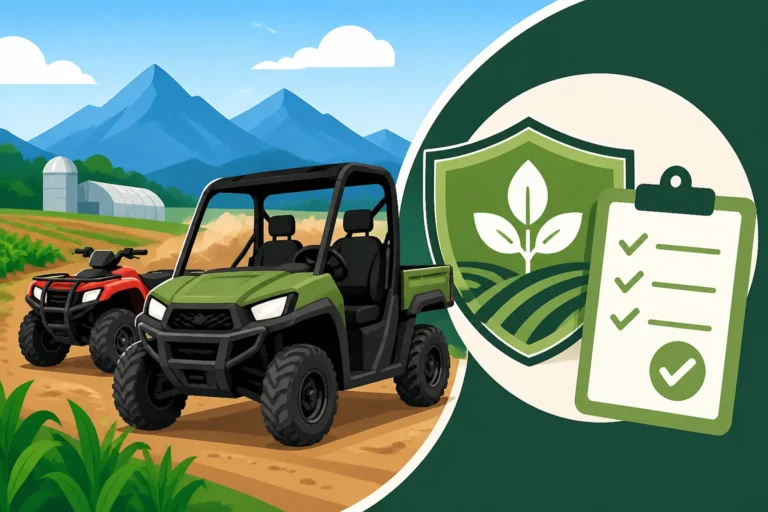
Colorado law provides an exemption for off-highway vehicles used primarily for agricultural purposes. This means that if your ATV or UTV is being utilized for legitimate farming, ranching, or other agricultural activities, and it's staying on your private land, it generally doesn't need to be registered with CPW. This is a huge benefit for ranchers and farmers who rely on these machines daily for their livelihood, without adding another annual fee to their operational costs.
However, it's crucial to understand what "agricultural purposes" truly entails. This exemption is intended for tasks directly related to the production of crops, livestock, or other farm products. This includes activities like checking irrigation lines, moving hay bales, inspecting fences, herding animals, or performing other necessary farm maintenance. It does not extend to joyriding around your fields with your friends on a Sunday afternoon, even if you own a working farm. If the machine's primary use shifts from genuine agricultural work to recreational riding, even if it's still on your private land, the exemption may no longer apply, and you might then be required to register it. For example, if you use your quad during the week to manage your peach orchard near Palisade, but then use the same quad on the weekend to explore your property's back trails with your kids, that recreational use could push it out of the exemption. You can dive deeper into this specific area by reading [Agricultural Exemptions From Colorado OHV Rules].
Using an OHV for Business Purposes on Private Land
The agricultural exemption is one specific type of business use, but what about other commercial operations? Perhaps you run a construction company and use a utility vehicle on a private job site, or a logging operation that uses an ATV to scout timber on private forest land. Similar to agricultural use, if the OHV is exclusively used for legitimate business operations on private property and never travels on public roads or trails, it generally does not require CPW registration.
However, just like with agricultural use, the key is the exclusive operation on private property for bona fide business purposes. If your business involves transporting equipment via a public road, even briefly, the registration requirement kicks back in. Furthermore, businesses often have complex liability considerations. Even if you're exempt from registration, ensuring proper insurance coverage is paramount. [Insuring an ATV in Colorado] is a vital topic for any owner, but especially for businesses where accidents could have significant financial repercussions. If you have employees operating the machine, or if clients or visitors are ever on or around the machine, you might also want to consult with legal counsel to ensure you have adequate waivers or agreements in place. Again, resources like LawDepot can be valuable for creating standardized business contracts or liability waivers that define the terms of use for your OHVs, protecting your business interests. For larger organizations, you may even consider [Colorado OHV Rules for Utility and Work Machines].
Best Practices for Private Land Riders
Even if your OHV is happily exempt from state registration because it never leaves your private property, there are still some important best practices that every Colorado private land rider should embrace. These aren't just about adhering to the letter of the law, but about responsible ownership, ensuring safety, and preventing potential disputes or misunderstandings.
Documenting Ownership and Permission
You might think that because you ride only on your own land, the typical paperwork associated with OHV ownership isn't as critical. However, this couldn't be further from the truth. Having clear documentation of ownership and, if applicable, permission to ride on another's land is absolutely essential. Imagine a scenario where your ATV is stolen from your private barn, or a dispute arises with a neighbor over boundaries. Without solid proof, reclaiming your machine or defending your rights can become incredibly difficult.
Always keep a bill of sale, title (if your machine has one), or other proof of purchase in a safe place. This establishes legal ownership. If you purchased your machine from a private seller, a detailed [Colorado ATV Bill of Sale Template] is invaluable. If you're riding on someone else's land, even a family member's, a written permission document, as discussed earlier, is your shield against misunderstandings. It clearly delineates what you're allowed to do and for how long. LawDepot offers customizable templates for various legal documents, including bills of sale and permission forms, making it easier to ensure you have the necessary records. Proper documentation is not just for public trail riding; it's a fundamental aspect of responsible property and asset management.
Safety and Responsibility: Regardless of Registration Status
Whether you're tearing up public trails or just puttering around your backyard, safety should always be your number one priority. The fact that you're on private land doesn't magically make an OHV less dangerous, nor does it excuse you from common-sense safety practices. Colorado has a vibrant culture of outdoor recreation, and with that comes a shared responsibility for safe conduct.
Always wear appropriate safety gear, including a DOT-compliant helmet, eye protection, sturdy boots, and long pants. Accidents can happen anywhere, and personal protective equipment significantly reduces the risk of serious injury. This is especially true for younger riders; even on private land, parental supervision and proper gear are crucial. You might want to review [Youth Machine Size Rules Colorado Parents Ask About] for guidance. Be mindful of noise levels, particularly if you have close neighbors. Unnecessary engine revving or loud aftermarket exhausts can quickly lead to strained relationships, even if you're entirely within your property lines. Respecting your neighbors and operating your machine responsibly can prevent many common complaints and foster a more harmonious community. It’s also wise to consider liability insurance, as an accident on your private land could still lead to costly damages or lawsuits.
Educating Yourself and Staying Informed
Colorado's OHV laws and regulations are dynamic and can sometimes vary by county or even by municipality, particularly concerning road access or noise ordinances. Just because you're riding on private land doesn't mean you're entirely immune to local rules that might affect you. What’s allowed in Hinsdale County might be different from Weld County.
It’s always a good idea to stay informed about any changes to state or local laws that could impact your use of an OHV, even on private property. The Colorado Parks and Wildlife website is an excellent resource for official regulations, and they often publish guides that clarify common questions. Periodically reviewing their information, such as [Colorado Parks and Wildlife OHV Registration Explained], can help ensure you’re always operating legally and responsibly. If you're unsure about a specific rule or exemption, especially if your property abuts public land or involves crossing public access points, a quick call to your local CPW office or county sheriff's department can provide clarity. Don't rely solely on word-of-mouth or outdated information; direct consultation with authorities is always the most reliable path to understanding your obligations as a private land OHV owner.
| Scenario | CPW Registration Required? | Key Considerations |
|---|---|---|
| Exclusively Private Property | No | Machine never touches public roads or trails. |
| Private Land (Agricultural Use) | No | Primarily used for farming/ranching. Not for recreation. |
| Private Land with Public Road Crossing | Yes | Even a few feet on a public road triggers requirement. Local road rules may apply. |
| Leased Land / Permission to Ride | No (typically) | Requires explicit, ideally written, permission. Ensure no public access is used. |
| Private Land (Business Use) | No (typically) | Machine solely used for legitimate business tasks on private property. |
| OHV Accessing Public Land from Private | Yes | If you ride from private land directly onto public trails/roads, registration is mandatory. |
Disclaimer
This article is for general informational purposes only and does not constitute professional advice. Laws, prices and regulations vary by location and change over time. Consult a qualified professional for guidance on your specific situation.