Recovering a Stolen ATV in Colorado
There’s almost nothing more disheartening than walking out to your garage, shed, or campsite and realizing your beloved ATV or UTV is gone. That gut-wrenching feeling of loss, anger, and violation can be overwhelming. You pour your hard-earned money and countless hours into these machines, and for someone to just take it feels like a personal attack. This guide is here to walk you through the immediate steps to take, what information you’ll need, and how to work with authorities in Colorado to maximize your chances of recovering a stolen off-highway vehicle.
The Immediate Aftermath: What to Do First When Your OHV is Gone
When you first discover your ATV or UTV is missing, it’s easy for panic to set in. But taking a few calm, structured steps right away can make a huge difference in the recovery process. Every minute counts, so let's get into what you need to do in those critical first moments.
Confirming the Theft, Not Just a Misplacement
Before you call the police, take a deep breath and do a quick, thorough check. It sounds obvious, but sometimes our minds play tricks on us in a stressful situation. Did you lend it to a buddy last weekend and forget? Did a family member move it to another part of the property without telling you? Check every corner of your garage, shed, and property. Look behind the fence, in that obscure corner of the yard, or wherever it might have been stashed or moved for a project. Ask anyone who might have had access. Once you're absolutely sure it's not simply misplaced or borrowed, then you know you're dealing with a theft, and it's time to move quickly. That sinking feeling in your stomach is usually right, but a quick verification never hurts.
Reporting the Theft to Local Law Enforcement Promptly
As soon as you confirm the theft, call your local law enforcement agency. For an immediate theft where the culprits might still be in the area, a 911 call is appropriate. If you're discovering it hours or days later, the non-emergency line for your county sheriff or city police department is the way to go. Be ready to provide them with as much detail as possible: the exact make, model, year, color, and distinguishing features of your ATV or UTV. Most importantly, have your Vehicle Identification Number (VIN) ready. This unique 17-digit code is the single most important identifier for your machine. Tell them exactly where and when you last saw the machine, and any suspicious circumstances you noticed. Get a police report number – you'll need this for insurance and any future interactions with authorities. The quicker you get this information into their system, the better the chances of it being flagged if it's stopped, sold, or brought to a pawn shop.
Notifying Your Insurance Company Promptly
Once you’ve filed a police report, your next call should be to your insurance provider. Even if you’re not sure about your coverage, it's best to initiate the process. Many comprehensive ATV/UTV insurance policies will cover theft, but there might be specific timelines for reporting it. Have your policy number, the police report number, and all the details about your stolen machine handy. Your insurance agent will guide you through their claims process, explaining what documents they need and what the next steps are. Don't delay this call; the sooner your insurer is aware, the smoother the claims process will be, should it come to that. While it's tough to think about, understanding your coverage and starting the claim is a critical safety net. For a deeper dive into policy specifics, check out [Colorado ATV Insurance Cost].
Gathering Key Information: The Paper Trail of Your OHV
When your ATV or UTV is stolen, law enforcement and your insurance company are going to ask for a lot of specific details. Having these readily accessible will not only speed up their work but also demonstrate that you are the rightful owner. It's like having all your ducks in a row for an emergency – you hope you never need them, but you're so glad when they're there.
Locating Your Vehicle Identification Number VIN
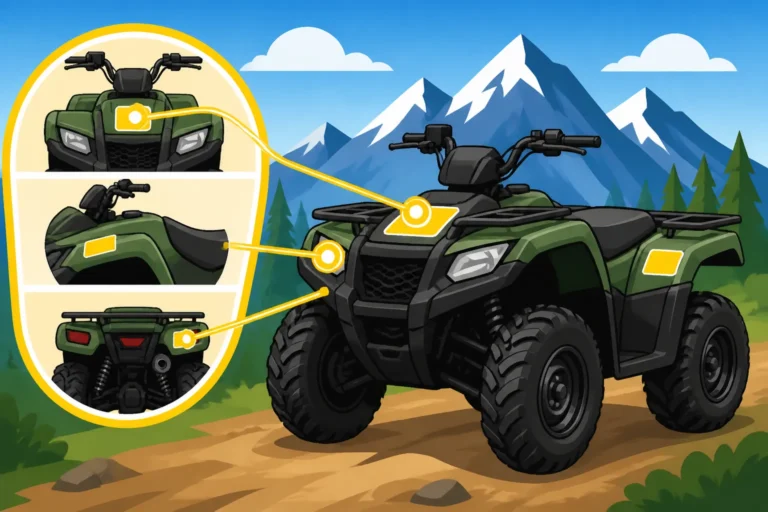
The Vehicle Identification Number (VIN) is the alphanumeric DNA of your ATV or UTV. It's a unique 17-character code that tells everyone its manufacturer, model year, and where it was made. Without this, tracking your machine is nearly impossible. Make sure you know where your VIN is located on your machine – usually stamped on the frame, often near the steering head, engine, or under the seat. If you have your registration card or title, the VIN will be clearly listed there. If you're wondering how to find it, we have a helpful guide on [Where the VIN Sits on a Side-by-Side]. Knowing your VIN immediately is the best way for police to enter it into national databases, alerting authorities across the country that your machine is stolen.
Compiling Proof of Ownership Documents
Beyond the VIN, having solid proof of ownership is absolutely vital. This includes your certificate of title, current Colorado Parks and Wildlife (CPW) registration, and the original bill of sale. Photos of your machine, especially if they show unique features or modifications, are also incredibly helpful. The more documentation you have, the stronger your case for rightful ownership, which is crucial for both police recovery efforts and your insurance claim. These documents prove that the machine legally belongs to you and isn't just a "lost" item. Understanding the difference between these documents is also important; for more information, consider [Titling an Off-Highway Vehicle in Colorado] and [Colorado OHV Title Versus CPW Registration]. Keeping these papers in a secure location, separate from where your OHV is stored, is a smart move. If you're not sure which documents are most important, our guide on [Proof of Ownership for a Colorado OHV] can help clarify.
Creating a Detailed Description of Your Stolen Machine
Think of yourself as an artist, painting a picture of your OHV with words. Beyond the basic make, model, and color, what makes your machine unique? Did it have a specific type of aftermarket exhaust? A dent in a particular fender? Custom graphics or stickers? What kind of tires were on it? Was there a winch, a specific brand of lighting, or any other accessories? Even a small scratch you always meant to fix can be a critical identifier. Police need to know these details to identify your machine among others. Don't forget to include the approximate mileage or hours on the machine if you know it, and any personal items that might have been left on or in it. If you have photographs, provide them. A detailed description, combined with your VIN, gives law enforcement the best chance to spot and recover your machine.
Spreading the Word: Leveraging Community and Digital Tools
Once you’ve done everything you can with law enforcement and your insurance, it's time to tap into the power of the community. In the OHV world, many riders are passionate and vigilant, and they often keep an eye out for stolen machines. Leveraging social media and local networks can sometimes lead to crucial tips.
Utilizing Online Forums and Social Media Groups
The internet is a powerful tool for getting the word out quickly. Post about your stolen ATV or UTV in local Facebook groups, specifically those for Colorado OHV riders, regional buy/sell groups, and even neighborhood watch pages. Include clear photos of your machine, your contact information (maybe a burner phone or email to avoid personal number overload), and a plea for help. Crucially, explicitly state that people should contact the police with any sightings and NOT to confront anyone. You don't want well-meaning individuals putting themselves in harm's way. The reach of social media can be astounding, and someone might have seen something or recognize your machine.
Alerting Local Dealerships and Pawn Shops
Thieves often try to get rid of stolen goods quickly, and local dealerships, repair shops, or pawn shops are common places they might attempt to sell or trade a machine. Call these establishments in your area and the surrounding towns. Provide them with your machine’s VIN and a good description. Ask them to keep an eye out for anyone attempting to sell a machine matching yours or looking for parts that could come from it. Many businesses are willing to cooperate, as they certainly don't want to get involved with stolen property. Law enforcement often does this as part of their investigation, but a personal call from you can reinforce the message and provide a direct point of contact.
Checking Online Marketplaces for Your Stolen OHV
The same places thieves might try to sell your OHV in person, they might also try online. Keep a diligent eye on online marketplaces like Craigslist, Facebook Marketplace, eBay, and any regional powersports classifieds. Search for your make and model, or similar machines, in your area and neighboring states. Look for machines with similar modifications or unique identifying marks you noted in your description. If you find something that looks like your machine, DO NOT contact the seller directly. Instead, immediately notify the police and your insurance company with the link to the listing. They will handle the investigation and potential recovery. Attempting to arrange a meeting yourself can be dangerous. For more tips on identifying a potentially stolen machine online, you can refer to [Checking a Used Machine Against Theft Records].
The Recovery Process: Working with Authorities and What to Expect
The period after reporting a theft can be frustratingly slow, but it's important to remember that law enforcement and your insurance company are working in the background. Understanding their process and what to expect can help manage your expectations.
How Law Enforcement Investigates OHV Thefts in Colorado
Once you've filed your report, Colorado law enforcement will enter your VIN into national databases like NCIC (National Crime Information Center). This flags your machine as stolen, meaning if it's pulled over, involved in another crime, or comes up during a routine VIN check anywhere in the country, authorities will know it's stolen. Police will also follow up on any leads, such as sightings reported by the public or information from their own intelligence. They might check pawn shop records, conduct neighborhood inquiries, and sometimes even work with other agencies if they suspect cross-county or interstate theft rings. While some thefts are open-and-shut, many are complex, and the police have many cases. Patience is key, but don't hesitate to politely follow up periodically for updates on your case number.
Potential Scenarios for Recovery and Next Steps
There are several ways an OHV might be recovered. Sometimes, thieves ditch a machine after realizing it's too hot to handle or they can't sell it, and it's found abandoned. Other times, it's recovered after a traffic stop, or if someone tries to register or title it. If it's sold to an unwitting buyer, the police might recover it from that person. In any recovery scenario, you'll typically be contacted by the investigating officer. They'll arrange for you to identify the machine, and once released from evidence, you'll be responsible for picking it up. It's an exciting moment, but also be prepared for the possibility that it might not be in the same condition as when it was stolen.
Dealing with a Recovered, Damaged, or Stripped Machine
It's a bittersweet moment when your OHV is recovered, but sometimes it comes with a dose of reality: the machine might be damaged, stripped of parts, or in worse shape than when it was taken. This is where your insurance company steps back in. They will assess the damage. If the repair costs exceed a certain percentage of the machine's value, it might be declared a total loss, and you'll receive a payout. If it's repairable, your insurance will cover the costs (minus your deductible). It's an emotional process to see your machine in this condition, but having a clear path forward with your insurance can ease the burden. In situations where a machine has been significantly damaged or declared a total loss, you might be looking at what's known as a salvage title, which is something important to understand. You can learn more about [Buying a Salvage Side-by-Side in Colorado] if you find yourself in this situation.
Preventing Future Thefts: Lessons Learned and Best Practices
While no security measure is 100% foolproof against a determined thief, there are many things you can do to significantly reduce the risk of your ATV or UTV being stolen again. Taking proactive steps can provide immense peace of mind.
Implementing Robust Security Measures for Your OHV
This is where you become your own security expert. Start with physical deterrents: high-quality chains and locks for your wheels, frame, or even to anchor the machine to a fixed object like a concrete pillar. Consider a disc lock for brake rotors. If your machine is stored on a trailer, lock the trailer hitch and the wheels. GPS trackers are an excellent investment, allowing you to monitor your machine's location from your phone. Many riders also install hidden kill switches, making it impossible to start the engine without knowing the trick. Keep your storage areas well-lit, and if possible, use motion-sensor lights or security cameras. The goal is to make your OHV as difficult and time-consuming as possible for a thief to steal.
Documenting Your OHV Thoroughly Before a Loss
This ties back to our earlier point about proof of ownership, but it’s so important it deserves its own section for prevention. Before anything happens, take detailed photos and videos of your ATV or UTV from every angle. Document any unique features, modifications, and serial numbers of accessories like winches or aftermarket parts. Keep a digital file of your title, registration, and bill of sale. Store this information securely, perhaps in a cloud drive or on a separate hard drive, so it's accessible even if your physical documents are compromised. Using a service like LawDepot can be incredibly helpful for creating and storing professional-grade bills of sale or ownership affidavits, ensuring all your details are accurately recorded should you ever need them. Having this organized digital footprint is invaluable for recovery and insurance claims.
Understanding Common Theft Tactics in Colorado
Thieves aren't always masterminds; often, they're opportunists. They might be driving by, see an ATV parked loosely in a driveway, and seize the chance. Some thefts are more targeted, where thieves might "case" a property, watching for patterns or weak security. Trailer thefts are also common, where the entire trailer with the OHV loaded on it is simply hitched up and driven away. Be wary of posting too much detail about your machine and its location on social media before a big trip, as this can alert potential thieves to its absence or specific storage location. Understanding these common tactics helps you anticipate and counter them with appropriate security measures.
The Legal Aspects: Navigating the Aftermath
Beyond the immediate shock and the practical steps of recovery, there are often legal nuances involved when an ATV or UTV is stolen, especially concerning ownership and sales.
The Role of a Bill of Sale in Theft Prevention and Recovery
A properly executed bill of sale is not just a receipt; it's a critical legal document proving the transfer of ownership from a seller to you. It should include the full names and addresses of both parties, the date of sale, the purchase price, and a complete description of the OHV, including the all-important VIN. This document is your first line of defense in proving you legally own the machine. If your OHV is recovered but someone else claims ownership, your detailed bill of sale can swiftly resolve the dispute in your favor. Furthermore, if you ever sell your machine, providing a thorough bill of sale protects both you and the buyer. Professional templates, easily found on platforms like LawDepot, can ensure you cover all legal bases. For guidance on what makes a bill of sale legally sound, check out [ATV Bill of Sale Wording That Holds Up] or use a template like the one detailed in [Colorado ATV Bill of Sale Template].
What Happens if Your Stolen OHV is Sold to an Innocent Buyer
This is a tricky situation. If your stolen ATV or UTV is sold to an "innocent purchaser" – someone who bought it without knowing it was stolen – Colorado law generally holds that the original owner (you) still has the rightful claim to the property. Thieves cannot transfer legal title, even if they forge documents. If the police recover your machine from an innocent buyer, that buyer typically loses the machine and must pursue a civil claim against the thief (if they can be found) to recover their money. You, as the rightful owner, would get your machine back after any police evidence holds are lifted. This highlights why having your proof of ownership, like your title and a robust bill of sale from your original purchase, is so crucial.
Facing Penalties for an Unregistered or Untitled Stolen Machine
While it might seem like the least of your worries when your machine is stolen, the lack of proper registration and titling can complicate recovery efforts and potentially lead to additional legal headaches. In Colorado, all OHVs used on public lands must be registered with Colorado Parks and Wildlife (CPW), and most new machines require a title from the Department of Revenue. If your stolen machine wasn't properly registered or titled, it can be harder for law enforcement to confirm your ownership, and you might face fines or penalties once it's recovered. While law enforcement will still work to return stolen property, having all your paperwork in order ensures a smoother, quicker process and avoids any additional citations for non-compliance. Don't let the stress of a theft add to an already frustrating situation by neglecting these basic requirements. You can learn more about this in [Penalties for an Unregistered OHV in Colorado].
Disclaimer
This article is for general informational purposes only and does not constitute professional advice. Laws, prices and regulations vary by location and change over time. Consult a qualified professional for guidance on your specific situation.