Pre-Purchase Inspection at Altitude
Buying a used ATV or UTV in Colorado can feel like navigating a minefield, especially when you factor in our stunning but demanding high-altitude terrain. You want to make sure you're getting a machine that can handle the thin air and steep climbs without leaving you stranded or draining your wallet with repairs. This guide is all about equipping you with the knowledge to perform a thorough pre-purchase inspection, paying special attention to the unique challenges Colorado's altitude presents, so you can make an informed decision and hit the trails with confidence.
Why Altitude Matters: The Unique Demands on OHVs in Colorado
When you're shopping for a used off-highway vehicle (OHV) in Colorado, it's easy to get caught up in the excitement of imagining yourself on a high mountain pass. But the reality is, our altitude puts extra stress on these machines that you might not encounter at sea level. Ignoring these factors during an inspection can lead to costly and frustrating breakdowns later on.
Engine Performance and Fuel Systems
One of the biggest impacts of high altitude is on engine performance. Less oxygen in the air means less power for an internal combustion engine. Carbureted machines, common in older ATVs, are particularly susceptible to this. They need to be "jetted" correctly for altitude, or they'll run rich, lose significant power, foul spark plugs, and potentially suffer long-term damage. If you're looking at a carbureted quad, ask the seller about re-jetting for local elevations and how the machine performs on colder, higher rides. A machine that struggles to start or runs poorly at a higher elevation test drive could be poorly tuned or have other issues exacerbated by the thin air.
Modern fuel-injected machines, while generally better at compensating for altitude automatically, still work harder. The computer adjusts fuel delivery, but the engine is still pulling thinner air. This means components like fuel pumps, injectors, and air filters can experience increased strain over time. During your inspection, listen closely for any unusual engine noises, look for excessive smoke from the exhaust (which could indicate burning oil or a rich fuel mixture), and check the air filter for signs of neglect, as a clogged filter will only compound the altitude-related power loss.
Cooling Systems and Overheating Risks
Colorado's steep, sustained climbs, combined with thinner air, make overheating a significant concern for OHVs. Engines have to work harder, generating more heat, while the cooling system has less dense air flowing over the radiator to dissipate that heat. This can be especially true for larger UTVs carrying multiple passengers or heavy gear.
When you're inspecting a used machine, pay extra attention to the cooling system. Look for any signs of coolant leaks around the radiator, hoses, or water pump. Squeeze the radiator hoses when the engine is cold – they should feel firm but pliable, not rock hard or mushy. Check the coolant reservoir level and the color of the fluid; it should be clean and bright, not murky or rusty. Also, inspect the radiator fins for damage from rocks or mud, which can severely restrict airflow. If the fan kicks on, listen for any grinding or unusual sounds. Ask the owner if the machine has ever overheated on a trail, as repeated overheating can lead to serious engine damage.
Drivetrain Wear and Tear at Elevation
Riding in Colorado often means conquering rocky trails, steep ascents, and technical terrain. This kind of riding puts immense strain on the drivetrain components: axles, CV joints, differentials, and the transmission. At altitude, with reduced engine power, riders might be more inclined to "lug" the engine or use lower gears more frequently, which can also stress these parts.
During your inspection, put the machine in 4-wheel drive (if equipped) and listen for any clunks, grinding, or popping sounds when turning the wheels or accelerating slowly. Check the CV boots (the rubber covers on the axle joints) for tears or cracks, as these can allow dirt and moisture in, leading to premature failure of expensive CV joints. Inspect the differential fluid for signs of contamination or metallic flakes, which would indicate internal wear. A machine that has spent its life tackling Colorado's most challenging trails will likely show more drivetrain wear than one used only for light recreational riding at lower elevations.
Mechanical Inspection Checklist: Digging Deep
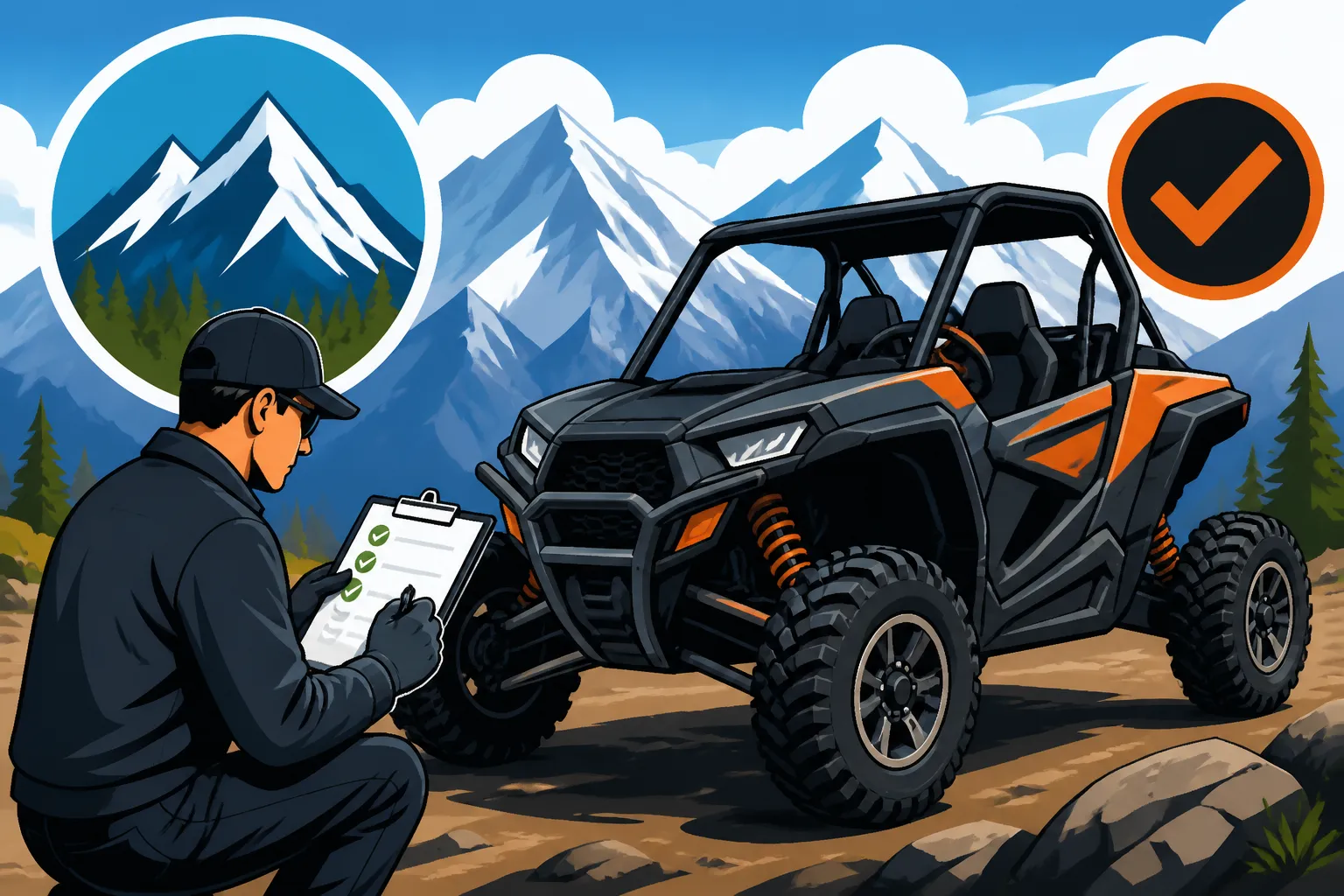
Beyond the altitude-specific considerations, a thorough mechanical inspection is critical for any used OHV. This isn't just about kicking the tires; it's about systematically evaluating every major system for signs of wear, neglect, or impending failure.
Engine and Exhaust System
Start the machine from cold if possible. This allows you to observe how it starts and idles without any warm-up masking potential issues. Listen for excessive ticking, knocking, or grinding noises. A little valve train noise might be normal for some models, but anything loud or persistent is a red flag. Check the exhaust for excessive smoke: blue smoke often means burning oil, while thick white smoke could indicate a head gasket issue or coolant burning. Black smoke, especially in carbureted machines, usually points to a rich fuel mixture. Feel the exhaust pipe for any loose connections or holes that could indicate a leak. A spark arrestor is crucial for Colorado public lands, so ensure it's present and not excessively clogged.
Once the engine is running, let it warm up. Does it hold a steady idle? Does it respond crisply to throttle input? Take note of any hesitation or flat spots in the power delivery. For machines with a clutch, feel for smooth engagement. If it's a CVT (automatic) system, listen for any squealing or grinding, which could indicate belt wear. Check the oil level and condition; clean oil is a good sign, but watch for milky oil (water contamination) or gritty, burnt-smelling oil (neglect or internal issues).
Suspension, Steering, and Brakes
These are your safety systems. Begin by visually inspecting all four shocks for leaks around the seals. Bounce each corner of the machine – it should rebound smoothly once or twice, not continue bouncing excessively. Look at the A-arms, tie rods, and steering components for bends, cracks, or excessive play. Grab each wheel at the 12 and 6 o'clock positions, then 3 and 9 o'clock, and try to wiggle it. Any significant play could indicate worn wheel bearings, ball joints, or tie rod ends, all of which are common wear items.
For brakes, check the fluid level in the master cylinder and the condition of the brake lines for cracks or leaks. Squeeze the brake levers (or depress the pedal) – they should feel firm, not spongy, and hold pressure. While riding, test both front and rear brakes independently and together. Listen for squealing or grinding, which indicates worn pads. Inspect the brake pads themselves for thickness and the rotors for excessive grooving or warping. Effective brakes are non-negotiable on Colorado's steep descents, so be extra critical here.
Tires, Wheels, and Undercarriage
Tires can tell you a lot about how a machine has been ridden and maintained. Look for uneven wear patterns, which could point to alignment issues or worn suspension components. Check the tread depth; new tires are expensive, so factor that into your offer if they're bald. Inspect the sidewalls for cuts, cracks, or plugs from previous punctures. Wheels should be straight and free of major dents or cracks, especially the bead where the tire seats.
Then, get down and look under the machine. This is where you'll see the real story of its life on the trails. Look for heavy gouges or dents on the frame, skid plates, or differential housings, which indicate hard hits on rocks. Check for leaks from any components: engine, transmission, differentials. Look for bent exhaust pipes or damaged plastic components. The undercarriage can also reveal if the machine has been regularly cleaned after muddy rides, or if mud and grime have been left to sit and cause corrosion.
| Inspection Area | Key Things to Look For | Notes for Colorado Altitude |
|---|---|---|
| Engine (Cold Start) | Easy start, steady idle, no abnormal noises (knocks, ticks) | Crucial for carbureted machines: hesitation or poor idle could mean incorrect jetting for elevation. |
| Engine (Warm) | Smooth throttle response, no excessive smoke (blue, white, black) | Listen for signs of overworking. Blue/white smoke suggests burning oil/coolant, black suggests rich mixture at altitude. |
| Cooling System | No leaks, firm hoses, clean coolant, fan function, clear radiator | High risk of overheating on steep climbs. Radiator damage or low/dirty coolant is a major red flag. |
| Drivetrain | Smooth 4×4 engagement, no clunks/grinds, intact CV boots | Technical trails stress components. Check for worn CV boots allowing grit in, or differential leaks. |
| Suspension | No shock leaks, smooth rebound, no excessive play in components | Rocky terrain can bend components. Worn ball joints or tie rods lead to unstable handling on rough ground. |
| Steering | No excessive play, smooth movement, no binds | Play in steering components makes precise navigation difficult and dangerous on shelf roads. |
| Brakes | Firm lever/pedal, no leaks, good pad thickness, smooth braking | Absolutely critical for steep descents. Spongy brakes or worn pads are immediate safety hazards. |
| Tires & Wheels | Even tread wear, no sidewall damage, straight wheels | Uneven wear suggests alignment/suspension issues. Damaged sidewalls risk flats far from help. |
| Undercarriage | No major frame damage, no fluid leaks, intact skid plates | Reveals how hard the machine was ridden. Heavy gouges or leaks indicate abuse or neglect. |
| Electrical | All lights/gauges work, good battery, clean wiring | Reliable charging and lighting are important for early morning starts or unexpected delays on the trail. |
Paperwork and Provenance: Beyond the Machine Itself
A thorough mechanical inspection is only half the battle. You need to ensure the machine you're buying is legally sound and that you'll be able to register and title it without a hitch in Colorado. Skipping this step can lead to a nightmare of legal issues, lost money, and a machine you can't even ride.
Title, Liens, and Proof of Ownership
In Colorado, ATVs and UTVs are titled through the Department of Revenue (DOR) and registered with Colorado Parks and Wildlife (CPW). You absolutely need a clear title to transfer ownership. Always ask to see the physical title in the seller's hand, ensuring the VIN matches the machine exactly and there are no discrepancies in the owner's name. A clear title means no outstanding loans or liens against the machine. If there's a lien listed, it means a lender still has a financial interest, and the seller cannot legally transfer ownership without paying off that loan.
Don't just take their word for it. It's smart to ask for documentation that proves they are the legal owner. If the seller says they have lost the title, this is a major red flag. While it's possible to get a [Replacing a Lost Colorado OHV Registration] or even a duplicate title, it complicates the sale and should make you very cautious. For peace of mind, consider doing your own due diligence by asking the seller for the VIN and then checking with the Colorado Department of Revenue's motor vehicle services or even a local law enforcement agency to see if there are any recorded liens or if the vehicle is reported stolen. This is a critical step, especially before you hand over any money.
Bill of Sale: Your Legal Shield
Even with a clear title, a comprehensive bill of sale is your best friend when buying a used OHV. This legal document details the transaction, protecting both buyer and seller. It should include the full names and addresses of both parties, the date of sale, the purchase price, and a complete description of the OHV, including the make, model, year, and crucially, the VIN. A well-worded [Colorado ATV Bill of Sale Template] should also state that the machine is sold "as-is" with no warranties, which is standard for private sales, but also confirms the seller's assertion of ownership.
While Colorado doesn't typically require notarization for a bill of sale, it can add an extra layer of authenticity if there are any doubts. Using a reputable template from a service like LawDepot can ensure you cover all the necessary legal bases. Without proper documentation like a bill of sale, you might struggle with [Titling an Off-Highway Vehicle in Colorado] or even proving [Proof of Ownership for a Colorado OHV] if questions arise down the line. Don't underestimate the power of good paperwork!
Maintenance History and VIN Verification
A seller who can provide a detailed maintenance history – receipts for oil changes, major repairs, or even personal notes on work performed – is a sign of a diligent owner. This history can give you insight into how well the machine was cared for and what issues it might have had in the past. If there's no history, that's not necessarily a deal-breaker, but it does mean you have to rely even more heavily on your physical inspection.
Finally, always, always verify the Vehicle Identification Number (VIN). The VIN is the unique identifier for the machine and should be clearly visible, typically stamped on the frame. Compare this VIN to the one on the title, the bill of sale, and any other documentation. Mistakes here can lead to huge headaches when you go to title or register the machine. For instance, knowing [Where to Find the VIN on a Polaris General] or how to decode [Reading the Model Year Digit in an ATV VIN] can help confirm the machine's true identity and age. This step is also crucial for [Checking a Used Machine Against Theft Records], which you should absolutely do before finalizing any purchase.
Bringing in a Pro: When to Get Expert Help
Even if you're handy with a wrench, some aspects of a pre-purchase inspection are best left to professionals, especially when you're dealing with complex engines and the unique demands of Colorado riding. Knowing when to call in an expert can save you from buying a lemon.
The Value of a Professional Mechanic's Inspection
If you're seriously considering a machine, especially a higher-priced UTV or one with a complex fuel injection system, paying a qualified mechanic for a pre-purchase inspection can be money well spent. These professionals have specialized tools, diagnostic equipment, and the experience to spot issues that a layperson might miss. They can perform critical tests like a compression test on the engine, which can reveal internal wear that might not be obvious during a simple start-up. They can also check fluid health more thoroughly, including differential and transmission fluids, for contamination or signs of metal shavings.
Many powersports dealers and independent shops across Colorado specialize in ATVs and UTVs. Look for a shop that has a good reputation and perhaps one that services the specific brand you're looking at. Be prepared to pay a fee for this service, but consider it an investment. It's far cheaper to pay for an inspection now than to face a major engine rebuild or transmission replacement after you've bought the machine. Ask the seller if they're willing to take the machine to a shop of your choice – a seller who is confident in their machine usually won't object.
Questions to Ask a Mechanic for a Pre-Purchase Inspection
When you take a potential purchase to a mechanic, be clear about what you want them to focus on. Here are some key questions to ask:
- "What's the overall condition of the engine?" Specifically, ask about compression numbers, any abnormal noises, and signs of neglect like sludge in the oil or cooling system issues.
- "How does the fuel system look, especially considering altitude?" For carbureted machines, ask about jetting. For fuel-injected models, ask about fuel pressure and any diagnostic codes.
- "Are there any signs of excessive wear on the drivetrain, suspension, or steering components?" These are high-stress areas on Colorado trails. Ask about play in bearings, ball joints, and tie rods, and the condition of CV boots.
- "What's the condition of the brakes and tires?" Safety items that are often overlooked or deferred on used machines.
- "Have you found any evidence of frame damage, previous accidents, or major repairs?" A mechanic can often spot repairs that were done poorly or damage that was not disclosed.
- "Are there any immediate maintenance items that need addressing, or anything that looks like it will need attention soon?" This helps you budget for immediate costs.
A detailed report from a mechanic can give you incredible leverage in negotiations or provide the confidence to walk away from a bad deal. Remember that even with an inspection, buying a used machine always carries some risk, but a professional's eye significantly reduces that risk. For more details on what other costs to consider, you might want to read about [Colorado Sales Tax on an ATV Purchase] to factor that into your overall budget.
Disclaimer
This article is for general informational purposes only and does not constitute professional advice. Laws, prices and regulations vary by location and change over time. Consult a qualified professional for guidance on your specific situation.