Looking Up a Colorado OHV Registration
Needing to verify a Colorado off-highway vehicle (OHV) registration can be a real headache, especially when buying a used machine or simply checking your own. It's confusing to know where to turn for accurate information. This guide cuts through the noise, explaining exactly how to look up a Colorado OHV registration, who to contact, what information they'll need, and what you can learn.
Why You Might Need to Look Up an OHV Registration
There are several common scenarios where you might find yourself needing to check the status of a Colorado OHV registration. It's not just a casual curiosity; often, there's a practical, and sometimes critical, reason behind your inquiry. Understanding these situations can help clarify why this information is important and how a simple lookup can save you a lot of grief down the trail.
Verifying a Used Machine's Status as a Buyer
One of the most frequent reasons people need to look up an OHV registration is when they're considering buying a used ATV, UTV, or dirt bike. When you're spending your hard-earned money on an off-road machine, you want to be absolutely sure that what you're buying is legitimate. Is it stolen? Does it actually belong to the person selling it? Is it even registered for use on Colorado's public lands? A quick check can offer peace of mind or, just as importantly, red flags.
Imagine showing up to ride one of Colorado's incredible trails, like those in Taylor Park, only to be told by a ranger that your newly acquired side-by-side isn't properly registered. You could face fines, or worse, have your day cut short. That's a nightmare nobody wants. [Buying a Used ATV in Colorado: The Paperwork] can be a bewildering process, and verifying the seller’s claims about registration is a crucial step to protect yourself. You want to ensure the machine is good to go from day one.
Confirming Your Own Machine's Status
Even if you're the proud owner of a Colorado OHV, you might occasionally need to double-check your registration status. Perhaps your decal faded, or you're nearing the renewal period and can't recall the exact expiration date. Maybe you never received your new sticker in the mail after an online renewal and you're wondering if it ever processed. It's easy to lose track amidst all the vehicle paperwork.
Before heading out on a multi-day trip on the Alpine Loop, for example, you want to be sure everything is in order. A ranger check at a trailhead isn't the time to discover your registration expired last month. Proactively checking your status ensures you comply with state regulations and avoid potential fines. It also helps you stay on top of important deadlines, like those outlined in [When a Colorado OHV Registration Expires].
Assisting a Friend or Family Member
Sometimes, you might be helping out a buddy or a family member. Maybe they're not tech-savvy, or they've run into a problem with their machine and need your help figuring out its registration history. If you're borrowing an OHV for a weekend adventure, it's also a smart move to verify its current registration status to ensure you're riding legally. You're the one operating the machine, so the responsibility ultimately falls on you to ensure it's compliant.
This kind of assistance is common in the tight-knit OHV community. You might be helping someone deal with lost paperwork or trying to get a machine ready for sale. Knowing how to access this information means you can lend a hand effectively and make sure everyone stays on the right side of Colorado's OHV laws. It's all about responsible riding and supporting your fellow enthusiasts.
The Official Way to Check a Colorado OHV Registration
When it comes to off-highway vehicle registrations in Colorado, there's one primary authority you'll want to turn to: Colorado Parks and Wildlife (CPW). Unlike your regular car or truck, which is handled by the Department of Motor Vehicles (DMV), OHVs fall under CPW's jurisdiction for registration and permitting for public land use. This distinction is crucial to avoid a wild goose chase.
Contacting Colorado Parks and Wildlife (CPW)
Colorado Parks and Wildlife is the state agency responsible for managing and enforcing OHV registrations. This means they are the keepers of the official records for ATVs, UTVs, and dirt bikes that operate on designated public lands within the state. If you need to verify a registration, contacting them directly is the most reliable method. [Colorado Parks and Wildlife OHV Registration Explained] details their role in more depth.
Typically, the most straightforward way to reach them for a registration lookup is by phone. They have dedicated customer service lines that handle these types of inquiries. While they also manage an online portal for renewals and initial registrations, directly looking up an existing registration often requires human interaction to ensure privacy and accuracy. Be prepared for a short wait, especially during peak riding seasons. You can find their general contact information on the official CPW website, usually under their "Licenses & Registrations" or "OHV Permits" sections.
What Information CPW Can Provide and What They Can't
When you contact CPW, they can generally confirm whether a specific VIN (Vehicle Identification Number) is currently registered in Colorado, the registration's expiration date, and whether the permit is active. This is incredibly helpful for buyers, as it confirms the machine is indeed registered for legal use on public trails. For owners, it's a quick way to verify their own records or confirm a renewal.
However, CPW is bound by privacy laws, so they typically won't just hand out personal information about the registered owner to just anyone who calls. If you're a prospective buyer, for instance, they can confirm the machine's registration status, but they usually cannot confirm if Joe Smith is the registered owner of that specific machine unless you can provide compelling proof that you have a legitimate interest or are the owner yourself. In a private sale scenario, you'll want to get the owner's details directly from the seller and then use the VIN to verify the machine's registration status. For official proof of ownership between private parties, a legally sound bill of sale is essential. Many buyers and sellers find templated forms helpful, such as those available from services like LawDepot, to ensure a smooth transfer and proper documentation of ownership.
Using the CPW Online System for Limited Information
While the CPW online system is primarily designed for buying or renewing an OHV registration, it can sometimes offer limited insight into an existing registration if you have access to specific identifying information. If you're the registered owner and have an account, you can often log in to view your current permits. However, there isn't a publicly accessible search tool where you can simply type in a VIN and get all the registration details without some form of authentication or a specific inquiry process. This limitation is, again, largely due to privacy concerns.
If you are just trying to find out your own OHV's registration number, or perhaps reprint a lost card, then navigating your personal account on the CPW site might be an option. Remember that the unique ID number associated with your registration, often printed on the decal, is different from the VIN, which is tied to the machine itself. For specific instructions on renewing, you might refer to [Colorado OHV Registration Renewal Online].
What Information You'll Need to Provide
To successfully look up a Colorado OHV registration, whether you're contacting Colorado Parks and Wildlife directly or navigating any online portals, you'll need to have certain pieces of information ready. The more accurate and complete the details you provide, the easier and quicker the lookup process will be. Without the right info, you might find yourself hitting a wall.
The Importance of the VIN
The Vehicle Identification Number (VIN) is paramount for any OHV registration lookup. Think of it as the machine's unique fingerprint. It's a 17-character alphanumeric code that identifies that specific ATV, UTV, or dirt bike. This number is how CPW tracks its registration status, so having it on hand is non-negotiable. Without the VIN, identifying the correct machine out of thousands registered in Colorado would be virtually impossible.
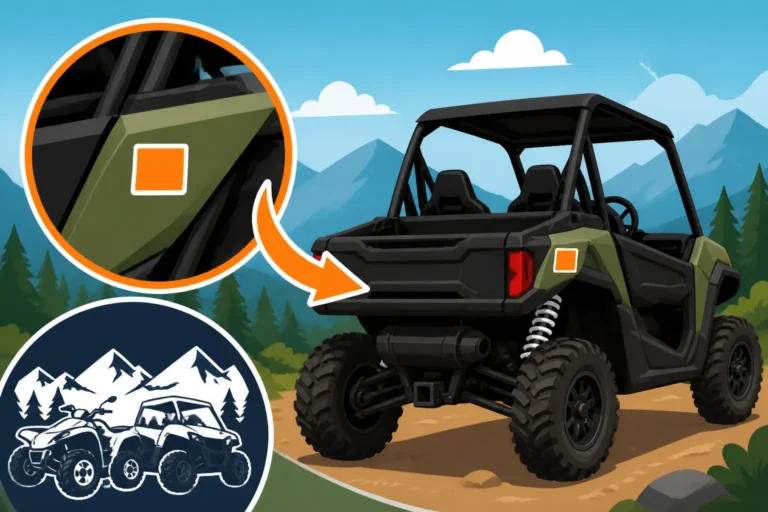
You can usually find the VIN stamped on the frame of the machine. For many side-by-sides, it's commonly located on the left-hand frame rail, often near the driver's side front wheel or under the driver's seat. On ATVs, it might be on the front frame, near the steering column, or on the lower frame rail. Dirt bikes often have it on the steering head or an engine case. If you're having trouble locating it, guides like [Where the VIN Sits on a Side-by-Side] can offer specific tips for different machine types. Being able to read the VIN correctly, including understanding digits like the model year, as discussed in [Reading the Model Year Digit in an ATV VIN], ensures accuracy.
Owner's Name and Address
If you are the registered owner, providing your full name and current address (as it appears on the registration) will help CPW verify your identity and confirm that you have the right to access the machine's registration details. This is part of their protocol to protect personal information. If you've moved, remember that changing your address on your driver's license doesn't automatically update your OHV registration; you typically need to notify CPW separately.
If you're buying a used machine, you'll naturally have the seller's name. While CPW likely won't confirm a match between a name and a VIN to a third party due to privacy rules, having the seller's details helps you in the overall purchase process, especially when drafting a bill of sale. For this step, having access to forms like those from LawDepot can be invaluable for ensuring you have a proper record of the transaction. You need to ensure the person selling the machine is indeed the legal owner; the registration lookup confirms the machine's legal status, and a bill of sale from the rightful owner confirms the transfer.
Other Identifying Details
Beyond the VIN and owner's information, having other descriptive details about the OHV can be helpful, especially if there's any ambiguity with the VIN or if you're trying to describe the machine over the phone. These details include:
- Make: (e.g., Polaris, Can-Am, Honda, Yamaha)
- Model: (e.g., RZR, Maverick, Rancher, Grizzly)
- Year: The model year of the machine.
- Color: While not strictly necessary, it can sometimes help differentiate machines if there are similar VINs or other confusions.
While these additional details aren't as crucial as the VIN, they can serve as backup information and make the conversation with CPW smoother. Having all these facts organized before you make that call or attempt an online lookup will greatly improve your chances of getting the information you need quickly and efficiently.
Common Questions and Misconceptions
Navigating government agencies and their specific rules can often lead to confusion, especially when multiple departments seem to handle similar types of vehicles. When it comes to looking up a Colorado OHV registration, there are a few common points of misunderstanding that many riders encounter. Clearing these up can save you time and frustration.
Why the DMV Isn't the Primary Source for OHV Registration
One of the biggest misconceptions new OHV owners or those moving to Colorado face is thinking that the Department of Motor Vehicles (DMV) handles OHV registrations. This is not the case for OHV registration in Colorado. The DMV is responsible for titling all motor vehicles, including OHVs, and issuing plates for street-legal vehicles like cars and trucks. However, the registration that allows an ATV, UTV, or dirt bike to operate on Colorado's public lands is managed by Colorado Parks and Wildlife (CPW).
This distinction often confuses people because both involve paperwork and fees. You might get a title for your OHV from the county DMV, but that title is purely a document of legal ownership, much like a house deed. It does not grant you permission to ride on public trails. For that, you need the CPW-issued registration sticker. This fundamental difference is important to grasp. For more on this, you can look into [Colorado OHV Title Versus CPW Registration] and [Do You Need Both a Title and a Registration in Colorado?]. If you were to call the DMV asking about an OHV registration sticker, they would likely redirect you to CPW.
Looking Up Owner Information for Legal Reasons
While CPW can confirm the registration status of a machine by its VIN, they are very strict about providing personal information about the registered owner to third parties. For privacy and security reasons, they generally will not release an owner's name, address, or contact details to just anyone who calls with a VIN. This is to protect individuals from potential fraud or harassment.
However, there are legitimate circumstances where owner information might be necessary, such as in cases of suspected theft, accident investigation, or legal disputes. In such situations, law enforcement agencies can access this information through official channels. If you believe a machine is stolen, your first step should always be to contact your local law enforcement, not CPW directly for an owner lookup. They have the legal authority and procedures in place to investigate and obtain the necessary details. If you're a buyer, remember to perform due diligence, like running the VIN through theft records as discussed in [Checking a Used Machine Against Theft Records], rather than expecting CPW to hand over owner data. Tools and services that assist with drafting legal documents, such as those offered by LawDepot, can be useful if you're dealing with an ownership dispute or need to formalize a private sale, but they don't circumvent privacy laws regarding direct access to other people's personal information from government databases.
Distinguishing Between Title and Registration Lookups
It's also important to understand that looking up an OHV's title is a different process from looking up its registration. A title search would typically go through the Colorado Department of Revenue (which oversees the DMV) and would focus on establishing legal ownership, identifying any liens, and confirming the vehicle's history (e.g., salvage title status). A title lookup won't tell you if the machine is currently registered for trail use.
Conversely, a CPW registration lookup will only confirm if the permit sticker is active and valid for public land riding. It will not provide details about the owner's title, previous owners, or whether there are any liens against the machine. Both pieces of information are vital for different purposes, especially when buying or selling. Therefore, if you're performing due diligence on a used machine, you'll want to consider both a title check through the proper DMV channels and a registration check through CPW. [Titling an OHV at the Colorado DMV] explains the title process in more detail.
Summary of Colorado OHV Information Sources
To help clarify which agency handles what, here's a quick reference table. Understanding these distinctions will save you a lot of time and direct you to the right place for your specific inquiry regarding a Colorado OHV.
| Information Needed | Primary Agency to Contact | What They Provide (Examples) | What They Typically Don't Provide |
|---|---|---|---|
| OHV Registration Status (for trail use) | Colorado Parks and Wildlife (CPW) | Confirmation of active/expired status, expiration date, validity for public lands by VIN. | Owner's personal details to third parties, title history, lien information. |
| OHV Title Information (ownership) | County DMV (Department of Revenue) | Legal ownership, lienholders, title history (e.g., salvage), VIN verification for title. | OHV registration status for public land use, permit numbers. |
| Bill of Sale / Legal Forms | Self-serve resources, legal aid | Templates for private sales, proof of ownership documents, agreements. | Official registration or title lookup services from state agencies. |
| Stolen Vehicle Records | Local Law Enforcement | Investigation, access to national stolen vehicle databases (e.g., NCIC) by VIN. | General OHV registration or title information for non-investigative purposes. |
When you need to know if an OHV is road-ready for public lands in Colorado, think CPW. When you need to know who owns it, think DMV.
Disclaimer
This article is for general informational purposes only and does not constitute professional advice. Laws, prices and regulations vary by location and change over time. Consult a qualified professional for guidance on your specific situation.