Buying a Used ATV in Colorado: The Paperwork
Buying a used ATV or UTV in Colorado can feel like an exciting adventure, but sometimes, the actual process of buying can feel more like navigating a bureaucratic maze. Many folks get really stressed out, wondering if they're getting all the right documents, worried about hidden problems, or just plain confused about what Colorado actually requires. This comprehensive guide is here to cut through all that confusion, walking you step-by-step through every piece of paperwork you'll encounter, from those initial checks to getting that final registration sticker on your machine, ensuring your used ATV or UTV purchase in Colorado is as smooth as a fresh groomed trail.
Before You Even Look: Pre-Purchase Paperwork & Research
When you're eyeing that shiny (or not-so-shiny) used ATV or UTV, it's easy to get caught up in the excitement. You might be picturing yourself tearing up the trails around Taylor Park or exploring the high passes near Lake City. But before you even arrange a viewing, there are some critical paperwork-related checks you absolutely must make. Skipping these steps is like heading out on a multi-day ride without packing a spare tire – you’re just asking for trouble down the line.
The VIN: Your First Line of Defense
Every ATV and UTV has a Vehicle Identification Number, or VIN, and it's your absolute best friend when buying used. Think of it as the machine's unique DNA. This isn't just a random string of characters; it holds a wealth of information and is the key to unlocking the machine's history. It's truly your first line of defense against buying a stolen machine, one with a murky past, or even one that's been cobbled together from various parts.
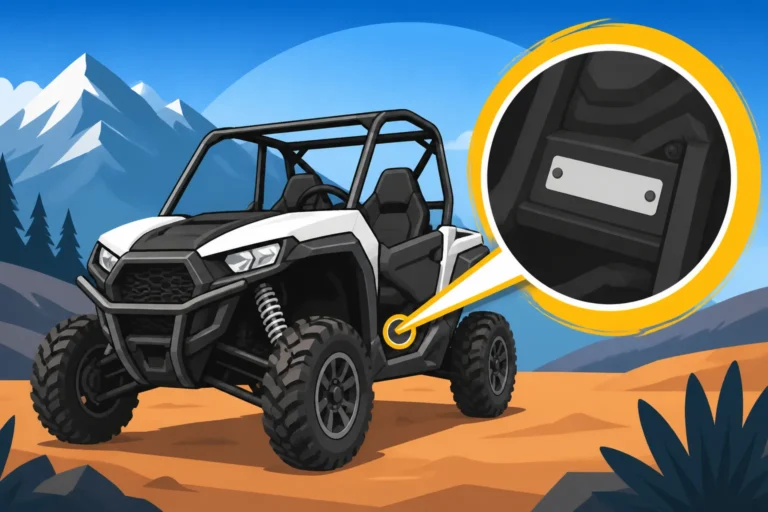
First off, you need to locate the VIN. On most ATVs, you'll often find it stamped on the frame, usually on the front left side near the handlebars, or sometimes under the seat. For side-by-sides, it can be in a few places: often on the lower frame rail near the driver's side front wheel, sometimes on the firewall, or occasionally under the hood or near the glove compartment. It's usually a metal plate or a stamp directly into the frame. Once you have that VIN, write it down accurately. Every digit matters.
With the VIN in hand, you can perform some vital background checks. There are online services that allow you to run a VIN to check for theft records. This is paramount. Imagine buying a machine, only to find out later it was reported stolen; you'd lose your money and the machine, and potentially face legal headaches. You can also use the VIN to learn about the machine's origins, including its original manufacturer, make, and model year. [Reading the Model Year Digit in an ATV VIN] can help you decode this information directly from the VIN itself. Furthermore, it can alert you to any outstanding liens on the machine, meaning someone else might still legally own a piece of it, which is a massive red flag. Always perform these checks before you drive to meet the seller or even consider making an offer. [Checking a Used Machine Against Theft Records] is a step that could save you thousands of dollars and endless headaches.
Understanding Colorado's OHV Landscape
Colorado has a somewhat unique system for off-highway vehicles, which can confuse even seasoned buyers, especially if they're new to the state or used to car purchases. Unlike cars, OHVs in Colorado can have two distinct types of "paperwork" related to their legal status: a title and a registration. It's vital to understand the difference and what each means for your purchase. Many people mistakenly believe that if a machine is registered, it's also titled, and vice versa. This simply isn't always the case here in the Centennial State.
A title, issued by the Colorado Department of Revenue (DOR) through your local county motor vehicle office, is essentially proof of legal ownership. It establishes who the rightful owner of the machine is. Not all ATVs and UTVs in Colorado are titled, particularly older ones, as titling requirements have changed over the years. If an OHV was purchased new before certain titling laws came into effect, it might only have a bill of sale as its primary proof of ownership, passed down through the years. This isn't necessarily a deal-breaker, but it's something to be aware of and to verify carefully. [Titling an Off-Highway Vehicle in Colorado] goes into more depth on this specific process.
On the other hand, a registration, issued by Colorado Parks and Wildlife (CPW), is what allows you to legally operate your ATV or UTV on public lands, designated trails, and any areas that require an OHV permit. The green sticker you see on machines is proof of this registration. It's an annual permit that supports trail maintenance and other OHV programs. Even if a machine isn't titled, it absolutely still needs to be registered to be ridden legally on public land. So, you can have a registered machine without a title, or a titled machine that isn't currently registered (though you couldn't ride it legally on public trails then). Understanding [Colorado OHV Title Versus CPW Registration] is key to ensuring you're covering all your bases. Knowing these distinctions upfront will help you ask the right questions and ensure the seller provides the correct documentation for your eventual use.
The Heart of the Deal: The Bill of Sale
Once you've done your preliminary VIN checks and you're comfortable with the machine's background, the next crucial piece of paperwork is the bill of sale. This document is far more than just a receipt; it's the bedrock of your transaction and your primary defense if any issues arise after the sale. Without a properly executed bill of sale, you could find yourself in a really tough spot, trying to prove ownership or deal with unforeseen problems.
Why a Bill of Sale Is Non-Negotiable
A bill of sale for an ATV or UTV is absolutely non-negotiable for several critical reasons. First and foremost, it serves as your official proof of ownership. When you buy a used machine from a private seller, there isn't a dealership to handle the transfer or create official records in the same way. The bill of sale bridges that gap, clearly documenting that the machine, identified by its unique VIN, has officially changed hands from the seller to you. This is essential for peace of mind, but more importantly, it's a legal requirement for several post-purchase steps.
Secondly, this document provides legal protection for both you, the buyer, and the seller. For you, it proves you legally acquired the machine, protecting you if there are any future claims of theft or ownership disputes. It also often includes an "as-is" clause, which is a standard disclaimer in private sales, stating that you're buying the machine in its current condition with no warranties from the seller. For the seller, it proves they no longer own the machine, releasing them from liability for anything that happens to it after the sale. This clear legal separation is incredibly important.
Finally, the bill of sale is often a mandatory document required for titling the OHV in your name (if applicable) and, most definitely, for registering it with Colorado Parks and Wildlife. Without it, the DMV or CPW might refuse to process your application, leaving you with a machine you can't legally ride on public trails. Trying to explain a cash transaction without a formal record is a recipe for frustration. Ensure you have a robust bill of sale. You might even consider using a reputable online service like LawDepot to generate a customized, legally sound bill of sale template, giving you extra confidence that all necessary clauses are included.
What Must Be Included in a Colorado Bill of Sale
To be effective and legally sound in Colorado, a bill of sale isn't just a quick scribble on a napkin. It needs to contain very specific information that leaves no room for ambiguity. This detail protects everyone involved and ensures that when you present it to the authorities for titling or registration, it will be accepted without a hitch. Missing critical information can lead to delays, rejection of your applications, and endless back-and-forth.
Here’s a breakdown of the essential elements your Colorado ATV/UTV bill of sale absolutely must include:
- Complete Identification of the OHV: This means the full Vehicle Identification Number (VIN), the make (e.g., Polaris, Can-Am), the model (e.g., RZR, Maverick), and the exact year of manufacture. Double-check that the VIN on the paperwork matches the VIN on the machine perfectly.
- Buyer and Seller Information: Full legal names and current physical addresses for both the buyer(s) and the seller(s) are required. If there are multiple buyers or sellers, all names and addresses should be listed.
- Date of Sale: The precise date the transaction took place. This is crucial for determining tax liability and transfer of ownership timelines.
- Purchase Price: The agreed-upon selling price of the ATV or UTV. If money changed hands, this needs to be clear. If it was a gift, the bill of sale should state "gift" or "$0" as the purchase price, but be aware of gift tax implications if the value is high.
- Signatures: Both the buyer(s) and seller(s) must sign the document. This signifies their agreement to the terms of the sale.
- "As-Is" Clause: It's highly recommended, especially for the seller, to include a statement that the vehicle is being sold "as-is, where-is" with no warranties, express or implied. This limits the seller's liability for any issues that arise after the sale.
- Odometer Reading (if applicable): While not always present on all OHVs, if there's an odometer, recording the mileage at the time of sale is a good practice.
While not strictly required, adding a line that states the seller affirms they are the legal owner and have the right to sell the machine adds another layer of security for the buyer. Using a template, perhaps from a service like LawDepot, can ensure you don't miss any of these vital components and that your [Colorado ATV Bill of Sale Template] is robust enough to stand up to scrutiny. Remember, a thorough bill of sale is your shield and your sword in the world of used OHV purchases.
Does It Need to Be Notarized in Colorado?
This is a question that comes up a lot, and it's a really important one. When you're dealing with private sales, especially of something as valuable as an ATV or UTV, the idea of having a document notarized often provides a sense of added security. In Colorado, for a standard bill of sale for an OHV between private parties, notarization is generally not legally required for the document to be valid. The signatures of the buyer and seller are usually sufficient to make the agreement binding.
However, just because it's not strictly required doesn't mean it's not a good idea. There are several situations where getting your bill of sale notarized can offer significant advantages and extra peace of mind. For instance, if you're purchasing a particularly high-value machine, or if the seller is someone you don't know well (which is often the case in private sales), a notary acts as a neutral third party who verifies the identities of the signers and witnesses their signatures. This adds an undeniable layer of authenticity to the document, making it much harder for either party to dispute later that they didn't sign it or weren't present.
Another scenario where notarization is highly recommended is if the seller lives out of state or will not be easily accessible after the sale. If any questions or issues arise with the paperwork down the road, having a notarized document can simplify things immensely, as the identities of the signers are already officially verified. Furthermore, some county motor vehicle offices, while not explicitly requiring notarization by state law, might prefer it or ask for additional documentation if a bill of sale isn't notarized, particularly for machines with a less clear ownership history. While you might not need it for basic [Using a Bill of Sale as Proof of Ownership], it can certainly strengthen your case. So, while it's an extra step and a small fee, getting your [Does a Colorado Bill of Sale Need Notarizing?] question answered with a "yes, for extra protection" is often the wisest choice.
Proof of Ownership: More Than Just a Handshake
Beyond the bill of sale, the concept of "proof of ownership" for an ATV or UTV in Colorado can get a little nuanced. It's not always as straightforward as presenting a clear title certificate, especially with older machines. Understanding the different forms this proof can take is essential to ensure you're making a legitimate purchase and won't face hurdles when you go to register or title the machine in your name.
The Colorado OHV Title: When You'll See It
When we talk about legal ownership, a title certificate is typically the gold standard for vehicles. In Colorado, Off-Highway Vehicles (OHVs) are titled through the Department of Revenue (DOR), specifically at your local county clerk and recorder's office, which is often referred to as the DMV. This is distinct from Colorado Parks and Wildlife (CPW), which handles registration for riding permits. The title is a certificate issued by the state that legally establishes who owns the machine. It contains key information like the VIN, make, model, year, and the owner's name.
You'll generally see an OHV title in two main situations: first, if the machine was purchased new from a dealership relatively recently, as dealerships typically handle the initial titling process. Second, if the previous owner (or an owner in the chain) took the initiative to title an older machine, even if it wasn't strictly required at the time of its original sale. Colorado's titling laws for OHVs have evolved, so newer machines are almost always titled, while older ones might not be. If the machine you're buying does have a title, you'll want to inspect it carefully. Look for the seller's name matching the name on the title, and ensure there are no lienholder markings if the seller claims it's paid off. The seller should then sign the title over to you in the designated area. This clear transfer is the easiest way to establish your new ownership. If you're looking to [Titling an OHV at the Colorado DMV], a clean, properly signed-over title is what they'll be looking for.
Navigating a Sale Without a Traditional Title
This is where things can get a bit tricky but don't immediately panic – it's often manageable. It's quite common to encounter used ATVs or UTVs in Colorado, especially older models, that do not have a traditional state-issued title certificate. This isn't necessarily a sign of a problem or an illegal sale, but it does mean you need to be extra diligent in gathering and verifying alternative forms of ownership proof. Many OHVs were sold before Colorado had mandatory titling requirements for these types of machines, or perhaps they were always used on private land and an owner never saw the need to title it.
In these situations, your primary document for proving ownership becomes a comprehensive and detailed bill of sale. This is why all the details we discussed earlier – the full VIN, buyer/seller information, date, price, and signatures – are so critical. The bill of sale must clearly demonstrate the transfer of ownership from the previous owner to you. Alongside a solid bill of sale, you should ask the seller for any other documentation they might have. This could include old registration cards from Colorado Parks and Wildlife, even if expired. These old registration cards, particularly if they show the seller's name and the machine's VIN, provide a valuable historical link in the chain of ownership. If the seller also has old dealer sales invoices or financing paperwork that links them to the machine, that's even better.
If you don't receive a title, or if the chain of ownership is broken (e.g., the person selling it never put it in their name), you might need to pursue a bonded title. This is a process, typically handled through the Department of Revenue, where you essentially obtain an ownership title backed by a surety bond. It's a more involved process, requiring an application, an inspection, and demonstrating your legitimate claim to the machine. It's often a route for situations like [Titling a Machine With No Previous Owner on Hand] or when there's a missing link in the ownership history. Gathering all available documentation, even without a formal title, is crucial for your eventual [Proof of Ownership for a Colorado OHV] and subsequent registration with CPW.
When the Seller Has No Paperwork (or Lost It)
Okay, this is where you need to put on your detective hat and possibly your running shoes, because this scenario often involves significant red flags. If a seller tells you they have absolutely no paperwork for the ATV or UTV – no title, no bill of sale from when they bought it, no old registration cards – your alarm bells should be clanging loudly. While "lost paperwork" is a common excuse, it’s also a common tactic for selling stolen machines or machines with serious legal problems. This is the point where you really need to pause and seriously reconsider the purchase.
In the best-case scenario, the seller genuinely lost all their documents and is the rightful owner. Even in this situation, it puts a significant burden on you. You'd be responsible for trying to establish ownership without any official starting point, which usually means going through the bonded title process, as mentioned earlier. This involves extra time, extra cost, and no guarantee of success. It's a risk. However, the worst-case scenario is that the machine is stolen, or the seller doesn't have the legal right to sell it. If you purchase a stolen machine, you will lose the machine and your money, and you could face legal trouble yourself, even if you acted in good faith. [Buying From a Seller With No Registration] is almost always a risky proposition.
So, what should you do if you encounter a seller with no paperwork but are still interested in the machine? Proceed with extreme caution. First, insist the seller provide the VIN so you can run all the checks we talked about earlier. If they refuse or the VIN is obscured, walk away immediately. If the VIN comes back clean, ask the seller to obtain a replacement title or registration in their name before you proceed with the purchase. While [Selling an ATV in Colorado Without Paperwork] might happen, as a buyer, you should never put yourself in that vulnerable position. A legitimate seller should be willing to do the legwork to prove their ownership. If they can't or won't, consider it a clear sign to move on and find a machine with clear and verifiable documentation. Your peace of mind and your wallet will thank you.
Taxes, Fees, and Official Business
Once you’ve successfully navigated the ownership proof and bill of sale, it’s time to think about the official costs and processes that come with owning an ATV or UTV in Colorado. This isn't just about the purchase price; there are taxes and fees that are legally required to be paid, and specific steps you must take to get your machine legal for the trails. Ignoring these steps can lead to penalties and fines, turning your exciting new purchase into a costly headache.
Colorado Sales Tax on Your Used ATV Purchase
Here's something that often catches people off guard when buying a used ATV or UTV in Colorado: you are generally required to pay Colorado sales tax on the purchase, even if it's a private sale. Many folks assume sales tax only applies to purchases made from a licensed dealer, but that's not the case for OHVs here. This is a state law, and it's designed to ensure fairness and generate revenue regardless of how the transaction occurs.
How this tax is collected depends on where you buy the machine. If you purchase from a licensed Colorado powersports dealer, they will calculate and collect the sales tax at the point of sale, just like buying a new car. They'll then remit that tax to the state on your behalf, making it a very straightforward process for you. However, if you buy from a private individual (which is often the case for used machines), the responsibility falls on you, the buyer, to self-report and pay the sales tax. This usually happens when you go to title the machine at your county motor vehicle office, or if you're only registering it with Colorado Parks and Wildlife, you'll often still need to declare the purchase price and pay the tax. [Colorado Sales Tax on an ATV Purchase] is a real expense you need to factor into your budget.
The sales tax rate will vary slightly depending on your specific county and any local district taxes that apply. Generally, it's a combination of state, county, and potentially special district sales taxes. The tax is calculated on the agreed-upon purchase price listed on your bill of sale. It's crucial to be honest about the purchase price on your bill of sale; intentionally understating it to avoid taxes can lead to legal issues. So, budget for that sales tax, whether you're buying from a dealer or a private individual. Getting ready for [Sales Tax on a Private ATV Sale in Colorado] will save you from a surprise fee later.
Understanding Colorado's Use Tax
Sales tax isn't the only tax consideration, especially if you're bringing an OHV into Colorado from another state. This is where Colorado's "use tax" comes into play, and it's another area where buyers can sometimes get confused. While similar in purpose to sales tax – ensuring the state collects revenue – use tax applies specifically to goods purchased outside of Colorado but then used or stored within the state.
Think of it this way: if you bought your used ATV or UTV from a private seller in, say, Utah or New Mexico, and that state had a lower (or no) sales tax rate on such purchases, Colorado wants to ensure that you pay the equivalent tax as if you had bought it here. So, if you paid less than Colorado's sales tax rate in the state of purchase, or no tax at all, you'll be responsible for paying the difference (or the full amount) as a use tax when you register or title the machine in Colorado. This rule is particularly important for folks who might travel out of state specifically to find a deal on an OHV, only to bring it back to their Colorado home. [Colorado Use Tax After an Out-of-State Purchase] applies to many residents moving to the state or making purchases across state lines.
The use tax rate is generally the same as the combined state and local sales tax rate that would apply in your Colorado county of residence. You'll typically pay this use tax when you title the machine at the county motor vehicle office. They'll ask for proof of purchase and how much sales tax (if any) you paid in the other state. It's essential to have clear documentation of your out-of-state purchase price and any sales tax paid there to avoid paying more use tax than necessary. Failing to report and pay the use tax can result in penalties, so always be upfront about the machine's origin. This is an important detail for [Use Tax on a Machine Brought Into Colorado].
The Colorado OHV Registration Process After a Private Sale
Once the transaction is complete, the taxes are accounted for, and you're the proud new owner, the final crucial step is to get your ATV or UTV registered with Colorado Parks and Wildlife (CPW). This is the process that gets you that iconic green sticker, allowing you to legally ride on the vast network of public lands and designated OHV trails throughout the state, from the sand dunes to the high alpine passes. Without this registration, you can face fines and legal trouble if caught riding on public land.
The registration process is separate from titling. While titling primarily establishes ownership through the Department of Revenue, registration is your permit to operate. After a private sale, you'll need to gather your paperwork and head to a CPW office or one of their authorized vendors. Many sporting goods stores and even some convenience stores act as vendors for CPW registrations, similar to where you might buy a fishing or hunting license. [Colorado OHV Registration Vendors Across the State] can help you find a convenient location.
What you'll need to bring with you includes:
- Your detailed bill of sale: This is paramount as proof of your recent purchase and ownership transfer.
- Proof of previous ownership: This could be the properly signed-over title (if applicable) or the previous owner's expired registration card.
- Your identification: A valid driver's license or state ID.
- Payment for the registration fee.
The CPW agent will process your information, confirm the VIN, and take your payment. You'll receive a temporary registration printout immediately, and your official green sticker will typically be mailed to you within a few weeks. Remember, even if you just bought the machine, it must be registered. You cannot rely on the previous owner's expired or soon-to-expire sticker. This crucial step is detailed further in [Colorado OHV Registration After a Private Sale] and ensures you're ready to hit the trails legally.
Dealing with Specific Scenarios & Red Flags
Not all used ATV or UTV purchases are straightforward "seller-meets-buyer-with-title" transactions. Sometimes you're buying from a dealer, sometimes the machine comes from out of state, or perhaps it has a history of damage. Each of these scenarios presents its own set of paperwork requirements and potential red flags that you need to be aware of to protect your investment and avoid future headaches.
Purchasing from a Colorado Dealer: What's Different?
While buying from a private seller might offer a lower price, purchasing a used ATV or UTV from a licensed Colorado dealer comes with some distinct advantages, particularly when it comes to paperwork. Dealers are professional entities, and their business operations are regulated, which often translates to a smoother, more transparent transaction process for you. They have systems in place to handle much of the administrative burden that falls on you in a private sale.
First, and perhaps most significantly, a dealer will typically handle all the sales tax calculations and remittances. You'll pay the sales tax directly to the dealer as part of your purchase price, and they are responsible for forwarding it to the state and local authorities. This eliminates the need for you to self-report and pay the tax later, simplifying that aspect of the purchase. Secondly, dealers are generally responsible for ensuring clear title. They should be able to provide you with a clean title for the machine, free of any liens, and they will usually process the title transfer into your name directly with the county motor vehicle office. This can save you a trip and ensure the titling is done correctly. [Buying From a Colorado Dealer: What They File] covers these aspects in detail.
Dealers might also issue a temporary registration or permit, allowing you to legally transport your new machine home while the official paperwork is processed. They often also handle the initial Colorado Parks and Wildlife (CPW) registration, so you might even leave with your new green sticker, or at least have it mailed to you directly. While dealers might charge a "documentation fee" for these services, the convenience and assurance that the paperwork is handled correctly can often outweigh this additional cost. However, always ask about all fees upfront so there are no surprises. Understanding [Dealer Documentation Fees in Colorado] is important so you know what you are paying for.
Out-of-State Sellers or Machines Coming to Colorado
Colorado is a popular destination, and many residents move here from other states, bringing their beloved OHVs with them. Similarly, you might find a fantastic deal on an ATV or UTV from a private seller in a neighboring state like Utah, Wyoming, or Kansas. While this can be a great way to expand your options, purchasing an out-of-state machine or bringing one to Colorado requires special attention to paperwork to ensure a smooth transition into Colorado’s system.
The primary concern is establishing clear ownership and paying any applicable Colorado taxes. If the machine is coming from a state that titles OHVs, you'll need that properly signed-over out-of-state title. This title will serve as your primary proof of ownership when you go to title the machine in Colorado. The Colorado Department of Revenue will use this to issue a new Colorado title in your name. For example, if you're [Registering a Utah Machine After Moving to Colorado], you'll typically need the Utah title and your bill of sale.
Crucially, you’ll also need to address Colorado’s use tax. As discussed, if you didn't pay sales tax (or paid a lower rate) in the state of purchase, you'll owe the difference to Colorado. Be prepared with your bill of sale, clearly showing the purchase price and any sales tax paid in the original state. When you present your paperwork to the county motor vehicle office, they will assess and collect any due use tax. Finally, regardless of titling, you'll need to register the machine with Colorado Parks and Wildlife to ride it on public lands. This involves showing your proof of ownership (the new Colorado title or your bill of sale) and paying the CPW registration fee. The process is straightforward, but ensuring you have all documentation from the original state is key to avoiding delays when you are [Registering an Out-of-State Machine in Colorado].
Rebuilt, Salvage, or Modified Machines
Encountering an ATV or UTV with a "rebuilt" or "salvage" title, or one that has been significantly modified, adds another layer of complexity to the paperwork process and carries additional considerations. These terms indicate a history that is often less straightforward than a machine with a clean title, and understanding them is crucial before committing to a purchase.
A salvage title is issued to a vehicle that has been deemed a total loss by an insurance company, usually due to significant damage from an accident, flood, fire, or theft recovery. This doesn't mean the machine is unusable, but it does mean the cost of repairs exceeded a certain percentage of its value. Buying a machine with a salvage title means you are purchasing it "as is" with known, extensive damage history. The machine cannot be registered or operated on public lands in Colorado with just a salvage title.
A rebuilt title comes into play after a salvage-titled machine has been repaired and inspected to ensure it is roadworthy (or trail-worthy, in this case). After passing a state inspection (often a certified VIN inspection), the title can be changed from "salvage" to "rebuilt." While this indicates the machine has been restored, it's still critical for you to understand what [What a Rebuilt Title Means for a Buyer]. The value of a rebuilt machine is typically lower than one with a clean title, and some insurance companies may have different policies for covering them. The inspection process requires specific forms and certifications from the repair shops, adding to the paperwork.
Significantly modified machines, such as homemade buggies or those with engine swaps, also have unique paperwork challenges. If you're [Registering a Homemade Buggy in Colorado], you'll need to provide documentation of parts, potentially receipts, and undergo inspections to verify the VIN and safety. The goal for the state is to ensure the machine is safe and that its origin isn't suspicious. Always ask for all repair records, inspection certificates, and proof of parts used when considering a salvage, rebuilt, or heavily modified machine. While you might find a good deal, the extra paperwork and potential risks warrant careful consideration and a thorough pre-purchase inspection by a trusted mechanic.
After the Purchase: Protecting Your Investment
You’ve shaken hands, signed the bill of sale, and the machine is sitting in your driveway. Congratulations! But the journey isn't quite over. There are still a few essential steps to take to fully protect your new investment and ensure you can legally enjoy it on Colorado's incredible trail system. These steps involve finalizing the official transfer of ownership and getting your machine ready for action.
Transferring the Title into Your Name
If the ATV or UTV you purchased has a state-issued title, transferring it into your name is a critical step in solidifying your legal ownership. This process isn't handled by Colorado Parks and Wildlife (CPW); instead, it's managed by the Colorado Department of Revenue (DOR) through your local county clerk and recorder's office (often simply referred to as the DMV). This is where you formally record yourself as the new legal owner.
When you head to the county motor vehicle office, you'll need to bring a few key documents. Paramount among these is the original title certificate, properly signed over to you by the previous owner. Ensure their signature matches the name printed on the title, and that any lien information (if applicable) has been properly released. You'll also need your bill of sale, your valid photo identification, and potentially proof of your Colorado residency. The staff at the DMV will review your paperwork, verify the VIN, and collect any applicable sales or use tax that hasn't already been paid. [Titling an OHV Through the Colorado Department of Revenue] is the official process for this.
There will be a fee associated with transferring the title, often referred to as the [Colorado OHV Title Fee]. This fee contributes to the administrative costs of processing the title change and issuing a new title certificate in your name. Once processed, you'll typically receive a temporary registration while your official new title is mailed to you within a few weeks. It's a crucial administrative step that formally establishes your ownership in the state's records, making it easier to sell the machine down the road or prove ownership if it's ever stolen.
Getting Your Colorado OHV Registration Sticker
Even if you’ve titled your machine with the county, you still need to get that green Colorado OHV registration sticker from Colorado Parks and Wildlife (CPW) if you plan on riding on any public land. Think of the title as your deed to a house and the registration as your permit to occupy it. Many first-time buyers confuse these two, but they are distinctly separate processes with different purposes and agencies. The CPW registration is an annual permit that funds trail maintenance, education, and other OHV programs across the state.
To get your registration sticker, you can visit a CPW office or one of their many authorized sales agents located throughout the state. These vendors are often sporting goods stores, hardware stores, or even some convenience stores – places where you might also buy a hunting or fishing license. You'll need to bring your proof of ownership (your new title or the robust bill of sale), your valid identification, and payment for the registration fee. The agent will process your application, confirm the VIN of your machine, and issue you a temporary paper registration. [Colorado OHV Registration Vendors Across the State] can help you find a nearby location.
The iconic green sticker itself will then be mailed to you, typically arriving within 7 to 10 business days, though sometimes it can take a bit longer. While you're waiting for the sticker to arrive, the temporary paper registration allows you to legally ride. Just make sure to carry it with you on the machine. Once you receive your sticker, it must be properly affixed to your machine in a visible location. For ATVs, it's usually on the front or rear fender. For side-by-sides, it's often on the rear fender or another easily seen part of the machine. [Where the Colorado OHV Sticker Goes] provides more specific guidance on placement, ensuring you avoid any potential issues with rangers out on the trail.
Considering ATV/UTV Insurance in Colorado
Once all the paperwork is done and your machine is legally ready to ride, the final piece of protecting your investment is often considering insurance. While Colorado doesn't mandate OHV insurance for all machines operated on private land, there are crucial situations where it becomes a requirement or simply a very wise choice. Neglecting insurance can leave you financially vulnerable in the event of an accident, theft, or damage.
When it's often required:
- Financed Machines: If you financed your ATV or UTV through a lender, they will almost certainly require you to carry comprehensive and collision insurance to protect their investment. This is standard practice for any financed vehicle.
- Riding on Public Roads (where permitted): Although Colorado does not generally allow OHVs on public roads, some towns and counties have specific ordinances that permit limited OHV street access. If you plan to ride your OHV on these designated public roads, you will typically be required to carry liability insurance, similar to an automobile.
- State Parks and Specific Managed Areas: While not a universal rule, some specific state parks or managed recreational areas might have their own insurance requirements for OHVs operating within their boundaries.
Why it's a good idea even if not required:
- Liability Protection: This is perhaps the most important reason. If you're involved in an accident where you injure someone else or damage their property, liability insurance will help cover those costs, protecting your personal assets. Accidents, unfortunately, happen, even on the trail.
- Collision Coverage: This protects your own machine from damage if you hit something (like a tree or another vehicle) or roll over. Given the cost of repairing ATVs and UTVs, this coverage can be a lifesaver.
- Comprehensive Coverage: This covers non-collision events like theft, vandalism, fire, or natural disasters. OHVs are unfortunately targets for thieves, and comprehensive coverage provides peace of mind.
- Uninsured/Underinsured Motorist: While less common for OHVs, this can protect you if you're hit by another OHV operator who doesn't have insurance or enough coverage.
Many major insurance providers offer specific OHV policies. It's wise to shop around and compare quotes. Think about your riding habits, where you'll be riding, and the value of your machine when deciding on coverage. Don't assume your homeowners insurance will cover your ATV; it often has very limited or no coverage for motorized vehicles, especially when operated off your property. A dedicated [Insuring an ATV in Colorado] policy is almost always the best way to go to truly protect your investment and yourself.
Disclaimer
This article is for general informational purposes only and does not constitute professional advice. Laws, prices and regulations vary by location and change over time. Consult a qualified professional for guidance on your specific situation.