Bringing a Texas Side-by-Side to Colorado
Bringing your beloved side-by-side from the dusty plains of Texas to the majestic mountains of Colorado can feel like navigating a maze blindfolded. You've got your machine, you're ready for the trails, but the paperwork? That's where things get murky. This guide is here to untangle the complexities of titling, registering, and taxing your Texas side-by-side when you move to Colorado, ensuring you can hit those breathtaking trails without a hitch or a fine.
Understanding Colorado's Dual System for OHVs
One of the biggest surprises for folks moving to Colorado with their off-highway vehicle (OHV) – whether it's an ATV, dirt bike, or side-by-side – is that our state actually has two separate systems for official recognition. It's not like some other states where one piece of paper covers everything. Here, you have to deal with both the county Department of Motor Vehicles (DMV) for titling and Colorado Parks and Wildlife (CPW) for registration. This can certainly be confusing when you're used to a different system back home in Texas, where perhaps the process was more integrated or simply different in its requirements.
Think of it this way: your title from the DMV proves you own the machine. It's that core document that establishes legal ownership, similar to how you own a car. The CPW registration, on the other hand, is your permission slip to ride it on designated public trails. Without that CPW registration sticker, even if you legally own the machine with a shiny new Colorado title, you're not supposed to be out on the trails. This dual approach is critical to understand from the get-go, as it dictates the separate steps you'll need to take. Many riders often miss one or the other, leading to frustration down the line when a park ranger asks for paperwork.
The primary reason for this separation is that titling tracks ownership for legal and sales purposes, while registration helps fund the very trails you want to ride. The money collected through CPW registrations goes directly into the Colorado OHV Grant Program, supporting trail maintenance, improvements, and safety programs. So, while it might feel like an extra step, your registration fee is directly contributing to keeping those incredible mountain trails open and enjoyable for everyone. It's a system designed to sustain the outdoor recreation we all cherish here. You'll find more details on this process in articles like [Colorado OHV Title Versus CPW Registration] and [Colorado Parks and Wildlife OHV Registration Explained].
What Makes Colorado Different from Texas?
Texas has its own set of rules for off-road vehicles, often focusing on private land use or specific designated recreation areas. While some states have robust reciprocity agreements, Colorado’s system is quite specific. When you move here, your Texas title will serve as your proof of ownership, but your Texas registration or off-highway decal will likely not be sufficient for riding on Colorado’s public lands. Colorado wants its own stamp, literally, in the form of a CPW registration sticker.
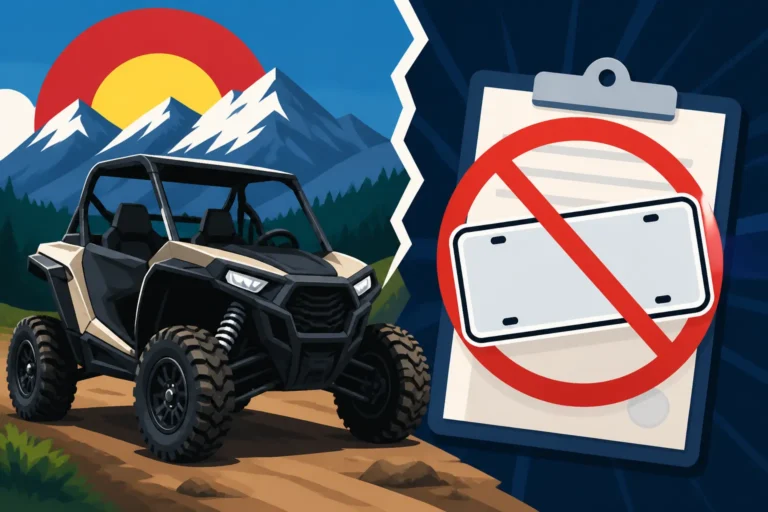
Another key difference is Colorado's emphasis on street legality – or rather, the lack thereof for most OHVs. While some areas in Texas might allow street-legal UTVs, Colorado generally does not issue street-legal plates for ATVs and UTVs for statewide road use. There are exceptions for certain county roads and town ordinances, but your Texas "street-legal" status won't automatically transfer. The state distinguishes sharply between licensed vehicles (like cars and trucks) and OHVs, and this distinction is crucial for understanding where you can and cannot ride, even if you were street-legal back in Texas. This is a common source of confusion for newcomers who might assume their machine's status translates directly.
Lastly, Colorado also has strict rules about where OHVs can be operated. Unlike some vast private ranch lands in Texas where you might have free rein, Colorado's public lands are often managed by the Forest Service or BLM, with specific "Motor Vehicle Use Maps" (MVUMs) that dictate exactly which roads and trails are open to motorized use. Your Texas-style freedom to explore might be a bit more structured here, requiring adherence to designated routes and seasonal closures, all enforced by rangers who often check for valid Colorado OHV registrations. This helps protect the sensitive mountain ecosystems and ensures a sustainable recreation environment.
Titling Your Texas Side-by-Side in Colorado
Once you've made the move, your first big step is often getting your machine properly titled in Colorado. This part of the process happens at your local county DMV, much like titling a car. The Texas title you bring with you is your primary document, but the Colorado DMV will want to ensure everything is above board and that your machine meets their administrative requirements. This isn't usually a complicated process, but it does require careful attention to detail and having all your ducks in a row.
The core of titling is proving ownership and verifying the vehicle. You'll need your Texas title, which should clearly show you as the owner. If you recently bought the side-by-side in Texas and only have a bill of sale, the process might be slightly more involved, potentially requiring you to first get a Texas title in your name before you can transfer it to Colorado, or, in some cases, apply for a bonded title if there's a missing chain of ownership. It's always best to have a clear title from Texas in hand. If you used a generic bill of sale for a private purchase, ensure it clearly lists the buyer, seller, date, purchase price, and a full Vehicle Identification Number (VIN). LawDepot offers templates for bills of sale that can help ensure you have all the necessary information, even if it was a Texas purchase.
The DMV will also require a VIN verification. This means a qualified agent, sometimes even the DMV itself or a Colorado law enforcement officer, will physically inspect your side-by-side to ensure the VIN on the machine matches the VIN on your title documents. This step is a crucial anti-theft measure and confirms that the paperwork accurately reflects the machine you're bringing into the state. They want to make sure the machine is indeed what the title says it is, and not a stolen or fraudulently identified vehicle. For more on this, you can look into [Titling an OHV at the Colorado DMV] and [Documents the Colorado DMV Wants for an OHV Title].
Required Documentation for Colorado Titling
To successfully title your Texas side-by-side in Colorado, you’ll need to gather a few key documents. Being prepared can save you multiple trips to the DMV, which is always a bonus when dealing with bureaucracy!
Here’s a typical checklist of what you should bring:
- Your Original Texas Title: This is the most important document. It needs to be clean, legible, and show you as the current legal owner. If there's a lien listed on the title from a Texas bank, you'll need to show proof that the lien has been released.
- Proof of Identity: Your valid driver's license or state-issued ID is essential. If the OHV is titled in multiple names, all owners might need to be present or provide power of attorney.
- Bill of Sale (if applicable): If you recently purchased the side-by-side in Texas, especially from a private seller, having a bill of sale can be helpful, even if you already have the title. It provides additional context for the transaction and helps establish the purchase price for tax purposes. A well-drafted bill of sale, like those available through resources such as LawDepot, can be a valuable supporting document.
- Odometer Disclosure Statement (if applicable): While less common for OHVs than for cars, some states require an odometer disclosure if the vehicle has an odometer. Be prepared, though your Texas title or bill of sale likely covers this for an OHV.
- VIN Verification Form: This form will be completed by an authorized inspector in Colorado. You don't bring this form with you; rather, you'll get it verified as part of the process, or have it done beforehand at an approved location.
Make sure all documents are originals, or certified copies if originals are unavailable for certain items. The DMV will likely make their own copies for their records, but they will want to see the authentic documents. Also, remember that Colorado has specific rules for when you bring a machine into the state and haven't yet paid Colorado sales tax on it, which leads us to the next point.
Navigating Colorado's Tax Requirements for Your Texas Machine
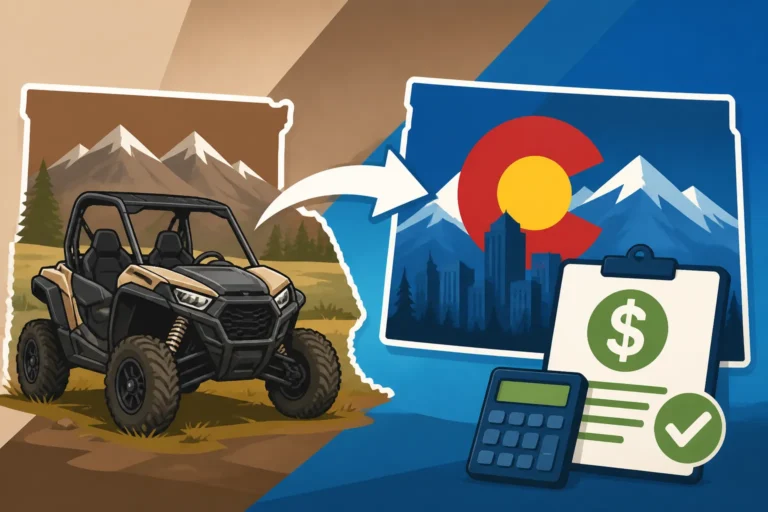
Moving your side-by-side from Texas to Colorado isn't just about changing its paper status; it also involves understanding Colorado's tax laws. The state has a "use tax" that often applies to vehicles and other items brought into Colorado from another state, especially if you didn't pay Colorado sales tax at the time of purchase. This can sometimes catch new residents off guard, so it’s important to be prepared for it.
The general rule of thumb for Colorado's use tax is that if you've recently purchased your side-by-side in Texas and the sales tax paid there was less than what you would have paid in Colorado, you might owe the difference. Or, if you paid no sales tax in Texas because it was a private sale or for another reason, Colorado will generally levy its sales tax (or use tax, as it’s called in this context) on the machine’s fair market value when you bring it in. This tax is typically paid at the same time you title your machine at the county DMV. They'll assess the value and calculate any applicable taxes. The goal is to ensure that items used within Colorado's borders contribute to the state's tax revenue, regardless of where they were originally purchased.
It’s not just about the state sales tax, either. Many Colorado counties and municipalities also have their own local sales and use taxes. So, the total amount you might owe could be a combination of state, county, and even city taxes, depending on where you register and reside. The DMV will typically handle the collection of all these applicable taxes during the titling process. It’s always a good idea to check with your specific county’s DMV or the Colorado Department of Revenue for the most up-to-date information on tax rates and exemptions before your visit. For more detailed information, check out [Use Tax on a Machine Brought Into Colorado].
When Colorado Use Tax Applies
Understanding when Colorado's use tax applies is key to avoiding surprises. It's not a blanket tax on every single OHV brought into the state, but rather a targeted tax on specific situations.
Here are the common scenarios where you'll likely encounter Colorado's use tax:
- Recent Purchase: If you bought your side-by-side in Texas within a certain timeframe (usually 12-18 months) before moving to Colorado, and you either paid no sales tax in Texas or the Texas sales tax rate was lower than Colorado's, you'll likely owe the difference or the full Colorado rate. The DMV will use the purchase price from your bill of sale or other documentation to calculate this.
- No Sales Tax Paid: If you acquired your side-by-side in Texas through a private sale where no sales tax was collected, Colorado will generally assess its use tax based on the fair market value of the machine when you title it here. This ensures equitable taxation regardless of where or how you bought the vehicle.
- Gifted Machines: Even if the side-by-side was gifted to you in Texas, Colorado may still assess a use tax based on the machine's value. Gifts are not always exempt from these types of taxes, as the state views it as an asset being brought into its jurisdiction. You'll need to provide documentation of the gift, which could include a bill of sale stating "gift" as the purchase price, or a gift affidavit. LawDepot can provide templates for gift affidavits if you need one.
It’s important to distinguish this from machines you’ve owned for many years in Texas, for which you paid sales tax there long ago, and are now simply moving with your household goods. In those cases, the use tax generally doesn't apply because it’s not a recent purchase or new acquisition. The DMV staff are usually well-versed in these distinctions and can guide you through the specifics based on your individual situation.
Registering Your Texas Side-by-Side with Colorado Parks and Wildlife
Once your side-by-side is properly titled in Colorado, you're halfway there! The next crucial step is to get it registered with Colorado Parks and Wildlife (CPW). This is the registration that allows you to legally operate your OHV on designated public trails, roads, and open riding areas across the state. Without this annual registration sticker, even with a Colorado title, you could face penalties for an unregistered OHV.
The CPW registration is an annual requirement, and it's what funds the state's extensive OHV program. Unlike vehicle registrations that often align with your birthday, Colorado's OHV registration year runs from April 1st to March 31st. This means that no matter when you register your side-by-side, your sticker will be valid until the following March 31st. So, if you register in July, it's good until March. If you register in February, it's still good until March 31st of that same year, requiring renewal shortly thereafter. This fixed year is something many new Colorado residents find unique, but it simplifies administrative processes for CPW.
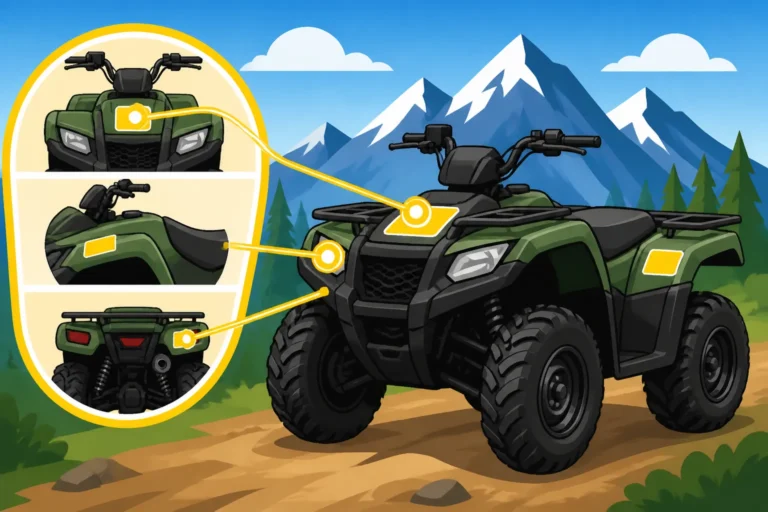
You can obtain your CPW registration in several ways: online, by mail, by phone, or in person at one of the many vendor locations across the state. These vendors often include sporting goods stores, some county courthouses, or CPW offices. When you register, you’ll need to provide proof of ownership (like your new Colorado title or your Texas title if you haven't titled it yet in Colorado but are just visiting), your personal identification, and the necessary fee. Once processed, you'll receive a colored sticker that needs to be affixed to your side-by-side in a visible location. For side-by-sides, this is typically on the left side of the machine, but always check the specific instructions provided with your decal. Don't forget to keep the registration card with you when you ride. [Colorado OHV Registration Vendors Across the State] can help you find a local spot to register, and [Where the Colorado OHV Sticker Goes] provides details on placement.
The Importance of the CPW Sticker for Trail Access
The CPW registration sticker is your ticket to Colorado's vast network of OHV trails. It's not just a formality; it's a legal requirement that rangers actively check for on public lands. Getting caught without a current Colorado OHV registration can result in fines, and nobody wants that to put a damper on their mountain adventure.
What does this mean for you, the new Colorado resident with a Texas side-by-side? Even if your Texas machine was registered or had some form of off-road permit in its home state, that doesn't count here. Colorado wants its own registration for machines operating on its public lands, regardless of origin. This applies equally to out-of-state visitors (who buy a non-resident permit) and new residents (who get a full resident registration). The system is designed to ensure everyone contributing to trail funding. [Registering an Out-of-State Machine in Colorado] delves deeper into this.
When you're out on the trails, especially in popular areas like the Alpine Loop or Taylor Park, you'll often encounter Colorado Parks and Wildlife rangers or Forest Service personnel. Their job includes ensuring riders are complying with state regulations, and a valid, properly affixed CPW registration sticker is one of the first things they'll look for. Having your registration card handy, perhaps in a waterproof bag, along with a copy of your new Colorado title, will ensure a smooth interaction and allow you to continue enjoying the incredible riding Colorado has to offer. It's a small step that makes a huge difference in your peace of mind while exploring.
| Aspect | Colorado County DMV (Titling) | Colorado Parks & Wildlife (Registration) |
|---|---|---|
| Purpose | Proves legal ownership, tracks sales. | Grants permission to ride on public OHV trails/areas. |
| Governing Body | Colorado Department of Revenue (via county DMVs). | Colorado Parks and Wildlife (CPW). |
| Key Document | Certificate of Title (shows VIN, owner info). | Annual registration sticker and accompanying card. |
| Frequency | One-time (unless ownership changes). | Annually (April 1st to March 31st). |
| Tax Implications | Often involves collection of Colorado sales/use tax. | Primarily a fee for trail funding, not a sales/use tax. |
| Required Docs | Texas title, ID, bill of sale (if recent purchase), VIN verify. | Proof of ownership (title), ID, payment for annual fee. |
| Placement | No physical sticker on machine for titling. | Sticker prominently displayed (e.g., left side of machine). |
| Penalty for Lacking | Can't legally sell, prove ownership, or get registration. | Fines for riding public trails, possible impoundment. |
Keeping Your Paperwork in Order After Moving
Once you've successfully titled and registered your Texas side-by-side in Colorado, the administrative hurdles are mostly behind you. However, it's crucial to maintain your paperwork and understand ongoing responsibilities. Just like any other vehicle, keeping your OHV's documents organized and up to date is essential for smooth riding and ownership in your new home state.
One of the most immediate things to remember is the annual renewal of your CPW registration. As mentioned, the registration year runs from April 1st to March 31st. CPW generally sends out renewal reminders, but it’s ultimately your responsibility to ensure your sticker is current before you head out on the trails. Many riders simply make it a habit to renew in late March or early April each year, ensuring they’re covered for the entire riding season. This prevents any last-minute scramble or potential fines when you're itching to hit the trails. Articles like [Colorado OHV Registration Renewal Online] can guide you through the process, which is often very straightforward.
Another important aspect is keeping your address current. If you move within Colorado, or if your mailing address changes, it's vital to update both your DMV records (for the title) and your CPW records (for registration). This ensures you receive renewal notices, any important communications regarding OHV rules, or even recall notices from the manufacturer. A simple change of address can prevent a lot of headaches down the road. Furthermore, should you ever decide to sell your side-by-side, having a clean, current Colorado title in your name will make the process much smoother for both you and the buyer. Always keep your title in a safe, secure place, not on the machine itself.
The Long-Term Benefits of Proper Documentation
While the process of transferring an out-of-state OHV can seem a bit tedious, doing it correctly from the start offers significant long-term benefits. It's not just about avoiding fines; it's about seamless ownership and peace of mind.
Properly titling and registering your side-by-side ensures that your ownership is unequivocally established in Colorado's system. This protects you in various scenarios, such as if your machine is ever stolen. With a Colorado title, law enforcement has clear documentation to aid in recovery. It also simplifies things if you need to secure a loan against your machine, if you need to make an insurance claim, or if you simply want to part ways with it down the line. A clean Colorado title makes selling your OHV much easier, as potential buyers will have confidence in the machine's legal status. You'll find helpful information on this in resources like [Proof of Ownership for a Colorado OHV] and [Checking a Used Machine Against Theft Records].
Beyond the personal benefits, your compliance with Colorado's titling and registration requirements directly supports the trails and riding areas that make Colorado such an incredible destination for OHV enthusiasts. Your fees contribute to trail maintenance, signage, safety programs, and even the development of new riding opportunities. By playing by the rules, you're not just protecting yourself, you're investing in the future of OHV recreation for everyone who loves to explore our beautiful state. It's a small price to pay for access to some of the most spectacular terrain in the country.
Disclaimer
This article is for general informational purposes only and does not constitute professional advice. Laws, prices and regulations vary by location and change over time. Consult a qualified professional for guidance on your specific situation.