Wildlife You Meet on Mountain Trails
A quiet Colorado trail can change quickly when an elk steps out of the timber or a moose appears beside a creek. Wildlife encounters are part of riding in the mountains, but a close approach can put riders and animals at risk. This guide explains what you may see, how to respond, and how to prepare for a safer ATV or UTV ride.
Wildlife you may encounter on Colorado mountain trails
The animals you see depend on the route, elevation, season, and time of day. A ride near Ouray or Lake City may pass through different habitat than a lower-elevation route near Grand Junction. Even on a familiar trail, wildlife activity can change from one outing to the next.
Elk, deer, and moose
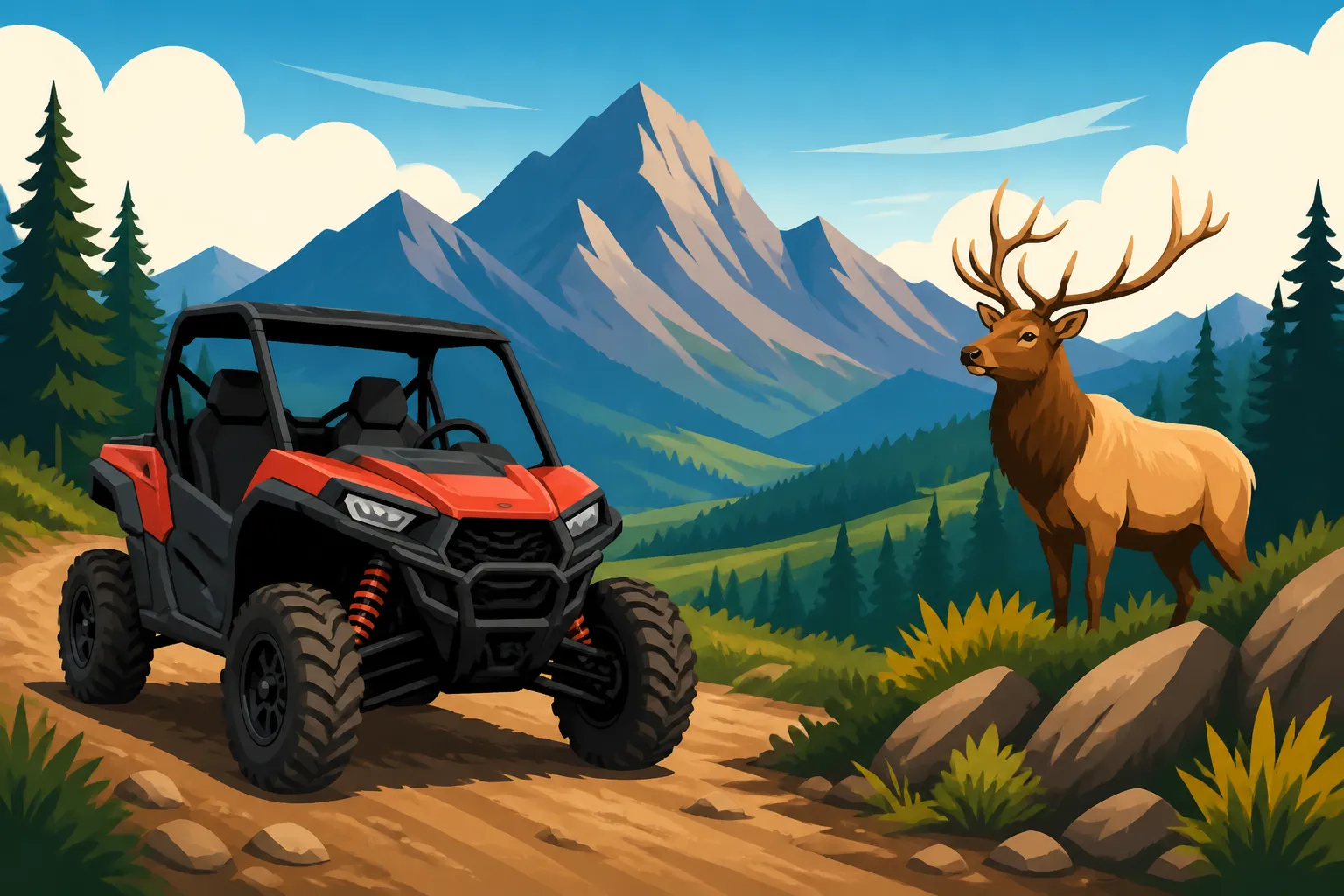
Elk and deer may cross roads or trails while moving between feeding and resting areas. You might see them in open meadows, near forest edges, or at dusk and dawn. A group can be less predictable than a single animal: one may cross first while others follow, sometimes from a direction riders cannot see around a bend.
Moose are especially important to give space. They may be found near willows, wetlands, streams, or other places with water and lush vegetation. A moose can look calm while still reacting quickly if it feels crowded, so don’t assume it will move away just because your engine is running or you have stopped. Keep well back, avoid blocking its route, and give it time and room to leave.
If a large animal is standing on the trail, stop at a safe distance and wait. Don’t rev the engine, honk, crowd it, or try to pass close by. If it doesn’t move, turn around when you can do so safely or choose another route. For trip planning, Riding Above Treeline in Colorado is a useful reminder that high-elevation terrain has its own conditions and constraints beyond wildlife.
Bears, mountain lions, and smaller animals
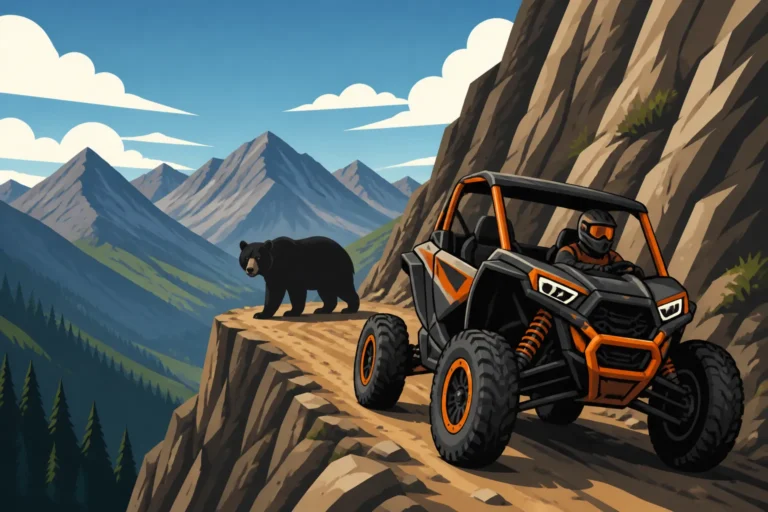
Black bears are found in many parts of Colorado, and a sighting can happen near forested roads, campsites, or berry patches. Keep food and scented items secured at camp, and never leave snacks or food scraps on the trail. If you see a bear, don’t approach for a photo, follow it, or try to draw it closer. Give it an open escape route and move away calmly.
Mountain lions are elusive, so many riders will never see one. Still, pay attention to the trail around you, particularly where visibility is limited. If you spot a lion, don’t approach it or run. Keep the group together, maintain awareness of where the animal is, and slowly create distance without cornering it.
Smaller wildlife can be easy to overlook. Marmots and ground squirrels may dart across a road, and birds may flush from brush beside a trail. Don’t swerve sharply to avoid a small animal if doing so could send your machine toward a drop-off, rock, or oncoming rider. Reduce speed where visibility is limited and keep a predictable line.
What to do when an animal is on or beside the trail
A wildlife encounter can feel surprising, especially when a large animal appears around a blind corner. A simple response plan helps everyone in the group avoid making a quick, risky decision.
Stop, give space, and let the animal choose
When you spot wildlife, slow down and stop where you have room to do so safely. Leave space between your machine and the animal, and keep other riders behind you rather than letting the group bunch up around it. A line of stopped machines can feel like a barrier to an animal trying to move away.
Let the animal decide where to go. Don’t ride toward it to encourage it off the trail, and don’t try to pass between an animal and its young. If it moves into the trees or across the route, wait until it has moved well clear before continuing. If it stays put, turn around or wait at a safe distance rather than forcing the encounter.
This matters on narrow mountain routes where there may be little room to maneuver. On a shelf road or steep climb, stopping abruptly can create a separate hazard for the riders behind you. Signal your group early, pull into a safe turnout if one is available, and leave the travel lane clear whenever possible.
Keep the group calm and avoid close-up photos
Wildlife can react to a cluster of people and machines differently from one rider who stops quietly. Keep voices low, don’t surround the animal, and don’t send someone closer on foot to get a better picture. A zoomed photo from a safe distance is preferable to a close approach that stresses the animal or puts a person in danger.
If you’re riding with children or inexperienced riders, tell them before the trip that the right response is to stay with the group and listen to the lead rider. Children may be excited by a moose or elk and want to get closer. Make the plan clear in advance: no feeding, no chasing, no walking toward wildlife, and no sudden movements toward the animal.
A wildlife sighting can also be a good reason to pause the ride and check that everyone is ready to continue. If the animal is close to camp or a staging area, secure food and give it a clear route away from people. What to Carry Over a High Pass can help with broader trip preparation, including planning for conditions that may slow or interrupt a ride.
Planning a wildlife-aware Colorado ride
You can’t schedule a wildlife sighting, but you can choose a pace and route that give you more time to react. That is particularly helpful on unfamiliar trails, where sharp turns, changing surfaces, and limited sightlines already demand attention.
Choose routes and timing with care
Wildlife may be more active during cooler parts of the day, but sightings can happen at any hour. If you’re riding at dawn or near dusk, reduce speed and give yourself extra room to stop. Don’t assume a familiar road is empty just because you’ve ridden it before; animals may use it as a crossing or travel corridor.
Before heading out, check current trail conditions and closures through the appropriate land manager. Route-planning tools such as onX Offroad can help you review a route and orient yourself, but a map app is not a substitute for posted signs, official closure information, or local restrictions. In areas such as the San Juans, don’t count on having a reliable signal throughout the ride; save maps or route details for offline use before leaving service.
Keep the terrain and your group’s ability in mind when choosing a route. A trail that is manageable in clear daylight can feel much more demanding when visibility is reduced or wildlife is near the road. If you’re introducing someone to mountain riding, Colorado Trails Suited to Beginners can help frame a more cautious route choice.
Ride slowly where visibility is limited
Slow down before blind corners, narrow sections, creek crossings, and places where brush blocks your view. This gives you more time to respond to an animal or another trail user. Keep to a controlled pace rather than accelerating into a stretch you can’t see, and leave room to stop without locking up the brakes.
Sound carries differently in the mountains, and an engine may not give wildlife enough warning to move away safely. Don’t count on noise to clear the trail. Be especially attentive where a route passes through dense vegetation or crosses a meadow, since an animal may be close by without being visible until it moves.
Keep your group spaced out enough that each rider can see the trail ahead. If the lead rider stops, signal the others clearly and avoid stacking machines around a corner. Respecting habitat and avoiding unnecessary disturbance are part of responsible riding; Colorado Trail Damage and Resource Protection and Stay The Trail Ethics in Colorado offer related guidance on minimizing impacts in riding areas.
| Situation | Safer response | Avoid |
|---|---|---|
| Elk or deer near the route | Stop at a safe distance and wait for a clear path | Riding between animals or speeding past |
| Moose beside a creek or trail | Give it ample room and leave an escape route | Approaching for a photo or trying to make it move |
| Bear near camp | Secure food and calmly create distance | Feeding it, following it, or leaving food out |
| Animal appears around a blind corner | Slow down, stop safely, and alert your group | Swerving sharply or crowding the animal |
| Wildlife stays on the trail | Wait, turn around, or choose another route | Revving, honking, or attempting a close pass |
Sharing trails with livestock and protecting wildlife
Not every animal on a Colorado route is wild. Cattle and other livestock may use open range, private land, or areas crossed by public roads. Riders should be ready to share the route with animals that may not behave like wildlife.
Cattle, dogs, and other trail users
Cattle may stand on a road, move in a group, or scatter when approached. Slow down and give them time to move rather than driving through the herd. Don’t chase animals or try to separate calves from adults. Where a gate is present, follow posted instructions and leave it as you found it. Cattle on Open Range Trails covers the practical considerations of sharing mountain routes with livestock.
If you bring a dog, keep it under control and follow local rules. A dog that runs toward wildlife or livestock can create a dangerous situation for itself, the animal, and the people nearby. Before a ride, consider whether your dog is comfortable around engine noise and whether the route is appropriate for an animal to travel safely.
Remember that wildlife encounters don’t happen in isolation. Hikers, cyclists, horseback riders, and other motorized users may be nearby. Slow down when visibility is limited, avoid startling people or animals, and give others room to pass. On busy routes, patience is safer than trying to squeeze through a narrow gap.
Leave the area undisturbed
Don’t feed wildlife, leave food scraps, or stop to collect antlers, feathers, or other natural objects. Feeding can encourage animals to approach people and vehicles, increasing the chance of conflict. Keep waste contained and pack it out, including small items that can be overlooked in dust or vegetation.
Stay on designated routes and avoid cutting across meadows or around obstacles. Going off route can damage plants and soil, and it may take riders into habitat where animals are resting or feeding. Pay attention to signs and seasonal closures, and check Colorado Trail Conditions Reports before setting out so a closure or changed condition doesn’t lead you to improvise a route.
If you encounter an animal that appears injured, trapped, or unusually aggressive, don’t try to handle it. Keep your group at a safe distance and report the situation to the appropriate land manager or wildlife authority when you can do so safely. In remote areas, useful preparation includes knowing your route and having a way to communicate if service disappears; Cell Dead Zones in the San Juans is a helpful consideration for planning a ride far from town.
A little restraint makes wildlife encounters safer for riders and animals alike. Slow down, leave space, keep food secured, and be willing to wait or turn around. Those choices help preserve the trail experience for the next group—and leave Colorado’s wildlife room to carry on undisturbed.
Disclaimer
This article is for general informational purposes only and does not constitute professional advice. Laws, prices and regulations vary by location and change over time. Consult a qualified professional for guidance on your specific situation.