Colorado Rules for Crossing a Cattle Guard Gate
Riding your ATV or UTV across Colorado's stunning landscapes often means encountering a common, yet sometimes confusing, trail feature: the cattle guard gate. Many riders find themselves wondering about the proper way to navigate these obstacles, not just for safety, but also to stay within the bounds of the law and respect private land. This guide aims to clear up the confusion, helping you understand the rules, best practices, and the spirit of responsible riding when you come across a cattle guard in the Centennial State.
What Exactly is a Cattle Guard, and Why Are They Everywhere in Colorado?
If you've spent any time exploring Colorado's backcountry, whether on designated OHV trails, Forest Service roads, or BLM routes, you've undoubtedly driven over more than a few cattle guards. These grates in the road might seem like a minor inconvenience, but they serve a crucial purpose and are deeply integrated into the fabric of land management here in the West. Understanding what they are and why they exist is the first step to navigating them correctly and responsibly.
The Purpose Behind the Grates: Keeping Livestock In
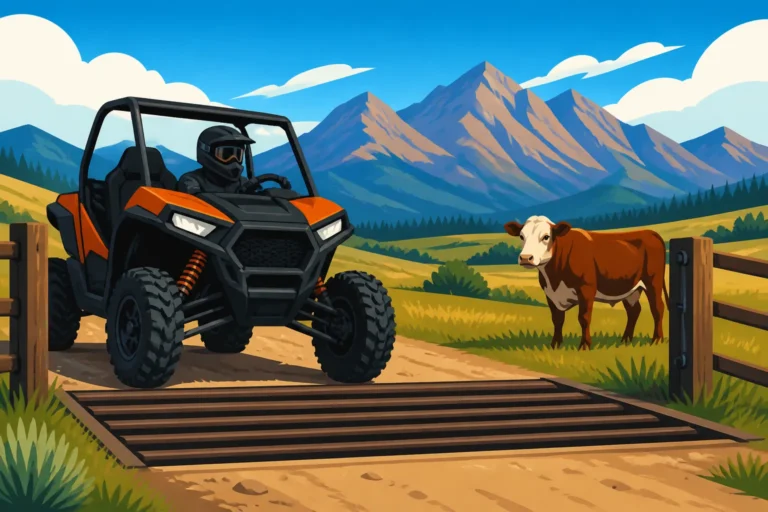
At its heart, a cattle guard is a type of fence that allows vehicles to pass over it while preventing livestock, primarily cattle, from crossing. They're basically a large, sturdy grate set into the roadway, with spacing wide enough that cattle won't step on them, instinctively avoiding the uneven and unstable footing. This simple yet ingenious design eliminates the need for a gate that drivers would have to open and close every time, saving countless hours for ranchers and recreational users alike. Colorado has a long history of ranching and open-range laws in many areas, meaning livestock can roam freely on public and private lands unless specifically fenced out. Cattle guards are a critical tool in managing these herds, ensuring they stay within designated pastures or property boundaries without hindering traffic flow. You'll often see them where public roads transition into private ranchland, or where a national forest boundary meets private grazing leases.
Where You'll Encounter Them: Public and Private Lands
You'll find cattle guards almost anywhere there's a need to control livestock movement without stopping vehicle traffic. This means they are prevalent on roads managed by the U.S. Forest Service, the Bureau of Land Management (BLM), and even many county roads in rural parts of Colorado. They're also a common feature on private ranch roads, particularly those that might offer public access for recreation, hunting, or accessing landlocked public parcels. It's important to recognize that just because you're on a road with a cattle guard, it doesn't automatically mean you're on public land or that you have a right to be there. Always consult a current Motor Vehicle Use Map (MVUM) for Forest Service lands or BLM travel management plans to confirm where you are allowed to ride your OHV. Getting caught on private property without permission can lead to serious consequences, regardless of whether you just crossed a cattle guard or not. [Colorado Trespass Rules Along Forest Roads] are very real.
The Law and Your OHV: Navigating Cattle Guards Legally in Colorado
When it comes to cattle guards, Colorado law and land management regulations emphasize respect for private property, livestock, and the integrity of the infrastructure itself. For OHV riders, this means understanding your rights and, more importantly, your responsibilities. Simply driving over the grate is usually straightforward, but the nuances come into play when gates are present, or when you're traversing areas where private and public lands intertwine.
Rights of Way and Public Land Responsibilities
Most of the time, when you encounter a cattle guard on a designated public road or trail, it's there to facilitate the shared use of the land, allowing both ranchers to manage their livestock and the public to access recreational areas. As long as you are on a route open to OHVs, you generally have the right to cross the cattle guard. However, this right comes with a responsibility to do so safely and without causing damage. These structures are expensive to install and maintain, and any damage caused by reckless driving could lead to significant repair costs, which ultimately impacts trail funding. On Forest Service and BLM lands, you are expected to follow all posted regulations regarding vehicle types and speed limits, even when crossing a cattle guard. Your actions directly contribute to whether these routes remain open for everyone. Remember, many of these public roads often border private property, and it's essential to understand the difference. [Colorado OHV Rules on Forest Service Roads] and [Colorado OHV Rules on BLM Roads] offer more specifics.
Understanding Gates Adjacent to Cattle Guards
This is where things can get a bit tricky for riders. Often, next to a cattle guard, you'll find a gate – sometimes a simple wire gate, other times a more robust metal one. The presence of such a gate usually indicates one of a few things:
- For heavy equipment or specific vehicles: Sometimes the cattle guard isn't designed to handle very heavy loads, or it's simply easier for a rancher in a large truck or tractor to use the adjacent gate.
- To maintain a fence line: The gate allows someone to pass without potentially damaging the cattle guard, especially if they are moving livestock or doing fence repair.
- Private access point: The gate might lead to private property, even if the cattle guard is on a public right-of-way.
The golden rule for these gates is critical: If a gate next to a cattle guard is closed, you must leave it closed after you pass through it, even if you found it open. And conversely, if you find it open, you should leave it open. The only exception is if there's clear signage instructing otherwise. This rule is paramount for respecting ranchers, preventing livestock from escaping, and maintaining good relationships between recreational users and landowners. Failing to close a gate can result in lost livestock, damage to crops, and severe financial losses for ranchers, which can, in turn, lead to public access being revoked. This is not just about courtesy; it's often a legal requirement.
Agricultural Exemptions and Private Land Rules
Colorado offers certain agricultural exemptions from OHV registration rules for machines used primarily for ranch or farm work. However, these exemptions typically apply to the machine itself and its use, not necessarily to the land it's on. When you encounter a cattle guard that's part of a private ranching operation, even if you believe you have permission to cross, you must still adhere to the fundamental principle of "leave it as you found it" regarding any gates. If you are riding on private land that you do not own, you absolutely must have [Written Permission Before Riding Private Land]. This permission should clarify any specific rules related to gates, cattle guards, or livestock. Ranchers rely on these systems, and any disruption can have serious consequences for their livelihood. Be aware that [Colorado Rules for Agricultural Road Use] might differ from general public land regulations, and it's always best to err on the side of caution and respect.
Safe and Responsible Crossing: Best Practices for Your ATV or UTV
Crossing a cattle guard might seem like a no-brainer, but doing it safely and responsibly, especially with an ATV or UTV, involves a bit more thought than just hitting the gas. These structures can be jarring, and an improper approach could lead to a less-than-ideal experience for you, your machine, or even damage the cattle guard itself. Let's break down how to cross them like a seasoned pro.
Preparing Your Machine and Your Mindset
Before you even approach a cattle guard, a little preparation goes a long way.
- Slow Down: This is the most critical step. Reduce your speed significantly. You want to approach at a pace that allows you to assess the condition of the cattle guard and react to any unevenness. Speed limits, even on county roads, often drop when approaching these features.
- Check Your Load: If you're carrying a heavy load, especially on a utility ATV or UTV, ensure it's secure. The jolt of crossing can shift cargo, potentially unbalancing your machine.
- Check for Damage: Give the cattle guard a quick visual inspection. Are any of the grates bent or missing? Is there debris caught in the gaps? While rare, a damaged cattle guard could pose an unexpected hazard.
- Mental Focus: Keep your focus squarely on the path ahead. Avoid distractions like talking on the phone or fiddling with your GPS. Crossing a cattle guard requires your full attention, even if it only takes a few seconds. For example, a quality suspension system from a brand like SuperATV can make the ride smoother, but it's no substitute for safe driving.
The Art of a Smooth Crossing: Technique Matters
Once you're slowed down and prepared, execute the crossing with a controlled technique.
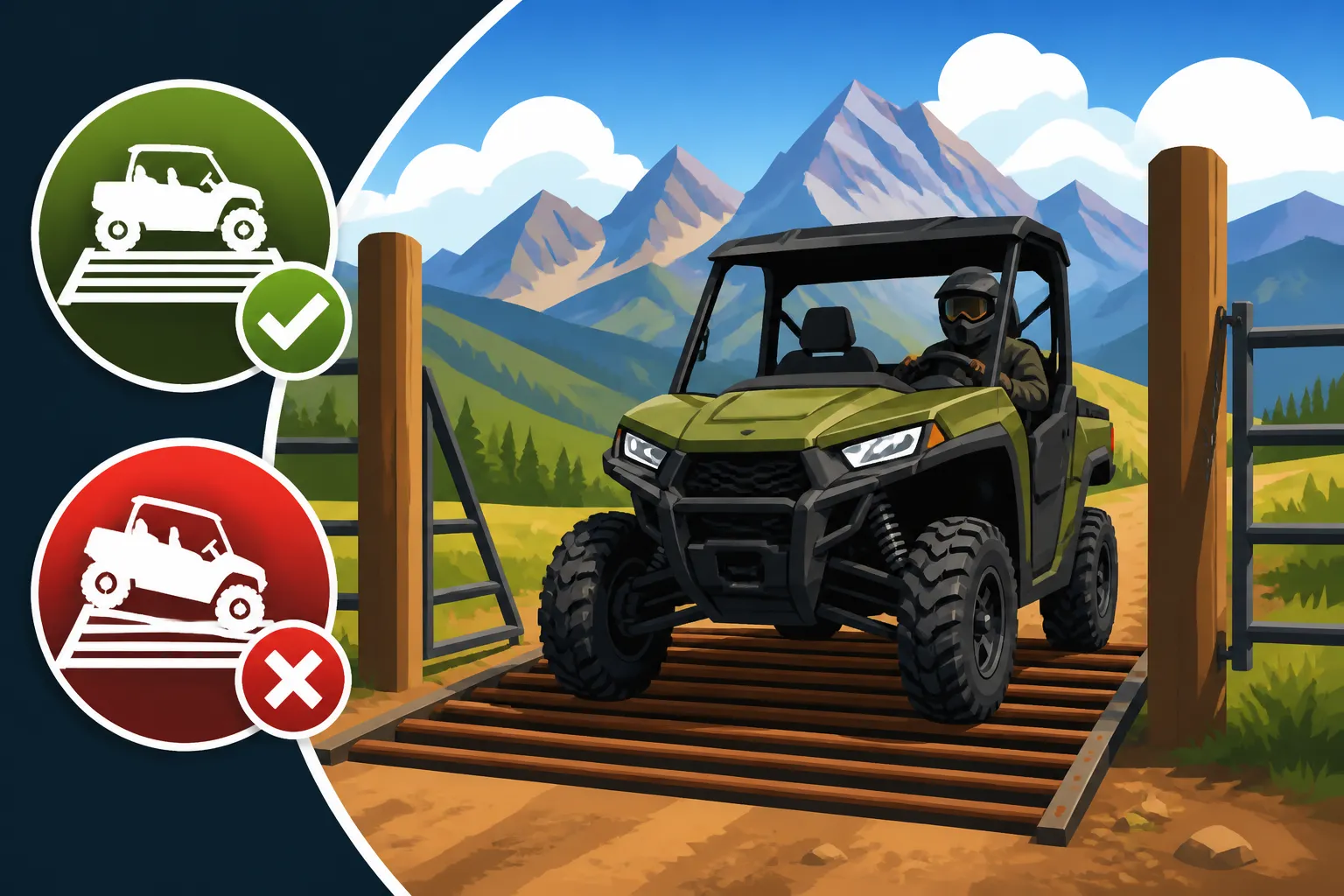
- Straight On: Aim to cross the cattle guard as straight as possible. Angling across can cause one wheel to drop into a gap while others are still on the grate, leading to a more severe jolt or even a momentary loss of control.
- Gentle Throttle: Maintain a steady, gentle throttle. You don't want to accelerate hard over the grates, nor do you want to lose momentum and get stuck. A consistent, low speed allows your suspension to absorb the bumps effectively.
- Relax Your Grip (Slightly): While maintaining control, don't white-knuckle the handlebars. Allowing your arms to flex slightly will help absorb the shock rather than transmitting it directly to your body.
- Mind the Gaps: The gaps between the grates are designed to deter cattle, but for an OHV, they can feel like small trenches. Be particularly mindful if you're on a smaller ATV, as its tires might sit more precariously within the gaps. For UTVs, the wider stance usually makes them feel more stable, but the jolt can still be significant.
- Table Example: Crossing Techniques
| Aspect of Crossing | Safe Practice | What to Avoid | Why It Matters |
|---|---|---|---|
| Speed | Slow and controlled | Fast, jerky acceleration | Prevents damage to machine/cattle guard, maintains control |
| Approach | Straight on | Angled, turning while crossing | Reduces jarring, prevents wheels from getting caught awkwardly |
| Throttle | Steady, gentle application | Sudden deceleration or hard acceleration | Allows suspension to work, avoids loss of momentum |
| Body Position | Relaxed grip, arms absorbing shock | Stiff, rigid posture | Reduces physical fatigue, prevents sudden jolts to the body |
| Observation | Look for damage or obstacles on the grate | Distracted, not looking ahead | Ensures safety, prevents unexpected hazards |
What to Do If There's a Gate, But No Cattle Guard
Sometimes, you'll encounter a gate on a public road or trail without an adjacent cattle guard. This is especially common on less-traveled routes, or where land managers or ranchers prefer a physical barrier. The rules here are even simpler: always close the gate behind you if you found it closed. If you found it open, leave it open unless clearly signed otherwise. It sounds basic, but many access disputes arise from gates being left open, leading to livestock escaping and significant issues for ranchers. Think of it as a courtesy that ensures you and other riders continue to have access to these incredible areas. If a gate seems to be intentionally tied open with wire or rope, and there are no signs, you can usually assume it's meant to stay open. However, if it's just swinging freely, odds are it was left open by mistake, and should be closed.
Consequences and Maintaining Access: Why Rules Matter
Ignoring the rules or being careless around cattle guards might seem like a minor offense, but the cumulative effect of such actions can have significant, negative consequences for both individual riders and the OHV community as a whole. Maintaining responsible access to Colorado's vast network of trails and roads is a shared responsibility, and every action counts.
Penalties for Misuse or Damage
Damaging a cattle guard, leaving a gate open, or illegally riding on private land can lead to a range of penalties. If a cattle guard is damaged due to negligent driving, you could be liable for the cost of repairs, which can be substantial. Land managers like the Forest Service or BLM can issue citations for reckless operation or property damage on public lands, leading to fines. [Fines for an Unregistered OHV in Colorado] are a clear indicator that Colorado Parks and Wildlife and local authorities take trail rules seriously. More severely, if your actions lead to livestock escaping, you could face civil liabilities from the rancher for lost animals, damages to crops, or even traffic accidents caused by the escaped animals. Beyond direct legal and financial penalties, there's the risk of losing future access. When ranchers or private landowners face repeated issues, they are often less inclined to allow public access across their land or permit specific routes to remain open. This means fewer places for everyone to ride.
Protecting Access for Future Generations
Every time you responsibly cross a cattle guard, close a gate, and stay on designated routes, you're not just following a rule; you're actively contributing to the long-term sustainability of OHV recreation in Colorado. [Stay The Trail Ethics in Colorado] are about more than just avoiding mud; they encompass respectful interaction with the entire landscape and its users. The relationship between recreational riders, ranchers, and land managers is delicate. Positive interactions and demonstrated respect build trust, which is crucial for maintaining and even expanding access to riding areas. By being a thoughtful steward of the land, understanding things like [Colorado Trespass Rules Along Forest Roads], and respecting agricultural operations, you help ensure that the unique experience of exploring Colorado's backcountry on an ATV or UTV remains available for future generations to enjoy. It also strengthens the reputation of the OHV community as responsible users, which can be invaluable when advocating for trail maintenance and funding.
Disclaimer
This article is for general informational purposes only and does not constitute professional advice. Laws, prices and regulations vary by location and change over time. Consult a qualified professional for guidance on your specific situation.