OHV Injury Claims After a Crash
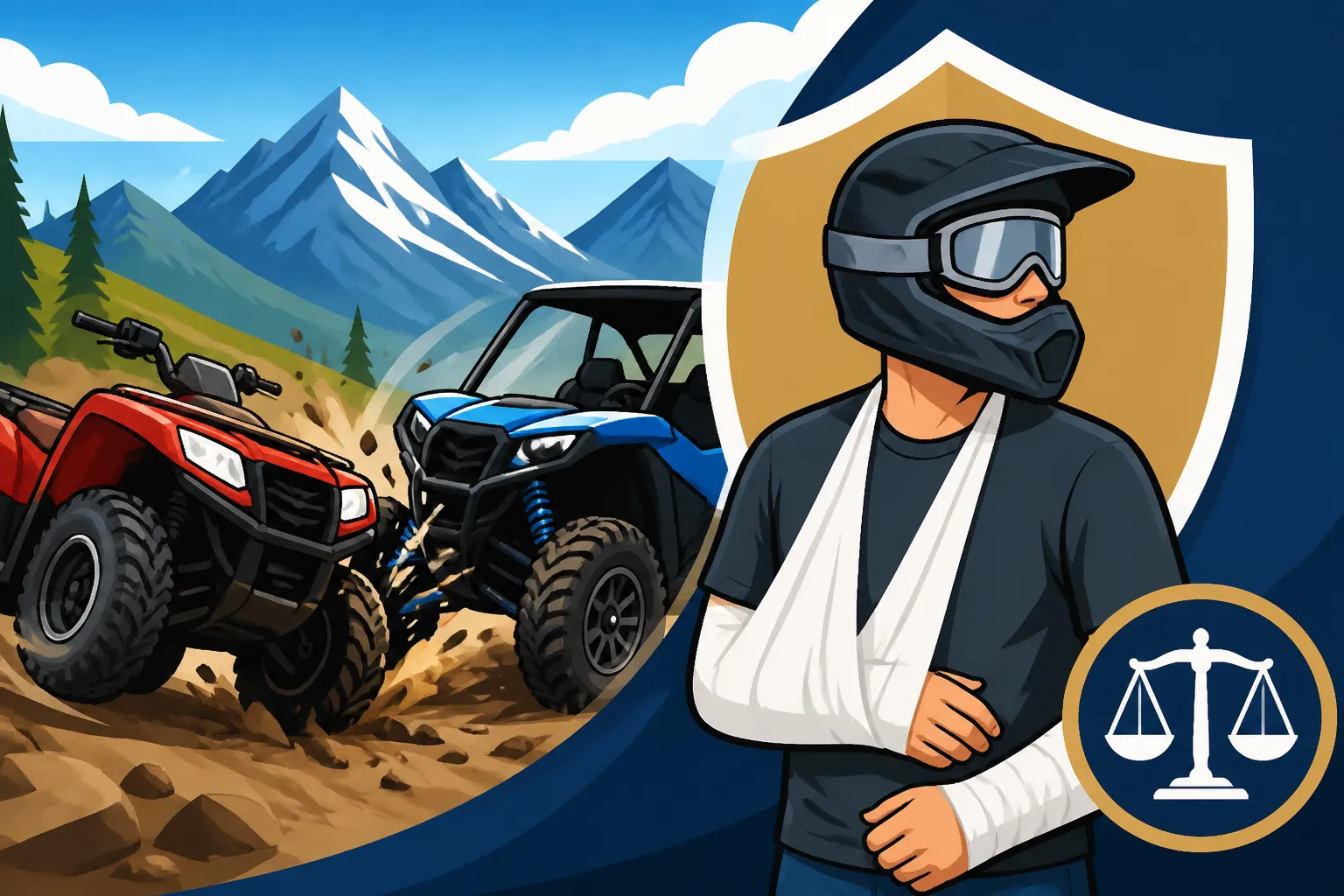
Experiencing an off-highway vehicle (OHV) crash, especially one that results in injuries, can be an absolutely terrifying and disorienting event. The immediate shock often gives way to a flurry of questions: Is everyone okay? What do I do next? How will I cover medical bills and other costs? This guide is here to walk you through the complex world of OHV injury claims in Colorado, offering practical advice and setting realistic expectations for what comes after the dust settles.
Immediate Steps After an OHV Injury Crash
When a crash happens on the trail, the priority is always the well-being of those involved. It's a high-stress situation, and clear thinking can be tough, but these initial actions are crucial for both immediate safety and any future injury claims.
Securing the Scene and Seeking Medical Help
First and foremost, assess for injuries. If anyone is hurt, especially seriously, your immediate action must be to call 911. Even if injuries seem minor, it’s always better to get checked out by medical professionals. Adrenaline can mask pain, and what feels like a small bump could be something more significant. Getting immediate medical attention creates an official record of your injuries, which becomes vital documentation for any claim down the line. Don't try to move anyone with suspected head, neck, or back injuries unless absolutely necessary for their safety.
Once medical help is en route or the immediate emergency is handled, make the scene as safe as possible. If your machine or another's is obstructing a trail or road, and it's safe to do so, move it to the side. Turn off engines, and if you have any emergency markers or flags, deploy them to warn other riders. You don't want another accident to happen in the same spot. It's easy to overlook these details when you're shaken, but they can prevent further complications. Remember, documentation of the scene, including its safety measures, is part of building your case.
Documenting the Incident and Gathering Information
After ensuring safety and seeking medical help, the next critical step is to document everything. This is often the hardest part when you're dealing with pain or emotional distress, but it’s invaluable. Take photos and videos of everything: the machines involved, the surrounding terrain, any visible injuries, damage to helmets or gear, tire marks, and anything else that looks pertinent. Get different angles and distances. The more visual evidence you have, the better.
Gather contact and insurance information from everyone involved, including witnesses. This means names, phone numbers, addresses, vehicle information (make, model, VIN), and insurance policy details. If a law enforcement officer or Colorado Parks and Wildlife (CPW) ranger responds, get their name, badge number, and the incident report number. Their official report will be a cornerstone of any injury claim. Ask them about [Colorado OHV Crash Reporting Rules] – understanding what they're required to document can help you make sure nothing is missed. You might even discover details you hadn't considered, like whether the machine was properly registered, which is covered in topics like [Penalties for an Unregistered OHV in Colorado].
| Information to Collect | Why It's Important |
|---|---|
| Date, Time, Location | Establishes where and when the incident occurred. |
| Names & Contact Info of All Parties | Necessary for communication and claim processing. |
| Insurance Info of All Parties | Critical for filing claims against relevant policies. |
| Witness Names & Contact Info | Provides independent accounts of the event. |
| Vehicle Make, Model, VIN, Plate (if applicable) | Identifies the machines involved. |
| Photos/Videos of Scene, Damage, Injuries | Visual evidence of conditions, impact, and harm. |
| Responding Officer/Ranger Info & Report Number | Official record and investigation details. |
| Weather & Trail Conditions | Contextual factors influencing the crash. |
Understanding Insurance and Coverage
The world of insurance can be a maze, especially after an OHV accident. Knowing what policies might apply and what they generally cover can significantly reduce stress and guide your next steps.
Types of Insurance That May Apply
Unlike street-legal vehicles, OHV insurance isn't always mandatory in Colorado, which adds a layer of complexity. However, several types of insurance could come into play:
- OHV-Specific Insurance: Many riders wisely opt for dedicated ATV or UTV insurance policies. These policies often include liability coverage (to protect you if you cause an accident that injures others or damages their property) and sometimes collision and comprehensive coverage for your own machine. Crucially, some policies also offer medical payments (MedPay) coverage, which can help cover your medical expenses regardless of who was at fault. This is often the first line of defense for your injuries. Understanding [Colorado ATV Insurance and When It Is Required] is a good place to start your research on this.
- Homeowners or Renters Insurance: Sometimes, your homeowners or renters insurance policy might offer limited coverage for OHVs, particularly if the machine is primarily stored on your property and not used frequently off-road. However, this coverage is usually very restrictive regarding liability and often excludes incidents that occur away from your home property or on public trails. Don't rely on this as primary coverage for serious trail riding.
- Auto Insurance (Limited): It's rare for a standard auto insurance policy to cover an OHV accident, especially if it occurs off public roads. However, there might be very specific circumstances where personal injury protection (PIP) or uninsured/underinsured motorist (UM/UIM) coverage could extend, particularly if the OHV incident involved another motor vehicle on a designated public road. This is highly dependent on your policy and the exact circumstances.
- Health Insurance: Your personal health insurance will likely be your primary payer for medical treatment. However, health insurance typically doesn't cover lost wages, pain and suffering, or other non-medical damages. It's important to understand that your health insurance company might seek reimbursement from any OHV-specific or liability insurance settlement you receive, a process known as subrogation.
It’s a good idea to review all your insurance policies before you hit the trails, so you know exactly what you’re covered for. Don't wait until an accident happens to find out you're underinsured.
Making a Claim Against Your Own Policy
If you have OHV-specific insurance with MedPay or Personal Injury Protection (PIP), or if your health insurance is kicking in, you'll typically file a claim directly with your own insurance company first. This is often the quickest way to get medical bills paid and start your recovery. Your insurer will likely want all the documentation you collected at the scene, including the incident report and medical records. Be thorough and provide everything they ask for promptly.
Even if another party was clearly at fault, using your own coverage for immediate needs (like medical bills) can be prudent. Your insurer may then seek reimbursement from the at-fault party's insurance. This can help you avoid delays in getting necessary treatment. It’s a process where your insurance company is working on your behalf to protect your interests, and they can often guide you through the initial steps. For details on how liability works, you might want to read [Who Pays After a Colorado OHV Collision].
Pursuing a Claim Against Another Party's Insurance
If another rider caused the crash and your injuries, you'll be pursuing a claim against their liability insurance policy. This is where things can get complicated. Their insurance company will investigate the incident, often looking for ways to minimize their payout or even deny the claim. This is why thorough documentation from the scene is so critical. You'll need to demonstrate that the other party was negligent and that their negligence directly led to your injuries and damages.
This might involve showing they were speeding, riding recklessly, operating under the influence, or simply failed to yield. If the other party was operating an unregistered OHV, this can complicate matters further and often points to a lack of insurance, leaving you to rely on your own policies or potentially legal action. The process can involve negotiating with adjusters, providing extensive medical records, proof of lost wages, and potentially a demand letter outlining your damages. This is typically when many people find it beneficial to seek legal counsel, as the other party's insurance company is not looking out for your best interests.
Navigating the Legal Landscape of Injury Claims
Dealing with injuries is tough enough, but adding the legal complexities of an OHV claim can feel overwhelming. Understanding the basic legal framework in Colorado can empower you as you pursue compensation.
Understanding Negligence and Liability in Colorado
Colorado operates under a modified comparative negligence system. This means that if you're injured in an OHV crash, you can still recover damages even if you were partially at fault, as long as your fault is determined to be less than 50%. If you are found to be 50% or more at fault, you generally cannot recover any damages from the other party. If you are, say, 20% at fault, your recoverable damages would be reduced by 20%. Proving negligence is key: you must show that the other party owed you a duty of care (which all riders do), they breached that duty (e.g., by riding too fast, being distracted, or making unsafe maneuvers), and that breach directly caused your injuries.
For example, if another rider on a SuperATV equipped with oversized tires was attempting to climb a particularly challenging section of trail and lost control, striking your machine, you would need to prove their actions were unreasonable for the conditions and directly led to your injury. It’s not just about what happened, but why it happened and who was responsible. This is where witness statements, accident reconstruction, and expert testimony can become crucial.
The Role of Attorneys in OHV Injury Cases
While you can attempt to handle an injury claim yourself, especially for minor incidents, an attorney specializing in personal injury, particularly OHV accidents, can be an invaluable asset. They understand the nuances of Colorado's negligence laws, can interpret complex insurance policies, and know how to negotiate with insurance adjusters who are trained to limit payouts. An attorney can help you:
- Investigate the Crash: They can hire accident reconstructionists, gather additional evidence, and interview witnesses.
- Assess Damages: Beyond medical bills, they can help you calculate lost wages (past and future), pain and suffering, emotional distress, and other non-economic damages.
- Navigate Legal Procedures: From filing paperwork to adhering to deadlines, an attorney ensures all legal requirements are met.
- Negotiate with Insurers: They speak the language of insurance companies and can push back against lowball offers.
- Represent You in Court: If a fair settlement cannot be reached, they can take your case to trial.
Trying to deal with serious injuries, medical appointments, and insurance adjusters all at once can be overwhelming. Having an experienced legal professional on your side allows you to focus on your recovery while they handle the legal heavy lifting.
Potential Damages You Can Claim
When pursuing an OHV injury claim, you can seek compensation for various types of damages, often categorized as economic and non-economic:
- Economic Damages: These are quantifiable financial losses, including:
- Medical Expenses: Hospital bills, doctor visits, physical therapy, prescription medications, future medical care, and assistive devices.
- Lost Wages: Income lost due to time off work for recovery or appointments.
- Loss of Earning Capacity: If your injuries prevent you from performing your previous job or earning at the same level in the future.
- Property Damage: Repair or replacement costs for your OHV, gear, helmet, etc.
- Non-Economic Damages: These are more subjective losses and are designed to compensate you for the impact the injury has had on your life, including:
- Pain and Suffering: Physical pain and discomfort caused by the injury.
- Emotional Distress: Anxiety, depression, fear, PTSD, and other psychological impacts.
- Loss of Enjoyment of Life: Inability to participate in hobbies, recreational activities (like OHV riding), or daily activities you once enjoyed.
- Disfigurement or Impairment: Compensation for permanent scarring, loss of function, or disability.
Understanding these categories helps ensure you pursue all the compensation you are entitled to. It's not just about the immediate bills, but the long-term impact on your life.
Practical Advice for Your Recovery
Beyond the legal and financial aspects, the personal journey of recovering from an OHV injury crash can be long and challenging. Taking care of yourself, both physically and mentally, is paramount.
Maintaining Detailed Records of Your Recovery
Just as you documented the accident scene, it's vital to meticulously document your recovery process. Keep a detailed log of all your medical appointments, treatments, medications, and physical therapy sessions. Save all medical bills, receipts for prescriptions, and any other expenses related to your injury. If you're missing work, keep track of every day lost and any communications with your employer.
Consider keeping a pain journal or diary. Note how your injuries are affecting your daily life, your mood, and your ability to do simple tasks. This kind of consistent record-keeping not only helps you track your progress but also provides compelling evidence of the impact of your injuries when it comes time to present your claim. It helps show the full scope of your suffering, not just what's on a medical bill. For example, if you can no longer easily install new SuperATV aftermarket parts due to a shoulder injury, that's a detail worth noting.
Dealing with Medical Bills and Financial Stress
The cascade of medical bills after an injury can be incredibly stressful. Here’s how to approach it:
- Use Your Health Insurance: Your personal health insurance will usually be the first payer for your medical treatment. Provide them with all the necessary information and ensure they are processing your claims correctly.
- MedPay/PIP (if applicable): If you have OHV insurance with MedPay or PIP, this coverage can often pay for medical expenses regardless of fault, up to your policy limits. This can be a huge relief in getting immediate care without out-of-pocket costs.
- Communicate with Providers: If you’re facing high deductibles or co-pays, talk to your medical providers. They may be willing to work out payment plans or pause collections while your injury claim is pending. Sometimes they will place a lien on your future settlement.
- Track Everything: As mentioned, keep meticulous records. This will be essential when negotiating with insurance companies to ensure all your costs are accounted for.
Financial stress can hinder your physical recovery, so proactively addressing these concerns is important. Don't be afraid to ask for help from your support network or legal counsel on managing these burdens.
The Emotional and Mental Toll of an OHV Crash
An OHV crash isn't just physically damaging; it can also take a significant emotional and mental toll. Fear, anxiety, frustration, and even post-traumatic stress can arise. You might find yourself hesitant to ride again, or simply struggling with daily life as you recover.
It’s crucial to acknowledge these feelings and seek support if needed. This could mean talking to friends and family, joining a support group, or consulting with a mental health professional. Therapy can be incredibly beneficial in processing the trauma and developing coping strategies. Remember, emotional distress is a legitimate part of your damages and should be documented and included in your claim. Focusing on your mental well-being is just as important as healing your physical injuries for a full recovery.
Disclaimer
This article is for general informational purposes only and does not constitute professional advice. Laws, prices and regulations vary by location and change over time. Consult a qualified professional for guidance on your specific situation.