Roll Cage and Net Requirements
Riding an ATV or UTV in Colorado's stunning backcountry is an incredible experience, but it comes with real safety concerns that can weigh heavily on riders' minds. One of the biggest areas of confusion and worry for many is around roll cage and net requirements – what exactly is required by law, what's just a good idea, and how do you ensure you're as safe as possible without breaking the bank or running afoul of regulations? This comprehensive guide will clear up the haze around roll cages, nets, and other protective structures, helping you understand what you need for peace of mind on the trail.
Understanding Colorado's Stance on OHV Safety Gear
When it comes to off-highway vehicles, Colorado's regulations primarily focus on general registration, riding areas, and certain operational aspects. Unlike on-road vehicles, where safety features like seatbelts and airbags are strictly mandated by federal and state law, the rules for OHV protective structures like roll cages and nets are a bit more nuanced. This often leaves riders scratching their heads, wondering if their stock setup is "enough" or if they need to invest in upgrades.
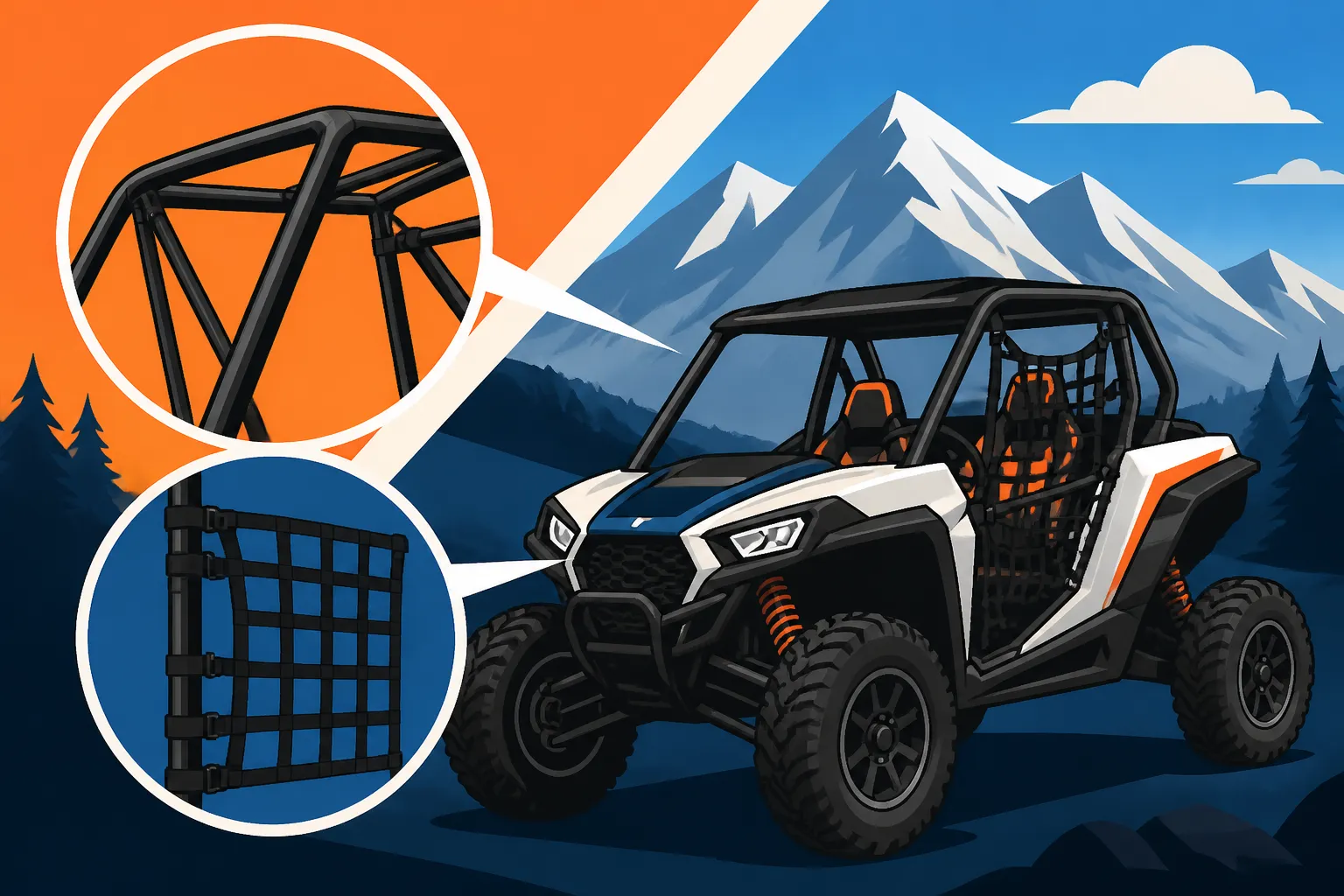
The core idea behind a roll cage (or a rollover protection structure, ROPS, in many UTVs) is to create a safety cell around the occupants, designed to maintain its integrity in the event of a rollover. For ATVs, the concept is different due to their design, often relying more on rider skill, quick dismount, and less on a rigid enclosure. Nets and doors, typically found on side-by-sides, are there to keep limbs (and the entire person) inside the vehicle's protective zone during aggressive riding or a crash.
Manufacturer Standards Versus State Law
The first thing to understand is that manufacturers design their ATVs and UTVs with certain safety standards in mind. When you buy a new side-by-side, it comes equipped with a factory-installed ROPS or roll cage that meets the manufacturer's internal testing and industry safety guidelines. These are generally robust and designed for the vehicle's intended use. Similarly, many UTVs come with half-doors or nets as standard equipment.
Colorado state law, for the most part, does not explicitly dictate the type or design of roll cage or nets required for off-highway use. You won't find a statute saying your roll cage must be made of 1.75-inch, .095-wall DOM tubing (unless you're in a competitive racing series, which is a different beast entirely). The general expectation is that your vehicle maintains its factory-designed safety equipment. If your UTV came with a roll cage and half-doors, those are generally expected to be present and in good working order when you're riding on public lands. [Colorado OHV Rules for Young Riders] are often about supervision and machine size, not the structural components of the machine itself.
However, where things get a little trickier is with modifications. If you modify your factory roll cage, or remove factory-installed nets or doors, you could potentially be compromising the vehicle's designed safety, even if it's not a direct violation of a specific Colorado OHV statute for off-road use. It's usually about common sense and ensuring the modifications enhance, rather than detract from, safety.
Local Ordinances and Street-Legal Use
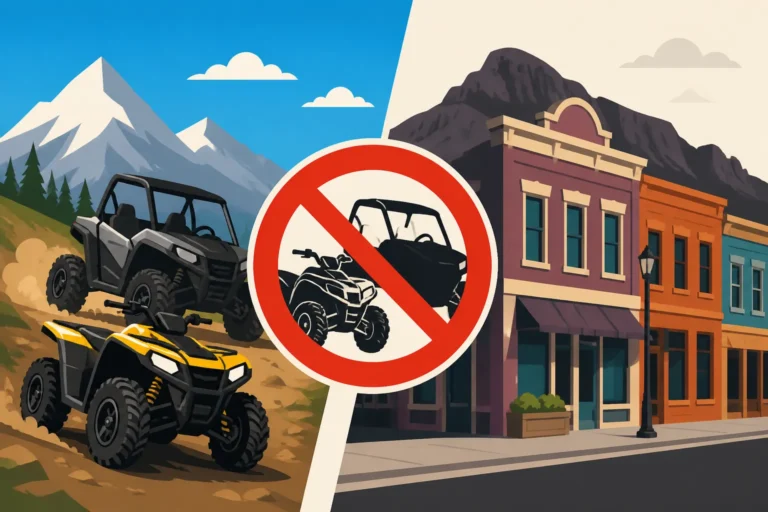
While statewide rules for off-road use might be less prescriptive, some local jurisdictions in Colorado that allow OHVs on designated public roads might have specific requirements for vehicles operating on those roads. This is a critical distinction because [Riding an OHV on the Road in Colorado] introduces a different set of expectations. For instance, a town or county that has opened its roads to UTVs might mandate that the vehicle retains all its factory safety equipment, including the roll cage, seat belts, and doors/nets. They might even specify additional lighting requirements, mirrors, or turn signals, but rarely will they specify the design of the roll cage beyond what came from the factory.
It's vital to check the specific ordinances of any town or county where you plan to ride on public roads. What's perfectly acceptable on a Forest Service trail in the middle of nowhere might get you a citation in a small mountain town if your vehicle isn't configured to their road-use standards. Generally, if a vehicle is approved for road use in these areas, it implies that its primary safety systems, like the roll cage and seat belts, are intact and functional.
Factory Versus Aftermarket: What You Need to Know About Roll Cages
The moment you start thinking about enhancing your vehicle's protection, the world of aftermarket roll cages opens up. This can be exciting, but also a bit overwhelming. Is an aftermarket cage truly better? What are the implications?
Why Upgrade Your Roll Cage?
Many riders opt for aftermarket roll cages for a few key reasons:
- Enhanced Strength and Protection: Some factory cages, while compliant for general use, are perceived by serious riders to be less robust than desired for extreme terrain or high-speed applications. Aftermarket cages, often from companies like SuperATV, are frequently constructed from thicker, stronger tubing and with improved bracing, offering a higher level of protection in a rollover scenario. This can provide significant peace of mind, especially when tackling aggressive trails or navigating challenging shelf roads.
- Customization and Accessories: Aftermarket cages often provide more points for mounting accessories like light bars, spare tires, or communication systems. They can also change the aesthetic of your machine, giving it a more aggressive or personalized look.
- Replacement After Damage: If your factory cage has been involved in a rollover and is bent or compromised, replacing it with an aftermarket option might be more feasible or desirable than trying to source and install an OEM replacement.
However, it's crucial to understand that modifying your roll cage, especially if not done correctly, can have unintended consequences. A poorly designed or installed aftermarket cage could actually be less safe than your factory setup. Always ensure any aftermarket cage meets or exceeds industry standards and is installed by a reputable professional if you're not confident in your own fabrication or installation skills.
What to Look for in an Aftermarket Roll Cage
If you're considering an aftermarket roll cage, here are a few things to keep in mind:
- Material and Tubing Diameter: Look for high-strength steel, often DOM (Drawn Over Mandrel) tubing, with appropriate wall thickness for your vehicle's weight and intended use. Common sizes are 1.75-inch or 2-inch diameter.
- Mounting Points: Ensure the cage bolts securely to the vehicle's frame at multiple points. The more robust the attachment, the better it will distribute impact forces.
- Design and Bracing: A good cage will have triangulation and cross-bracing to prevent collapse from different angles. Pay attention to how the cage is designed around the occupants' heads and shoulders.
- Fitment for Your Model: Always buy a cage designed specifically for your make and model. Universal cages rarely offer the same level of protection or fit. Companies like SuperATV specialize in exact fitment for popular UTV models, which simplifies the process considerably.
- Certification (if applicable): While not legally required for general recreational use in Colorado, some aftermarket cages might come with a certification for specific racing bodies. While you might not race, this can indicate a higher standard of design and construction.
It's also worth noting that modifying your roll cage can sometimes affect your insurance. [Insuring an ATV in Colorado] is important, and you should always check with your insurance provider to understand how aftermarket modifications might impact your coverage. Some policies might have clauses about structural modifications.
| Feature | Factory Roll Cage (ROPS) | Aftermarket Roll Cage (e.g., SuperATV) |
|---|---|---|
| Primary Purpose | Meets manufacturer safety standards; general recreational use. | Enhanced strength, customization, aggressive aesthetics. |
| Construction | Designed by manufacturer, typically good quality steel. | Often thicker, stronger tubing; improved bracing; specialized designs. |
| Cost | Included with vehicle purchase; OEM replacement can be costly. | Varies widely, generally a significant investment. |
| Installation | Pre-installed. | DIY or professional installation; specific tools may be required. |
| Warranty Impact | No impact; covered by vehicle warranty. | May void portions of vehicle warranty related to frame/safety. |
| Insurance Impact | Standard coverage. | Check with insurer; may require disclosure or affect coverage. |
| Accessory Mounting | Limited, designed for OEM accessories. | Often designed with multiple points for lights, spare tires, etc. |
| Legal Standing | Generally compliant for all uses (off-road, local roads). | Compliant for off-road; check local ordinances for road use. |
The Role of Nets, Doors, and Restraints
Beyond the core roll cage, other elements contribute significantly to rider safety. Nets, half-doors, and seat belts work in conjunction with the cage to keep you secure within the protective zone.
Nets and Half-Doors: Keeping Limbs Inside
For side-by-sides, nets and half-doors serve a crucial purpose: preventing occupants from being ejected or having limbs extend outside the protective area of the roll cage during a rollover or collision. When you hit a tree or roll over, the forces involved can be immense, and it's surprisingly easy for an arm or leg to slip out if not properly contained.
- Factory-Installed Nets/Doors: Many UTVs come with either a basic netting system or half-doors as standard. These are designed to meet basic safety expectations. If your vehicle came with them, it's generally expected that you keep them installed and in good working order when riding on public lands. Removing them might not always be a direct legal violation for off-road use, but it certainly compromises safety.
- Aftermarket Options: Just like roll cages, you can find a vast array of aftermarket nets and doors. These often offer increased coverage, more robust construction, and improved aesthetics. For instance, companies like SuperATV offer full doors that replace nets, providing better containment, weather protection, and a more "finished" look. Some riders prefer these for the added sense of security and protection from trail debris.
- Functionality and Safety: When choosing aftermarket nets or doors, consider ease of entry and exit, visibility, and how securely they latch. They should not interfere with seat belt operation or obstruct your view of the trail. The goal is to enhance safety, not create new hazards.
Seat Belts and Other Restraints
This is where Colorado law does get more specific for OHVs on public roads. While there might not be explicit laws detailing roll cage design for off-road, [Seat Belts in a Side-by-Side] are absolutely critical. For any OHV that comes equipped with seat belts (which includes virtually all UTVs), those seat belts must be worn by all occupants whenever the vehicle is in motion, especially if operating on a road where OHV use is permitted. Failing to wear a seat belt is a clear violation and carries penalties.
- Types of Restraints: Most UTVs come with 3-point seat belts (lap and shoulder). Many serious riders or those in competitive scenarios upgrade to 4-point or 5-point harnesses. These multi-point harnesses offer superior body containment and reduce movement within the cabin, which is a huge advantage in rough terrain or during a sudden impact. They hold you more securely against the seat, preventing you from sliding around and potentially hitting the roll cage components.
- Importance of Proper Use: A seat belt, no matter how advanced, is only effective if worn correctly. Ensure it's snug, properly adjusted, and not twisted. For harnesses, make sure they are routed correctly over the shoulders and hips. Never ride with a loose or improperly fastened restraint.
- Child Restraints: If you're riding with children, special care is needed. While specific child seat laws for OHVs might differ from on-road vehicles, the principle of securing a child appropriately remains. Many UTV seats are not designed for standard car seats. Ensure your child is tall enough and heavy enough for the vehicle's seat belt system, or consider aftermarket youth seats/harnesses designed for UTVs. This ties into [Youth Machine Engine Sizes Colorado Families Choose] and [Whose Name Goes on a Youth Machine], as younger riders often require more specialized safety considerations beyond just engine size.
Practical Considerations for Your Rides
Beyond the legalities and equipment choices, there are practical steps you can take to maximize your safety, regardless of your roll cage or net setup.
Regular Inspection and Maintenance
Your roll cage, nets, and seat belts aren't "install it and forget it" components. They need regular inspection, especially if your machine sees heavy use or has been involved in any minor incidents.
- Roll Cage Inspection: Look for any cracks in the tubing, bent sections, or compromised welds. Check the mounting bolts regularly to ensure they are tight and free from corrosion. A loose mounting bolt can severely compromise the cage's effectiveness.
- Net and Door Inspection: Check nets for tears, fraying, or weakened attachment points. Ensure zippers or buckles are fully functional. For doors, check hinges for excessive play, latches for secure closure, and any signs of cracking around mounting points.
- Seat Belt Inspection: Look for fraying, cuts, or worn spots on the webbing. Test the buckle mechanism to ensure it latches and releases smoothly. If your belts are retractable, ensure they retract fully and lock up properly under sudden movement. Replace any seat belts showing signs of wear or damage immediately; they are a critical life-saving device.
These checks should be part of your routine [Pre-Purchase Inspection at Altitude] if you're buying a used machine, and certainly before any major riding trip.
Understanding Your Vehicle's Limits
No matter how robust your roll cage or how secure your nets, every vehicle has its limits. Understanding these limits, and your own riding abilities, is paramount.
- Weight Distribution and Center of Gravity: UTVs are much more stable than ATVs, but they are still susceptible to rollovers, especially on steep side hills or when carrying excessive weight. Be mindful of how passengers and gear affect your machine's center of gravity.
- Terrain Awareness: Recognize terrain that could challenge your vehicle's stability. Extremely steep inclines, off-camber sections, or large obstacles can put stresses on your machine and increase rollover risk. Often, the skill of the driver is the most important safety factor, even more so than the specific roll cage design.
- Manufacturer Recommendations: Always adhere to your vehicle's manufacturer recommendations for passenger capacity, weight limits, and tire pressures. These guidelines are there for a reason and contribute to safe operation. While not always directly about the roll cage, ignoring these can indirectly lead to situations where the cage is put to the test.
Ultimately, while Colorado doesn't have a long list of specific roll cage and net requirements for general off-road use, understanding the purpose of these safety features and taking proactive steps to ensure their integrity is essential. Riding responsibly, performing regular checks, and considering thoughtful upgrades from reputable brands like SuperATV can help ensure your adventures in Colorado are as safe and enjoyable as possible.
Disclaimer
This article is for general informational purposes only and does not constitute professional advice. Laws, prices and regulations vary by location and change over time. Consult a qualified professional for guidance on your specific situation.