Teaching a Child to Ride Off-Road
Bringing your child into the world of off-road riding is an incredible adventure, full of shared thrills and unforgettable memories. But let's be honest, as parents, our hearts can race a little faster than the engine when we think about our kids on an ATV or UTV. The worry about safety, the confusion over what machine is right, and navigating all the rules and proper training can feel overwhelming. This guide is here to walk you through everything you need to know about safely and responsibly teaching your child to ride off-road in the beautiful state of Colorado, helping you turn those worries into confidence.
Setting the Foundation: Before the First Ride
Before your child even swings a leg over a seat or buckles into a side-by-side, there's a lot of groundwork to cover. This isn't just about picking out a cool machine; it's about creating a safe, educational, and fun environment for them to learn in. Skipping these critical steps can lead to frustration, accidents, or even turn them off to the sport entirely, and no parent wants that.
Choosing the Right Machine for Young Riders
The single most important decision you'll make is selecting an appropriate off-highway vehicle (OHV) for your child. It's so tempting to buy something they'll "grow into," but that's a common mistake that can have serious consequences. A machine that's too powerful, too heavy, or simply too large for their physical capabilities can be extremely difficult to control and exponentially increases the risk of an accident. Think about it: a child struggling to reach the brakes or manage the throttle isn't learning; they're just trying to survive the ride.
Colorado has specific [Youth Machine Size Rules Colorado Parents Ask About] that dictate engine displacement based on age for riding on public lands, and these are excellent guidelines to follow even for private land use. For example, a 7-year-old generally won't be permitted on anything larger than a 70cc machine, while a 12-year-old might be ready for up to 90cc. Pay attention to the manufacturer's age recommendations, which are usually prominently displayed. These aren't just suggestions; they're based on extensive safety testing and development. When looking at ATVs, consider models with features like speed limiters, throttle restrictors, and remote shut-off switches – these are fantastic tools for gradually introducing power and ensuring you always have an "off switch" in your hand if things get out of control. For UTVs, ensure they have proper seatbelts, roll cages, and doors, and that the child can comfortably reach and operate all controls while securely buckled in. You'll find many reputable brands offering youth models designed with safety as the paramount concern.
Essential Gear and Safety Preparations
Once you have the machine, gearing up is the next non-negotiable step. Just like a bicycle helmet for a bike, proper safety gear is not optional for off-road riding. The idea of your child getting hurt because of inadequate protection is something that keeps every OHV parent up at night. Investing in quality gear upfront is an investment in their safety and your peace of mind. Every single ride, from the very first slow putter to future trail adventures, requires full protective gear.
This includes a DOT-compliant helmet that fits snugly and doesn't wobble, eye protection like goggles or a face shield that allows for clear vision, sturdy over-the-ankle boots to protect feet and ankles, long pants and long-sleeved shirts (or better yet, riding pants and jerseys) to prevent scrapes and abrasions, and gloves to improve grip and protect hands. Imagine a small fall where a rock catches their exposed knee or elbow – that's a quick end to the fun. Before each ride, perform a quick "T-CLOC" check on the machine: Tires and Wheels, Controls, Lights and Electrics, Oil and other Fluids, Chain/Driveshaft, and Chassis. Make sure tires are properly inflated, brakes are working, and there are no loose parts. This routine instills good habits in both you and your young rider. A good set of mirrors or a whip flag, especially if you get a robust one from a brand like SuperATV, can also be a smart addition for visibility as they progress.
| Gear Item | Why It's Essential | Key Features to Look For |
|---|---|---|
| Helmet | Protects the head from impact | DOT compliant, snug fit, good ventilation, lightweight |
| Eye Protection | Shields eyes from dust, debris, and UV rays | Goggles or face shield, anti-fog, good peripheral vision |
| Gloves | Improves grip, protects hands from scrapes/blisters | Full-finger, padded palms, breathable material |
| Long-Sleeved Shirt/Jersey | Protects arms from sun, scrapes, and minor impacts | Durable fabric, moisture-wicking, comfortable fit |
| Long Pants/Riding Pants | Protects legs from scrapes, impacts, and heat from engine | Durable material (denim or purpose-built riding pants), flexible |
| Over-the-Ankle Boots | Supports ankles, protects feet from injury | Sturdy construction, good grip, oil/water resistant |
Understanding Colorado's Rules for Youth Riders
Colorado is a fantastic state for OHV enthusiasts, but with that freedom comes responsibility, and specific rules apply to young riders, especially when it comes to public lands. It's not enough to just know how to ride; you need to know where and under what conditions your child can legally operate their machine. Ignorance of the law isn't an excuse, and a citation for non-compliance can put a damper on any family outing.
For riding on public lands, Colorado law generally requires anyone under the age of 10 to be supervised by an adult, and they cannot operate an OHV on a public street or highway. Riders between 10 and 16 must also be supervised by an adult and can ride on designated roads if they possess a valid driver's license, a permit, or are taking an approved OHV safety course. Even if you're planning to stick to private property for learning, understanding these regulations helps prepare your child for future adventures on public trails. Make sure you check out [Colorado's Minimum Age to Ride an Opened Road] and [Colorado Age Rules for Young OHV Riders] for the specifics. While Colorado doesn't mandate an OHV safety certification, it's highly recommended and incredibly valuable. Organizations like the ATV Safety Institute offer hands-on courses designed specifically for young riders, covering everything from proper control to responsible trail etiquette. This formal training can instill confidence and solidify good habits that you might miss in informal backyard lessons. You can find more information about the benefits of such courses in our article [Colorado Voluntary Safety Course Costs].
The First Steps: Learning to Ride Safely
Once you've got the right machine and gear, and you're clear on the rules, it's time for the actual riding. This stage is all about patience, repetition, and a structured approach. Trying to rush a child into complex maneuvers or throwing them onto challenging terrain too soon is a recipe for tears, frustration, and potentially, injury. Remember, small victories build big confidence.
Finding the Perfect Practice Spot
The environment where your child takes their first rides is just as important as the machine itself. You want a space that is safe, clear of obstacles, and provides a forgiving surface for learning. Think flat, open areas, perhaps a large grassy field, a wide-open dirt lot, or even a well-maintained section of your own private land. The key is to eliminate distractions and potential hazards. Public designated riding areas sometimes have "kid zones" or beginner loops, but for true first-timers, these can still be too intimidating with other riders, varying terrain, and noise. For very early lessons, [Riding Only on Your Own Colorado Land] provides the most controlled environment.
Avoid areas with trees, fences, ditches, or steep grades. The goal is to focus solely on the mechanics of riding without the added stress of avoiding obstacles. A soft, even surface like grass can be more forgiving if they happen to lose their balance or stall out. As they progress, you can gradually introduce slightly varied terrain, like gentle slopes or small bumps. The important thing is to ensure that the practice area is always clear of other vehicles, pedestrians, or animals that could unexpectedly cross their path. Communication is key, so choosing a spot where you can easily talk to them without shouting over engine noise is also beneficial.
Mastering the Basics: From Stance to Braking
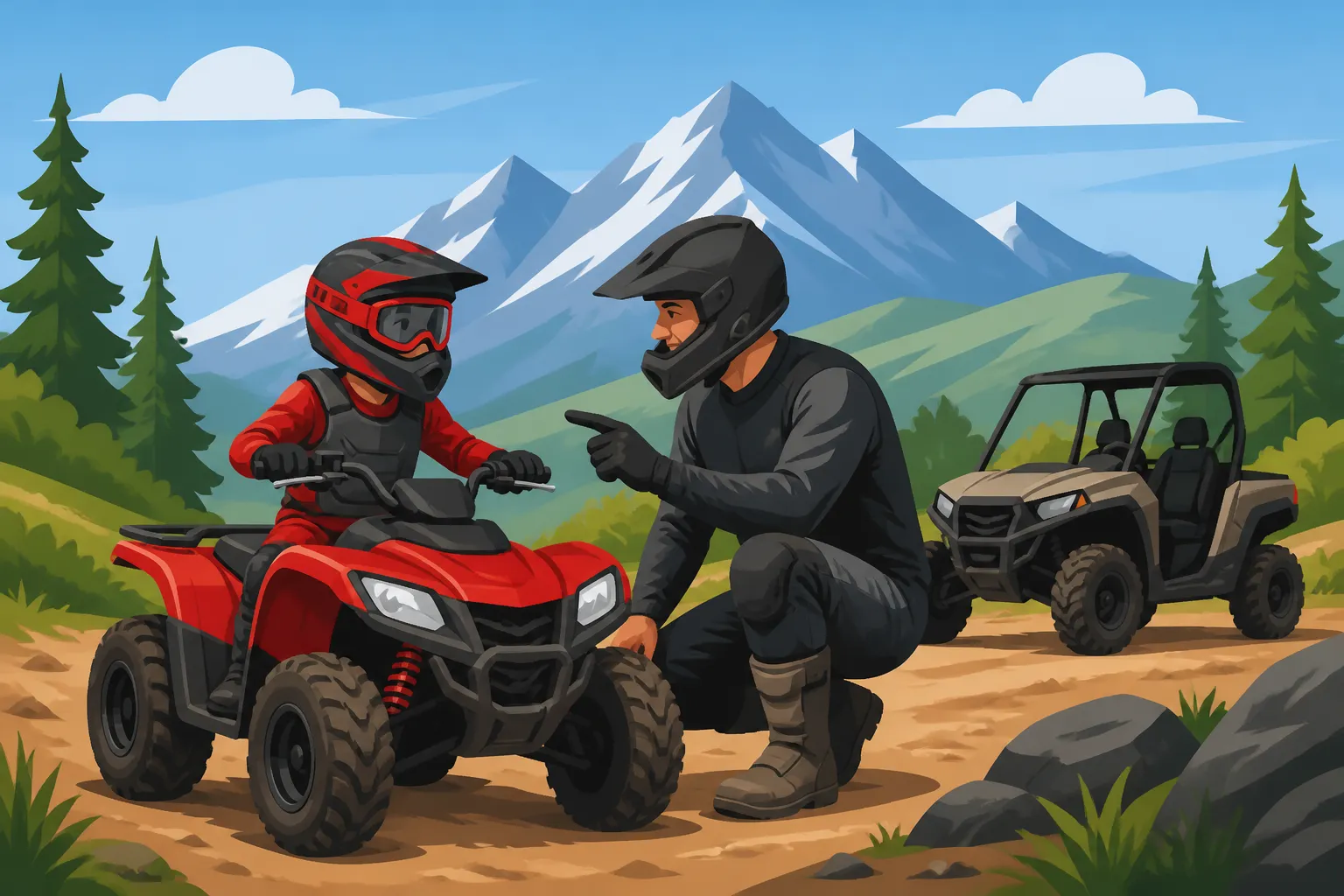
This is where the rubber meets the trail, literally. Start with the absolute fundamentals. Before the engine even turns on, teach them proper posture and body positioning. For ATVs, this means explaining how to stand up slightly, lean into turns, and use their body weight to control the machine. For UTVs, it's about proper hand placement on the wheel, how to adjust their seat for optimal control, and always keeping seatbelts fastened. Demonstrate everything slowly and clearly, then have them mimic you.
Once they're comfortable with the stance, move on to the controls. Explain the throttle – gently squeezing, not twisting full-bore. Teach them the brakes – first the front and rear brakes independently, then how to apply them together smoothly to avoid skidding. Practice starting and stopping, emphasizing smooth transitions. Use cones or markers to create simple straight lines and very wide, gentle turns. Keep the speed incredibly low, barely above an idle. Walk alongside them for the first few passes, offering encouragement and immediate feedback. Remember, the goal is not speed, but control and confidence. Slowly increase the distance you walk from them, giving them more independence as they prove they can handle it. This slow, methodical approach prevents bad habits from forming and reinforces safe operating procedures right from the start.
Building Confidence and Good Habits
Learning to ride isn't just about physical skills; it's also about mental fortitude and building confidence. Every small success should be celebrated. Did they make a smooth stop? Great job! Did they keep their eyes up and look where they wanted to go? Fantastic! Positive reinforcement goes a long way. Conversely, avoid harsh criticism for mistakes. Instead, gently correct and explain why something went wrong and how to do it better next time. The learning process should be enjoyable, not a source of anxiety.
As they become more comfortable with the very basic controls, gradually introduce new elements. This might be slightly tighter turns, very gentle undulations in the terrain, or navigating around a few widely spaced objects. Always keep the practice sessions relatively short to prevent fatigue and maintain their focus and enthusiasm. It's better to have several short, positive sessions than one long, exhausting, and frustrating one. Encourage them to ask questions and express any fears or uncertainties they might have. Open communication builds trust and ensures they feel safe coming to you with concerns, which is crucial as they gain more independence on the trails. Instilling these good habits early will serve them well for years to come, ensuring they develop into responsible and skilled riders.
Beyond the Basics: Developing Off-Road Skills
Once your child has a solid grasp of the fundamentals – starting, stopping, basic turning, and maintaining a slow, controlled speed – it's time to gently expand their skill set. This phase focuses on introducing them to the varied challenges of off-road riding in a controlled and progressive manner. Remember, Colorado's trails offer a huge range of terrains, and a little preparation goes a long way.
Navigating Different Terrains and Obstacles
Moving beyond the flat, open field means introducing them to the real world of off-road riding, albeit in miniature. Start with very minor changes in elevation. This could be a gentle, short incline and decline. Teach them how to approach a hill straight on, maintaining a consistent throttle to climb, and how to use engine braking or gentle brake application to descend safely. Explain the importance of shifting their body weight forward on climbs and slightly back on descents for stability, especially on an ATV. For UTVs, it’s about understanding the machine’s center of gravity and not making sudden steering inputs on slopes.
Next, introduce small bumps, ruts, or shallow ditches. Explain how to approach these obstacles slowly, maintaining control, and how to keep their eyes ahead to anticipate the next challenge. This is also a great time to reinforce the importance of looking through a turn, not just at the immediate front tire. Many beginner riders stare directly down at the machine, which limits their reaction time and ability to see what's coming. Encouraging them to scan the trail ahead will make a huge difference in their confidence and control. Consider adding a wider, more stable stance from a company like SuperATV if your UTV could use a little extra stability as they encounter more varied terrain. This kind of aftermarket support can be a real game changer for pushing confidence.
The Importance of Continuous Supervision and Education
Even as your child gains proficiency, continuous supervision is absolutely paramount. [Who May Supervise a Young Colorado Rider] outlines the specific requirements, but beyond the legal aspects, it’s about being present, watchful, and ready to intervene. This doesn't mean hovering over their shoulder every second, but always being within sight and earshot, especially in more challenging environments. Use every ride as a teaching opportunity. If they encounter a tricky section, talk them through it. If they make a mistake, discuss what happened and how they can handle it differently next time.
Lead by example. Always wear your own safety gear, follow all trail rules, and practice responsible riding etiquette. Children learn far more from watching what you do than from simply hearing what you say. If you're constantly pushing limits or disregarding rules, they will likely adopt similar behaviors. Point out trail markers, discuss the importance of staying on designated trails, and explain why certain areas might be closed. This isn't just about riding; it's about fostering a deep respect for the land, other riders, and wildlife. This ongoing dialogue ensures that their learning never stops and that they develop into thoughtful and ethical off-roaders.
When to Seek Professional Training
While your guidance as a parent is invaluable, there comes a point where professional instruction can significantly benefit a young rider. Often, instructors can identify subtle issues or introduce techniques that might be difficult for a parent to teach effectively. They also provide an objective perspective and can push a child safely beyond their comfort zone in a structured environment. These courses, often offered by certified ATV Safety Institute (ASI) instructors, delve deeper into advanced riding techniques, emergency braking, evasive maneuvers, and navigating truly challenging terrain.
Think of it like any other sport: a child can learn to throw a ball from their parent, but a good coach can refine their technique and teach them strategies. Professional courses also offer a social aspect, allowing your child to learn alongside peers, which can be highly motivating. They might also cover important topics like basic machine maintenance, trail first aid, and environmental awareness in more detail. Even if your child is becoming a confident rider, a formal safety course can solidify their skills, provide a recognized certification (which may be useful in other states or for insurance purposes), and further embed a safety-first mindset.
Maintaining the Fun and Safety Long-Term
Getting your child started is one thing, but ensuring they continue to enjoy off-road riding safely and responsibly for years to come is the ultimate goal. This means ingraining habits that extend beyond the immediate ride and encouraging a lifelong passion for the sport balanced with respect and awareness.
Regular Machine Maintenance and Safety Checks
Just like any vehicle, off-road machines need consistent care. Teach your child the importance of pre-ride inspections and basic maintenance from a young age. This doesn't mean they need to be master mechanics overnight, but they should understand how to check tire pressure, verify brake function, ensure lights are working, and look for any obvious damage or loose parts. For more serious maintenance, like oil changes or inspecting drive belts, involve them in the process. Show them what you're doing and explain why it's important. This fosters a sense of ownership and responsibility for their machine.
Neglecting maintenance isn't just about breakdowns; it's a safety issue. A loose chain, worn brakes, or a damaged tire can lead to a loss of control and serious injury. By teaching them to participate in the upkeep, you're not only extending the life of their OHV but also instilling a critical safety habit. You might even find yourself looking into heavier-duty parts as they get older, with options from a company like SuperATV providing robust upgrades that can withstand the rigors of more aggressive riding. Proper care also includes cleaning the machine after each ride, protecting it from the elements, and storing it safely.
Fostering a Responsible Riding Mindset
Beyond the mechanics of riding, it’s crucial to cultivate a deep sense of responsibility in your young off-road enthusiast. This involves teaching them about [Stay The Trail Ethics in Colorado], environmental stewardship, and respecting others on the trail. Discuss why it's important to stay on marked trails to prevent erosion and protect delicate ecosystems. Talk about packing out what you pack in, and even picking up litter you might find. Explain how excessive noise or dust can impact residents in trail towns, and why slowing down when passing homes or other trail users is not just courteous, but often mandated by local ordinances.
This responsible mindset extends to their interactions with other trail users, whether they are hikers, mountain bikers, or other OHV riders. Teach them about yielding the right-of-way, maintaining safe distances, and being polite. These principles are vital for ensuring that off-road recreation remains accessible and enjoyable for everyone. Emphasize that their actions reflect not just on them, but on the entire OHV community. By being good ambassadors, they help preserve access to Colorado's incredible riding areas for future generations.
Growing with the Sport: Upgrading Machines and Skills
As your child grows in size, strength, and skill, their machine might need to grow with them. This is a natural progression, but it should always be approached thoughtfully and with safety as the top priority. The temptation to jump to a much larger or more powerful machine can be strong, but a gradual transition is always best. Look for signs that their current machine is becoming too small or underpowered for their developing abilities, such as them constantly hitting the speed limiter, easily managing challenging terrain, or simply looking cramped on the machine.
When considering an upgrade, refer back to Colorado's age and engine size guidelines for public land riding, and once again, prioritize safety features. A child who has mastered a 90cc ATV at 12 might be ready for a 125cc or a larger UTV at 14, but don't rush it. Continue to assess their comfort, control, and judgment. This is also a great time to encourage further skill development, perhaps through advanced riding clinics or joining a local youth OHV club. These clubs often offer supervised group rides, opportunities to learn from experienced riders, and engage in trail maintenance projects, further enriching their passion for the sport while reinforcing responsible practices.
Disclaimer
This article is for general informational purposes only and does not constitute professional advice. Laws, prices and regulations vary by location and change over time. Consult a qualified professional for guidance on your specific situation.