Where a County Road Becomes a Forest Road
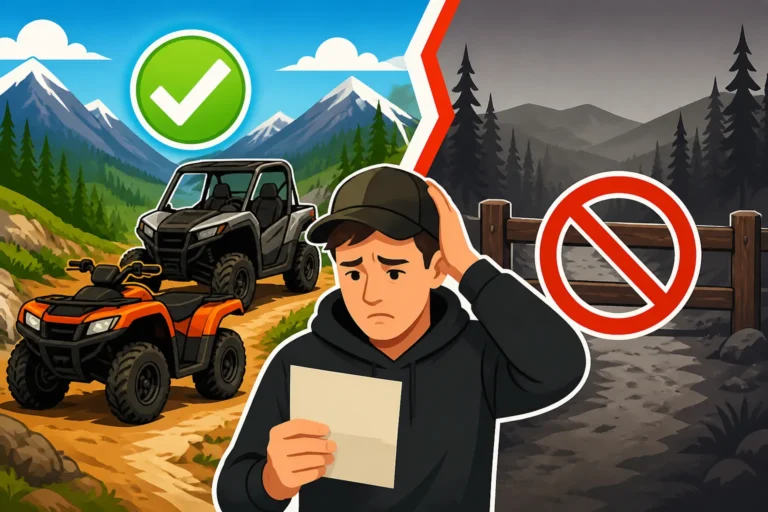
One of the trickiest parts of riding your ATV or UTV in Colorado's stunning backcountry is figuring out exactly where one set of rules ends and another begins. Many riders find themselves confused when a smooth, maintained county road suddenly turns into a rougher, unpaved forest service road, not always with a clear signpost. This guide will walk you through how to identify these transitions, understand the shifting regulations, and ensure you're always riding legally and safely.
Understanding the Legal Landscape: County Roads Versus Forest Roads
It's easy to think of all public roads in the mountains as one big category, especially when you're just enjoying the ride. But for OHV owners in Colorado, there's a crucial distinction between a county-maintained road and a Forest Service or Bureau of Land Management (BLM) road. This distinction isn't just a bureaucratic detail; it dictates everything from required equipment to who has jurisdiction and what rules you must follow. Misunderstanding this can lead to hefty fines or, worse, safety issues.
The Authority Behind the Asphalt (or Gravel)
Colorado county roads are primarily managed by local county governments, meaning the specific rules can vary slightly from one county to the next. While there are some overarching state laws regarding [Colorado County Roads Open to OHVs], individual counties often have their own ordinances dictating where OHVs can and cannot operate on their specific road networks. You might find some counties are very welcoming, allowing OHVs on many of their gravel roads, while others have much stricter limitations or specific town-centric bans, like [Silverton's Ban on OHVs in Town]. It’s always a good idea to check the specific county’s website or local signage before you head out. These roads are typically used by residents for access to homes, ranches, or businesses, and they can see a mix of traffic, from passenger vehicles to heavy farm equipment.
Forest Service and BLM roads, on the other hand, fall under federal jurisdiction. These are typically unpaved routes primarily intended for access to national forests and public lands for recreation, timber harvesting, or resource management. While they might connect to county roads, the rules governing OHV use on them are generally set by the Forest Service or BLM. The biggest difference here is often related to designated routes, as these federal agencies utilize Motor Vehicle Use Maps (MVUMs) to clearly mark which roads and trails are open to motorized use, what types of vehicles are allowed, and for what periods. You can't just wander off any Forest Service road into the trees; you must stay on designated routes.
Rules That Shift with the Terrain
The practical implications of this shift in jurisdiction are significant. On county roads, especially those that are paved or more highly traveled, you might encounter strict rules regarding street legality, even if the county permits OHV use. This can include requirements for turn signals, mirrors, horn, and DOT-approved tires – much like what you'd need for a street-legal vehicle, though typically not a full [Why Colorado Will Not Plate Your UTV]. Some areas might require proof of insurance, too, beyond just liability for your machine, which is generally a good idea for anyone riding off-road.
Once you transition to a Forest Service or BLM road, the focus often shifts more towards environmental protection and designated use. While basic safety gear like helmets (for youth riders) and eye protection are still crucial, and a spark arrester is always a must, the specific "street legal" equipment requirements often loosen. However, you're now under the strict guidance of the MVUM. Riding off a designated route, even by a few feet, can result in significant fines and environmental damage. The key takeaway is that the rules aren't static; they adapt to the land management agency, so your awareness and preparation need to adapt too.
Identifying the Transition: Signs, Maps, and Local Knowledge
The moment a county road transitions into a forest road isn't always marked with a giant, flashing billboard. In fact, sometimes it's barely noticeable, blending from one gravel track into another. This ambiguity can be a real headache for riders who are trying their best to follow the rules. It often requires a combination of good planning, keen observation, and sometimes, a little help from local knowledge.
Reading the Road and the Signs
While not always perfectly obvious, there are often subtle cues that you're moving from county jurisdiction to federal land. Look out for changes in road numbering and signage. County roads will usually have signs indicating their numerical designation (e.g., "County Road 10"), and these signs might also include county logos or seals. When you enter a national forest or BLM land, you'll often start seeing signs that are characteristic of those agencies. These can include brown Forest Service signs, often with white text, or signs clearly marking "National Forest Boundary" or "Bureau of Land Management." Sometimes, there will be specific signs indicating "Motorized Vehicle Use Designated Route Only" or "Trail Number XXX."
Another key indicator is the road’s maintenance level. County roads, even gravel ones, tend to have a higher level of routine maintenance, with wider clearings and more consistent grading, especially if they provide access to residential areas. Forest Service and BLM roads, while often maintained, might be rougher, narrower, and feel more remote, reflecting their primary purpose for access rather than through-traffic. Pay attention to the surrounding landscape too; the presence of specific campgrounds, trailheads, or logging operations can suggest you're on federal land.
Essential Navigation Tools: MVUMs and GPS
Your absolute best friends for navigating these transitions are Motor Vehicle Use Maps (MVUMs) and a good GPS system or app. An MVUM is the official document from the Forest Service or BLM that designates which roads and trails are open to motorized travel, what type of vehicle is allowed (ATV, UTV, motorcycle, full-size vehicle), and during what season. It’s not just a suggestion; it's the law. These maps are updated annually, so having the most current version, either printed or downloaded to your device, is critical. [Reading a Colorado Motor Vehicle Use Map] is a skill every rider should develop.
Many riders swear by apps like onX Offroad, which layers MVUM data onto satellite imagery, making it incredibly easy to see exactly where you are in relation to designated routes and jurisdictional boundaries. These apps can be a game-changer, showing you in real-time if you're on a county road, a Forest Service road, or even veering into a closed area. Even with modern tech, I always recommend carrying a [Carrying a Paper Map Above Treeline] and a compass as a backup, especially in areas with spotty cell service, which is common in Colorado's high country. Planning your route beforehand, identifying potential transition points, and noting any specific county ordinances or Forest Service closures, like [Forest Service Seasonal Gates in Colorado], will make your ride much smoother and stress-free.
| Feature/Requirement | Colorado County Road (OHV Permitted) | Colorado Forest/BLM Road (Designated) |
|---|---|---|
| Managing Authority | County Government | US Forest Service / BLM |
| Primary Identifier | County Road number signs (e.g., CR 10) | Brown Forest Service signs, MVUM |
| Road Condition | Generally more maintained, wider | Can be rougher, narrower, more remote |
| Permitted Use | Varies by county ordinance | Specific routes and vehicle types on MVUM |
| "Street Legal" Gear | Often required (lights, mirrors, horn) | Less stringent, but basic safety still |
| Navigation Tool | County maps, local signs, GPS | MVUMs (mandatory), GPS, onX Offroad |
| Jurisdiction Shift | May be marked by boundary signs, MVUMs | Clearly defined on MVUMs |
| OHV Registration | [Registering an OHV in Colorado] always required for public land use | [Colorado Parks and Wildlife OHV Registration Explained] always required for public land use |
Navigating the Shift: Rules, Gear, and Etiquette
Successfully transitioning from a county road to a forest road isn't just about knowing where the line is; it's about being prepared for the immediate change in rules and adapting your riding style. This is where your pre-ride planning really pays off, ensuring you have the right equipment and the right mindset to handle whatever comes next.
Adjusting Your Riding Style and Speed
When you move from a more maintained county road to a federal forest or BLM road, the terrain itself often changes, becoming rougher, steeper, and perhaps even narrower. This naturally calls for an adjustment in your riding. On county roads, you might be accustomed to slightly higher speeds, especially on straighter sections. However, on forest roads, lower speeds are typically necessary due to rocks, ruts, blind corners, and potential encounters with other trail users like hikers, mountain bikers, or even wildlife. [Colorado OHV Speed on a County Road] might be higher than what's safe or legal on a remote forest track.
Always be mindful of dust. If you're riding through or near a residential area on a county road, keep your speed down to minimize dust for homes and other vehicles. When you hit the forest roads, while dust is still an issue, the primary concern shifts to trail preservation and visibility for other users. If you're riding in a group, spacing out helps reduce dust clouds and improve safety for everyone. Remember the "Stay The Trail" ethics in Colorado, which encourages responsible riding to prevent resource damage and maintain access for everyone.
Essential Gear for the Transition
Your machine itself needs to be equipped to handle both environments. For county road sections, especially if the local ordinance allows OHVs, you'll likely need basic "street legal" accessories. This includes working headlights and taillights, a horn, and at least one mirror. Some riders add turn signals for extra safety, even if not explicitly required by a specific county. Companies like SuperATV offer a wide range of accessories, from mirrors to full street-legal kits, that can help you meet these requirements without a hassle. It’s always better to be over-prepared than under-prepared.
When you hit those forest roads, while some of the street-specific gear might become less critical, other items become paramount. A well-maintained machine with good tires is essential for the varying terrain. Always carry a spare tire or a tire repair kit, especially if you're on a multi-day trip. Recovery gear, like a winch (many SuperATV bumpers come winch-ready) or tow strap, can be a lifesaver if you get stuck in a tricky spot. Don't forget a first-aid kit, plenty of water, and extra layers of clothing, especially when [Riding in Colorado Above 12,000 Feet], where weather can change in an instant. Ensuring you have your [Colorado OHV Registration Card] visible and easily accessible is also crucial for any ranger checks you might encounter.
Respecting Others and the Environment
The transition from a county road to a forest road also means a shift in the community you're interacting with. On county roads, you're sharing with residents, commuters, and delivery vehicles. On forest roads, you're sharing with a diverse group of outdoor enthusiasts: hikers, backpackers, mountain bikers, horseback riders, hunters, and other OHV users. Practicing good trail etiquette is vital. Always yield to non-motorized users. When passing, slow down, give them plenty of space, and offer a friendly greeting.
Also, be acutely aware of your environmental impact. Stay on designated trails, avoid riding through sensitive areas, and practice Leave No Trace principles. This includes packing out all your trash, avoiding excessive noise, and respecting wildlife. The longevity of our access to these incredible lands depends on every rider doing their part. [Colorado Noise Rules in Mountain Towns] are there for a reason, often to protect the quiet enjoyment of residents and visitors alike. By being a considerate and prepared rider, you help ensure that these beautiful Colorado roads and trails remain open for generations to come.
Staying Legal and Avoiding Citations
No one wants their day on the trails cut short by a ranger or sheriff, especially when they thought they were following the rules. The penalties for riding an unregistered OHV or violating road-specific ordinances can be costly, both in terms of fines and potential future access to trails. Understanding the consequences and taking simple preventative measures can save you a lot of headache.
Common Missteps and Their Consequences
One of the most frequent reasons riders get cited during this transition is simply not realizing the rules have changed. You might be accustomed to riding your UTV on certain gravel county roads, then unknowingly cross onto a federal forest road where a [Colorado OHV Permit Rules on Public Land] is required, and your machine isn't registered. Or, you might be riding without the proper "street legal" accessories on a county road that explicitly allows OHVs but demands certain equipment. [Fines for an Unregistered OHV in Colorado] can be significant, often starting around a few hundred dollars, and that's just for the registration. Add in other violations, and the costs quickly add up.
Another common issue is straying from designated routes on Forest Service or BLM land. MVUMs are very clear about what is open to motorized travel. If you ride off-trail, even just a short distance, you could face [Resource Damage Citations Off Trail], which can be very expensive and may lead to temporary or permanent trail closures for everyone. In some cases, repeated violations or severe damage could even result in your machine being impounded. These consequences underscore why proactive planning and awareness are so critical.
Proactive Measures for a Smooth Ride
The best way to avoid trouble is to be prepared and informed before you even leave your driveway.
- Check Your Registration: Always ensure your ATV or UTV has a current Colorado OHV registration sticker. This is absolutely non-negotiable for riding on any public lands, including designated Forest Service and BLM roads. You can easily renew [Colorado OHV Registration Renewal Online] or find [Colorado OHV Registration Vendors Across the State].
- Study Your Maps: Download and understand the current MVUM for the area you plan to ride. Cross-reference it with any local county ordinances for roads leading into the federal land. Apps like onX Offroad are invaluable for this, but have a backup.
- Equip Your Machine: If your route includes county roads, make sure you have the necessary "street legal" equipment like lights, a horn, and at least one mirror. Consider adding turn signals for safety. Many accessories from SuperATV, such as their lighted whips, can make your machine more visible and help you meet requirements.
- Know the Local Laws: Before heading out, a quick search for the specific county's OHV ordinances can clarify any unique rules. Some towns, like [Ouray and Telluride OHV Town Restrictions], have specific rules even if the surrounding county roads are more permissive.
- Carry Proof of Ownership and Insurance: While not always explicitly checked, having your [Proof of Ownership for a Colorado OHV] (like your title or bill of sale) and insurance information handy can save you hassle during a stop. [Insuring an ATV in Colorado] is smart, even if not strictly required on all trails.
- Ride Respectfully: Slow down around homes, yield to other users, and stick to designated routes. Being a courteous rider often helps prevent negative interactions with law enforcement and helps maintain good relations with locals.
By taking these steps, you can confidently navigate the transitions between county and forest roads, enjoy Colorado's breathtaking scenery, and keep your riding adventures positive and hassle-free.
Disclaimer
This article is for general informational purposes only and does not constitute professional advice. Laws, prices and regulations vary by location and change over time. Consult a qualified professional for guidance on your specific situation.