Sheriff Enforcement in Colorado Mountain Towns
There’s nothing quite like the thrill of exploring Colorado’s backcountry trails, but the moment you roll into a charming mountain town, a wave of anxiety can hit. You wonder: Am I allowed here? Will a sheriff pull me over? It’s a common frustration for many OHV enthusiasts, facing a patchwork of local rules that feel impossible to keep straight. This guide is dedicated to demystifying sheriff enforcement in Colorado mountain towns, helping you understand what to expect, how to stay compliant, and what to do if you find yourself on the wrong side of an ordinance.
Understanding the Legal Landscape of Colorado OHV Road Use
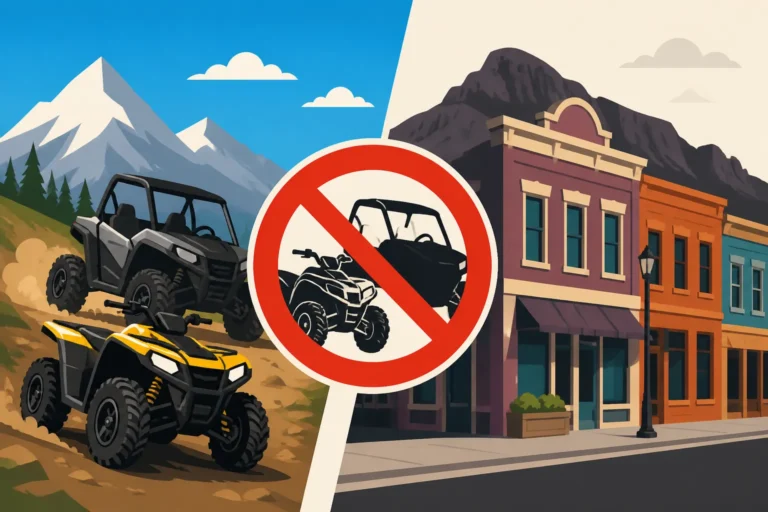
Colorado's approach to allowing Off-Highway Vehicles (OHVs) on public roads, especially within town limits, is, frankly, a bit of a maze. Unlike some states with clear, statewide street-legal programs, Colorado delegates much of this authority to individual counties and municipalities. This means that what's perfectly fine in one town, like Lake City, might be a quick ticket in another, such as Silverton. It’s this very local control that creates much of the confusion and, consequently, the need for robust sheriff enforcement.
The state did make a significant step forward with the 2021 law, which generally allows OHVs on certain county and forest service roads unless specifically prohibited. However, this state-level allowance doesn't automatically open up every town street. Many towns have opted in or out of specific OHV access, or have implemented their own unique sets of rules regarding equipment, times of day, and even specific routes. This fractured legal environment means that staying informed isn't just a suggestion; it's essential to a stress-free ride. It's not uncommon for a rider to spend months planning a trip to the Alpine Loop, only to discover upon arrival that they’re running afoul of a local rule they never knew existed.
Why Local Ordinances Vary So Much
The primary reason for the disparate rules lies in the principle of "home rule," allowing local governments to tailor laws to their unique communities. A quiet ranching town might have very different needs and concerns than a bustling tourist hub built around OHV recreation. For example, a town heavily reliant on OHV tourism might actively encourage and facilitate OHV use on its streets to allow riders to access businesses, whereas a more residential community might prioritize noise reduction, traffic flow, and resident peace of mind, leading to stricter regulations or outright bans.
These local ordinances are often a response to community feedback, traffic studies, and the desire to balance economic benefits from tourism with the quality of life for permanent residents. This means towns might restrict OHV access on their main streets, designate specific routes for entry and exit, or impose time-of-day restrictions to minimize disruption. It’s a constant balancing act, and as an OHV enthusiast, it's our responsibility to understand the specific rules of each locale we plan to visit. Before you even load up the trailer, a quick check of the town or county website can save you a world of trouble and keep you on good terms with the locals and the sheriff. [Colorado County Roads Open to OHVs] offers a good starting point for research.
The Role of County Sheriffs in Enforcement
County sheriffs and their deputies are typically the primary law enforcement agencies responsible for upholding both state OHV laws and local ordinances within their jurisdiction, which includes incorporated towns unless those towns have their own police force. In many smaller mountain towns, the county sheriff’s office is the local police force, making them the direct point of contact for all OHV-related enforcement. These officers are often intimately familiar with the local trail systems, the popular routes, and the common infractions. They aren't just looking for major violations; they're also enforcing the nuances of local ordinances, from speed limits on town roads to required safety equipment.
Sheriffs are tasked with ensuring public safety, maintaining peace, and protecting local resources. For OHV use, this means checking for valid registration, proper equipment, safe operation, and adherence to specific town rules. Their patrols might focus on known problem areas, trailheads, or main street corridors. Many sheriffs in OHV-heavy areas will conduct routine checks, especially during peak riding seasons, making it crucial that you and your machine are fully compliant before hitting any pavement. [Fines for an Unregistered OHV in Colorado] can give you an idea of the consequences of non-compliance.
Common OHV Violations Sheriffs Watch For
When you're out riding in Colorado's mountain towns, sheriffs are generally looking for a few key things to ensure safety and compliance with local rules. It's not about trying to "catch" you, but about maintaining order and making sure everyone—riders, pedestrians, and residents—can coexist peacefully. Knowing what they're keeping an eye out for can help you avoid unnecessary encounters and ensure your ride is nothing but enjoyable.
One of the most immediate checks they'll perform is for proper registration. Every OHV operating on public land, including roads designated for OHV use, needs a current Colorado Parks and Wildlife (CPW) registration sticker. This sticker signifies that you've paid your part to maintain the trails, and it's easily visible. Without it, you're not just breaking a rule, you're also riding on trails that your fees help support. It’s an easy fix, and there are many vendors across the state where you can get your registration. [What Colorado OHV Registration Costs] is a helpful resource.
Equipment Requirements: Lights, Horns, and Mirrors
Beyond registration, sheriffs will be looking at your machine's equipment, especially if you're on designated town roads. While state law for off-road use has basic requirements, local ordinances often add more. Many towns that allow OHVs on their streets will require your machine to be equipped with headlights, taillights, brake lights, a horn, and at least one rearview mirror. These aren't just suggestions; they're safety essentials for operating alongside regular vehicular traffic. Imagine trying to signal a turn or see a car behind you without these features—it's just not safe.
Some towns might even go further, requiring turn signals or a lighted license plate bracket. If your factory machine doesn't come with these, you might need to look into aftermarket kits. Many riders turn to brands like SuperATV for their robust selection of street-legal kits, mirrors, and horns, ensuring their machines meet these specific demands. These kits are often designed for easy installation and provide the necessary components to help you navigate town streets legally. Always check the specific ordinance of the town you plan to visit, as what's mandatory in Buena Vista might be different from what's required in Lake City.
Speed Limits and Reckless Operation
Speed limits are a huge enforcement priority, particularly within town limits. Mountain towns often have reduced speed limits, sometimes as low as 15 or 20 mph, especially on residential streets or near popular pedestrian areas. Operating an OHV at excessive speed not only violates the law but also poses a significant danger to others. The sound of a roaring engine and the dust kicked up by a fast-moving OHV can quickly become a nuisance to residents and other visitors. Sheriffs are vigilant about this, as it's a common source of complaints.
Beyond just speed, reckless operation covers a broad range of unsafe behaviors, including weaving through traffic, performing stunts, or operating too close to pedestrians. These actions demonstrate a blatant disregard for public safety and the local rules, and sheriffs will not hesitate to issue citations or even impound vehicles for egregious offenses. Remember, a single act of irresponsible riding can lead to increased restrictions for all OHV enthusiasts in that area. [Colorado Alcohol Limits for OHV Operators] is also a critical piece of information, as operating under the influence is heavily enforced and carries severe penalties.
How Enforcement Differs by Town and County
One of the trickiest aspects of riding OHVs in Colorado is navigating the disparate rules from one locale to the next. What's allowed in one county might be strictly prohibited just a few miles down the road in another. This creates a challenging environment for riders, but it's also a reality that sheriffs are tasked with upholding. Understanding why and how these differences manifest is key to staying out of trouble.
For instance, some counties, like Hinsdale County (home to Lake City), have broadly embraced OHV use on their county roads and within the town, recognizing the significant economic benefit it brings. Their approach might be more about education and ensuring safety than strict prohibition. You'll see signs clearly indicating OHV routes and parking. In contrast, a town like Silverton, while surrounded by incredible trails, has historically had stricter regulations, with certain areas of town outright prohibiting OHVs or imposing hefty fines for non-compliance. This difference often boils down to the local community's priorities and the specific ordinances they've enacted.
Town-Specific Ordinances: Silverton, Ouray, Lake City
Let's look at some examples of how these town-specific ordinances play out. Silverton, for example, has been a hot topic among OHV riders for its strict rules. While access to the surrounding trails is unparalleled, the town itself has designated specific routes for ingress and egress, with core areas often off-limits to OHVs. The fines for violating these rules can be substantial, making it critical to understand their local map. [Silverton's Ban on OHVs in Town] is a vital read for anyone planning a trip there.
Ouray, often called the "Switzerland of America," has also navigated the complexities of OHV access. While it serves as a major staging area for trails like Imogene Pass, Ouray has its own set of rules regarding where OHVs can be driven and parked within town limits. These rules are designed to manage traffic flow, noise, and the experience of all visitors. Lake City, on the other hand, has often been cited as one of the most OHV-friendly towns, allowing broad access on many of its streets, provided riders adhere to speed limits and equipment requirements. These towns represent a spectrum of approaches, highlighting the need for pre-trip research.
| Town/Area | General Approach to OHV Road Access | Common Restrictions | Enforcement Focus |
|---|---|---|---|
| Lake City | Generally permissive | Speed limits, equipment (lights, horn, mirror) | Safety, noise control, proper equipment |
| Ouray | Managed access | Designated routes, parking, speed limits | Traffic flow, public safety, noise |
| **Silverton | Highly restricted core area | Specific entry/exit routes, designated parking | Strict adherence to routes, preventing access to banned areas |
| Kremmling | Growing access | Marked routes, speed limits, noise | Route adherence, quiet operation |
| Hinsdale Co. | Broad county road access | State and local equipment, speed limits on roads | General compliance, safe operation |
Navigating County Roads Versus Town Streets
It's crucial to understand that even within the same county, the rules for county roads can differ significantly from those for incorporated town streets. A county might open all its unpaved roads and even some paved ones to OHV traffic, but as soon as you cross into a town's municipal boundary, a whole new set of rules might apply. For instance, Hinsdale County allows widespread OHV use on its roads, but Lake City, while permissive, still has its own distinct speed limits and sometimes specific parking rules.
This distinction means you can often ride miles on county roads without issue, only to find yourself immediately non-compliant upon entering a town. Sheriffs are acutely aware of these boundaries and the differing regulations. They expect riders to know when they are transitioning from county jurisdiction to municipal jurisdiction and to adjust their behavior and compliance accordingly. Always be on the lookout for town boundary signs, "Welcome to [Town Name]" signs, and any posted ordinances, which can often be found at town entrances or at local visitor centers.
What to Expect During an OHV Stop in Colorado
Getting pulled over by law enforcement can be nerve-wracking, no matter the vehicle. When you're on an OHV in a Colorado mountain town, knowing what to expect can help you remain calm, cooperative, and potentially avoid further complications. Sheriffs are generally looking for compliance and safety, and a calm, respectful demeanor on your part goes a long way.
First and foremost, if a sheriff signals you to stop, do so immediately and safely. Pull over to the side of the road where it's clear and you won't obstruct traffic. Turn off your engine and keep your hands visible, perhaps on the handlebars or steering wheel. This shows respect for the officer and helps de-escalate any potential tension. Reaching for your paperwork before they ask might seem helpful, but it's best to wait for their instructions. They might approach from either side of your machine, so be aware of your surroundings.
Document Checks: Registration, License, Insurance
Once the officer approaches, they will typically ask for your documents. This will almost certainly include your OHV registration from Colorado Parks and Wildlife. If you're riding on public roads, even those designated for OHV use within a town, you'll also likely need a valid driver's license. While Colorado doesn't require a special endorsement for OHVs, a standard driver's license is necessary if you're operating on roads open to other vehicles. It’s also wise to have proof of insurance, even though it's not universally required for off-highway use. [Insuring an ATV in Colorado] has more on this.
They'll verify that your registration is current and matches your machine's Vehicle Identification Number (VIN). They may also check your driver's license for validity and any outstanding issues. For any passengers, especially youth, they might inquire about age and supervision, as there are specific rules for young riders. Having all your paperwork readily accessible, perhaps in a waterproof pouch, will make this process much smoother and quicker.
Equipment and Condition Checks
Beyond documents, the officer will likely conduct a visual inspection of your OHV to check for required equipment. This is where those town-specific rules come into play. They'll be looking for things like:
- Headlights and Taillights: Are they functional? Are they on if conditions require it?
- Brake Lights: Do they illuminate when you apply the brakes?
- Horn: Does it work?
- Mirrors: Do you have at least one rearview mirror, and is it properly adjusted?
- Muffler/Spark Arrester: Is your exhaust system intact and not excessively loud? A well-maintained exhaust, perhaps with an aftermarket spark arrester from a trusted brand like SuperATV, is crucial for sound and fire prevention.
- Whip Flag (if required): In some open riding areas, a whip flag is mandatory for visibility.
They might also assess the general condition of your machine for any obvious safety hazards, such as bald tires, broken suspension components, or unsecured cargo. If you've modified your machine, ensure those modifications don't put you out of compliance with state or local regulations.
What Happens If You're Non-Compliant
If the sheriff finds you to be non-compliant with state or local rules, several outcomes are possible, depending on the severity of the infraction. For minor issues, especially if you're cooperative and it's a first offense, you might receive a warning and instructions on how to rectify the issue. However, for more serious violations like an unregistered machine, no driver's license, or reckless operation, you can expect a citation (a ticket) carrying a fine. [Penalties for an Unregistered OHV in Colorado] gives a good overview.
In severe cases, such as operating under the influence, extremely reckless driving, or having a machine that's significantly unsafe, your OHV could be impounded. This is a costly and inconvenient process, involving towing fees, storage fees, and often additional fines. The officer will explain the violation, the consequences, and any steps you need to take. While it can be frustrating, remember to remain calm and respectful throughout the interaction, even if you disagree with the assessment. Arguing or being confrontational will rarely improve your situation.
Avoiding Citations and Staying Compliant
The best way to deal with sheriff enforcement is to avoid it altogether, or at least ensure that any interaction is positive because you're fully compliant. This means being proactive and doing your homework before you ever hit the trails or venture into a mountain town. A little planning goes a long way in ensuring your Colorado OHV adventure is fun and free of legal headaches.
One of the simplest yet most effective strategies is to thoroughly research the specific rules of every town and county you plan to visit. Don't assume that because you were allowed on streets in Lake City, you'll have the same freedom in Ouray or Silverton. Check town websites, county tourism boards, and even call local visitor centers. Many communities that embrace OHV tourism will have clear maps and summaries of their rules available online.
Pre-Trip Planning and Research
Before you even load your machine onto the trailer, make a checklist. First, ensure your Colorado OHV registration is current and properly affixed to your machine. This is non-negotiable for public land and road use. Next, confirm that you have a valid driver's license if you plan to operate on any public roads. If you're traveling with youth riders, review Colorado's age and supervision rules to ensure everyone meets the requirements. [Youth Machine Engine Sizes Colorado Families Choose] is important for families.
Then, dive into the specifics for your destination. Will you be entering any towns? If so, what are their specific equipment requirements (horn, mirrors, turn signals)? Are there designated entry/exit routes? Are there time-of-day restrictions? What about parking? Knowing these details beforehand allows you to equip your machine appropriately or plan alternative routes. If your machine needs an upgrade to meet local rules, exploring options from reputable suppliers like SuperATV for items such as mirrors, turn signal kits, or sound-reducing exhausts can be a smart move.
Essential Gear and Documentation Checklist
To make any potential stop quick and painless, and to ensure you're ready for any legal requirement, always carry the following:
- Current Colorado OHV Registration Sticker: Clearly displayed on your machine.
- Your Physical Driver's License: Required for road use.
- Proof of Insurance: While not always mandatory, it's good practice.
- Printed or Digital Copies of Local Ordinances/Maps: Especially for towns with specific rules.
- Basic Safety Gear: Helmets (especially for youth, and a good idea for all), eye protection, and appropriate clothing.
Keep these documents organized and protected from the elements, perhaps in a zip-lock bag within a secure compartment on your OHV. This preparation not only helps you avoid fines but also demonstrates to any officer that you are a responsible and informed rider, which can often result in a more positive interaction. [Do You Carry Paperwork on the Trail?] explains this further.
Responsible Riding Practices
Beyond legal compliance, responsible riding is your best defense against citations and negative encounters. This includes:
- Adhering to Speed Limits: Especially in residential areas and small towns. Slow down, enjoy the scenery, and be mindful of pedestrians and other vehicles.
- Controlling Noise: Excessive engine noise is a common complaint from residents. Ensure your muffler is in good working order and avoid unnecessary revving.
- Staying on Designated Routes: Do not stray onto private property or closed trails. Respect land closures and wilderness boundaries.
- Being Courteous: Yield to pedestrians, slow down around horses, and share the road respectfully with other vehicles. A simple wave and a friendly attitude can go a long way in fostering positive community relations.
- No Alcohol or Drugs: Operating an OHV under the influence is illegal and extremely dangerous. [Colorado Alcohol Limits for OHV Operators] clearly outlines the severe consequences.
By embracing these practices, you not only protect yourself and others but also contribute to a positive image for the entire OHV community, helping to preserve and even expand access for future generations.
Fighting an OHV Citation in Colorado
Receiving an OHV citation can be frustrating, especially if you feel you were compliant or misunderstood a local rule. It's important to understand that you have rights and options when facing a ticket. However, successfully fighting a citation requires understanding the process, gathering evidence, and presenting your case effectively.
The first step after receiving a citation is to read it carefully. It will typically list the specific violation, the issuing agency, the court date (if applicable), and instructions on how to pay or contest the ticket. Do not ignore it, as failing to respond by the deadline can lead to additional penalties, including higher fines, license suspension, or even a warrant for your arrest. If you decide to contest it, you'll generally need to notify the court of your intention to plead "not guilty" by the specified date.
Understanding the Offense and Gathering Evidence
Before you decide to fight a citation, thoroughly understand the specific offense you're accused of. Was it for an unregistered OHV, speeding, improper equipment, or riding in a restricted area? Review the exact wording of the state law or local ordinance cited on your ticket. You can often find these laws on the Colorado Parks and Wildlife website or the specific town/county government website.
Once you understand the charge, start gathering any evidence that supports your case. This might include:
- Photographs or Videos: Did you take pictures of your machine (showing required equipment, registration sticker), or the signage (or lack thereof) in the area where you received the ticket?
- Witness Statements: Were there any passengers or other riders who can corroborate your account?
- Maps and Ordinances: A printed copy of the official map showing permitted routes, or the text of the ordinance itself, can be powerful evidence if the officer misinterpreted the rules.
- Maintenance Records: If the ticket was for equipment failure (e.g., a non-functioning light), and you have recent repair or inspection records, these could be helpful.
The more detailed and relevant your evidence, the stronger your case will be in front of a judge or magistrate.
Court Appearance and Presenting Your Case
If you decide to contest the citation, you will likely need to appear in court. This will typically be a municipal court for town ordinances or a county court for state or county-level infractions. Dress respectfully, arrive early, and be prepared to present your case clearly and concisely.
When your case is called, you'll have the opportunity to explain your side of the story to the judge. Present your evidence logically. For example, if you were cited for riding in a restricted area, you might present a copy of the official town map that shows your route as an allowed thoroughfare. If you were cited for an equipment violation, you might show a receipt for a recently installed SuperATV horn that was working just fine moments before the stop. Be polite and respectful to the judge and the ticketing officer, even if you disagree with their testimony. Avoid becoming emotional or argumentative.
Sometimes, the ticketing officer may not show up for court, in which case your citation might be dismissed. However, don't count on this; always be prepared to present your case. If you are found guilty, you will be responsible for the fine and any associated court costs. In some instances, the judge might offer a reduced penalty or an option for deferred judgment, especially for minor offenses and first-time offenders. Ultimately, fighting a citation can be a time-consuming process, but if you genuinely believe you were in compliance or the citation was issued in error, it's a right worth exercising. [Fighting an OHV Ticket in Colorado] provides more insight.
Disclaimer
This article is for general informational purposes only and does not constitute professional advice. Laws, prices and regulations vary by location and change over time. Consult a qualified professional for guidance on your specific situation.