Do You Need a Trailer Title in Colorado?
One of the most common questions we hear from new ATV and UTV owners in Colorado, especially those who've just picked up their dream machine, is about the paperwork for their trailer. It’s easy to get caught up in the excitement of getting your off-highway vehicle registered and ready for the trails, but then you're left scratching your head wondering if that trusty trailer hauling it needs its own set of official documents, specifically a title. This guide is here to clear up that confusion, explaining exactly when a trailer needs a title in Colorado and how to navigate the process for your ATV or UTV hauler.
Understanding Colorado's Trailer Titling Requirements
Navigating the world of vehicle paperwork can feel like trying to find your way through a dense forest without a map. When it comes to trailers in Colorado, many folks assume that if it rolls, it needs a title, just like their truck or car. While that’s often true, there are some important distinctions that specifically impact ATV and UTV owners, especially since these trailers come in a wide range of sizes and designs.
The General Rule: When a Title is Required and When It Isn't
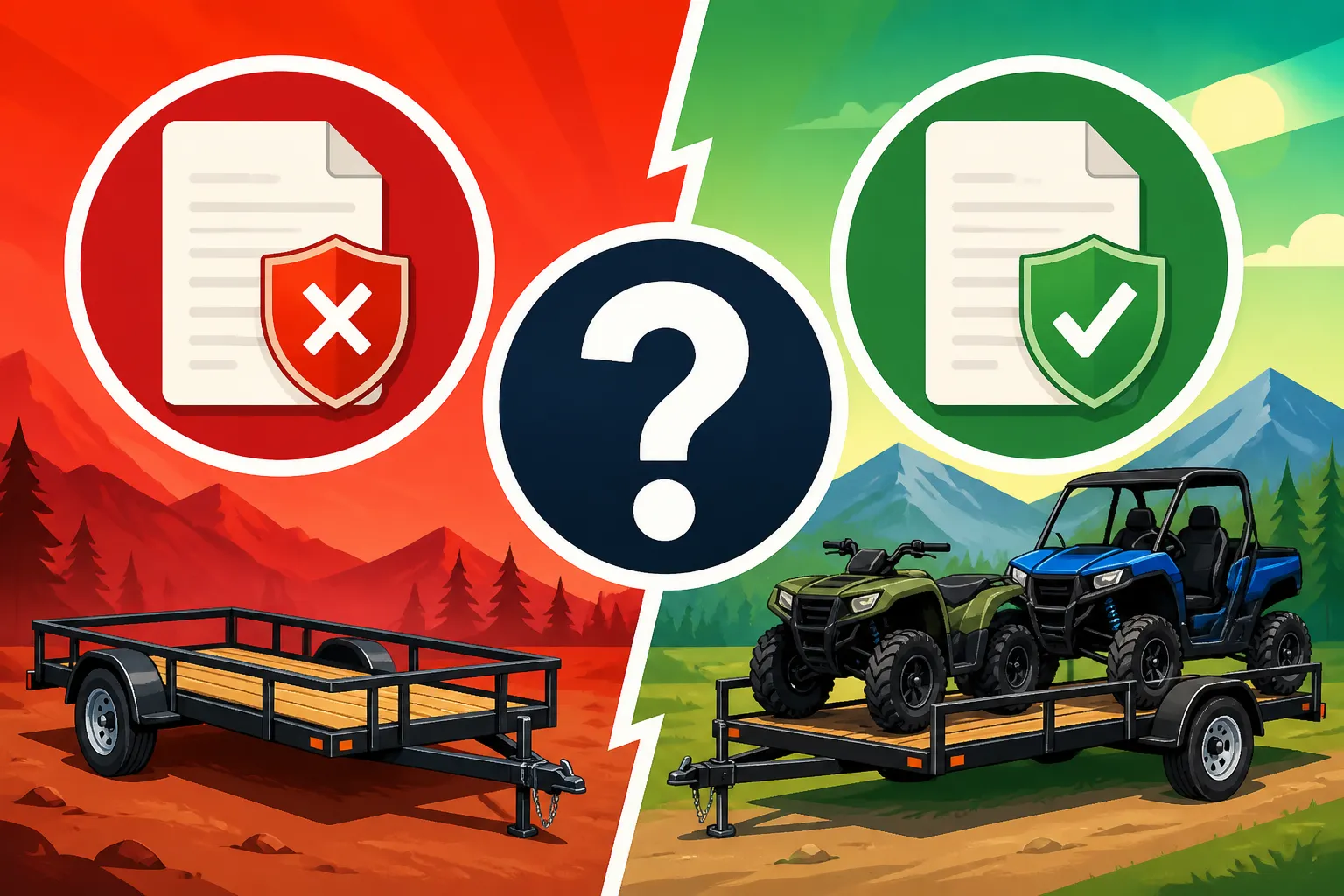
Let's cut right to the chase: in Colorado, not every trailer needs a title. The primary factor that determines whether your trailer needs a title is its empty weight. Generally speaking, a trailer with an empty weight of 2,000 pounds or more requires a title. This is a crucial number to remember because many single or even some smaller double ATV/UTV trailers might fall under this threshold, leading to a lot of confusion.
So, what does this mean for you? If you’ve got a small, open utility trailer that weighs, say, 1,500 pounds empty, you might not be required to get a title for it. However, if you step up to a larger enclosed trailer, a triple-axle hauler, or even some robust tandem-axle open trailers designed for multiple machines or heavier UTVs, you'll very likely cross that 2,000-pound mark and will absolutely need a title. It's not about the trailer's capacity, but its empty weight. This distinction often surprises people who bought a compact trailer thinking it would simplify things, only to find it still needed a title because of its heavy-duty construction. Always check the manufacturer's stated empty weight or, if in doubt, get it weighed. Knowing this specific weight is also critical when you're looking at [Trailer Registration for Hauling ATVs in Colorado].
The Importance of a Trailer Title for ATV/UTV Owners
Even if your specific trailer doesn’t technically require a title based on its weight, having one can save you a world of headaches down the line. A trailer title serves as the definitive legal proof of ownership. Think of it as your trailer's birth certificate and deed rolled into one. Without it, proving that you legitimately own your trailer can become incredibly difficult, which is a major problem if you ever face certain situations.
First off, consider selling your trailer in the future. A clear, properly executed title makes the sale process smooth and instills confidence in potential buyers. Imagine trying to sell your trailer and only being able to provide a handwritten bill of sale. Most savvy buyers, especially those looking to finance, will walk away without a title. They want to know the trailer is legitimate and can be transferred without issues. This becomes particularly important if you’re trying to sell a [Buying a Used ATV in Colorado: The Paperwork] package deal where both the machine and the trailer are changing hands.
Secondly, if you ever need to finance the purchase of a trailer, whether new or used, the lender will almost certainly require a title to secure their loan. Without a title, a financial institution has no legal way to place a lien on the trailer, making it an unfinanceable asset. This can restrict your options considerably. Thirdly, and perhaps most critically, a title is invaluable in the event of theft. While registration might provide some basic information, the title is the ultimate document proving you are the legal owner, aiding law enforcement in recovering your stolen property and allowing your insurance company to process a claim efficiently. Having proper documentation, even if it feels like extra work, is always a smart move when it comes to your valuable equipment.
Navigating the Titling Process for Your ATV/UTV Trailer in Colorado
Okay, so you’ve figured out that your trailer does, in fact, need a title. Now what? The process itself isn't inherently complicated, but it does require attention to detail and making sure you have all your ducks in a row before you head to your local County Clerk and Recorder's office (which often handles motor vehicle services for the DMV). For many ATV and UTV owners, this process feels a bit familiar to registering their actual OHV, but there are some unique twists for trailers.
What Documents You'll Need at the DMV
Getting your trailer titled involves presenting a specific set of documents that prove its identity and your ownership. Missing even one piece of paper can send you right back home, so it's best to be over-prepared.
Here’s a breakdown of the key documents you’ll typically need:
- Manufacturer’s Statement of Origin (MSO) or Certificate of Origin (MCO): This is the "birth certificate" for a brand-new trailer. If you bought your trailer new from a dealership, they will provide this to you. It proves the trailer was legitimately manufactured and has not been previously titled. Make sure the VIN on the MSO matches exactly the VIN stamped on your trailer.
- Previous Title (for used trailers): If you purchased a used trailer that has been previously titled, the seller must provide you with the original title, properly signed over to you. Pay very close attention to ensure all seller information is complete, accurate, and includes the correct odometer reading (if applicable, though less common for utility trailers). If the seller signed in the wrong spot or made any errors, it can cause significant delays.
- Bill of Sale: This is essential for both new and used purchases. A robust bill of sale details the transaction, including the buyer and seller's information, the trailer's description (make, model, VIN), the purchase price, and the date of sale. For private party sales, a comprehensive bill of sale, perhaps one you can customize from a service like LawDepot, provides a clear record of the transfer of ownership and is vital for calculating [Colorado Sales Tax on an ATV Purchase] on the trailer. Even if you have the MSO or previous title, the bill of sale supports the transaction details.
- Proof of Identity and Residency: You'll need a valid Colorado driver's license or state ID card. If you’re a new resident, you might need additional documents to prove your Colorado residency.
- Proof of Insurance: While trailers generally don't require their own liability insurance in the same way a motor vehicle does (they're usually covered under the towing vehicle's policy while attached), some offices might ask for it, particularly if it's a very large or specialized trailer. It’s always good practice to confirm your towing vehicle's insurance policy covers towed units.
- Odometer Reading Disclosure: While less common for utility trailers, some states require an odometer reading disclosure on the title for any motorized vehicle. For trailers, this usually isn't an issue, but be prepared if the form has a spot for it.
Always make sure that all names, addresses, and VINs match perfectly across all documents. Any discrepancy, no matter how minor, will likely lead to a rejection of your application.
Special Cases: Homemade, Inherited, or Out-of-State Trailers
Not every trailer purchase is a straightforward dealership transaction. Sometimes you've built your own, inherited one, or brought it in from another state. These scenarios require a few extra steps to get that Colorado title.
- Homemade Trailers: This is a common situation for resourceful ATV/UTV owners who want a custom hauler. If you've built a trailer from scratch, you won't have an MSO. Instead, you'll need to go through a process to get a Vehicle Identification Number (VIN) assigned to your homemade trailer. This typically involves an inspection by a certified VIN inspector (often at the State Patrol or an authorized partner) to ensure it meets safety standards and to verify the components used. You'll also need to provide receipts for the major parts you used to build it. Once a VIN is assigned, you can then apply for a title, often with a statement of construction in lieu of an MSO. It's a bit more involved, but completely doable. You don't want to get caught riding without [Titling a Machine With No Previous Owner on Hand] if you built it yourself.
- Inherited Trailers: Dealing with an inherited asset, especially after a loss, can be emotionally taxing. If you've inherited a trailer, the process will depend on whether the previous owner had a will, the value of their estate, and how the title was held. You might need a court order, a Small Estate Affidavit, or a Death Certificate along with the existing title to transfer ownership. It’s wise to consult with your County Clerk's office or even legal counsel to understand the specific requirements for [Transferring a Colorado OHV After an Owner Dies] for a trailer.
- Out-of-State Trailers: Moving to Colorado with your existing ATV/UTV trailer or buying one from another state requires a process similar to registering an out-of-state vehicle. You'll need to present the out-of-state title (properly signed over to you if you just purchased it) and often undergo a VIN verification by a certified VIN inspector. This verification confirms that the VIN on the title matches the physical VIN on the trailer and that the trailer isn't stolen. Once the VIN is verified, you can then apply for a Colorado title. Remember, Colorado also has a [Use Tax on a Machine Brought Into Colorado] that might apply if sales tax wasn't paid at a comparable rate in the state of purchase.
Each of these special cases adds a layer of complexity, but with the right documentation and a bit of patience, you can successfully title your trailer in Colorado.
Consequences of Not Titling Your Trailer Properly
Ignoring Colorado's titling requirements for your ATV/UTV trailer might seem like a small shortcut, but it can lead to some significant headaches and potential legal trouble down the road. It’s not just about avoiding a fine; it’s about protecting your investment and ensuring you have clear legal ownership. Many riders are diligent about their [Registering an OHV in Colorado] but forget that the trailer carrying it also needs attention.
Legal Repercussions and DMV Headaches
The most immediate consequence of not titling a trailer that requires one is the inability to register it properly. In Colorado, all trailers must be registered, and for those over the 2,000-pound empty weight threshold, a title is a prerequisite for registration. Without proper registration, you risk receiving a citation or fine if pulled over by law enforcement. While the initial fine might not break the bank, repeat offenses or more severe infractions could lead to higher penalties, impoundment of your trailer, and a lot of wasted time and frustration.
Beyond immediate legal issues, attempting to deal with an untitled trailer at the DMV (or County Clerk's office) can be a maddening experience. Imagine selling your trailer to a new owner, only for them to be turned away at the counter because there's no title to transfer. This can lead to accusations, demands for refunds, and a damaged reputation. Resolving such issues often involves lengthy bureaucratic processes, potentially requiring you to apply for a bonded title, which is an additional expense and a lot of extra paperwork just to correct an oversight that could have been avoided in the first place. You definitely don't want to get stuck with [Selling an ATV in Colorado Without Paperwork], and the same goes for your trailer.
Complications with Insurance and Resale
An untitled trailer can become a major liability when it comes to financial protection and your ability to sell it down the line.
When it comes to insurance, while many homeowner's policies or your towing vehicle's auto insurance might offer some basic coverage for a towed trailer, the specifics can vary greatly. In the event of an accident, damage, or theft, an insurance company will want clear proof of ownership. Without a title, proving your insurable interest in the trailer can be incredibly difficult, potentially leading to denied claims or significantly complicated payouts. This means if your valuable ATV/UTV trailer is stolen or totaled, you might be out of luck, losing thousands of dollars because of a missing piece of paper. You've gone through the trouble of getting [Insuring an ATV in Colorado], don't let your trailer fall through the cracks.
Then there's the issue of resale value and marketability. As mentioned earlier, a trailer without a clear title is a red flag for most potential buyers. They'll be wary of purchasing something that could be stolen or that will be difficult for them to register in their own name. This significantly reduces your pool of interested buyers and will almost certainly force you to sell the trailer at a much lower price than its true market value. You might even have to offer a deep discount to someone willing to jump through the hoops of obtaining a bonded title themselves. In essence, by skipping the titling process, you're not saving money; you're likely losing it in the long run through potential fines, legal fees, insurance complications, and reduced resale value.
Summary of Colorado Trailer Titling Requirements
To help you quickly determine what applies to your situation, here's a quick reference table:
| Trailer Type/Condition | Empty Weight Requirement | Titling Required? | Notes |
|---|---|---|---|
| Standard Utility/Open/Enclosed Trailer | 2,000 lbs or more | Yes | Most ATV/UTV trailers, especially tandem axle or enclosed, fall here. |
| Standard Utility/Open/Enclosed Trailer | Less than 2,000 lbs | No | Registration still required, but no title needed. Keep bill of sale as proof. |
| Homemade Trailer | Any weight | Yes (after VIN) | Requires VIN assignment and inspection before titling. |
| Inherited Trailer | Any weight (if previously titled) | Yes | Requires proper probate/affidavit and existing title for transfer. |
| Out-of-State Trailer | Any weight (if previously titled) | Yes | Requires VIN verification and existing title for transfer. |
| New Trailer from Dealer | Any weight (if over 2,000 lbs) | Yes | MSO/MCO will be provided by dealer. |
So, while it might seem like just one more hoop to jump through when you're eager to hit the trails, understanding Colorado's trailer titling rules is crucial. For most ATV and UTV owners hauling their machines, their trailer will likely require a title due to its weight or the complexities of its origin. Getting this right from the start protects you legally, financially, and saves you a world of trouble when you eventually want to sell or if something goes wrong. Always aim for clear, undisputed ownership of all your valuable assets.
Disclaimer
This article is for general informational purposes only and does not constitute professional advice. Laws, prices and regulations vary by location and change over time. Consult a qualified professional for guidance on your specific situation.