Insuring a Side-by-Side Used for Plowing a Driveway
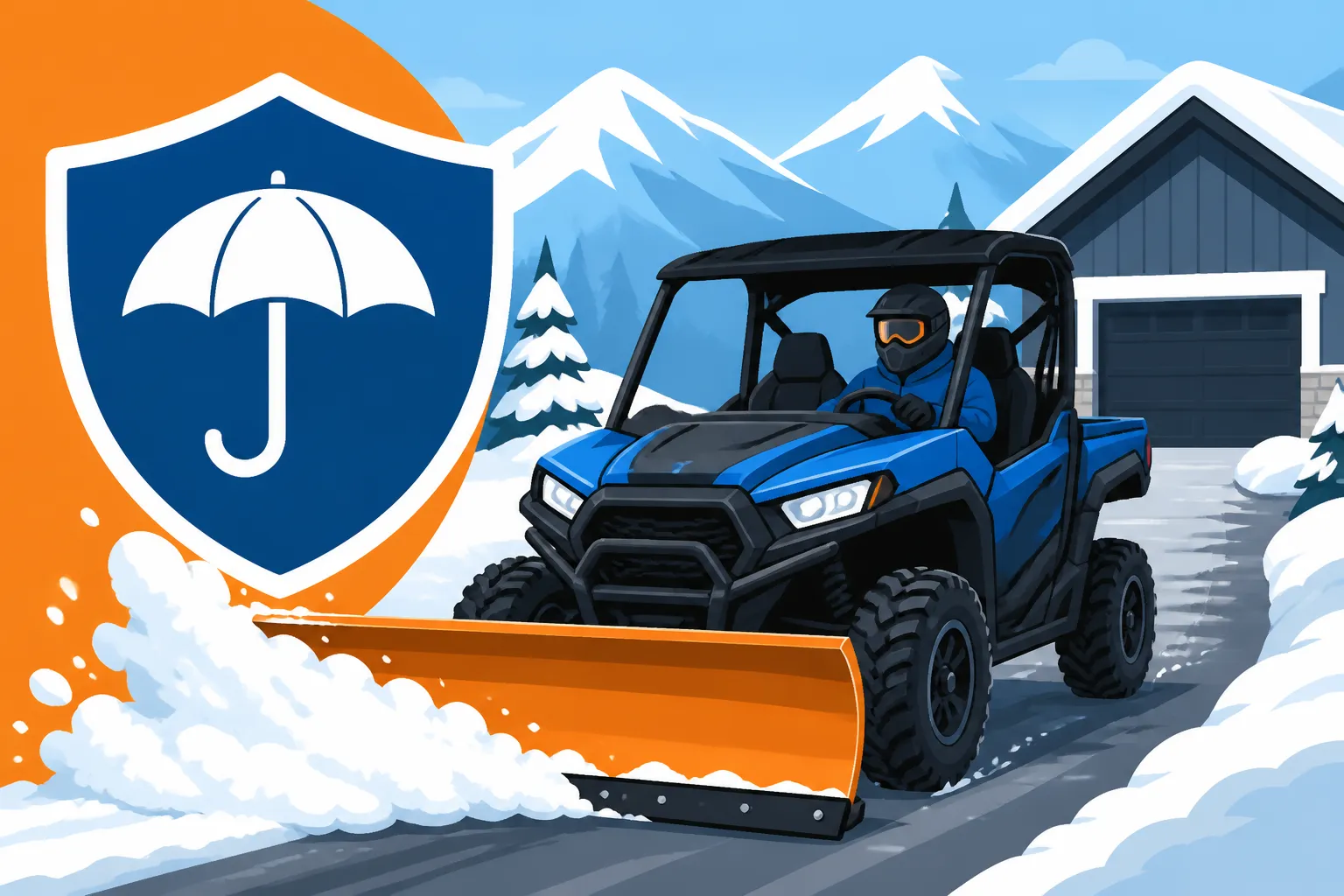
It’s a common scenario here in Colorado: you invested in a side-by-side not just for hitting the glorious trails, but also because it’s a workhorse that can tackle real chores, like plowing your driveway after a heavy snow. What many folks don't realize is that using your trusty UTV for practical tasks like snow removal can actually change the game when it comes to your insurance coverage. This guide is here to walk you through the nuances of insuring your side-by-side specifically for plowing, helping you avoid costly misunderstandings and ensuring you’re truly protected when that next blizzard rolls in.
Why Your Standard OHV or Homeowners Insurance Might Fall Short for Plowing
You’d think, "Hey, it's my machine, on my property, what could go wrong?" or "My off-highway vehicle (OHV) insurance covers my UTV, right?" Unfortunately, these assumptions can leave you in a very vulnerable position if an incident occurs while you're pushing snow. Insurance policies are intricate documents, and they often contain specific clauses and exclusions that come into play based on how you're using your vehicle.
The Homeowners Insurance Myth
Many Colorado homeowners believe their existing homeowners insurance policy will simply extend to cover any damage or liability arising from using an OHV on their property, especially for a routine task like plowing. The reality is almost always different. Homeowners policies are generally designed to cover fixed structures and personal property within your home and on your land, along with certain liability risks. However, most standard policies have explicit exclusions for motorized vehicles, particularly those not registered for street use.
Think about it: your homeowners policy likely doesn't cover your car if you crash it in your driveway, even though it's on your property. The same logic often applies to OHVs. If your side-by-side slips on ice and takes out a fence post, or worse, injures a guest who stepped out to grab the mail while you were plowing, your homeowners policy is unlikely to step in and cover the damages or medical bills. It’s a harsh truth that many discover only after an incident, leaving them to foot substantial repair or legal costs out of pocket. For more on this, you might find [Does Homeowners Insurance Cover a Colorado ATV?] helpful.
The Recreational OHV Policy Gap
You’ve done your due diligence and bought a dedicated OHV insurance policy for your side-by-side. Fantastic! That’s a crucial first step for anyone riding trails in Colorado. However, these policies are primarily crafted with recreational use in mind – think trail riding, camping, and exploring the backcountry. When you start using your machine for "work" or "utility" purposes, even on your own property, you could be venturing into a grey area of your policy's terms.
Some OHV policies might have exclusions for commercial use, or even for non-recreational utility use, depending on the specifics. If the insurance company determines that the primary use at the time of an incident was not recreational, they could deny your claim. For instance, if your plow attachment breaks and damages your side-by-side’s frame while clearing snow, a recreational policy might not cover the repair of the attachment or the damage it caused to the machine, as that specific "utility" scenario might not be outlined in your coverage. It's vital to clearly communicate with your insurance provider about all intended uses for your side-by-side, especially tasks like plowing, to ensure you have the appropriate endorsements or a different type of policy altogether.
Essential Insurance Coverages for Plowing with Your Side-by-Side in Colorado
When using your side-by-side for plowing, you're looking at a different risk profile than simply cruising down a forest trail. You're operating heavy machinery in potentially adverse conditions, often near valuable property or people. Therefore, you need to ensure your insurance covers these specific risks.
Liability Coverage Tailored for Utility Use
This is arguably the most critical component. If, while plowing, you accidentally damage a neighbor's car, hit a mailbox, or cause an injury to another person, liability coverage protects you from the financial fallout. Standard OHV liability might be sufficient for trail-riding incidents, but when you're actively performing a service (even for free, or on your own property, where guests might be present), the scope of potential damage can increase.
It’s crucial to confirm with your insurer that your liability coverage specifically extends to utility operations, such as plowing. You might need a special endorsement added to your existing OHV policy, or a separate policy entirely. Without this, you could face lawsuits for property damage or bodily injury, potentially costing you thousands, if not hundreds of thousands, of dollars. Consider the scenarios: your side-by-side veers off course and takes out a portion of a neighbor's expensive landscaping, or perhaps you're plowing for an elderly family member, and their visiting grandchild slips and falls near your working machine. Adequate [Colorado ATV Liability Coverage Limits] are key here.
Physical Damage Coverage for Your Machine and Attachments
Plowing puts a lot of stress on your side-by-side and its attachments. Hitting an unseen obstacle under the snow, damaging the plow blade itself, or even having the hydraulics fail can lead to significant repair costs. Your basic comprehensive and collision coverage on a recreational OHV policy might cover damage to the machine itself from accidents or other perils, but it’s essential to clarify if it also covers damage directly related to the plowing operation.
Specifically, ask about coverage for the plow attachment. Is it considered part of the vehicle, or does it need separate coverage? What if the plow attachment malfunctions and damages the UTV's frame? Some policies might exclude damage caused by attachments or specific utility operations. Making sure your policy explicitly covers these scenarios will save you a huge headache and expense down the line.
Medical Payments and Uninsured/Underinsured Motorist Coverage
While these might seem less critical for "work," they are still vital. If you, or a passenger, are injured while plowing, medical payments coverage can help with immediate medical expenses regardless of fault. This is especially important if you're out in a remote area and need emergency transport.
Uninsured/underinsured motorist (UM/UIM) coverage, while more common for road-legal vehicles, can still be relevant. Imagine you’re plowing your rural driveway, which happens to be accessible from a county road, and an uninsured driver on a snowmobile illegally crosses your property and collides with your side-by-side. UM/UIM would help cover your medical bills and property damage in such an unfortunate event. While it might seem less likely for driveway plowing, it adds another layer of protection. You can learn more about general coverage in [Insuring an ATV in Colorado].
| Coverage Type | Standard OHV Policy Focus | Utility/Plowing Use Focus | Why It Matters for Plowing |
|---|---|---|---|
| Liability | Damage/injury to others while recreating | Damage/injury to others, often involving property boundaries or non-riders | Protects against claims if you damage property (e.g., mailboxes, landscaping) or injure someone while plowing. |
| Collision | Damage to your OHV from impacts while riding | Damage to your OHV from impacts, especially with unseen obstacles under snow | Covers repair/replacement if you hit something like a hidden rock or curb while pushing snow. |
| Comprehensive | Damage to your OHV from non-collision events (theft, fire) | Same, but also important for theft of plow attachments or weather-related damage | Covers non-collision damage, like a falling tree branch, or if the side-by-side is stolen with the plow attached. |
| Plow Attachment | Often not explicitly covered or requires endorsement | Crucial to have explicit coverage for the plow blade, frame, and hydraulic system | Essential for covering damage to the plow itself or damage it causes to your UTV during operation. |
| Medical Payments | Medical expenses for you/passengers after an accident | Same, important for injuries sustained while performing a strenuous task in adverse weather | Helps cover your medical bills if you get injured while operating the side-by-side for plowing. |
| UM/UIM | Damage/injury from uninsured riders on trails | Damage/injury from uninsured parties, potentially on shared access roads or property | Provides protection if an uninsured party causes damage or injury to you while plowing. |
Navigating Insurance Providers and Policies for Utility Use
Finding the right coverage often involves more than just selecting a basic OHV policy. You need to be proactive and very clear about how you plan to use your side-by-side.
Talking to Your Current Insurer
Your first step should always be to talk to your existing insurance provider. If they already cover your side-by-side for recreational use, they are the best starting point. Call them, explain explicitly that you are using your UTV for plowing your driveway, and ask about specific endorsements or policy adjustments. Don't just assume they know or that it's covered. Use direct language like, "I use my side-by-side to plow my residential driveway with a snowplow attachment. Is this covered under my current policy, and specifically, what about liability if I damage someone else's property or injure someone, and what about damage to the plow itself or the UTV caused by plowing?"
Be prepared for them to potentially offer an add-on or rider to your existing policy. Some insurers might categorize this as "farm and ranch" use, even if it's just a residential driveway, or "utility vehicle" coverage. It’s also a good time to ask about [Colorado ATV Insurance Cost] so you understand any premium adjustments.
Exploring Specialized Policies
If your current provider can't or won't offer adequate coverage for plowing, don't give up! Many insurance companies specialize in powersports vehicles and understand the diverse ways people use their machines. Look for providers that offer specific "utility vehicle" or "commercial use" endorsements, even if you’re just using it for personal property maintenance.
Companies like Progressive, State Farm, Allstate, and many others have various options. They understand that a side-by-side isn't just a toy; it's a versatile tool. When shopping around, always compare quotes and make sure you're comparing apples to apples in terms of coverage limits, deductibles, and specific inclusions for utility work. Ensure you ask about any exclusions related to "commercial activity" if you are even occasionally helping a neighbor for a small fee, as this can dramatically change your policy needs. For instances where you might need specific legal documentation for agreements or ownership proof, a service like LawDepot could provide templates that complement your insurance by clearly defining usage terms if, say, you lend your side-by-side out.
Documenting Your Machine and Its Use
Regardless of the policy you choose, meticulous record-keeping is your friend. Keep copies of your purchase receipts for the side-by-side and the plow attachment. Maintain a clear title and registration. If you ever need to make a claim, having all your paperwork in order, including proof of ownership, makes the process much smoother. Tools like a bill of sale template, which you might find on a site like LawDepot, can be helpful if you ever sell the machine or acquire a used attachment. [Proof of Ownership for a Colorado OHV] is essential here.
It's also a good idea to take photos of your side-by-side with the plow attached when you first get the coverage, especially if it's a new addition. This visually confirms to the insurer that they know about the attachment.
What to Do if an Incident Occurs While Plowing
Even with the best preparation, accidents happen. Knowing what steps to take immediately after an incident can significantly impact the success of your insurance claim and protect you legally.
Prioritize Safety and Assess the Scene
First and foremost, ensure everyone involved is safe. If there are injuries, provide first aid if you're able and immediately call 911. If there's significant property damage or injuries, it’s also wise to contact local law enforcement or the Colorado Parks and Wildlife (CPW) if you're on public land, though for a private driveway, local sheriff or police might be more appropriate. They can help document the scene.
Once immediate safety is addressed, try to secure the area to prevent further damage or injury. Take deep breaths and calmly assess the situation.
Gather Information and Document Everything
This step is critical for your insurance claim.
- Photos and Videos: Use your phone to take extensive photos and videos of everything. This includes the position of your side-by-side, the damage to your machine, the damage to any property (your own or others'), the surrounding environment, and any relevant conditions (e.g., icy patches, snow depth). Take pictures from multiple angles and distances.
- Witnesses: If there are any witnesses, get their names and contact information. Their account can be invaluable in corroborating your story.
- Damaged Property: If you've damaged someone else's property, get their contact information and be cooperative. Do not admit fault or make promises, but assure them you will report it to your insurance.
- Your Machine: Note the exact damage to your side-by-side and the plow. What broke? What stopped working?
- Incident Details: Write down everything you remember about the incident as soon as possible. The time, date, weather conditions, what you were doing, how it happened, and any other pertinent details. This is especially helpful if you need to review [Colorado OHV Crash Reporting Rules].
Contact Your Insurance Provider Promptly
Do not delay in reporting the incident to your insurance company. Most policies require prompt notification of an accident or incident. The sooner you report, the smoother the process tends to be. Have all the information you gathered ready when you call. They will guide you through the claims process, which will likely involve an adjuster assessing the damage.
When speaking with your adjuster, be honest and factual. Refer to your documentation and photos. This is where your upfront communication with your insurer about using your side-by-side for plowing pays off – if they already knew and covered it, the claims process should be more straightforward.
Remember, using your side-by-side for plowing your Colorado driveway is incredibly practical, but it carries specific insurance needs. Don't let a lapse in coverage turn a helpful chore into a financial nightmare.
Disclaimer
This article is for general informational purposes only and does not constitute professional advice. Laws, prices and regulations vary by location and change over time. Consult a qualified professional for guidance on your specific situation.