Colorado ATV Title With a Missing Seller Signature
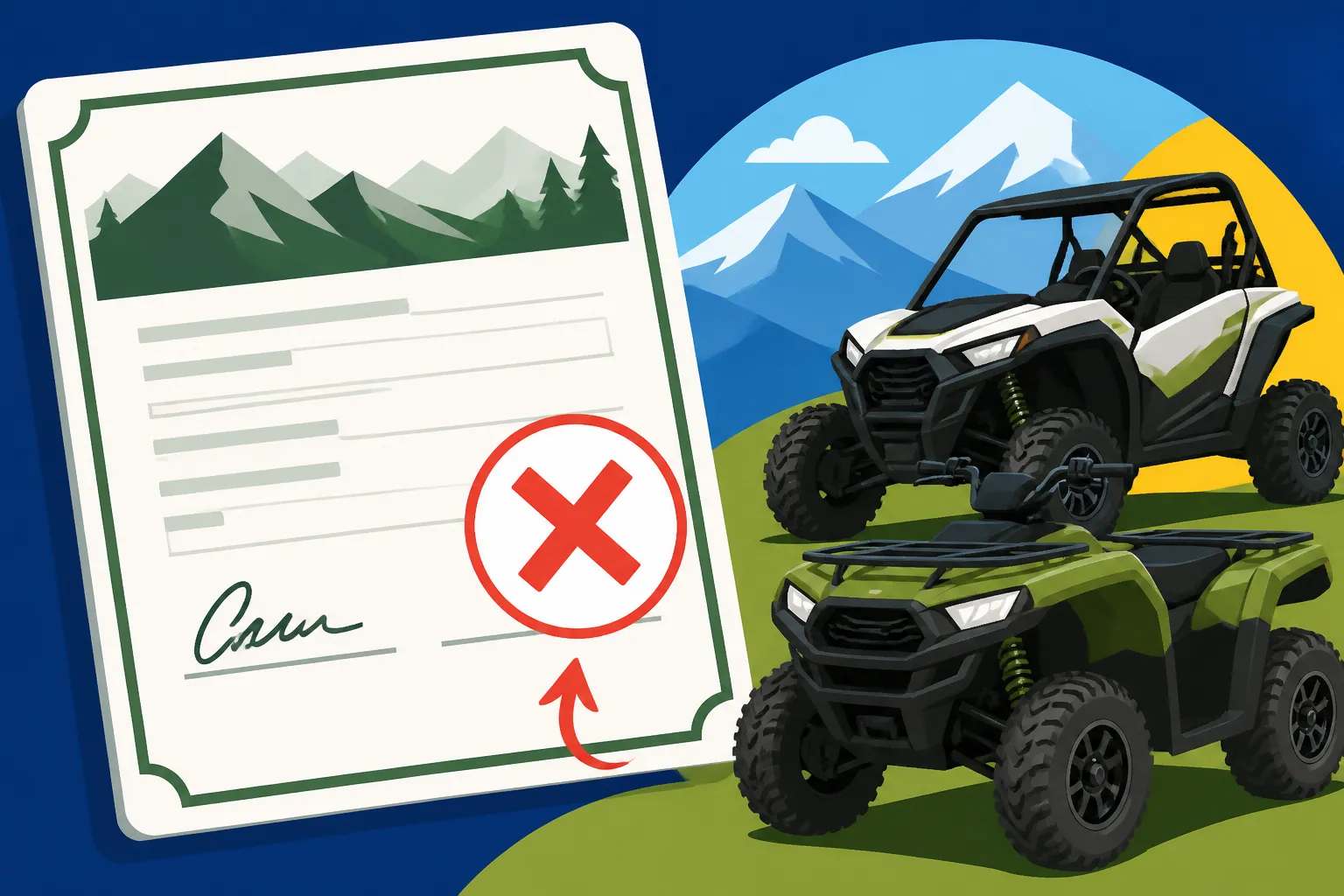
Oh boy, trying to get that ATV or UTV titled in Colorado, only to realize the seller's signature is nowhere to be found on that crucial paperwork. It's an incredibly frustrating situation that many of us have faced, leaving you wondering if you just bought a really expensive lawn ornament. This guide is here to walk you through exactly why a missing signature is such a big hurdle, what your options are for getting it resolved with the Colorado DMV, and how to prevent this headache from ever happening again.
Why a Missing Signature is Such a Big Deal in Colorado
When you're dealing with something as important as transferring ownership of an ATV or UTV in Colorado, a signature isn't just a formality – it's the legal bedrock of the entire transaction. Without it, the state of Colorado, through its Department of Revenue (DOR) and local county DMVs, simply can't verify that the previous owner willingly and legally transferred the machine to you. It's a massive roadblock, and it's totally understandable why you'd feel stuck.
Think about it from the state's perspective: how do they know you didn't just find a title and try to claim ownership? The signature is the previous owner's declaration that they are relinquishing their rights to the machine and passing them on to you. Without that, there's no clear chain of ownership, and that can open the door to all sorts of legal complications, from potential theft issues to disputes over sales tax. The DMV is essentially protecting itself, and future owners, by requiring this vital piece of documentation.
The Documents That Absolutely Need That Signature
For off-highway vehicles (OHVs) like ATVs and UTVs in Colorado, there are a few key documents where a signature is non-negotiable for a clear transfer of ownership:
- The Certificate of Title: This is the big one. Colorado issues titles for OHVs, and the back of that title is where the previous owner (the seller) signs to transfer ownership to you (the buyer). If this section is blank, incomplete, or signed incorrectly, you're going to have a bad time at the DMV. It's the primary legal document proving who owns the machine.
- The Bill of Sale: While not always strictly required by the DMV for titling if you have a perfectly signed title, a well-drafted bill of sale is your best friend in any private sale. It should clearly identify the buyer and seller, the machine (including VIN), the sale price, and most importantly, both parties' signatures and the date. In situations with a missing title signature, a complete bill of sale can be crucial backup, though it might not be enough on its own. You can find robust templates online from resources like LawDepot to ensure all the necessary details are captured.
- Odometer Disclosure Statement: For some vehicles (though less common for purely off-highway machines unless they're capable of highway use or of a certain age/weight), an odometer disclosure might be required. Again, this requires signatures from both parties to attest to the accuracy of the mileage.
The Colorado DMV takes these signatures seriously because they represent the transfer of legal ownership, not just physical possession. You might have the ATV sitting in your garage, but until the title is properly signed over and processed, you're not the legal owner, and that means you can't register it, sell it, or even insure it properly. It's a cycle of frustration that starts with that blank line on the title. [Titling an Off-Highway Vehicle in Colorado] goes into more detail about the overall process.
Your First Steps: Reaching Out to the Seller
When you discover that missing signature, the absolute first and best course of action is to try and contact the seller. I know, it sounds obvious, but sometimes in the panic, people jump straight to the most complicated solutions. A cooperative seller can save you weeks, if not months, of headaches and potential legal costs.
When the Seller is Cooperative: The Easiest Fix
If you're lucky enough to have a seller who responds and is willing to help, the fix can be incredibly simple. Here's what you should do:
- Clearly Explain the Problem: Don't accuse, just state the fact: "Hi, I was trying to title the ATV, and we realized your signature is missing on the title/bill of sale. The DMV won't accept it without it."
- Arrange a Meeting: The ideal scenario is to meet in person to get the necessary signatures.
- The Original Title: If the signature is missing from the assignment section on the back of the original title, this is what you need them to sign. Make sure they sign exactly as their name appears on the front of the title.
- A New Bill of Sale: Even if they sign the title, it’s a great idea to also get a new, thoroughly filled-out bill of sale with both your signatures. This provides an additional layer of proof. Websites like LawDepot offer templates that cover all the critical information for a robust bill of sale.
- An Affidavit: In some cases, especially if there's any confusion or a minor error, the DMV might accept an affidavit from the seller stating they sold the vehicle to you and intended to transfer ownership. This is essentially a sworn statement.
- Go to the DMV Together (If Possible): This is the gold standard. If the seller is willing to accompany you to your local county DMV, you can complete the transfer right there. Any questions or issues can be resolved on the spot with a DMV agent present, leaving no doubt about the legitimacy of the signatures. This saves so much future trouble and gives you peace of mind.
When the Seller is Uncooperative or Unreachable: The Real Challenge Begins
This is where the situation gets tough, and unfortunately, it's not uncommon. People move, change phone numbers, or simply decide they don't want to be bothered after a sale is complete. If you can't get hold of the seller, or they refuse to help, you'll need to explore more complex avenues with the Colorado Department of Revenue. This is a common pitfall when [Buying a Used ATV in Colorado: The Paperwork] is not meticulously handled.
Before you give up hope on reaching them, consider these steps:
- Check Old Advertisements: Did you find the ATV on Facebook Marketplace, Craigslist, or a local classified ad? The old listing might have contact information or even a name that you can use to search public records (if legal and appropriate).
- Proof of Communication: Keep records of all your attempts to contact them – emails, text messages, phone call logs. This documentation can be helpful if you need to go a more formal route later on, showing you made a good-faith effort.
- Original Payment Records: How did you pay for the ATV? A check, a bank transfer, or even a Venmo/PayPal transaction might have the seller's name or account information that could help you track them down.
This situation underscores why securing a properly signed title and a complete bill of sale at the time of purchase is absolutely critical. But, if you're already in this pickle, don't despair – there are still options, though they require more effort.
When the Seller is Gone: Exploring Your Options with the Colorado DMV
Okay, so you've tried everything to reach the seller, or they're just not willing to help, and you're still sitting there with an ATV you can't legally call your own. It's time to talk to the big guns: the Colorado Department of Revenue (DOR) and your county DMV. They have processes in place for these exact scenarios, though they require patience and thoroughness. [Titling an OHV at the Colorado DMV] involves specific procedures.
Option A: The Bonded Title Process
For many folks in Colorado who find themselves with an ATV or UTV but no clear title or a missing signature, the bonded title is often the most practical solution. A bonded title basically allows you to get a title for your vehicle by putting up a surety bond. This bond protects the state and any previous owners (or lienholders) if someone else comes forward later and proves they're the rightful owner. It's the state's way of saying, "We'll give you a title, but you're vouching for its legitimacy."
Here’s a general rundown of what the bonded title process in Colorado usually entails:
- Application and Initial Review: You'll start by filling out specific application forms with the Colorado Department of Revenue. You'll need to provide all the information you have about the ATV, including the VIN, how you acquired it, and why you don't have a clear title (i.e., the missing seller signature).
- Vehicle Identification Number (VIN) Inspection: A VIN inspection is almost always required for bonded titles. This ensures the VIN on the machine matches your paperwork and isn't reported stolen. This usually needs to be done by law enforcement.
- Obtaining a Surety Bond: This is the "bonded" part. You'll need to purchase a surety bond from an insurance company. The amount of the bond is typically 1.5 times the value of the ATV. The cost you pay for the bond itself is usually a small percentage of that bond amount (a few hundred dollars, for example), not the full bond amount. This bond typically remains in effect for three years.
- Advertising or Notifying Potential Claimants: In some cases, the DMV might require you to advertise your intent to apply for a bonded title (e.g., in a local newspaper) or send certified letters to anyone who might have a claim on the vehicle. This is to ensure due diligence and give any rightful owners a chance to come forward.
- Submitting All Documentation: Once you have all the forms, the VIN inspection, and the surety bond, you submit everything to the Colorado DOR for review. They will scrutinize your application to ensure all requirements are met.
- Issuance of the Bonded Title: If everything checks out, after a waiting period (which can vary), the DOR will issue you a bonded title. This title acts like a regular title, but it has the "bonded" designation on it. After the bond period expires (usually three years), you can apply for a regular, non-bonded title.
Here's a simplified table outlining the documents you'll likely need and the process:
| Step / Document | Description | What You'll Need |
|---|---|---|
| Complete Bonded Title Application | Official forms from the Colorado Department of Revenue, explaining your situation and vehicle details. | Form DR 2409 (Application for Bonded Title), Form DR 2392 (Statement of Fact) |
| Proof of Ownership / Acquisition | Any and all paperwork you have, even if incomplete: bill of sale (signed or not), payment receipts, old registrations, photos of the machine, etc. | Original (unsigned) bill of sale, payment records, old ads. |
| Vehicle Identification Number (VIN) Verification | An inspection by law enforcement (e.g., Colorado State Patrol) to verify the VIN. | The ATV/UTV itself, photo ID. |
| Surety Bond | A bond purchased from an authorized surety company, typically for 1.5 times the vehicle's value. | Bond agreement, payment for the bond premium. |
| Photo Identification | Your valid government-issued ID. | Driver's License or State ID. |
| Title Fees | Fees associated with processing the bonded title application. | Check the Colorado DOR website for current fees. |
The bonded title process can be detailed and take time, so be prepared for a bit of a journey. It's often the route that allows you to eventually obtain clear ownership. For specific instructions, you'll need to consult the Colorado Department of Revenue's official titling documents or visit your county DMV. [Bonded Title for an ATV in Colorado] provides further reading on this specific avenue.
Option B: Quiet Title Action (Legal Last Resort)
If for some reason a bonded title isn't an option, or if the situation is particularly complex (e.g., very high-value machine, multiple disputed claims), you might hear about a "quiet title" action. This is a legal process, typically handled in civil court, where you ask a judge to declare you the rightful owner of the ATV.
This is generally considered a last resort because:
- It's Expensive: You'll likely need to hire an attorney, and legal fees can quickly add up, easily exceeding the value of many ATVs or UTVs.
- It's Time-Consuming: Court processes can take many months, if not years, to resolve.
- It's Complex: You'll be dealing with legal procedures, filing petitions, potentially serving notice to previous owners, and presenting your case in court.
For the vast majority of ATV and UTV owners in Colorado dealing with a missing seller signature, the bonded title process is the more appropriate and cost-effective path. A quiet title action is usually reserved for higher-value assets or situations where there are truly no other administrative options.
Preventing This Headache Next Time: Best Practices for Buying a Used ATV in Colorado
Dealing with a missing seller signature is a major headache, and once you've been through it, you definitely don't want to repeat the experience. The best defense is a good offense, so here are some critical best practices to follow when you're looking to buy a used ATV or UTV in Colorado to make sure you get a clean title transfer every single time.
Verify the Seller and the Paperwork Before Money Changes Hands
This is the golden rule. Never, ever complete a transaction without thoroughly inspecting the paperwork and the seller's identity.
- Insist on Seeing the Title First: Before you even start talking price seriously, ask to see the physical title. A legitimate seller should have it readily available. Look for:
- The Seller's Name: Does the name on the title match the name on the seller's government-issued ID (like a driver's license)? If not, ask why. It could be legitimate (e.g., they just bought it and haven't titled it yet), but it's a red flag.
- Liens: Check for any lienholders listed on the title. If there's a bank or finance company listed, the seller needs to provide a lien release letter from that institution, proving the loan is paid off. Without it, they don't have a clear title to transfer. [Liens on a Colorado OHV Title] is a good resource for this.
- The VIN: Ensure the Vehicle Identification Number (VIN) on the title matches the VIN physically stamped on the ATV itself. Double-check this! Don't just glance. [Where to Find the VIN on a Polaris General] can help locate it on specific machines.
- A Comprehensive Bill of Sale: Always, always use a bill of sale. It should include:
- Full names and addresses of both buyer and seller.
- The date of the sale.
- The complete VIN of the ATV/UTV.
- Make, model, and year.
- The agreed-upon sale price.
- A statement that the vehicle is sold "as-is" (unless otherwise agreed).
- Signatures from both the buyer and the seller.
- It's a good idea to include a clause stating the seller attests they are the legal owner and the machine is free of liens. You can easily find detailed templates for this from legal document services like LawDepot, ensuring you don't miss any critical information.
- Seller's Signature on the Title: Crucially, watch the seller sign the title right in front of you. Verify that they sign in the correct spot on the assignment of title section. Don't let them say, "Oh, I already signed it," if you weren't there. If they insist on signing beforehand, walk away or meet them at the DMV. Colorado ATV Title With a Missing Seller Signature is what we're trying to prevent!
Conduct Due Diligence Beyond the Paperwork
While the title and bill of sale are paramount, a smart buyer does a little more digging.
- VIN Check: Before you even look at the machine, run the VIN through a service that checks for stolen vehicles or salvage titles. This can reveal if the machine has a shady past that even a clean title might not immediately show. [Checking a Used Machine Against Theft Records] is essential reading.
- Meet at the DMV: The absolute safest way to transfer ownership is to meet the seller at your local county DMV. This way, you can both be present when the title is transferred, and any questions or issues can be addressed by a DMV agent immediately. It ensures all signatures are witnessed and all forms are correctly filled out.
- Payment Records: Use a payment method that leaves a clear paper trail, like a cashier's check or a bank transfer. Avoid large cash transactions if possible, as they provide less proof of purchase if something goes wrong.
Buying a used ATV or UTV can be a fantastic way to get into the Colorado OHV scene without breaking the bank. But it requires vigilance and attention to detail, especially when it comes to the paperwork. A few extra minutes of careful checking upfront can save you untold hours of frustration and potential legal battles down the road. It's truly worth the effort to ensure you get clean [Proof of Ownership for a Colorado OHV].
Disclaimer
This article is for general informational purposes only and does not constitute professional advice. Laws, prices and regulations vary by location and change over time. Consult a qualified professional for guidance on your specific situation.