Colorado ATV Liability Coverage Limits
It’s a heart-stopping moment many of us dread: that sudden realization that you’ve misjudged a turn, hit an unexpected obstacle, or simply had an unfortunate encounter with another rider or someone else’s property while out on your ATV or UTV. The immediate physical risk is one thing, but then the panic sets in: Am I covered for this? What if I damaged their rig, or worse, someone got hurt? This guide is all about breaking down the intricacies of Colorado ATV liability coverage limits, helping you understand what they are, why they matter, and how to protect yourself on the trail and beyond.
Understanding What "Liability" Means for Your Colorado OHV
When we talk about liability insurance for your off-highway vehicle (OHV) in Colorado, we’re really zeroing in on a very specific kind of protection. It’s not about fixing your machine after you roll it, or covering your medical bills if you take a spill. Instead, liability coverage is all about protecting you financially if you are found at fault for causing damage or injury to someone else or their property. It’s a crucial distinction that often gets overlooked in the excitement of hitting the trails.
Distinguishing Liability from Other Coverage
Think of it this way: if your ATV or UTV is involved in an incident, there are several things that might need to be paid for. There's the damage to your machine, the cost of your medical care, and then there’s everything else – the damage to another person's vehicle, their medical expenses, or even damage to a fence on private land. Liability insurance specifically addresses that "everything else" category. It's the coverage that kicks in when you are deemed responsible for harming a third party or their assets.
This is fundamentally different from collision coverage, which helps pay to repair or replace your machine if it's damaged in an accident, or comprehensive coverage, which covers things like theft, fire, or vandalism to your OHV. It’s also distinct from personal injury protection or medical payments coverage, which would help with your medical bills, regardless of who was at fault. Understanding this separation is the first step toward building a robust insurance strategy for your Colorado adventures. Without sufficient liability, you're directly exposing your personal finances to the whims of an accident.
The Legal Obligation (or Lack Thereof) in Colorado
Here's where things can get a little murky and often lead to confusion for Colorado OHV owners. Unlike passenger vehicles, which generally have mandatory liability insurance requirements to be registered and driven on public roads, Colorado Parks and Wildlife (CPW) does not require you to carry liability insurance simply to register your ATV or UTV and obtain your [Colorado OHV Registration Explained] sticker. This means you can get your annual permit without ever showing proof of insurance.
However, this lack of a direct state-level mandate for registration doesn't mean you're entirely off the hook. The critical nuance comes into play depending on where you ride. While you might not need insurance to get your sticker for public land trails, venturing onto certain county roads or state highways (where OHV use is specifically permitted by local ordinance) shifts the legal landscape considerably. In these situations, you are effectively operating a motor vehicle on a public thoroughfare, and Colorado's financial responsibility laws would apply. This means that while CPW doesn't require it for the sticker, the act of riding on a public road can necessitate proof of financial responsibility, which typically means carrying liability insurance. It’s a detail many riders only discover after an incident. You can find more specific information on this in [Colorado ATV Insurance and When It Is Required].
Navigating Colorado's "No Mandatory OHV Insurance" Reality and Smart Choices
Given that Colorado doesn't mandate liability insurance for OHV registration through CPW, it's easy to assume you don't need it. But that assumption could be a costly mistake, especially if you ever plan to leave private land. The reality is that for any serious rider, robust liability coverage isn't just a good idea – it's practically a necessity for peace of mind and financial security.
The Unspoken Requirement for Public Road Use
Let's dive deeper into the public road scenario. Colorado is unique in that many counties and municipalities have adopted ordinances that allow OHVs on certain county roads or even short stretches of state highways to connect trails or access trailheads. This is fantastic for expanding your riding opportunities, but it comes with a big caveat. The moment your wheels touch these authorized public roads, you fall under the umbrella of Colorado's motor vehicle laws regarding financial responsibility. This means you must have some form of financial responsibility, typically liability insurance, just like you would with your truck or SUV.
Imagine you're cruising down a designated county road near Lake City, following all the [Riding an OHV on the Road in Colorado] rules, and suddenly, you misjudge a turn and clip the bumper of a parked vehicle, or worse, cause an injury to a pedestrian. Without adequate liability insurance, you could be facing astronomical repair bills and medical costs out of your own pocket. A simple collision could turn into a life-altering financial burden, far beyond the initial frustration of the accident itself.
Typical Liability Coverage Limits Explained
When you look at liability insurance, you'll often see coverage limits expressed as three numbers, like 25/50/15 or 50/100/25. While specific dollar amounts vary depending on the policy and your chosen coverage, these numbers represent:
- Bodily Injury Liability per Person: The first number (e.g., $25,000) is the maximum amount your insurance will pay for medical expenses, lost wages, and pain and suffering for each individual injured in an accident where you are at fault.
- Bodily Injury Liability per Accident: The second number (e.g., $50,000) is the total maximum your insurance will pay for all bodily injuries in a single accident, regardless of how many people were injured. If multiple people are hurt, this amount is split among them.
- Property Damage Liability per Accident: The third number (e.g., $15,000) is the maximum amount your insurance will pay for damage to property in an accident you cause. This could be another vehicle, a guardrail, a sign, or even a building.
For example, a policy with limits of 50/100/25 means your insurer would pay up to $50,000 for one person's injuries, a total of $100,000 for all injuries in the accident, and up to $25,000 for property damage. While many policies start at these lower tiers, it's crucial to understand that these are often bare minimums and may not be enough to cover serious incidents in today's world of escalating medical costs and vehicle repair expenses.
Why Going Beyond the Minimums is Always Prudent
While the 25/50/15 type of minimum coverage might satisfy any potential road-use requirements, it rarely provides true financial protection. Imagine you're riding in the mountains and, through no ill intent, you cause a severe accident. A hospital stay alone can quickly rack up tens of thousands of dollars, not to mention lost wages for the injured party, and the costs to repair a late-model truck or side-by-side. Those "minimum" limits can be exhausted almost instantly. When the insurance money runs out, you are personally responsible for the rest.
This is where your personal assets come into play. A judgment against you for damages beyond your insurance limits could mean your savings are at risk, your future wages could be garnished, or even your home could be targeted to satisfy the debt. It's a terrifying prospect, and one that makes the relatively small extra cost for higher liability limits an incredibly smart investment. Many seasoned riders choose limits more akin to 100/300/50 or even higher, recognizing that the potential cost of an accident far outweighs the annual premium difference. Protecting your family's future and your hard-earned assets is truly what adequate liability coverage is all about when you're out enjoying the Colorado backcountry.
Expanding Your Protection: Beyond Basic Liability for Your OHV
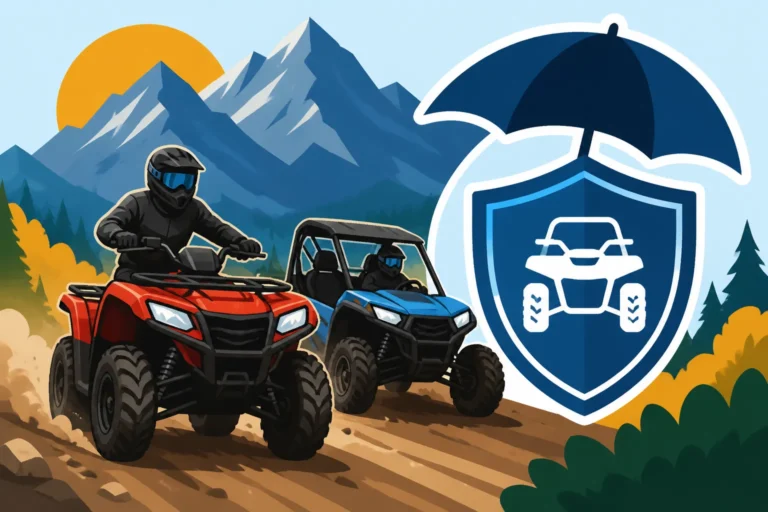
While liability coverage is foundational for protecting others, a comprehensive approach to insuring your ATV or UTV means looking at how you protect yourself and your machine, too. Many riders mistakenly believe that their existing auto or homeowners insurance will automatically cover their OHV, but this is rarely the case, or if it is, the coverage is often severely limited. Dedicated OHV insurance policies offer a suite of options designed specifically for the unique risks of off-roading.
Comprehensive and Collision Coverage
These two types of coverage are about protecting your investment in your ATV or UTV.
- Collision coverage is pretty straightforward: it pays for damage to your OHV resulting from a collision with another object (like another vehicle, a tree, or even the ground if you roll it). This is the coverage that helps you get back on the trail after an accident where your machine is damaged.
- Comprehensive coverage steps in for all those other unpredictable events. This includes things like theft (a major concern for many OHV owners), fire, vandalism, falling objects, or even hitting an animal on the trail. If your side-by-side is parked at a trailhead and someone breaks in, or if a tree falls on it during a storm, comprehensive coverage is what would typically cover the repairs or replacement. Both are vital for safeguarding the money you've put into your machine.
Uninsured/Underinsured Motorist and Medical Payments
These coverages shift the focus back to protecting you and your passengers.
- Uninsured/Underinsured Motorist (UM/UIM) coverage is incredibly important. While you might be a responsible rider with full liability, not everyone on the trail or road will be. If you're involved in an accident with another OHV or vehicle, and the at-fault party either has no insurance or insufficient insurance to cover your injuries or damages, UM/UIM steps in. It covers your medical bills, and sometimes even damage to your machine, up to your policy limits. It’s a sad reality that not everyone carries sufficient coverage, so this can be a lifesaver.
- Medical Payments (MedPay) coverage is a no-fault option that helps pay for immediate medical expenses for you and your passengers if you're injured in an OHV accident, regardless of who caused it. This can be very useful for covering ambulance rides, emergency room visits, or initial doctor consultations, helping to bridge the gap before other health insurance might kick in or a liability claim is settled. For more on getting your machine covered, check out [Insuring an ATV in Colorado].
Personal Property and Accessory Coverage
Many riders invest significant money in aftermarket accessories for their ATVs and UTVs – winches, light bars, upgraded tires, suspension, or even custom wraps. Then there’s your personal gear: expensive helmets, riding jackets, and communications systems. Standard OHV policies might only cover the stock value of your machine. If you've customized your ride, you'll want to inquire about additional coverage for your accessories and modifications. Similarly, you might be able to add a rider to your policy to protect personal items you carry on your OHV that could be damaged or stolen during an incident. It's worth discussing with your insurance provider to ensure these valuable additions are fully protected.
Here's a quick overview of common OHV insurance coverages:
| Coverage Type | What It Protects | Who It Protects | Key Benefit |
|---|---|---|---|
| Bodily Injury Liability | Medical expenses, lost wages, pain/suffering of others if you're at fault | Third parties (people you injure) | Protects your assets from claims against you for personal injuries you cause. |
| Property Damage Liability | Repairs/replacement of another's property if you're at fault | Third parties (property you damage) | Protects your assets from claims against you for property damage you cause. |
| Collision | Damage to your ATV/UTV from a collision with another object | You and your machine | Pays for repairs or replacement of your OHV if you crash. |
| Comprehensive | Damage to your ATV/UTV from non-collision events (theft, fire, vandalism) | You and your machine | Protects your OHV from a wide range of unexpected events when not in motion. |
| Uninsured/Underinsured Motorist | Your medical bills/damage if hit by someone without enough or any insurance | You and your passengers | Protects you when the at-fault party can't pay. |
| Medical Payments | Medical expenses for you/passengers after an accident, regardless of fault | You and your passengers | Provides quick access to funds for immediate medical care after an incident. |
| Accessory/Custom Parts | Damage/theft of aftermarket parts, customizations | You and your machine's modifications | Ensures your investment in upgrades is covered beyond stock value. |
| Personal Property | Damage/theft of personal items (helmet, gear) carried on your OHV | You and your personal belongings | Protects valuable riding gear and items you bring along. |
The Repercussions of Insufficient Coverage in Colorado
Ignoring the need for robust liability coverage for your Colorado ATV or UTV is akin to playing Russian roulette with your finances. While the thrill of the ride is exhilarating, the potential aftermath of an accident without adequate protection can be devastating, impacting not just your current financial standing but your future for years to come.
Financial Ruin and Legal Battles
If you're found responsible for an OHV accident that results in significant injuries or property damage and you only carry minimum liability (or worse, no liability at all), you become personally responsible for all costs exceeding your policy limits. In today's world, a serious injury can easily rack up hundreds of thousands of dollars in medical bills, rehabilitation, and lost wages. Property damage, especially to another new side-by-side or a valuable piece of equipment, can also be substantial.
When your insurance coverage is exhausted, the injured party or their insurance company will come after you for the remainder. This can lead to a lengthy and stressful legal battle. A court judgment against you could result in:
- Wage garnishment: A portion of your paycheck could be legally seized to pay down the debt.
- Asset seizure: Your savings accounts, investment portfolios, and even non-exempt personal property (like a secondary vehicle or certain valuables) could be targeted.
- Liens: A lien could be placed on your home or other real estate, meaning you couldn't sell it without first paying off the debt.
The stress, time, and financial strain of such a situation can truly turn your life upside down. It’s a scenario no one wants to face, which is why a thoughtful approach to [Who Pays After a Colorado OHV Collision] should always start with robust insurance coverage.
The Importance of Preparedness and Documentation
Beyond simply having insurance, being prepared with proper documentation can help mitigate potential issues or clarify situations that could otherwise escalate into liability claims. For instance, if you're buying or selling a used ATV or UTV in Colorado, having a meticulously drafted [Colorado ATV Bill of Sale Template] is paramount. This document serves as undeniable proof of ownership transfer, protecting both buyer and seller from future disputes. Similarly, if you plan to ride on private land that isn't your own, obtaining [Written Permission Before Riding Private Land] isn't just a courtesy, it's a legal safeguard, clearly defining the terms of your access and potentially limiting your liability in certain situations.
Resources like LawDepot can be incredibly helpful for generating these kinds of essential legal documents. Whether you need a bill of sale, a promissory note for a private sale, or other agreements, having access to professionally drafted templates ensures your paperwork is legally sound and thorough. This proactive approach to documentation can prevent misunderstandings and provide clarity, which can be invaluable should any unforeseen incidents occur.
Avoiding Common Pitfalls
One of the biggest pitfalls many OHV owners fall into is assuming their existing insurance policies will cover them. Your standard auto insurance policy almost certainly does not cover your ATV or UTV, especially when it's being ridden off-road. Similarly, while your homeowners insurance might offer a tiny sliver of liability coverage for an OHV, it typically has very low limits, numerous exclusions, and often won't apply if the incident occurs away from your property. Always confirm directly with your insurance provider whether your OHV is covered, and under what specific circumstances and limits. Don't rely on assumptions – ask for written confirmation.
Another common mistake is misinterpreting the rules for riding on public roads. Just because a road is open to OHVs doesn't mean you're exempt from carrying appropriate insurance. Ignoring these requirements can lead to serious [Fines for an Unregistered OHV in Colorado] and [Penalties for an Unregistered OHV in Colorado] that extend far beyond the lack of a registration sticker. Always do your homework on local ordinances and state laws before you hit the road or trail.
Ultimately, navigating the world of Colorado ATV liability coverage limits requires a blend of legal understanding, common sense, and a strong dose of self-preservation. While Colorado may not mandate liability insurance for your OHV registration, the potential for financial disaster from an accident makes comprehensive coverage an indispensable part of being a responsible and prepared rider. It's an investment in your peace of mind and your future.
Disclaimer
This article is for general informational purposes only and does not constitute professional advice. Laws, prices and regulations vary by location and change over time. Consult a qualified professional for guidance on your specific situation.