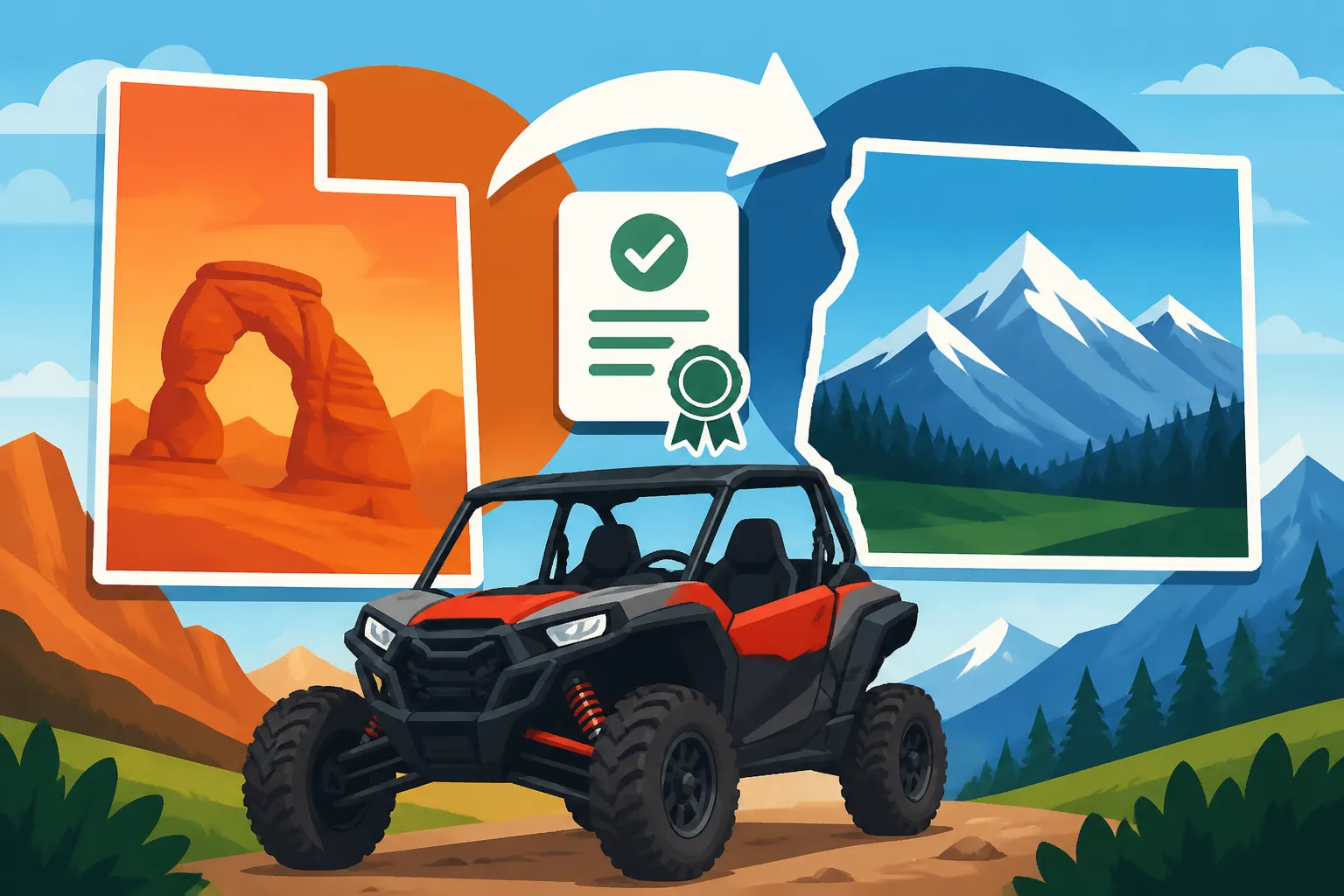
Registering a Utah Machine After Moving to Colorado
Moving to a new state is a huge undertaking, and bringing your beloved ATV or UTV with you can add a whole new layer of administrative headaches. You’ve just navigated packing, unpacking, finding your way around, and now you’re wondering if your trusty Utah-registered machine is even legal to ride on Colorado's incredible trails. This guide is here to walk you through exactly what you need to do to get your off-highway vehicle properly registered and titled in Colorado, so you can stop worrying about paperwork and start exploring.
Understanding Colorado's OHV Rules for New Residents
When you move to Colorado with an off-highway vehicle (OHV) from another state like Utah, it’s not as simple as just slapping a new sticker on it. Colorado has its own unique system for managing OHVs, which involves two main components: registration with Colorado Parks and Wildlife (CPW) and, for many machines, a title through the Department of Revenue (DOR). This can be a bit of a head-scratcher, especially if you're used to Utah's system where registration and titling might be handled differently or even combined.
The biggest frustration I hear from folks coming from states like Utah is the feeling of starting from scratch. You already went through the process once! It feels like unnecessary duplication, and honestly, sometimes it can be. But understanding why Colorado does things this way can help demystify the process. CPW registration is all about trail access and funding, while the DOR title is about legal ownership. Both are vital for different reasons, and navigating both simultaneously is often the reality for new residents. [Colorado OHV Title Versus CPW Registration] covers this in more detail.
Colorado law generally requires that if you establish residency here, your OHV needs to be registered within the state if you plan to ride it on public lands. There isn't a long grace period for new residents to operate an out-of-state registered machine, unlike some other states for passenger vehicles. If you're going to be a Colorado resident, your machine needs to play by Colorado rules. This means getting that Colorado Parks and Wildlife registration sticker, and in most cases, making sure it has a Colorado title.
Registering Your Utah OHV with Colorado Parks and Wildlife (CPW)
Getting your OHV registered with Colorado Parks and Wildlife is your first crucial step for getting out on the trails. This is the permit that allows you to ride on designated public lands. Think of it as your passport to Colorado's vast network of incredible OHV routes. If your machine from Utah already has a valid registration in Utah, that's a good start, but it won't be sufficient for long-term use as a Colorado resident. You'll need a new Colorado OHV permit. [Registering an OHV in Colorado] details the basics.
The process for a new resident isn't drastically different from someone buying a machine in-state, but there are a few nuances to be aware of, particularly regarding proof of ownership and the state of your previous registration. You’ll need to provide documentation showing you own the machine, which usually means your Utah title or a bill of sale.
Documents You'll Need for CPW Registration
When you head to a CPW office or one of their authorized vendors, you'll want to have your ducks in a row. They're primarily interested in confirming ownership and collecting the registration fee. Here’s what you’ll typically need:
- Proof of Ownership: This is paramount. If you have your Utah title, bring it. If Utah only provides a registration and no traditional title for your specific machine (which can sometimes be the case for older or smaller OHVs), bring your Utah registration document and a bill of sale. The goal is to clearly demonstrate that you are the legal owner of the machine you're trying to register. [Proof of Ownership for a Colorado OHV] explains the acceptable forms in depth.
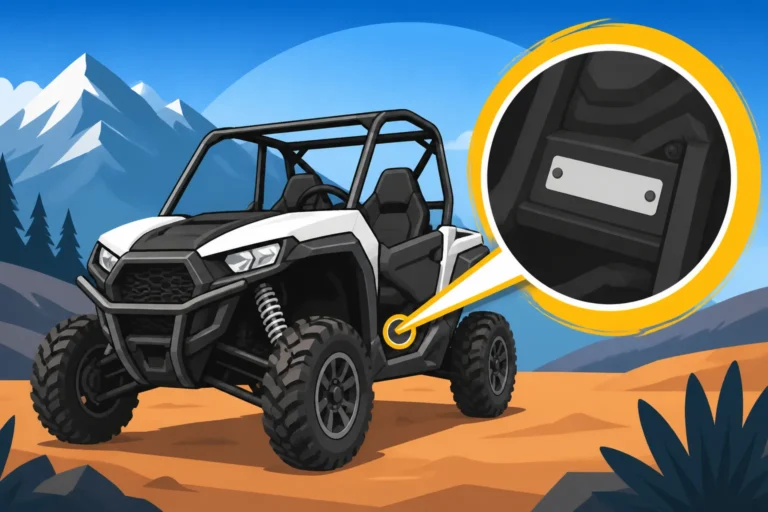
- The Machine's VIN: The Vehicle Identification Number is how your OHV is uniquely identified. Make sure you know where it's located on your machine and have it accurately written down. It will be recorded on your new Colorado registration.
- Personal Identification: Your driver's license or other state-issued ID.
- Payment for the Registration Fee: Colorado's OHV registration fee is set by CPW and goes towards trail maintenance, enforcement, and education programs.
Once you submit these documents and pay the fee, you’ll receive a temporary registration, and your new Colorado OHV decal should arrive in the mail. Don't worry, you can often ride with your temporary registration while you wait for the physical sticker. [How Long a Colorado OHV Sticker Takes to Arrive] offers more insight into this waiting period.
What if Utah Didn't Issue a Title for My OHV?
This is a common point of confusion for new Colorado residents. Some states, especially for ATVs or older UTVs, might only issue a registration certificate and not a formal certificate of title like you’d get for a car. If your Utah machine falls into this category, don’t panic. Colorado's Department of Revenue (DOR) understands this. You'll still need that proof of ownership for CPW registration, and for titling, you'll go through a slightly different process.
For CPW registration, your Utah registration card combined with a clear bill of sale often suffices as proof of ownership if a traditional title was never issued. The key is to provide as much documentation as possible to establish a clear chain of ownership. If you need a solid bill of sale, resources like LawDepot can provide templates that help ensure all necessary information is included, giving you a strong piece of documentation to present. This kind of detail can save you a lot of back-and-forth.
Titling Your OHV with the Colorado Department of Revenue (DOR)
Beyond CPW registration, many OHVs in Colorado also require a title through the Department of Revenue (DOR). This is the legal document that establishes you as the rightful owner of the machine. While CPW registration gets you on the trails, a DOR title protects your investment and is crucial for selling your OHV later. For a machine coming from Utah, you'll need to transfer your Utah title to a Colorado title, or apply for an original Colorado title if one was never issued in Utah. [Titling an Off-Highway Vehicle in Colorado] is a great resource.
The county motor vehicle office (part of the DOR) handles titling. This is where things can sometimes feel a bit more like a traditional DMV experience compared to the CPW vendors. They are very particular about documentation, as they are establishing a legal record of ownership.
Steps to Title Your Utah OHV in Colorado
- Gather Your Utah Title: This is the primary document. Your original Utah title, completely filled out with your name as the new owner, is what the Colorado DOR wants to see. If there was a lien on the Utah title (meaning you had a loan on the machine), make sure you have the lien release documentation from your lender.
- Bill of Sale (if applicable): If you recently purchased the machine, a bill of sale is often required, even if you have the title. This helps establish the purchase date and price, which are relevant for calculating Colorado use tax. A comprehensive bill of sale, perhaps generated using a platform like LawDepot, can be incredibly helpful here, ensuring all critical details are present.
- Proof of Identity: Your current Colorado driver's license or other valid ID.
- Verification of VIN: Sometimes, especially for out-of-state vehicles, the DOR might require a VIN inspection. This is a quick check to ensure the VIN on your documents matches the physical VIN on your machine and to verify it hasn't been stolen. You might need to bring your OHV to the motor vehicle office or to a law enforcement agency for this. [Checking a Used Machine Against Theft Records] highlights the importance of this.
- Pay Use Tax: This is a big one for new residents. If you brought your OHV into Colorado and haven't paid Colorado sales tax on it (because you bought it in Utah, for example), you'll likely owe Colorado use tax when you title it here. The tax is generally based on the purchase price of the OHV. They'll also add a title fee. Don't be surprised by this; it's a common requirement for vehicles (including OHVs) brought into the state by new residents. [Use Tax on a Machine Brought Into Colorado] delves into this in detail.
- Complete Colorado Titling Forms: The motor vehicle office will have specific forms for you to fill out to apply for your new Colorado title.
Once all the paperwork is submitted, fees are paid, and everything checks out, the DOR will process your application, and you'll receive your Colorado certificate of title in the mail. This usually takes a few weeks.
What if My Utah Machine Never Had a Title?
This is where things can get a bit more complex, but it's not insurmountable. If your OHV never received a traditional certificate of title in Utah (perhaps it was an older model or a type of machine that Utah didn't title), you can still apply for an original Colorado title.
In this scenario, the Colorado DOR will require robust proof of ownership to establish your legal claim to the machine. This usually means:
- Original Bill of Sale: This is critical. It should clearly show who you purchased the OHV from, the date, the purchase price, and a full description of the OHV, including the VIN. If you're missing some details, a well-drafted bill of sale, perhaps created with the help of a tool like LawDepot, can provide the clarity the DOR needs.
- Previous Registration Documents: Your Utah registration cards from previous years are very helpful as they show a consistent record of you owning and registering the machine in Utah.
- Affidavit of Ownership: The DOR might require you to sign an affidavit attesting to your ownership and how you acquired the machine.
- VIN Inspection: This is almost certainly going to be required to confirm the machine's identity and status.
The goal for the DOR is to create a new, legitimate chain of ownership for a machine that previously didn't have a formal title. It takes more documentation and patience, but it is a standard process they are equipped to handle.
Common Roadblocks and How to Overcome Them
Moving your OHV from Utah to Colorado involves more than just a change of scenery. There are a few common issues that new residents encounter during the registration and titling process. Being prepared for these can save you a lot of stress.
Missing or Incomplete Paperwork
One of the biggest headaches is missing paperwork. You might have bought your OHV years ago in Utah, and the original bill of sale is long gone, or perhaps your Utah title has a small error or a previous owner's signature missing. Colorado county motor vehicle offices are sticklers for complete and accurate documentation.
- Solution: If you're missing a bill of sale, try to reconstruct one with the seller if possible. If not, be prepared to explain the situation to the motor vehicle clerk. They might require a notarized affidavit of ownership. For a missing title, you'll need to apply for a duplicate title from Utah before you can title it in Colorado. If there's a small error, contact the issuing authority in Utah to see if they can correct it before you attempt to title in Colorado.
Understanding Colorado Use Tax
As mentioned, new residents are often surprised by having to pay use tax on their OHV when they title it in Colorado, even if they paid sales tax in Utah. Colorado considers that if the machine is now "used" in Colorado, and Colorado sales tax wasn't collected, use tax applies.
- Solution: Budget for this. The use tax rate is generally the same as the state sales tax rate, plus any local sales tax for your specific county of residence. You'll pay this at the county motor vehicle office when you title the OHV. It's not an optional fee; it's a legal requirement.
VIN Inspection Requirements
Some county motor vehicle offices, especially for out-of-state vehicles, require a physical VIN inspection. This is to prevent stolen vehicles from being titled.
- Solution: Call your local county motor vehicle office before you go to find out if a VIN inspection is required for an out-of-state OHV and if so, how to get it done. Some offices have personnel on-site, others might require you to go to a local law enforcement agency. Be prepared to bring your machine in for inspection if needed.
Dealing with Liens
If you still have a loan on your Utah OHV, the financial institution holds the title (or is listed as a lienholder on an electronic title). To title it in Colorado, the lien needs to be transferred to Colorado, or the loan paid off.
- Solution: Contact your lender. They will have a process for transferring the lien to Colorado or releasing the lien if you've paid off the loan. You'll need an official lien release document from them to get a clean Colorado title. [Liens on a Colorado OHV Title] provides more details on this process.
Confusion Between CPW Registration and DOR Titling
It’s easy to mix up the two distinct processes in Colorado. You might think that once you have your CPW sticker, you’re good to go on all fronts. Not quite!
- Solution: Remember, CPW registration is about trail access and funding, while DOR titling is about legal ownership. For most OHVs, you'll need both. Think of the CPW sticker as your trail pass and the DOR title as your ownership deed. Make sure you complete both steps if your machine is eligible for titling. [Do You Need Both a Title and a Registration in Colorado?] addresses this common question.
By understanding these potential hurdles and preparing for them, you can make the transition of your Utah OHV to Colorado smooth and efficient. It's an investment of time and a bit of money, but it's worth it to legally enjoy all the amazing trails Colorado has to offer. Welcome to the neighborhood, and happy riding!
Disclaimer
This article is for general informational purposes only and does not constitute professional advice. Laws, prices and regulations vary by location and change over time. Consult a qualified professional for guidance on your specific situation.