Where the VIN Sits on a Side-by-Side
It can be incredibly frustrating when you're ready to register your side-by-side in Colorado, you've got all your paperwork in hand, and then you hit a wall trying to locate that elusive Vehicle Identification Number (VIN). This tiny, yet mighty, sequence of characters is absolutely crucial for everything from ownership verification to legal registration, and sometimes it feels like manufacturers play hide-and-seek with it. This guide is here to walk you through exactly where to look for your VIN on a side-by-side, offering practical tips and brand-specific insights to save you time and headaches, especially for us folks here in Colorado.
Why Finding the VIN is So Important for Colorado Side-by-Side Owners
Imagine you’ve just brought home a shiny new (or new-to-you) side-by-side, itching to hit those stunning Colorado trails, and you get to the DMV or a Parks and Wildlife vendor, only to be told you can’t register it without a verified VIN. This isn't just a minor inconvenience; it's a critical step in legally owning and operating your machine. In Colorado, the VIN is the cornerstone of your OHV's identity, linking it undeniably to you.
Legal Requirements for Registration and Titling
When you’re preparing to [Registering an OHV in Colorado] or [Titling an Off-Highway Vehicle in Colorado], the VIN is the first piece of information the state agencies will ask for. This isn't just bureaucratic red tape; it's how they keep track of every machine operating within the state. Colorado Parks and Wildlife (CPW) uses the VIN for your annual OHV registration, which funds trail maintenance and safety programs. The Department of Revenue (DOR) uses it for titling, which is your ultimate proof of legal ownership. Without a clear, legible VIN, you simply cannot complete these essential processes. This can lead to delays, frustration, and even legal issues if you're caught riding an unregistered machine.
Preventing Theft and Fraud
The VIN acts like your side-by-side's fingerprint. Each VIN is unique to that specific vehicle, containing coded information about its manufacturer, model year, and production sequence. When you’re [Buying a Used ATV in Colorado: The Paperwork], checking the VIN against ownership documents and theft databases is a critical step in protecting yourself from fraud. A VIN helps ensure the machine hasn't been stolen or pieced together from different vehicles. If you ever need to [Recovering a Stolen ATV in Colorado], the VIN is the primary identifier law enforcement will use. Matching the VIN on the machine to the VIN on the title and registration ensures that the person selling the vehicle is the rightful owner and that you're not inadvertently purchasing stolen property. This due diligence is paramount, especially in private sales where there isn't a dealer vouching for the machine's history.
Insurance and Warranty Claims
Should you ever have an accident or need to file a warranty claim, the VIN is absolutely indispensable. Insurance companies use the VIN to identify your specific side-by-side, verify its value, and process claims accurately. If your machine needs repairs under warranty, the manufacturer will use the VIN to confirm it's still covered and to track any previous service history. Without a clear VIN, you might find yourself in a difficult position trying to prove your ownership or eligibility for coverage, potentially costing you thousands in repairs or replacement. It’s also crucial when [Insuring an ATV in Colorado], as the VIN is required to get an accurate quote and policy.
Common VIN Locations on Your Side-by-Side
Manufacturers place VINs in specific, usually easy-to-access, locations. However, "easy-to-access" can be relative after a few years of mud, dirt, and trail grime. Generally, you'll find the VIN stamped directly onto the frame of your side-by-side, often in a spot that's less prone to damage but still visible.
Main Frame Rail (Front or Rear)
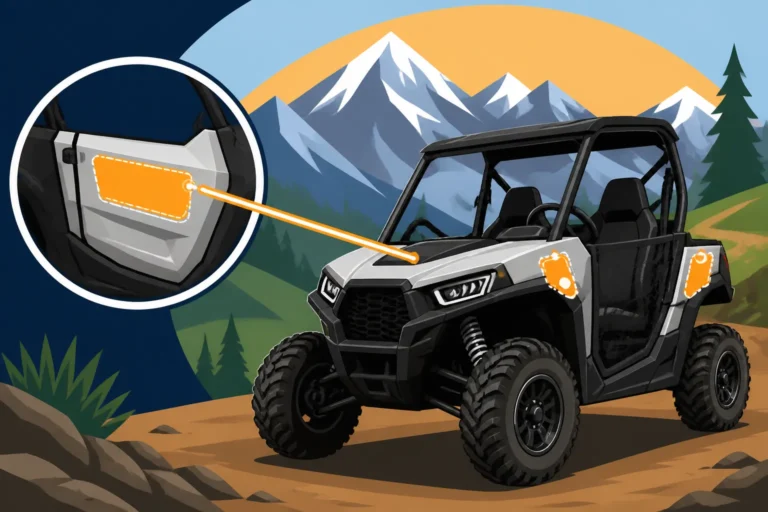
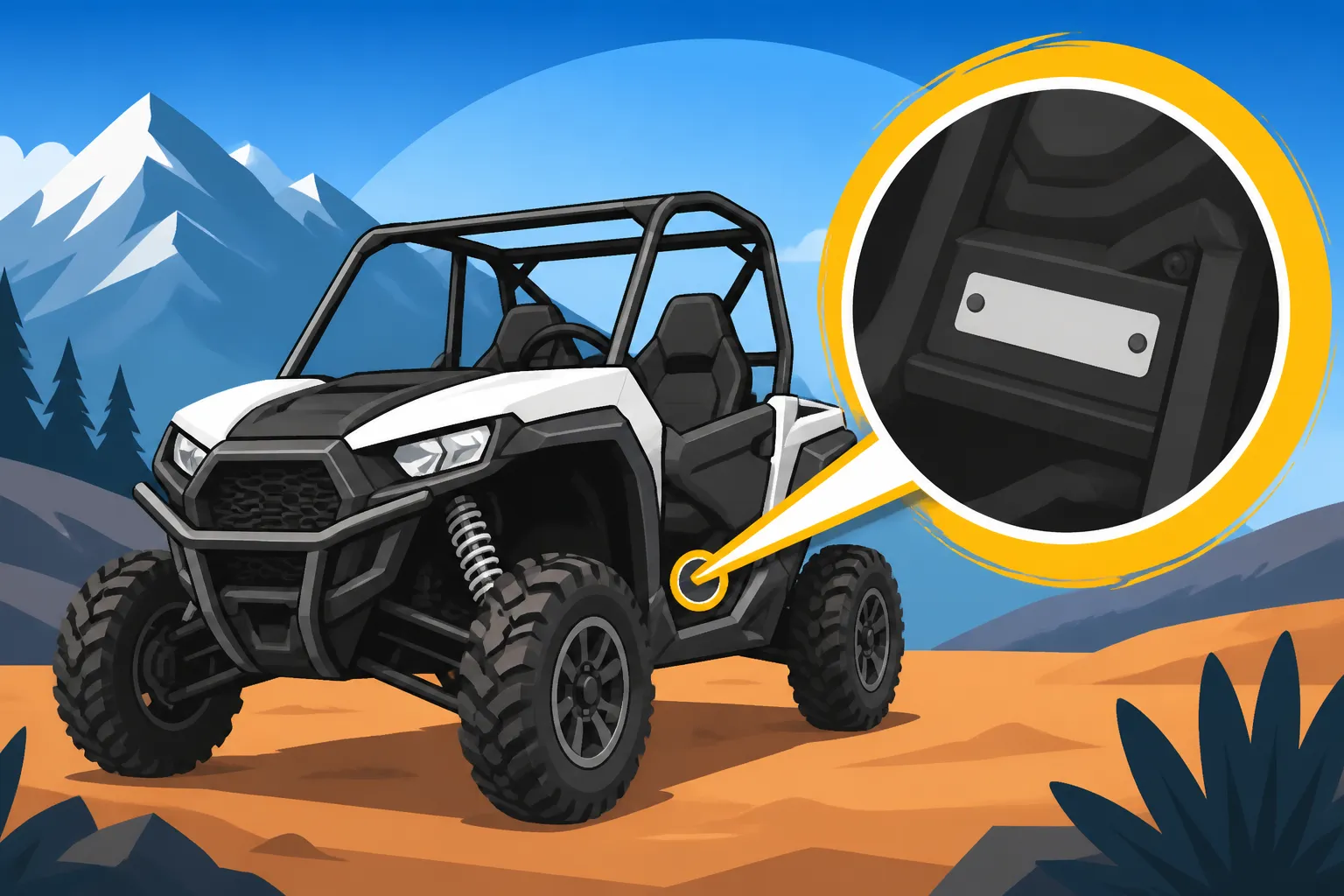
One of the most common places to find the VIN is stamped into the main frame rail, either at the front of the vehicle or towards the rear. For many side-by-sides, this means looking along the frame member just behind the front left wheel, or sometimes on the frame near the rear suspension. This spot is chosen because the frame is a primary structural component, difficult to alter or replace without significant effort.
Scenario: You’re in your garage with your tools, ready to find that VIN. Start by getting down low near the front wheels. Look for a thick metal beam that runs front to back. Sometimes, it’s on the passenger side, but often it's on the driver's side. You might need to wipe away some dirt or mud, or even brush off a little surface rust. The VIN is usually stamped directly into the metal, not on a sticker that could peel off. Be prepared to shine a flashlight into tight spots, as it might be tucked away slightly.
Engine Compartment or Firewal
Another popular spot for VIN placement is within the engine compartment or on the firewall. This location offers a bit more protection from direct trail impacts, though it can still accumulate plenty of dust and grease. The firewall is the metal barrier separating the engine from the passenger cabin.
Scenario: For this location, you'll need to open the hood (if your side-by-side has one) or remove the engine access panel. Once you have a clear view of the engine bay, look for a metal plate or a stamped area on the frame structure around the engine. Sometimes, it’s on the frame cross-member that runs above the engine, or even on the engine block itself, though this is less common for the primary VIN. Again, a good flashlight is your best friend here, and you might need a rag to clear away any engine grime to make the numbers legible.
Driver's Side Pillar or Inside the Cab
Some manufacturers, particularly those designing side-by-sides with more enclosed cabins or a strong automotive influence, might place the VIN in a location similar to a car. This means looking on the driver's side door jamb (if it has a door) or on a structural pillar within the cabin.
Scenario: If your side-by-side has full doors, open the driver's side door and check the pillar where the door latches. There might be a sticker or a stamped plate here. If it's a more open design, look for a metal plate riveted to the frame structure immediately inside the driver's area, perhaps near the seatbelt anchor point or on the base of the roll cage. This spot tends to stay cleaner than the frame rails, but it can still be obscured by accessories or accumulated debris.
Here's a quick reference table for common VIN locations:
| Area to Check | Typical Location Details | Common Obstructions/Challenges |
|---|---|---|
| Main Frame Rail | Front left (driver's side) or rear left/right | Mud, dirt, rust, skid plates, accessories |
| Engine Compartment | Firewall, frame cross-member above engine, or near mounts | Grease, dust, wiring, hoses |
| Inside Cab/Pillar | Driver's side door jamb, roll cage base, dashboard | Accessories, aftermarket modifications, dirt |
| Suspension Arm | Less common, but sometimes on a major suspension component | Mud, dust, flex with movement |
Specific Brand Examples for VIN Placement
While general locations are helpful, sometimes knowing where specific brands tend to put their VINs can really narrow down your search. Keep in mind that exact locations can vary by model, year, and even specific trim levels, so always consult your owner's manual if you're truly stuck.
Polaris Side-by-Sides
Polaris, a very popular brand on Colorado trails, often places its VINs on the frame. A common spot for models like the RZR or Ranger is on the main frame rail, typically on the driver's side (left side of the vehicle when sitting in it), near the front A-arm or just behind the front wheel. You might have to peer through suspension components or even partially remove a skid plate to get a clear view. For specific guidance, you can often find information on [Where to Find the VIN on a Polaris General], which applies to many of their other models as well. Remember that these areas are prone to collecting mud and debris, so a good cleaning might be necessary.
Can-Am Side-by-Sides
Can-Am machines, known for their sporty performance, can also have their VINs stamped on the frame. Similar to Polaris, check the main frame rail on the driver's side, often lower down and sometimes closer to the rear wheel or tucked under the cargo bed. Some Can-Am models might have a secondary VIN plate or sticker in the engine compartment or on a pillar inside the cab, but the primary stamped VIN on the frame is what you're really looking for when dealing with official Colorado paperwork. Be thorough, as they can sometimes be more discreetly placed.
Yamaha and Honda Side-by-Sides
For Yamaha and Honda side-by-sides, the VIN is frequently found on the frame, much like other major manufacturers. For Yamaha's Wolverine or Viking series, look along the frame rail, often towards the front or middle of the machine on the driver's side. Honda's Pioneer models might have the VIN stamped on the frame near the front left wheel well or on a cross-member closer to the engine. Again, these areas are structural and usually less likely to be completely obscured, but they do require a good visual inspection and often some elbow grease to clean. Always check your owner's manual for the precise diagram.
Tips for Locating a Difficult-to-Find VIN
Sometimes, despite your best efforts, that VIN can seem impossible to find. Years of use, modifications, or just plain old dirt can obscure it. Don't give up! With a few clever tricks and the right mindset, you can usually uncover it. This is especially true when you're preparing for something like [Documents the Colorado DMV Wants for an OHV Title] where the VIN must be clearly identifiable.
Cleaning the Area Thoroughly
This might sound obvious, but it's often overlooked. Many VINs are simply hidden beneath layers of mud, dust, grease, or even surface rust. Get a stiff brush, some degreaser, and a rag, and thoroughly clean any suspected areas. Work in small sections, wiping away grime to reveal the stamped numbers. For stubborn rust, a wire brush or even a light sanding with fine-grit sandpaper might be necessary, but be careful not to damage the numbers themselves.
Scenario: You’ve spent an hour poking around, but all you see is caked-on mud from last season's high-country adventure. Grab a bucket of warm, soapy water and a scrub brush. Focus on the main frame rails, especially near the front and rear suspension points on the driver's side. Sometimes, the VIN is covered by a small plastic splash guard, so check if anything can be temporarily moved aside. A dedicated parts cleaner or engine degreaser can work wonders on greasy areas in the engine bay. It’s amazing how often a seemingly "missing" VIN simply needed a good cleaning.
Using Proper Lighting and Angles
A regular shop light might not cut it. The VIN is stamped into the metal, meaning it creates indentations. Sometimes, these indentations are easier to see with light coming from a specific angle, casting subtle shadows that highlight the numbers. A powerful flashlight, especially one with a narrow beam, can be invaluable.
Scenario: With your areas cleaned, now's the time for a flashlight. Instead of shining it straight onto the surface, try holding it at a very shallow angle, almost parallel to the metal. Move the light around, experimenting with different angles. This technique often makes the stamped numbers "pop" as the light catches the edges of the indentations. If you have a mirror on an extendable handle, it can also help you see into really tight or awkward spaces that are hard to get your head into. Even taking a photo with your phone's flash can sometimes reveal details you missed with the naked eye.
Consulting Your Owner's Manual and Online Resources
Your side-by-side's owner's manual is a treasure trove of information, and it almost always includes a diagram showing the exact location of the VIN for your specific model. If you don't have a physical copy, many manufacturers offer free digital versions on their websites. You can also find numerous forums and online communities dedicated to your specific brand or model, where other owners have likely faced the same challenge and shared photos or detailed instructions. This can be particularly helpful when trying to decipher the [Reading the Model Year Digit in an ATV VIN] or other coded information within the VIN.
Scenario: You've scrubbed, shined, and still nothing. Time to hit the manual. Look in the "Specifications" or "Maintenance" section; there's usually a dedicated paragraph or diagram about the VIN. If you're online, type "VIN location [Your Side-by-Side Make and Model]" into a search engine. You'll likely find forum discussions with pictures and step-by-step guidance from other enthusiasts. Sometimes, a video tutorial can make all the difference, showing you exactly where to look.
What to Do If Your VIN is Damaged or Missing
Discovering a damaged, altered, or seemingly missing VIN can be a stressful experience, especially when you're trying to navigate Colorado's registration and titling processes. It raises red flags for authorities and can complicate legal ownership. But there are pathways to resolve this, though they require patience and diligence. [Fixing a Wrong VIN on a Colorado Title] is a related but distinct issue that can also arise from VIN problems.
Reporting Damage or Suspected Tampering
If your VIN appears intentionally altered, ground off, or otherwise tampered with, this is a serious issue and you should immediately report it to local law enforcement. Tampering with a VIN is illegal and suggests the vehicle might be stolen or involved in other illicit activities. Do not attempt to fix or alter the VIN yourself. If the damage is accidental (e.g., rust corrosion from trail riding, or impact from a rock), documentation is key. Take clear photos of the damage and be prepared to explain the circumstances to the Colorado Department of Revenue (DOR) or Colorado Parks and Wildlife (CPW). They may require a physical inspection by an authorized VIN inspector.
Scenario: You found the VIN, but half the numbers are rusted away, or it looks like someone tried to grind off a section. Your first call should be to your local Sheriff's office or police department. They will investigate and provide you with a report, which will be essential for any subsequent steps with the DMV. If it's just heavy corrosion, document it with photos from multiple angles. When you go to the DMV, they will likely direct you to a VIN inspection station, often staffed by Colorado State Patrol, to verify the remaining numbers and confirm there's no foul play.
The Bonded Title Process for Unclear Ownership
If you've purchased a side-by-side without a clear title, or if the VIN issues make it impossible to prove legal ownership in Colorado, you might need to pursue a bonded title. This process essentially allows you to obtain a title for a vehicle where the ownership history is murky or the original title is missing and cannot be replaced. It's a legal safeguard for both you and the state. You’ll typically need to apply to the DOR, provide proof of possession, and purchase a surety bond, which protects previous owners or lienholders if they come forward later. [Bonded Title for an ATV in Colorado] provides more detail on this specific process.
Scenario: You bought a vintage side-by-side from a private seller years ago, and they didn't have a title, just a handwritten bill of sale. Now you want to register it, and the VIN is hard to read. After exhausting all efforts to find the original title or prior owner, the Colorado DOR will likely guide you toward a bonded title. You'll need to fill out specific forms, present any proof of purchase you have (like that bill of sale – maybe even a template from LawDepot if it's well-detailed!), and then secure a surety bond from an insurance company. This bond is usually for 1.5 to 2 times the vehicle's value. After a few years, if no one else claims ownership, the bond is released, and you get a clear title.
Dealing with Rebuilt or Salvage Machines
A side-by-side with a "rebuilt" or "salvage" title indicates it was previously deemed a total loss by an insurance company due to significant damage. While legal to own and register in Colorado, these machines require special attention. The VIN will still be present, but the title will carry a "salvage" or "rebuilt" brand. Before you can register a rebuilt machine, it often needs a thorough inspection by the Colorado State Patrol to ensure it's roadworthy and safely repaired. This is important to understand when purchasing, as [What a Rebuilt Title Means for a Buyer] can impact resale value and insurance coverage.
Scenario: You're looking at a great deal on a side-by-side online, but the seller mentions it has a rebuilt title. This isn't necessarily a deal-breaker, but it means extra steps. When you take it to the DMV for [Titling an OHV at the Colorado DMV], they'll see that "rebuilt" designation. You'll likely need to schedule a certified VIN inspection with the Colorado State Patrol, who will meticulously check that the repairs were done correctly and safely, and that all major components are from legitimate sources. They'll also verify the VIN is intact and matches the title paperwork. Be prepared with receipts for any parts used in the rebuild.
Verifying Your VIN for Colorado Paperwork
Once you’ve successfully located your VIN, the job isn’t quite done. You need to verify that it’s correct, legible, and matches any existing documentation. This step is critical for avoiding errors in your Colorado registration and titling, and it’s especially important when you’re dealing with a private sale where you’re responsible for all the paperwork, like when doing [Colorado OHV Registration After a Private Sale].
Cross-Referencing with Existing Documents
Before heading to the DMV or CPW vendor, always cross-reference the VIN you found on the machine with any existing documents you have. This includes the bill of sale, the previous owner's title, and any insurance cards or past registration papers. Every single digit and letter must match perfectly. Even one incorrect character can lead to delays or rejection of your application. If you’re creating a new bill of sale, perhaps using a template from a service like LawDepot, ensure you transcribe the VIN exactly. This attention to detail can prevent a lot of grief down the line.
Scenario: You've found the VIN on your used side-by-side and written it down. Now, pull out the title the seller gave you. Compare the VIN on the title, letter by letter, number by number, with what you copied from the machine. Then, look at the bill of sale. Do all three match? What about the lien release if there was a loan? If you find a discrepancy, no matter how small, stop and investigate immediately. It could be a simple typo, or it could be a sign of a deeper issue. Contact the seller if possible, or consult the DMV about how to proceed with a VIN discrepancy. A simple error on a document like a [Colorado ATV Bill of Sale Template] can cause significant registration delays.
Dealer Verification or VIN Inspection
If you’re purchasing your side-by-side from a licensed Colorado dealer, they will typically handle the VIN verification as part of their sales process. They have the tools and expertise to find the VIN and ensure it’s correctly recorded. However, if you’re buying privately or have any doubts, Colorado offers official VIN inspections. These inspections are often performed by the Colorado State Patrol or authorized VIN inspectors at certain DMV locations. They will physically examine the machine, verify the VIN, and check for any signs of tampering, giving you an official document confirming its legitimacy. This is a crucial step when you want to ensure you're doing your due diligence, especially when [Running a Serial Number Before You Buy].
Scenario: You bought a side-by-side from a friend, and they've misplaced their old registration, so you only have the title and a signed bill of sale. To be absolutely sure everything is correct before spending time at the DMV, you might opt for a VIN inspection. Schedule an appointment with the Colorado State Patrol or check with your local county motor vehicle office for authorized VIN inspection sites. An officer will inspect your machine, confirm the VIN's legitimacy, and provide you with a form that states the VIN has been verified. This official verification can smooth out your [Titling an OHV Through the Colorado Department of Revenue] process immensely.
What Happens if the VIN on Your Machine Doesn't Match the Title?
This is a serious problem that needs immediate attention. If the VIN stamped on your side-by-side doesn't match the VIN on the title you received, you have a major issue with ownership proof. It could be a simple clerical error from a previous sale, or it could indicate that the title belongs to a different vehicle entirely, or even that your machine is stolen. Do not proceed with registration until this is resolved. You'll need to contact the seller, provide them with the discrepancy, and request clarification or a corrected title. If the seller is unresponsive or unhelpful, you may need to involve law enforcement and the Colorado Department of Revenue to investigate the discrepancy. This is a scenario where seeking legal advice or professional assistance with documentation (perhaps through a platform like LawDepot for custom letters or affidavits) can be extremely valuable. The last thing you want is to discover you own a machine without clear, legal title.
Disclaimer
This article is for general informational purposes only and does not constitute professional advice. Laws, prices and regulations vary by location and change over time. Consult a qualified professional for guidance on your specific situation.