Search and Rescue OHV Access
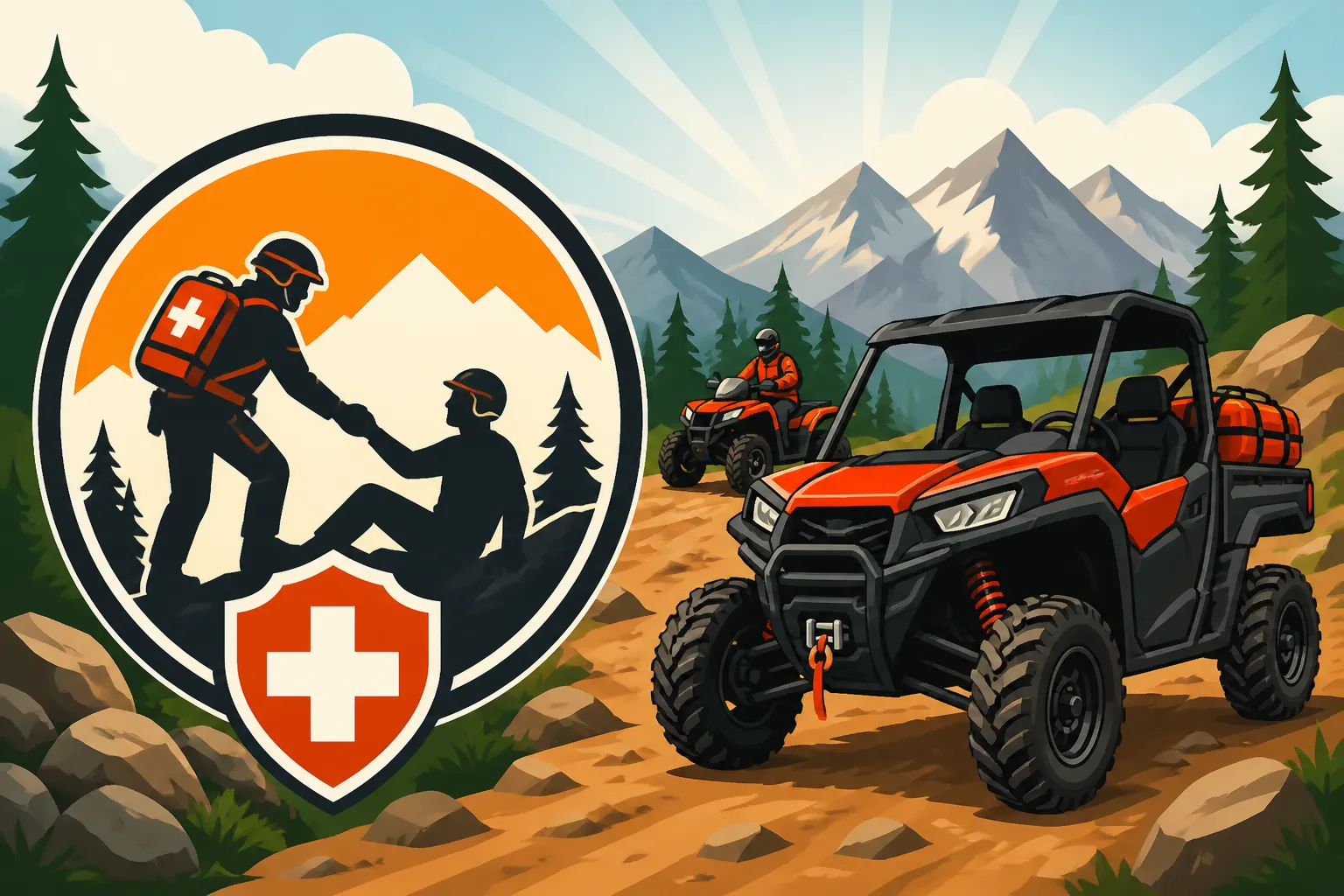
A search-and-rescue call can put an ATV or UTV in the middle of a time-sensitive operation, but emergency work does not automatically make every route open or every machine exempt from ordinary rules. In Colorado, the key questions are who authorized the ride, where it will go, and whether the vehicle is being used as part of an official response or for recreation.
What counts as authorized search-and-rescue access
Search-and-rescue access is different from a private rider deciding to help. A volunteer or agency member should respond through the organization coordinating the incident, such as the local sheriff’s office or designated incident command. That coordination helps establish the mission, routes, staging points, communications plan, and which land managers need to be involved.
An ATV or UTV may be useful when a team needs to move people, medical supplies, communications equipment, or other gear over terrain a standard vehicle cannot reach. But the fact that a machine is useful—or that a rider is a trained volunteer—does not by itself authorize travel on a closed road, across private land, or beyond a gate.
For an active incident, follow the instructions of the coordinating agency and the people managing the response. They can clarify whether a route is approved, whether a closure can be entered for the mission, and whether the machine and operator meet the team’s requirements. If you are not assigned to the operation, do not enter the scene or follow rescuers onto a trail. Extra vehicles can obstruct access, complicate communications, and create another person for responders to manage.
If you encounter someone who may need rescue, call 911 and share the location as accurately as possible. Do not assume that driving toward the person is the fastest or safest way to help. A dispatcher or response leader can tell you what information is useful and whether you should stay put, meet responders at a staging area, or take another action.
It is also important to distinguish an organized response from a training exercise or a personal ride. A team’s training plan may have its own permissions and land-manager arrangements. A volunteer riding a personal machine to a recreational destination is not necessarily covered by those arrangements just because the rider belongs to a search-and-rescue team.
Permits, registration, and land access are separate questions
A permit or registration addresses vehicle requirements; it is not a general pass to use every trail or road. In Colorado, resident and nonresident riders should check which credential applies to their machine and the land where they plan to ride. The overview in Colorado Parks and Wildlife OHV Registration Explained can help clarify the difference between registration and a permit, while Colorado OHV Permit Rules on Public Land covers the broader public-land context.
| Situation | What to clarify before riding | Why it matters |
|---|---|---|
| A volunteer is dispatched on a personal ATV or UTV | Whether the incident coordinator has assigned the rider and approved the machine and route | Membership alone does not confirm that a particular trip is part of an authorized response |
| An agency-owned machine is used | Which agency rules, operating procedures, and land-manager arrangements apply | Official use may be handled differently from recreational riding, but the details depend on the agency and location |
| A team is training | Whether the exercise has been approved for the route, date, and type of vehicle | Training is not the same as an active rescue and should not be treated as automatic access |
| A rider encounters a closed route during a response | Who can authorize entry and what route or limits apply | A closure sign or gate should not be bypassed based on a rider’s own judgment |
| A machine is used before or after the mission for personal recreation | Which ordinary registration, permit, and route rules apply | A response assignment does not turn unrelated riding into official use |
Do not assume that a government or emergency-response exemption applies to a privately owned ATV or UTV. The operator’s role, the vehicle’s ownership, the purpose of the trip, and the agency’s authority may all matter. For official use, teams should get direction from their agency and confirm relevant requirements with the land manager. For personal use, follow the standard rules for the machine and location.
That distinction matters on federal, state, county, and private land. A road may be open to the public but unsuitable for a particular machine, or it may be closed to motorized travel altogether. Land ownership does not always match what a rider sees on the ground, and a route that appears to continue through a gate may have different rules on either side. Forest Service Permits Colorado Riders Need and BLM Permit Rules in Colorado are useful starting points for understanding land-specific requirements, but an emergency assignment still needs to be coordinated with the responsible agency.
How to coordinate a machine before and during a response
The best time to settle access questions is before a callout. Teams that expect to use ATVs or UTVs can make a plan for machine approval, transport, communications, equipment, route authorization, and staging. Individual volunteers can ask their team what to do with a personal machine rather than deciding at the trailhead.
A practical pre-incident checklist includes:
- Confirm the response chain. Know who can dispatch you and who assigns tasks during an incident. If you receive an alert but are not sure whether you are needed, contact the listed coordinator rather than self-deploying.
- Ask whether your machine is approved. Teams may have requirements for capacity, maintenance, lighting, safety equipment, passenger space, or cargo. A vehicle that is capable of reaching a location may still be unsuitable for the task.
- Clarify the route and access authority. Find out which roads or trails are approved, where to stage, and who can answer questions about gates, closures, or landowner permission.
- Check credentials and documents. Keep the machine’s required registration or permit current for ordinary riding, and ask the agency what documents or identification are needed during an official deployment. Do not assume a response assignment replaces paperwork that is otherwise required.
- Agree on communications. Follow the team’s radio and check-in procedures. A rider who leaves the assigned route or cannot be contacted can create a new search problem.
- Plan for recovery and transport. Determine how the vehicle will get to the staging area, what happens if it breaks down, and whether it can be safely loaded or recovered from the terrain.
- Know the limits of your assignment. A search task, transport task, or supply run may have different risks. Do not take on medical, technical, or driving duties beyond your training and authorization.
During a response, use the route and operating limits set by the incident coordinator. A shortcut that looks obvious on a map can cross private property, enter a sensitive area, or put the vehicle into terrain that is unsafe for recovery. If the assigned route is blocked, stop and report the problem. Do not create a new route around a gate or closure unless the appropriate response leader or land manager directs you to do so.
Weather and trail conditions can change quickly in Colorado. A route that is passable for a full-size emergency vehicle may be too narrow, steep, or unstable for an ATV or UTV, and a machine that reaches a scene may not be able to turn around or get back out. Consider altitude, snow, mud, water, loose rock, exposure, and the availability of a safe recovery point. Colorado Trail Conditions Reports can help with trip planning, but incident-specific decisions should be made with the response team and current information.
Keep other trail users in mind as well. People may not expect an emergency vehicle on a narrow trail, and dust, noise, or a fast approach can create hazards. Slow down where visibility is limited, make room when it is safe, and follow any instructions from responders managing traffic or access. If the mission involves road travel, do not assume that an OHV permit authorizes use of a public road; route rules and local restrictions still matter. See Riding an OHV on the Road in Colorado for the separate road-access issues.
What to do if you are a rider who finds an emergency
Finding an injured or stranded person while riding can be unsettling. The most useful first step is usually to contact 911, provide the clearest location you can, and follow the dispatcher’s instructions. A trail name, nearby junction, route marker, GPS coordinates, or recognizable landmark may help responders narrow down the search area. If you are unsure of your coordinates, explain what you can see rather than guessing.
Avoid sending several riders in different directions to search without coordination. That can make it harder for the response team to know who is where, and riders may lose contact or become stuck. If you have a safe way to remain reachable, keep your phone or radio available and tell the dispatcher if your location changes.
Do not move an injured person unless there is an immediate danger or a qualified responder instructs you to do so. If you are trained in first aid, provide help within your training while waiting for responders. Keep the trail clear for arriving vehicles when possible, and do not block a staging area or access route with your machine or trailer.
If you are asked to guide responders from a known point, confirm the meeting place and stay in contact. Do not lead them along a route you have not checked or that may be closed. A rider who knows the area can provide useful local information, but the response coordinator should decide how that information is used.
When the incident is over, keep any follow-up riding separate from the rescue. A volunteer may be returning to a staging point under instructions, but that does not make later recreational use part of the mission. For ordinary riding, check the relevant credential, route status, and land rules again. If you are uncertain whether an operation’s authorization covered your machine or route, ask your team or agency contact before assuming that future trips have the same access.
The safest working rule is straightforward: take part through the coordinating organization, use only the routes and access arrangements it approves, and treat permits as vehicle credentials rather than permission to enter any closed area. For a broader look at what officials may ask during a stop, see Colorado Ranger Checks at a Trailhead. If an incident results in a crash, the reporting process is a separate concern covered in Colorado OHV Crash Reporting Rules.
Disclaimer
This article is for general informational purposes only and does not constitute professional advice. Laws, prices and regulations vary by location and change over time. Consult a qualified professional for guidance on your specific situation.