Becoming a Licensed OHV Guide
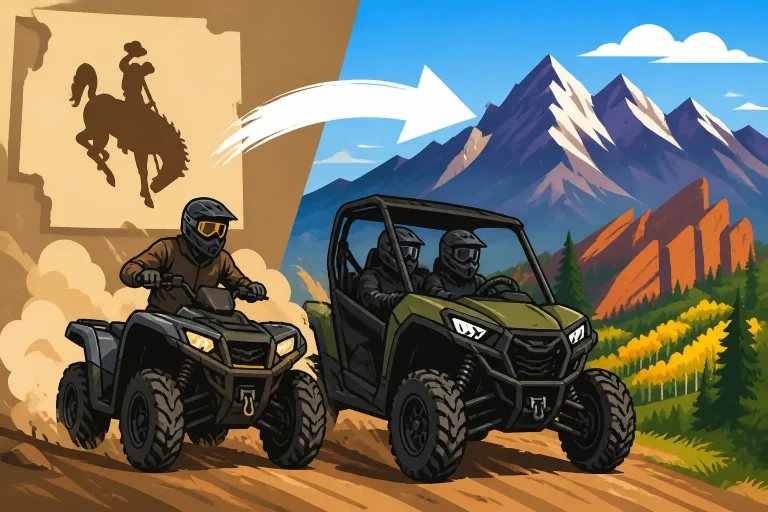
If you want to lead paid ATV or UTV rides in Colorado, the first challenge is figuring out what “licensed” means. There may not be one statewide OHV-guide license that covers every trail. Instead, you may need separate approvals for the land, route, business, and machines involved. Here’s how to identify the requirements before you advertise or take clients out.
What a Colorado OHV guide may need
“Licensed OHV guide” can mean different things: a business authorization, permission to guide on public land, approval to use particular roads or trails, or simply a trained and insured guide. Don’t assume a single credential covers all of them.
The main question is whether you’ll provide a paid or organized service on land managed by a public agency. A trip on a national forest, BLM land, state land, or a town road can involve different rules. Commercial use may require an agency authorization even if every customer’s machine has the right registration or permit. Some operations may also need local business approvals or other permissions.
Start by defining the service clearly:
- Will clients ride your machines, or bring their own?
- Will you charge for guiding, instruction, rentals, transportation, or a package?
- Which exact roads, trails, and staging areas will the group use?
- Does the route cross land managed by more than one agency?
- Will the trip include town streets, county roads, or only designated trails?
- How often will trips run, and how many machines will be in each group?
These details affect which offices to contact and what permissions to ask about. For example, a guide who leads customers on a designated trail may face different requirements from a rental operator who provides machines and directs customers toward a route. A route that crosses multiple jurisdictions may require more than one authorization.
| Part of the operation | What to confirm | Why it matters |
|---|---|---|
| Guiding activity | Whether paid or organized guiding needs authorization | Public-land commercial use may be treated differently from personal recreation |
| Route | Which agency or local government manages each segment | Permission from one land manager may not cover another |
| Business | Local registration, tax, or operating requirements | These are separate from land-use approval |
| Machines | Registration, permits, and safe operating condition | A guide’s approval does not automatically cover each vehicle |
| Risk management | Insurance, client instructions, and emergency planning | Commercial trips add responsibilities beyond a casual group ride |
If you’re trying to understand the land-use side, start with Colorado Outfitter Permits and Guided Rides and Commercial Outfitter Permits in Colorado. Treat those as starting points, not proof that a permit or license is—or isn’t—required for your particular route.
Identify every land manager on your route
A route name or trailhead does not tell you the full jurisdiction. A ride might start on a county road, continue onto federal land, and pass near a town with its own OHV restrictions. Before you take bookings, map the complete route and check the rules for every part.
Contact the agency responsible for the route
For a route on national forest land, ask the relevant Forest Service office whether your proposed commercial activity needs authorization and what process applies. A guide operating on BLM-managed land should ask the responsible BLM office about commercial use and recreation-permit requirements. The specifics can depend on the activity, location, frequency, group size, and services provided.
Useful background includes Special Use Permits on Colorado Forest Land and BLM Special Recreation Permits in Colorado. An agency may need to review the proposed route, operating plan, group size, timing, resource impacts, and safety procedures. Ask what documents are required, whether the proposed route is available for commercial use, and whether an authorization covers the whole operation or only specified activities and areas.
Do not treat a personal OHV permit as commercial authorization. A permit or registration that lets an individual ride may not allow a business to conduct paid trips on public land. The reverse is also true: an agency’s commercial-use approval does not necessarily replace the registration or permit requirements for each machine. For background on rider permits, see Colorado Permit Rules on Public Land and Colorado OHV Permit Rules for a Guided Trip.
Check town and county road rules separately
A road that appears rideable on a map may not be open to OHVs, and a route that is open for personal travel may have conditions that affect a guided group. Towns and counties can have their own rules about which roads OHVs may use, where they can park, and when access is allowed.
Confirm whether your route uses any municipal streets or county roads, and ask the relevant local office about commercial activity as well as general OHV access. Check the current closure notices and route restrictions before each operating season; access can change. The internal resources Finding Your Colorado County’s OHV Ordinance and Colorado Towns That Let OHVs Use Their Streets can help you identify questions to ask.
Plan an alternate route if a segment closes or an agency does not authorize your activity. Do not assume you can substitute a nearby road without checking its status. A different route may cross another jurisdiction or have different rules.
Build the business and operating plan
Land-use permission is only one part of setting up a guiding business. Before opening bookings, decide what you will provide, how the business will operate, and how you will manage safety and client expectations.
Separate your business approvals from land approvals
Ask the city or county where the business is based whether you need local registration or other approvals. If you operate in more than one community, requirements may differ. Also ask how sales, rentals, or packaged services are treated for tax and recordkeeping purposes. Those questions are separate from permission to guide on a trail.
Keep written records of agency communications and approvals. Save maps, route descriptions, operating conditions, renewals, and any correspondence about seasonal restrictions. If the approved route or service changes, check with the agency before treating the old approval as sufficient. A change from guided rides to rentals, for example, may affect the activity being authorized.
Plan for insurance and responsibility
Before accepting customers, talk with an insurance professional who understands powersports and commercial guiding. Explain the actual operation: the machine types, whether clients drive, the route and terrain, passenger arrangements, any instruction provided, and whether you supply or rent vehicles. Personal coverage may not apply to a business activity, and coverage terms vary. Ask the provider what activities are covered and what exclusions or conditions apply.
An insurance certificate may be part of an agency or landowner’s application requirements, but it does not replace the authorization itself. Don’t rely on a customer waiver as a substitute for insurance, safe operating practices, or legal advice. For a broader overview of the issue, see Event Insurance for a Club Ride, while remembering that a commercial guiding operation may need different coverage from a club event.
Set clear operating and emergency procedures
A strong operating plan helps you answer agency questions and gives clients a more predictable trip. It should match the real conditions of your route, not just describe general intentions. Consider documenting:
- The approved route and any route segments clients must not leave.
- The maximum group size and how riders will be spaced.
- Machine checks, required protective equipment, and passenger limits.
- Weather, visibility, road-condition, and closure checks before departure.
- What happens if a rider cannot continue or a machine breaks down.
- How the group will communicate if riders become separated.
- The emergency contact process and the nearest practical exit points.
- How you’ll brief clients on local rules, noise, dust, wildlife, and other trail users.
Build a procedure for stopping or changing a trip when conditions make it unsafe. In mountain areas, weather, snow, road damage, and closures can change quickly. A customer’s expectation of reaching a particular destination should not override a closure or a safety decision.
Prepare the machines and clients before launch
Guides may use their own machines, customer-owned vehicles, or rentals. In each case, verify the applicable registration and permit rules rather than assuming the business authorization covers the vehicle. If you offer rental machines, confirm the additional requirements for that part of the service and describe it clearly when speaking with the land manager.
For owned or rental machines, maintain a process for checking condition before trips. Pay attention to brakes, tires, steering, lights, belts, and other parts suited to the machine and terrain. Match the vehicle to the route and the riders’ experience. A route that is manageable for one machine may be unsuitable for another because of width, capability, or operating limitations.
Be precise with clients about what the trip includes. Explain the expected duration, difficulty, passenger arrangements, machine requirements, gear, and route restrictions before they book. Make clear that riders must follow the guide’s instructions and stay on authorized routes. If clients bring their own vehicles, tell them what documents or equipment they need to check before arrival; don’t promise that a machine is compliant without verifying the relevant rules.
For a rented or guided trip, the operator should explain how the permit and machine arrangements work rather than leaving clients to guess. A guide’s commercial authorization, a rider’s OHV permit, and a machine’s registration are different matters. See Permits for a Colorado Guided Tour and [Colorado Rentals and the OHV Permit] for related questions about guided and rental trips.
Keep a pre-trip checklist for staff and customers. It can cover machine condition, protective gear, weather, route status, client briefing, emergency contacts, and confirmation that the trip stays within its authorized area. Revisit the checklist when the route, machines, services, or agency conditions change.
A practical order of operations
The cleanest approach is to confirm the operation before spending heavily on machines, advertising, or bookings.
- Write down the service. Describe what customers pay for, who supplies the machines, and what the guide will do.
- Map the route. Mark the start, finish, staging areas, roads, trails, and any land or town boundaries crossed.
- Identify the authorities. Contact each relevant land manager and local government. Ask directly whether your proposed commercial activity requires authorization.
- Get requirements in writing. Request application details, operating conditions, route limits, insurance requirements, and renewal or reporting obligations.
- Check business and insurance needs. Confirm local business requirements and discuss the full activity with an appropriate insurance provider.
- Set up machines and client procedures. Verify registration and permits, create maintenance and safety processes, and give clients accurate pre-trip information.
- Confirm before operating. Check that approvals are in place and the route remains open before accepting or running trips.
If an agency says authorization is needed, ask what activity the approval covers, which land it applies to, whether it can be transferred, and what changes would require a new review. If the answer is unclear, send a written description and map rather than relying on a brief verbal conversation. Keep a record of the response.
The main takeaway is that becoming a Colorado OHV guide is usually a process of matching your specific service to the rules for the land and route you plan to use. Confirm those requirements before taking payment. A business registration, insurance policy, or individual rider permit may solve one part of the problem, but none should be assumed to substitute for the others.
Disclaimer
This article is for general informational purposes only and does not constitute professional advice. Laws, prices and regulations vary by location and change over time. Consult a qualified professional for guidance on your specific situation.