Eye Protection Rules for Passengers
A passenger’s goggles are easy to overlook when you’re getting an ATV or UTV ready for a ride. In Colorado, eye protection matters for passengers as well as drivers, especially for riders under 18. Here’s how to think about the rules, what counts as useful protection, and what to check before leaving the trailhead.
Colorado eye protection rules for passengers
Colorado’s youth OHV safety rules apply to passengers, not just the person driving. Riders under 18 should wear eye protection when riding an ATV or UTV. A passenger doesn’t avoid the requirement by sitting behind the driver, riding in a side-by-side, or using a vehicle that has some windshield coverage.
Rules can also depend on where and how the machine is being operated. A designated public-road route may have requirements beyond those that apply on a trail, and local access rules can differ. If your ride includes public roads, check the route’s requirements rather than assuming the rules for an off-road trail cover the whole trip. Colorado Helmet and Eye Protection: What Is Actually Required explains the broader equipment rules.
For adults, it’s sensible to wear eye protection even when a particular ride or situation does not make it mandatory. Dust, grit, insects, branches, and wind can strike a passenger’s eyes quickly. In a side-by-side, passengers may face swirling dust from the rear or side, even when the driver is partly shielded.
| Passenger or vehicle situation | Practical approach |
|---|---|
| Passenger under 18 | Wear eye protection; check the helmet and eye-protection rules that apply to the route |
| Adult passenger on an ATV | Wear goggles or other suitable eye protection, especially on dusty or wooded trails |
| Passenger in a UTV with a windshield | Wear eye protection unless an applicable official rule clearly says the vehicle setup qualifies for an exception |
| Ride includes a public road | Check road-specific equipment requirements and local route rules |
| Glasses are the only option available | Use impact-rated protective eyewear that fits securely; ordinary prescription glasses may not shield the eyes adequately |
A helmet and eye protection serve different purposes. A helmet protects the head; goggles or another suitable eye device protect the eyes. A helmet visor can provide coverage when it is designed for that purpose and kept in good condition, but a regular cap brim or sunglasses should not be treated as a substitute for protective eyewear.
Passengers under 18 should also check the helmet rules that apply to their ride. See Do Colorado Passengers Under 18 Need a Helmet? and Colorado Rules for Riders Aged 10 to 16 for related age and supervision questions.
What counts as suitable eye protection
The right choice depends on the vehicle, route, weather, and fit. The central job is to keep particles and wind out of the passenger’s eyes while allowing a clear view. Look for purpose-made riding goggles, protective glasses, or a helmet face shield designed for the riding conditions.
Goggles
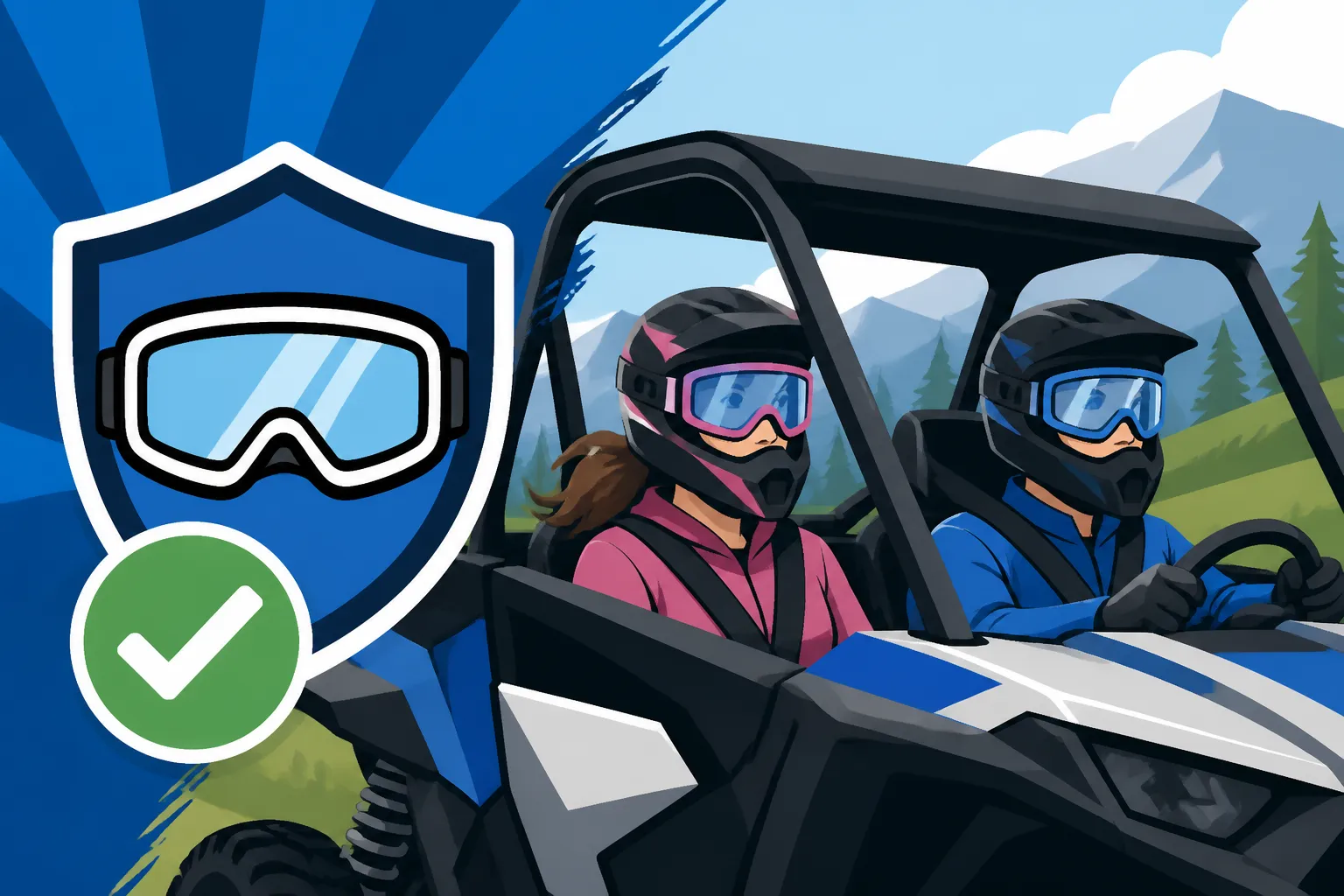
Goggles usually provide the most secure coverage for an ATV passenger. A strap helps keep them in place when the ride gets bumpy, and a close fit around the face can limit dust entering from the sides. They are especially useful on open ATVs, where riders have little protection from wind and flying debris.
Fit matters. Goggles should sit comfortably without pressing painfully on the nose or temples, and they should work with the helmet rather than being pushed out of position by it. Check that the strap holds the goggles firmly and that the lens gives an unobstructed view. If the passenger wears prescription glasses, choose goggles designed to fit over them or consider properly fitted protective eyewear made with the prescription.
Protective glasses
Protective glasses can be practical when goggles feel too warm or restrictive, but ordinary fashion sunglasses are not the same thing. Look for eyewear intended for impact protection and make sure it shields the eyes from the sides as well as the front. Glasses that slide down, leave large gaps, or fog easily may be a poor choice for a rough or dusty ride.
Tinted lenses can help in bright sun, but they may make it harder to see in shade, under trees, or late in the day. Clear lenses are often the more versatile choice when light changes frequently. Whatever the tint, the passenger needs to be able to see the trail surface, other vehicles, and signals from the driver.
Face shields and UTV windshields
A face shield attached to a helmet can provide useful coverage, provided it is designed for riding and stays securely in place. Keep it clean and replace it if it becomes badly scratched or cracked. Scratches can scatter light and make it harder to see obstacles, especially when riding toward the sun.
A UTV windshield can reduce direct wind and debris, but it does not necessarily protect every passenger from dust or particles. Wind can enter from the sides or rear, and an open or partial windshield offers less coverage than a fully enclosed cab. Don’t assume that having a windshield automatically makes eye protection unnecessary. Check the official rule for the particular vehicle and route, and use eye protection as the safer default.
For related equipment questions, see Seat Belts in a Side-by-Side and Carrying a Passenger on a Quad. Passenger protection depends on more than eyewear: the vehicle needs to be suitable for carrying that person, and the passenger needs to use the safety equipment provided.
Choosing and using passenger eye protection
The best eyewear is the kind that fits the passenger, stays in place, and is actually worn for the whole ride. A pair that seems comfortable in the parking area may become irritating after an hour of dust, vibration, and changing weather. Try the fit with the helmet before the trip, not after the vehicle is already moving.
- Match the eyewear to the vehicle. An ATV passenger may need close-fitting goggles, while a UTV passenger may prefer protective glasses or a helmet shield that works with the vehicle’s setup.
- Check the fit with the helmet. Put on the helmet and eyewear together. Make sure the helmet does not push the goggles away from the face or make the strap slip.
- Choose a lens for the conditions. Clear lenses work well when light changes. Tinted lenses can be more comfortable in bright sun, but avoid a tint that makes shaded trail sections hard to see.
- Inspect the eyewear before riding. Look for cracks, loose straps, damaged foam, deep scratches, or dirt that blocks the passenger’s view.
- Bring a way to clean it. A clean microfiber cloth and a suitable lens cleaner can help remove dust without scratching the lens. Avoid wiping grit across a dry lens.
- Carry a backup option. A spare set of goggles or protective glasses can prevent a minor breakage or fit problem from ending the ride.
If buying replacement eyewear online, including through Amazon, check the product description for impact-protection details, fit information, and compatibility with the passenger’s helmet. Don’t select a pair based on appearance alone. A low-cost pair that doesn’t fit securely or protect the sides of the eyes may be poor value if the passenger won’t wear it.
Eyewear also needs to stay usable throughout the ride. Dust and mud can obscure vision; fogging can happen when the temperature changes or the vehicle slows. Keep a cloth available, and stop in a safe place to clean or adjust eyewear rather than asking a passenger to remove it while the vehicle is moving. If the passenger’s goggles keep fogging, check ventilation and fit, and consider lenses or goggles designed for the conditions.
For younger passengers, the adult organizing the ride should make the check before departure. Confirm that the eyewear fits the child, that the helmet is properly secured, and that the child can see comfortably through the lens. A quick fit check is particularly important when borrowing or sharing equipment. More age-related riding details are covered in Colorado Age Rules for Young OHV Riders and Eye Protection Rules for Young Colorado Riders.
If a trip crosses between a trail and a road, or uses a machine with an out-of-state plate, don’t assume another state’s rules settle the question. Colorado’s route and equipment rules still need to be checked for the ride taking place in Colorado. Colorado Rules for a Side-by-Side With Utah Plates covers one related out-of-state vehicle question, while Colorado OHV Road Rules for Young Riders addresses youth riders on road routes.
A practical rule is simple: equip every passenger with protective eyewear that fits, and be especially careful to meet the requirements for riders under 18. Before setting out, confirm the current rules with Colorado Parks and Wildlife and check any local requirements for the roads or trails on your route. That small step helps avoid a preventable stop and, more importantly, keeps a passenger’s vision protected.
Disclaimer
This article is for general informational purposes only and does not constitute professional advice. Laws, prices and regulations vary by location and change over time. Consult a qualified professional for guidance on your specific situation.