Does a Colorado Bill of Sale Need Notarizing?
Buying or selling an ATV or UTV in Colorado can feel like navigating a minefield of paperwork. You're excited about your new machine, or perhaps relieved to have sold your old one, but then the questions start: "Did I sign everything correctly? Do I need to get this document stamped by a notary? What exactly does the state expect from me?" This guide is here to untangle one of the most common anxieties surrounding private sales in the Centennial State: whether your Colorado ATV or UTV bill of sale needs to be notarized. We'll clear up the confusion and give you the straightforward answers you need for a smooth transaction.
The Basics of a Colorado ATV/UTV Bill of Sale
Before we dive into the notarization specifics, let's lay the groundwork for what a bill of sale actually is and why it's so important in Colorado, especially when dealing with your beloved off-highway vehicles (OHVs).
What Exactly Is a Bill of Sale For an OHV?
Think of a bill of sale as the undisputed proof that a transaction actually happened. It’s a legally binding document that records the transfer of ownership of an item—in this case, your ATV or UTV—from one person to another. It’s not just a formality; it’s your key piece of evidence that you either bought or sold the machine, and it serves several critical purposes. For the buyer, it acts as [Proof of Ownership for a Colorado OHV], which you'll need for various steps, including eventually registering the machine with Colorado Parks and Wildlife (CPW) and potentially titling it with the Department of Revenue. For the seller, it proves that you no longer own the machine, protecting you from any liability for its use after the sale date.
A robust bill of sale will always include several key pieces of information. This isn't just a scribble on a napkin; it needs to clearly identify both the buyer and seller with their full legal names and addresses. It must accurately describe the OHV, including the make, model, year, and—critically—the Vehicle Identification Number (VIN). Without the VIN, you're essentially just selling an idea, not a specific machine. The purchase price, the date of the sale, and the signatures of both parties are also absolute must-haves. These details prevent disputes later on, ensuring everyone is clear on the terms of the transfer.
Having a clear and comprehensive bill of sale protects both the buyer and the seller from misunderstandings or potential legal issues down the line. Imagine a scenario where a buyer later claims the price was different, or a seller faces a ticket for an OHV they no longer own. The bill of sale is your official record, a legal shield. This is especially true when you're navigating the process of [Buying a Used ATV in Colorado: The Paperwork], where a solid paper trail is your best friend.
Why Paperwork Feels So Confusing in Colorado
It’s completely understandable to feel overwhelmed by the paperwork required for OHV transactions in Colorado. Our state has a unique system where different agencies handle different aspects of vehicle ownership. You've got Colorado Parks and Wildlife (CPW) for OHV registration, which focuses on ensuring your machine is permitted for trail use. Then there's the Colorado Department of Revenue (DOR) and its Division of Motor Vehicles (DMV) that handles titling, which is about proving legal ownership. These overlapping, yet distinct, requirements can make even experienced riders scratch their heads.
Adding to the complexity is the general anxiety that comes with any significant purchase or sale. You want to make sure you’re doing everything by the book to avoid future headaches, fines, or even losing your machine. The fear of missing a crucial signature, an important date, or an official stamp can be paralyzing. Many people assume that for any "official" document, a notary's seal is absolutely essential, because it adds that extra layer of governmental blessing.
This widespread belief often leads to the specific question we're addressing today: "Does my bill of sale need to be notarized?" The answer isn't always a simple "yes" or "no" across all documents, which only fuels the confusion. Understanding which documents actually require a notary, and which merely benefit from one, can save you a lot of time and unnecessary trips.
The Notarization Question: Is It Required for a Colorado ATV/UTV Bill of Sale?
Now for the million-dollar question that brings so many people here: does that bill of sale for your ATV or UTV need to be notarized in Colorado? Let's get to the heart of it.
The Short Answer and Why It Matters
Here’s the straightforward truth: In most private party sales of an ATV or UTV in Colorado, the bill of sale itself does not need to be notarized to be considered legally valid or to facilitate the registration and titling process with state agencies. That's right, you typically won't need to hunt down a notary public just to finalize the sale of your quad or side-by-side.
Colorado law generally doesn't mandate notarization for a simple transfer of ownership between private individuals for vehicles like OHVs. The core requirement is clear intent and agreement between buyer and seller, evidenced by their signatures. This means that as long as your bill of sale includes all the essential information we discussed earlier—buyer and seller details, machine description, VIN, price, date, and both signatures—it should be perfectly acceptable as a legal document. Knowing this can save you a frantic search for a notary on a Saturday afternoon when you just want to get your deal done!
When Notarization Can Still Be a Good Idea (Even If Not Required)
While notarization isn't typically required, there are definitely situations where it can still be a really smart move, providing an extra layer of security and peace of mind for both parties involved in the transaction. Think of it as an optional upgrade to your paperwork security system.
For instance, if you're dealing with a particularly high-value machine, say a top-of-the-line side-by-side that costs as much as a small car, the added assurance of a notary can be invaluable. A notary public verifies the identity of the signers and witnesses their signature, which makes it much harder for someone to later claim they didn't sign the document or that their signature was forged. This extra layer of authenticity is a powerful deterrent against fraud and can protect both parties from future legal disputes.
Another scenario where notarization could be beneficial is if there's any distrust between the parties, or if one party is located out of state and the transaction is being handled remotely. In such cases, having a neutral third party (the notary) confirm the identities and signatures adds a level of undeniable legitimacy to the document. Even if not mandated, some people simply prefer the added formality and security a notary provides. Many comprehensive bill of sale templates, like those you might find on LawDepot, will even include a section for notarization, giving you the option to use it if you choose, even when it's not strictly necessary. It’s all about enhancing the integrity of your transaction.
The Difference Between a Bill of Sale and a Vehicle Title
It's super important to differentiate between a bill of sale and the vehicle title, as their requirements can vary significantly. While your bill of sale generally doesn't need notarization for a private ATV/UTV sale in Colorado, the title transfer process is a different beast entirely and often has its own very specific requirements that sometimes do involve notarization or certified agents.
The bill of sale is your proof of purchase, documenting the transaction. The title, on the other hand, is the official government document that establishes legal ownership. When you buy an OHV, the seller must sign over their existing title to you. This is the primary document the Department of Revenue (DOR) will look at when you go to get the title transferred into your name. While the bill of sale acts as supportive evidence, the title itself is paramount for official ownership transfer.
Sometimes, for specific circumstances like applying for a [Bonded Title for an ATV in Colorado] or dealing with certain lien releases, the Department of Motor Vehicles (DMV) may require specific forms or sections of forms to be notarized. These are usually forms provided by the state, not the bill of sale you drafted yourself. So, while you might not need a notary for the initial sale document, keep in mind that other parts of the overall [Titling an OHV at the Colorado DMV] process could still involve one. Always check the specific requirements with the Colorado DOR for titling and Colorado Parks and Wildlife (CPW) for [Colorado Parks and Wildlife OHV Registration Explained] to ensure you're covering all your bases. Knowing this distinction is key to avoiding unnecessary trips and confusion!
What Colorado Agencies Do Require for ATV/UTV Sales
Now that we've cleared up the notarization question for your bill of sale, let's look at what the various Colorado agencies do expect when you're buying or selling an ATV or UTV. Understanding their priorities will help you prepare the correct documentation.
Colorado Parks and Wildlife (CPW) Registration Requirements
When it comes to hitting the trails in Colorado, your OHV needs to be registered with Colorado Parks and Wildlife (CPW). This registration is essentially a permit for public land use, and a valid bill of sale is absolutely crucial for this process, acting as your primary [Proof of Ownership for a Colorado OHV]. However, here's the good news again: CPW generally does not require a notarized bill of sale for you to register your machine. Their focus is on the legitimate transfer of ownership and the accurate identification of the vehicle.
What CPW does care about is that the bill of sale clearly identifies the machine you're registering. They'll be looking for the Vehicle Identification Number (VIN) to match what's on the machine, along with the make, model, and year. They also need to see who bought it, who sold it, and the date of the transaction. This information allows them to properly record your ownership and issue the correct registration sticker. As long as your bill of sale contains all these details, is legible, and is signed by both the buyer and seller, you should be all set for the registration step.
So, while you're standing in line at the CPW office or submitting your registration online, don't sweat the notary seal on your bill of sale. Focus on making sure every other detail is accurate and complete. A well-prepared bill of sale, even without a notary, is your golden ticket to getting your machine legal for the trails. For more details on this process, you can refer to [Colorado Parks and Wildlife OHV Registration Explained].
Colorado Department of Revenue (DOR) Titling Requirements
The other major player in Colorado OHV paperwork is the Department of Revenue (DOR), specifically the Division of Motor Vehicles (DMV), which handles the titling of your off-highway vehicle. While CPW manages registration for trail use, the DOR is concerned with the official legal ownership of your machine. This is where things can feel a bit more formal, but again, the need for a notarized bill of sale is generally not present.
For titling an OHV, the most critical document you'll present to the DOR is the properly endorsed (signed over) certificate of title from the previous owner. This signed title is the direct chain of ownership transfer. Your bill of sale acts as a supporting document, confirming the transaction details, the price paid (which is important for calculating [Colorado Sales Tax on an ATV Purchase]), and the date of sale. It's proof that you legally acquired the machine, bolstering your claim when you present the signed title.
In certain, less common situations, the DOR might have specific forms that do require notarization. For example, if the original title is lost and you're applying for a bonded title, or if there's a complex ownership issue, there might be state-specific affidavits that a notary must witness. However, for a standard private sale where the seller has a clean title in hand and simply signs it over, the bill of sale itself does not typically need to be notarized. The emphasis is on a clear, legal transfer of the existing title. If you're unsure about your specific situation, it's always best to check the official DOR website or contact your local county DMV office, especially if you're dealing with [Titling an OHV at the Colorado DMV].
Common Pitfalls to Avoid Without Notarization
Since notarization isn't typically required for a Colorado ATV/UTV bill of sale, it places a greater emphasis on ensuring the document itself is absolutely solid. Without the notary's verification, any sloppiness in the paperwork can lead to headaches down the line. One of the biggest pitfalls is illegible handwriting. Imagine trying to read a scrawled VIN or an unclear buyer's address – it can cause delays at the DMV or CPW, or even lead to questions about the validity of the sale. Always insist on clear, printed information if handwriting is used.
Another crucial step is to gather copies of identification from both the buyer and the seller. While you won't have a notary verifying identities, taking a clear photo or copy of each other's driver's license (or other government-issued ID) can provide an important record if any questions arise later. This simple act acts as a personal safeguard against potential disputes or claims of false identity.
Furthermore, using a vague or incomplete bill of sale is a recipe for disaster. Don't just jot down "ATV sold for $X." Ensure every detail we've discussed—full legal names, addresses, purchase price, date, VIN, make, model, and year—is explicitly written. A comprehensive bill of sale form, perhaps one obtained from a reputable online service like LawDepot or a state-specific template, can guide you to include all necessary fields. This prevents either party from claiming that specific terms were misunderstood or omitted. Remember, [ATV Bill of Sale Wording That Holds Up] is critical for a smooth transfer and your protection.
Best Practices for a Smooth ATV/UTV Private Sale in Colorado
Even without the notary's stamp, a successful private sale of an ATV or UTV in Colorado requires diligence and careful attention to detail. Let's outline the best practices to ensure your transaction is as smooth as a fresh trail ride.
Essential Information for Your Bill of Sale
A well-crafted bill of sale is the backbone of your private ATV/UTV transaction. It needs to be thorough and leave no room for ambiguity. Start with the full legal names and current addresses of both the buyer and the seller. Don't use nicknames or abbreviations; match what's on your official ID. Next, clearly state the full purchase price in both numerical and written form to prevent any misinterpretations, along with the exact date of the sale.
The description of the OHV is paramount. Include the make (e.g., Polaris, Honda), model (e.g., RZR, Foreman), year, and the crucial Vehicle Identification Number (VIN). Double-check the VIN against the machine itself to ensure it matches exactly—a discrepancy here can halt your registration or titling process. If your OHV has an odometer, note the reading at the time of sale, even if not strictly required for all OHV types in Colorado, it's good practice. Finally, both the buyer and seller must sign the document. It’s also wise to add a clause stating "sold as-is" if that is the agreement, which protects the seller from future mechanical claims. Templates from services like LawDepot often provide a structured format for all these essential fields, simplifying the process considerably. You can even search for a [Colorado ATV Bill of Sale Template] to help you get started.
Beyond the Bill of Sale: Other Important Documents
While the bill of sale is essential, it's just one piece of the puzzle. The title is equally, if not more, important for establishing legal ownership. Ensure the seller properly signs over the existing title to you, usually in designated spots on the back of the document. Without a clear title transfer, you won't be able to get the machine titled in your name at the Colorado DMV, even if you have a perfect bill of sale. This is why understanding [Do You Need Both a Title and a Registration in Colorado?] is so vital.
Don't forget about sales tax! Even in a private sale, Colorado requires sales tax to be paid on the purchase of an ATV or UTV. This is typically calculated on the purchase price listed on your bill of sale and paid when you register or title the machine. Being aware of [Sales Tax on a Private ATV Sale in Colorado] can help you budget correctly and avoid surprises. Additionally, depending on how you're registering or titling your machine, other forms might be necessary, such as an odometer disclosure statement (though many OHVs don't have odometers, it's a standard vehicle form) or a specific application for title. Always verify the latest requirements with the Colorado Department of Revenue and Colorado Parks and Wildlife. Having all these documents in order will significantly smooth out your experience.
Meeting the Seller Safely and Smartly
Beyond the paperwork, the actual act of meeting a seller or buyer requires a smart and safe approach. When arranging to see the ATV or UTV, suggest meeting in a public, well-lit place during daylight hours, especially if you don't know the other party. If the machine is at a private residence, consider bringing a friend or family member along for your safety.
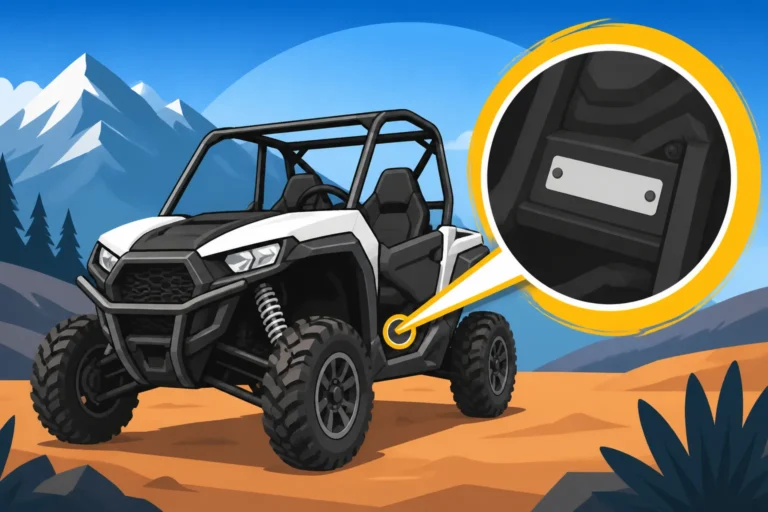
Thoroughly inspect the machine before finalizing any deal. This means checking the engine, tires, suspension, and looking for any signs of damage or unusual wear. It's also critical to physically locate the VIN on the machine and ensure it matches the VIN on the title and the bill of sale. While you’re at it, it’s a very good idea to [Checking a Used Machine Against Theft Records] using the VIN. There are various online databases that allow you to do a quick check, which could save you from inadvertently purchasing a stolen vehicle.
Finally, have all your payment and paperwork ready. If paying in cash, ensure you have the exact amount and consider conducting the transaction at a bank to verify funds and handle large sums safely. Both parties should sign multiple original copies of the bill of sale – one for the buyer, one for the seller, and perhaps an extra for your records or for the state if they require a physical copy. This ensures everyone walks away with an official, signed record of the transaction, leaving no room for doubt or dispute.
Here's a quick reference table to summarize the key points regarding your Colorado OHV bill of sale:
| Feature / Document | Required for Colorado OHV Private Sale | Recommended for Best Practice & Peace of Mind | Notes |
|---|---|---|---|
| Bill of Sale | Yes | Absolutely! | Essential proof of transaction for registration and titling. |
| Notarization on Bill of Sale | No | Can be, for high-value or complex deals | Adds authenticity and fraud protection, but not legally mandated for most private sales. |
| Seller's Signed Title | Yes (for titling) | Crucial | Primary document for transferring legal ownership at the DMV. |
| Clear Buyer/Seller Info | Yes | Essential | Full legal names, addresses, and contact information. |
| OHV Details & VIN | Yes | Critical | Make, model, year, and accurate Vehicle Identification Number. |
| Purchase Price & Date | Yes | Crucial | Essential for sales tax calculation and transaction record. |
| Seller's ID Copy | No | Highly Recommended | Helps verify seller identity and provides a record for buyer. |
| "Sold As-Is" Clause | No | Recommended | Protects seller from future claims regarding mechanical condition. |
| Multiple Signed Copies | No | Absolutely! | Both buyer and seller should keep original signed copies. |
| VIN Check (theft/lien) | No (buyer's responsibility) | Highly Recommended | Protects buyer from purchasing a stolen or encumbered machine. |
Disclaimer
This article is for general informational purposes only and does not constitute professional advice. Laws, prices and regulations vary by location and change over time. Consult a qualified professional for guidance on your specific situation.