Buying From a Seller With No Registration
You've found that perfect-looking ATV or UTV, maybe even at a great price, but there's a catch: the seller admits it's never been registered, or perhaps the registration lapsed years ago and they haven't bothered renewing. This situation can throw a wrench into your excitement, making you wonder if you're about to buy a headache rather than a fun machine. This guide will walk you through the critical steps and considerations when purchasing an off-highway vehicle (OHV) in Colorado from a seller who doesn't have a current registration, helping you navigate the process to ensure a smooth transfer of ownership and get you out on the trails.
Understanding What "No Registration" Actually Means
It's really common to stumble upon an off-highway vehicle for sale in Colorado that doesn't have a current registration sticker from Colorado Parks and Wildlife (CPW). You might see a "for sale" sign in someone's yard, or perhaps a listing online, and the seller openly tells you they've only ever ridden it on their private ranch or property, so they never bothered to register it. Or maybe it's an older machine that hasn't seen public trails in years, and the registration simply expired and was never renewed.
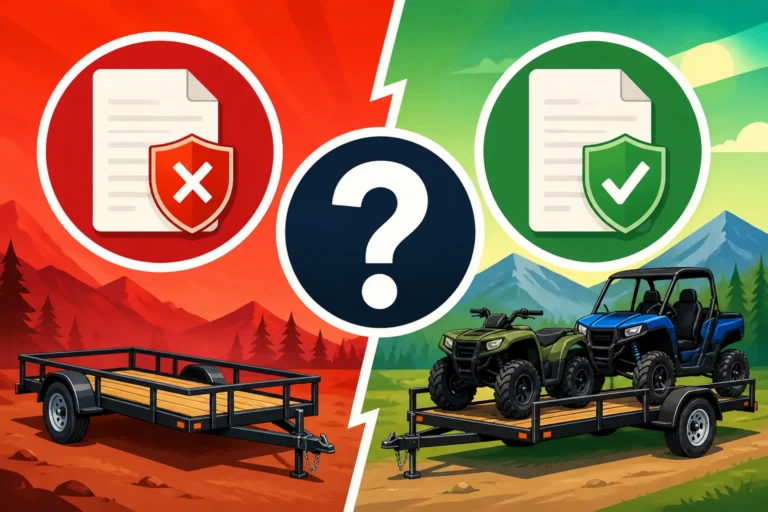
The key thing to understand right away is that "no registration" doesn't necessarily mean "no legal ownership." These are two distinct concepts in Colorado. Registration through CPW is primarily about getting a sticker for your machine that allows you to legally ride on designated public lands. It's how Colorado collects funds to maintain those trails we all love. On the other hand, titling an OHV through the Colorado Department of Revenue (the DMV) is about establishing legal ownership. Think of it like a car: you need a title to prove you own it, but you also need current registration (license plates) to drive it on public roads. For OHVs, it's very similar, though the agencies are different.
A machine might have a valid title but no current registration, perfectly legally. Many Colorado residents keep their OHVs exclusively on private land for work, recreation, or hunting access, and in those cases, a CPW registration isn't required. So, while the lack of a registration sticker might raise an eyebrow, it's not an immediate red flag that the machine is stolen or untraceable. However, it does mean you need to do a bit more digging to ensure a clear path to becoming the legal owner.
The Critical Distinction: Title Versus Registration
Let's really dig into this, because it's where a lot of confusion, and potential problems, arise. In Colorado, an OHV must have a title to legally prove who owns it. This title is issued by the Department of Revenue, just like your car title. It's the document that shows a clear chain of ownership, typically from the manufacturer, through dealers, to private owners. When you buy an OHV, this title is the single most important document you need to get into your name. Without it, you truly can't prove you own the machine, and you won't be able to sell it later, nor will you be able to get a new registration.
Registration, on the other hand, is handled by Colorado Parks and Wildlife. It's the process of getting that little green sticker you see on the side of ATVs and UTVs out on the trails. This sticker expires annually, usually at the end of March, and needs to be renewed if you plan to ride on public lands. If a machine hasn't been registered, it simply means it hasn't received one of these stickers for the current season, or perhaps for many seasons. This is perfectly fine if the machine has only ever been used on private property. [Colorado OHV Title Versus CPW Registration] really clarifies these differences.
The main issue for a buyer isn't the lack of registration, it's the lack of clear, verifiable ownership. If a seller tells you "it's never been registered," your immediate follow-up question should be, "Do you have the title?" If they have the title, and it's properly signed over to them (or they are the original owner and have the Manufacturer's Statement of Origin), then the lack of a registration sticker is a minor hurdle. If they don't have a title, that's where the real detective work begins.
Risks of Buying an Unregistered OHV (and how to mitigate them)
Buying an off-highway vehicle that isn't currently registered can come with a unique set of risks, especially if you're not careful. It’s not just about the sticker; it’s about the underlying reasons for the lack of registration and what that might imply about the machine's history and legal status. Nobody wants to buy a machine only to find out it's a hot mess of paperwork or, even worse, stolen.
One of the biggest risks is unclear ownership. If the seller doesn't have a current registration, it can sometimes be a symptom of a larger problem, like them never having properly titled the machine themselves. They might have bought it years ago from a friend with just a handshake and a crumpled bill of sale, and now they can't actually prove they own it. This leaves you in a bind, as you won't be able to title it in your name, which in turn means you can't register it for public land use. Imagine getting ready for a big trip to Taylor Park, only to find out your new-to-you side-by-side can't legally hit the trails because you can't get that green sticker. It's frustrating, to say the least.
Another significant risk, though less common, is that the machine could be stolen. Thieves aren't usually concerned with proper registration or titling. If a machine has no paperwork whatsoever, no registration, and no title, it should immediately raise a red flag. While "no registration" alone isn't proof of theft, it's part of a puzzle that needs to be thoroughly checked. Always take steps to verify the VIN. [Checking a Used Machine Against Theft Records] is an absolute must-read before you hand over any cash. You can usually find the VIN stamped on the frame, often near the front wheels, under the seat, or on the lower frame rails. Take a photo of it and run it through appropriate online databases.
Finally, you run the risk of unexpected costs and hassle down the road. If the titling process isn't straightforward because of missing paperwork, you might face delays, extra fees for things like a bonded title, or even needing legal assistance. What seemed like a great deal upfront can quickly become a money pit if you have to jump through hoops to establish legal ownership. It can take weeks, or even months, to sort out complicated title issues, during which time your new machine is essentially stuck in your garage, unable to be legally ridden on public land.
What Documents to Demand from the Seller
Even if an OHV hasn't been registered with Colorado Parks and Wildlife, there are still crucial documents the seller absolutely needs to provide you. These documents are your lifeline to establishing legal ownership and getting that machine titled in your name. Don't let the seller brush off missing paperwork with an excuse like "it's just an ATV, it doesn't need all that."
First and foremost, you need the original Certificate of Title or Manufacturer's Statement of Origin (MSO). If the machine has ever been titled in Colorado or any other state, there should be an official title document. This is a crucial piece of paper. The title should be signed over by the seller, often in a specific section on the back, and the odometer reading (if applicable) and sale date should be filled in. If the seller is the original owner and has never titled it, they should have the MSO from the dealership or manufacturer. This document is essentially the "birth certificate" for the OHV and is used to get the first title issued. Always check for liens on the title, too. If there's a lien holder listed, make sure they have signed off, or that the seller provides a lien release document. [Liens on a Colorado OHV Title] is important reading here.
Secondly, a comprehensive Bill of Sale is absolutely non-negotiable, even if the machine has a clear title. This document should detail the buyer and seller's full names, addresses, and contact information, the date of sale, the purchase price, and a full description of the OHV including the make, model, year, and crucially, the Vehicle Identification Number (VIN). It should also include a statement that the seller is conveying clear title and that the machine is free of any liens or encumbrances. Both parties should sign and date it. While a notary isn't always legally required for an ATV bill of sale in Colorado, it adds an extra layer of authenticity and can prevent disputes down the road. You can find robust templates through services like LawDepot that help ensure all necessary fields are covered. [ATV Bill of Sale Wording That Holds Up] gives you a great overview of what to include.
Third, ask for any previous registration cards or expired stickers. While not current, these can still provide a paper trail, showing that the machine was at one point recognized by CPW and linking it to a previous owner. These can sometimes help the Department of Revenue track down old records if there's a question about the title.
Finally, and this might seem obvious but it's often overlooked, make sure you get proof of payment. Whether it's a cancelled check, a receipt for a cashier's check, or a screenshot of an electronic transfer, having a record of how and when you paid the seller can be vital if any disputes arise. This helps validate the information on your bill of sale.
Establishing Proof of Ownership for Titling
Let's say you've found a seller who genuinely used their OHV exclusively on private land and, as a result, never bothered to get it registered with CPW. The first and most important step, as we discussed, is obtaining a clear, properly signed Certificate of Title or the original Manufacturer's Statement of Origin (MSO). This is the gold standard for proof of ownership in Colorado.
However, what if the seller has no title and no MSO? This is where things get a bit more complicated, but not necessarily impossible. The lack of current registration often goes hand-in-hand with a lack of proper titling, especially with older machines or those passed down through families with informal transactions. In such cases, your primary tool for establishing ownership will be a robust Bill of Sale.
A well-crafted bill of sale, even for an unregistered machine, acts as your initial proof that you lawfully acquired the OHV. As mentioned, a service like LawDepot can provide a detailed template that ensures all critical information is included. This document should explicitly state that the seller is transferring all ownership rights to you. It's also incredibly helpful if you can get supporting documents from the seller, even if they aren't official titles. Did they ever have an old registration card? A purchase receipt from a dealer years ago? Any document that links the machine's VIN to their name helps build a stronger case. [Proof of Ownership for a Colorado OHV] outlines various documents that can serve this purpose.
Once you have your bill of sale and any other supporting documents, you'll need to head to your local County Motor Vehicle office (part of the Department of Revenue) to apply for a new title. This is where the rubber meets the road. They will review your documents, verify the VIN, and check for any existing records of the machine in Colorado's system. Be prepared for them to ask questions and possibly request additional information, especially if there's no previous title history they can easily find.
In some challenging cases, if there is absolutely no record of a title for the machine, and the previous owner can't provide one, you might need to pursue a bonded title. This is a process where you purchase a surety bond to protect against any claims of prior ownership. It's a more involved process, requiring an inspection of the machine, an application to the Department of Revenue, and the purchase of a bond, but it can be a viable path to obtaining a legal title for a machine with a truly murky ownership history. [Bonded Title for an ATV in Colorado] dives into this specific process. It’s definitely more work, but for a great machine at the right price, it can be worth the effort.
Here's a quick comparison of scenarios:
| Scenario | Documents to Demand | Next Steps for Buyer | Potential Hurdles |
|---|---|---|---|
| No Registration, Has Title | Original Title (signed over), Bill of Sale | Go to DMV for title transfer, then CPW for registration | Seller might not sign title correctly, active liens |
| No Registration, No Title, Has MSO | Original MSO, Bill of Sale | Go to DMV for first-time title, then CPW for registration | MSO might be missing or damaged, VIN not matching |
| No Registration, No Title, No MSO | Comprehensive Bill of Sale, any old receipts/docs, VIN verification | DMV to apply for title (may require bonded title process) | Very high chance of needing a bonded title, significant delays, theft risk |
Steps to Title and Register Your "Unregistered" OHV
Once you've done your due diligence and secured the necessary proof of ownership—ideally a signed-over title or a strong bill of sale—it's time to make it official in your name. The process involves two main agencies in Colorado: the Department of Revenue (DMV) for titling, and Colorado Parks and Wildlife (CPW) for registration. These steps are fairly standard for any used OHV purchase, but knowing that your machine came without current registration means focusing heavily on securing that title first.
Step 1: Secure Your Title Through the Department of Revenue
Your first stop will be your local County Motor Vehicle office. This is where you transfer the title into your name. Even if the machine had no registration, if it had a title, you'll bring that properly signed-over document along with your bill of sale and your driver's license. [Titling an OHV at the Colorado DMV] provides a comprehensive list of what you'll need. You'll fill out the necessary forms, pay any applicable sales tax (yes, even on private sales, you typically owe sales tax in Colorado based on the purchase price), and the titling fee. Remember, even if the machine hasn't been registered in years, the DMV is concerned with the transfer of ownership via the title, not the CPW registration status.
If the seller did not have a title or MSO, and you're relying solely on a bill of sale, prepare for a more in-depth review by the DMV. They will likely want to verify the VIN and may run additional checks to ensure the machine isn't stolen or has any previous ownership disputes. As discussed, this is the scenario where you might be guided towards the bonded title process. Be patient and bring every piece of paper you have that links you or the seller to the machine. [Titling a Machine With No Previous Owner on Hand] directly addresses this challenging situation.
Step 2: Apply for Your OHV Registration with Colorado Parks and Wildlife
Once you have a new title (or proof that your title application is in progress), you can then proceed to register your OHV with Colorado Parks and Wildlife. This is the part that gets you the green sticker for public land use. You can do this online, by mail, by phone, or in person at various vendors across the state. [Colorado Parks and Wildlife OHV Registration Explained] covers all the methods.
When you register, you'll need to provide information from your newly acquired title, such as the VIN and proof of ownership. Since your machine wasn't previously registered by the seller, you'll be applying for a new registration, not just a renewal. The fee is a standard amount that goes directly to funding trail maintenance and OHV programs in Colorado. You'll receive a new green sticker that you'll need to affix to your machine in the designated spot, usually on the front fender or a visible, flat surface. [Where the Colorado OHV Sticker Goes] has all the details on correct placement.
It's important to remember that you can't truly register an OHV without first establishing legal ownership through the titling process. CPW needs to know who the legal owner is before they issue a registration sticker. So, even if the machine was "unregistered" when you bought it, following these steps ensures you're doing everything by the book to get it legally titled and ready for the amazing trails Colorado has to offer.
Navigating Potential Hurdles and Staying Legal
Even with all the right intentions, buying an OHV without current registration can sometimes throw up unexpected obstacles. Knowing how to navigate these can save you a lot of grief and ensure you don't end up with a machine you can't legally ride.
One common hurdle, especially with older machines, is a missing or incorrectly signed title. If the seller gives you a title that isn't signed in the right place, or the signature looks forged, the DMV might reject your application. Always inspect the title carefully before completing the sale. If the title is missing entirely and the seller insists they are the rightful owner, that's when your carefully prepared bill of sale becomes even more vital, potentially leading you down the path of a bonded title. [Colorado ATV Title With a Missing Seller Signature] is a great resource if you find yourself in this predicament.
Another potential issue is discovering a VIN discrepancy. If the VIN on the bill of sale doesn't match the one on the machine, or if the VIN plate looks tampered with, walk away immediately. This is a massive red flag for a stolen machine. Even a slight error on the paperwork can cause major headaches at the DMV, delaying your titling for weeks. Always double-check and even triple-check the VIN from the machine against any documents you're given.
What about if you purchase the machine, and then realize the previous owner had some old, unpaid fees or a lien you didn't know about? This is why the comprehensive bill of sale is so important. It should explicitly state that the seller is delivering the machine free and clear of all liens and encumbrances. If a lien does pop up after the fact, your bill of sale provides a basis to go back to the seller, or at least shows due diligence on your part if you need to pursue a bonded title.
Finally, while you're waiting for your new title and registration sticker to arrive, resist the urge to ride your "new" OHV on public lands. Until you have that valid CPW sticker affixed to your machine, you are riding an unregistered vehicle, which can result in fines and citations. [Penalties for an Unregistered OHV in Colorado] can be quite steep, and it's simply not worth the risk. Plan your first ride only after all your paperwork is in order and that green sticker is proudly displayed.
By being diligent, asking the right questions, and demanding proper documentation, you can confidently purchase an OHV even if it's never been registered. The key is understanding that the lack of registration isn't the problem; it's the lack of proof of ownership that you need to safeguard against. With the right paperwork in hand, you'll soon be enjoying Colorado's incredible trails on your newly acquired machine.
Disclaimer
This article is for general informational purposes only and does not constitute professional advice. Laws, prices and regulations vary by location and change over time. Consult a qualified professional for guidance on your specific situation.