South Sand Wash Open Riding Area
South Sand Wash offers a very different ride from Colorado’s high alpine passes: open, dry country near Maybell, where sand, open terrain, and long distances make preparation matter. The challenge is knowing where riding is allowed, what your machine can handle, and what to bring when services and cell coverage may be limited. This guide covers the essentials before you head out.
Getting oriented at South Sand Wash
Where the riding area is and what to expect
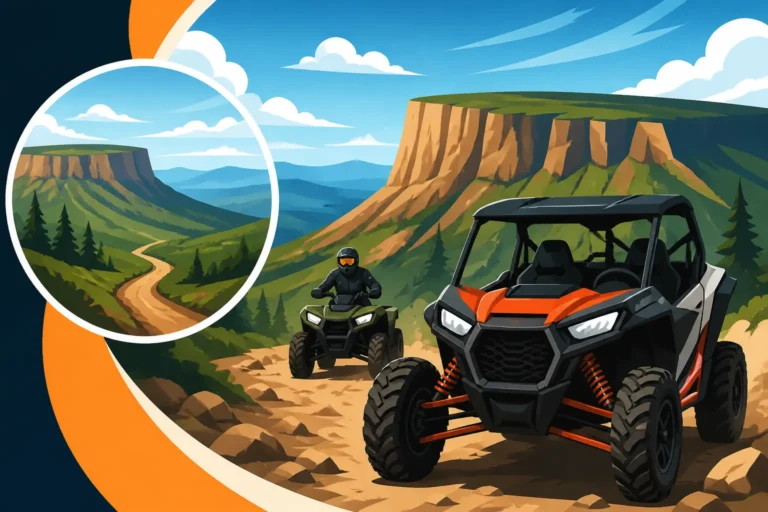
South Sand Wash is a Bureau of Land Management recreation area in northwestern Colorado, in the wider Maybell and Moffat County region. It is known for open-country OHV riding rather than a single, tightly defined trail loop. Expect a mix of sandy stretches, dirt routes, open terrain, and uneven ground. Conditions can shift with weather and traffic, so a route that felt straightforward on a previous visit may be rougher or softer the next time.
The landscape is more exposed and arid than many riders expect when they picture Colorado. Shade and reliable water sources can be scarce, and the sun can feel intense even when the air is cool. Plan for dry-country riding: carry drinking water, protect yourself from sun and dust, and avoid assuming that a nearby road or settlement means help is close at hand.
South Sand Wash is also not a place to treat every visible track as an invitation. “Open riding area” does not mean every patch of public land nearby is open to vehicles. Boundaries, designated routes, seasonal restrictions, and temporary closures still matter. Before leaving home, check current BLM travel information and any posted notices at the access point. For context on how open areas differ from designated routes, see [Colorado Open OHV Areas on BLM Land].
Read the map before choosing a route
A useful map helps you understand where the riding area begins and ends, how routes connect, and whether a tempting track crosses into a restricted area. Start with official land-manager maps and notices, then use a navigation app as a planning aid. onX Offroad can help you review terrain and organize a route, but treat it as a companion to official information—not as the final word on whether a route is legally open.
Download maps or route details before you leave reliable service. A phone map that depends on a live connection may become much less useful once you are out in the backcountry. If you use onX Offroad, save the area for offline access in advance, confirm the map loaded properly, and carry a second navigation option such as a paper map or a separate GPS device. The map-reading habits in [Reading a Colorado Motor Vehicle Use Map] are useful even when you are riding somewhere that is not a conventional trail network.
Before the trip, identify your planned entrance, likely turnaround point, and a backup route. Share that plan with someone who is not riding with you. If your group decides to explore a spur, note where it branches off and agree on a time or landmark to regroup. In open country, it is easy for riders to spread out or lose sight of one another across folds in the terrain.
Choosing a machine and preparing for desert terrain
Match your vehicle to the ground and group
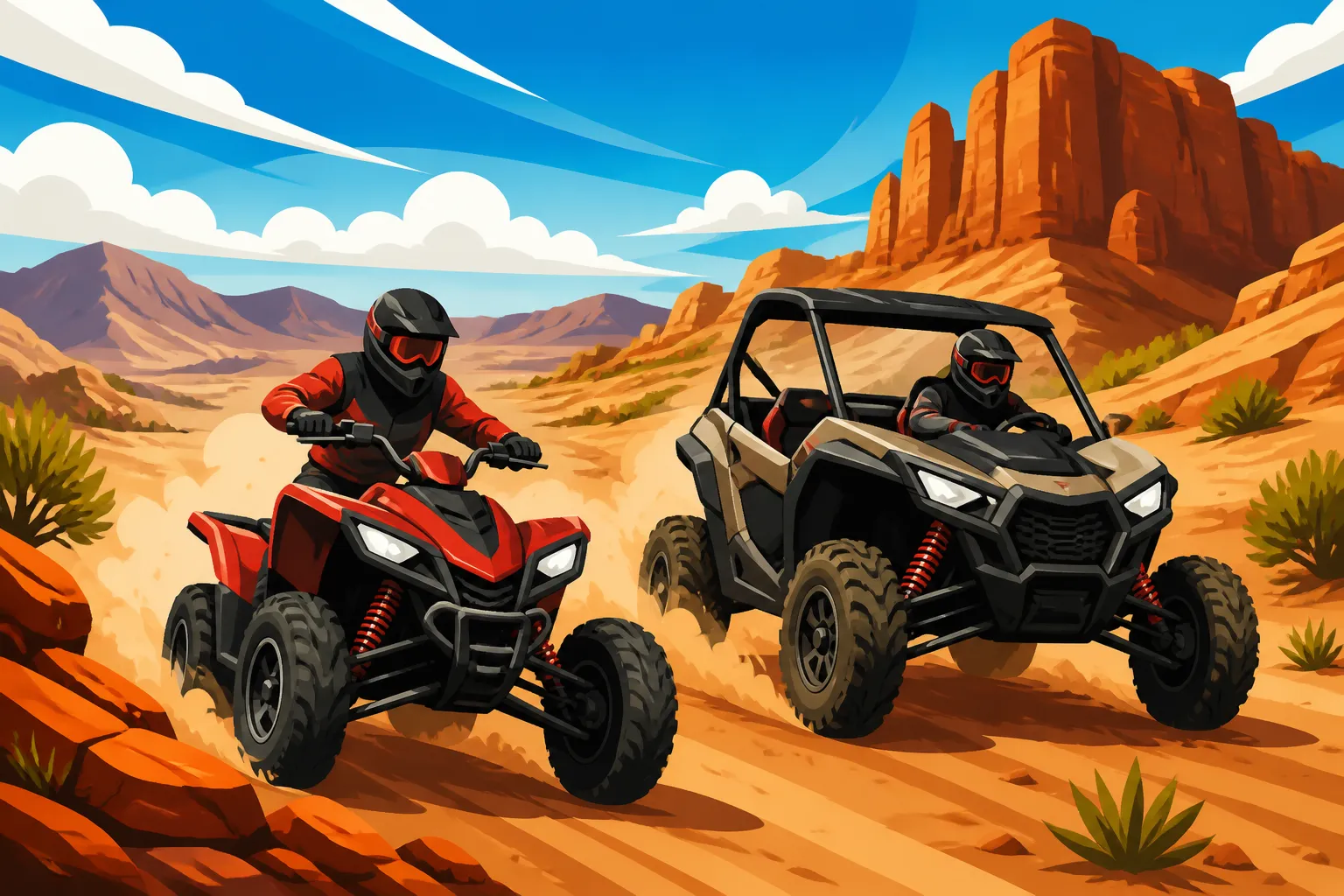
The right machine depends on your group, experience, and intended ride—not simply on engine size. An ATV may suit a solo rider looking for a smaller, more maneuverable vehicle. A side-by-side can make sense for passengers or for riders who prefer a steering wheel, seat belts, and a larger vehicle footprint. In either case, check the machine’s width, tires, ground clearance, fuel range, and condition before you go.
Sand can demand steady throttle and smooth inputs. Sudden braking or sharp turns may make it harder to maintain control, especially when the surface is loose or rutted. Avoid charging into an unfamiliar stretch just because it looks flat. Slow down enough to read the ground, watch for dips or hidden obstacles, and leave room between vehicles so the lead machine’s dust does not obscure the view for everyone behind it.
Use this comparison as a starting point rather than a guarantee about how any one machine will perform:
| Riding consideration | ATV | Side-by-side |
|---|---|---|
| Maneuverability | Often easier to place around obstacles and narrow tracks | Larger turning radius and footprint |
| Passengers | Usually suited to the number of seats designed for that model | Often offers multiple seats, but follow the vehicle’s limits |
| Sand and uneven ground | Tire condition and rider control are especially important | Weight, width, and tire setup can affect how it handles |
| Pre-ride checks | Inspect tires, controls, brakes, fuel, and protective gear | Also check seat belts, restraints, and other safety equipment |
| Group planning | Agree on spacing and regrouping points | Confirm that all riders understand the route and vehicle limits |
A machine that is comfortable on a familiar local track may behave differently in soft sand or under a full passenger load. Check the owner’s manual for operating guidance, and do not exceed the vehicle’s seating or cargo limits. If you are riding with children, make sure the vehicle and protective gear are appropriate for them and that they can follow your group’s safety plan.
Check the machine and pack for self-reliance
A careful inspection can prevent a minor issue from becoming a long walk back. Check tires for damage and proper condition, test the brakes and controls, look for loose or leaking parts, and confirm that lights work if your ride could extend toward low-light conditions. Start with a full fuel tank and know the practical range of the machine under the load and terrain you expect. Do not plan around a manufacturer’s best-case range.
Carry water, food, sun protection, eye protection, basic first aid, and tools suited to your machine. A tire repair kit and a way to inflate a tire can be especially useful in rocky or remote country. Bring a charged phone, but do not count on it for navigation or emergency contact. A satellite messenger or another communication device may be worth considering for a group traveling beyond reliable coverage. For a broader pre-ride checklist, see [Fuel Planning for a Colorado Trail Day] and [Colorado Trail Conditions Reports].
Tell your group what to do if a vehicle breaks down or someone gets separated. Decide whether the group will stay together, who carries the first-aid kit, and how you will contact one another if riders lose sight of each other. A small amount of planning can prevent a frustrating situation from turning into a risky one.
Permits, boundaries, and responsible riding
Confirm what applies to your machine
Before riding, make sure your ATV or UTV has the registration or permit required for your situation. Colorado requirements can depend on whether you are a resident or visitor, whether the machine is registered in Colorado, and where you intend to ride. Do not assume that a permit or registration from another state automatically covers every Colorado riding area. Visitors can review [Colorado OHV Permits for Out-of-State Riders], while riders who need to distinguish between different permit situations can check [Colorado Permit Rules on Public Land].
Also check whether the vehicle’s status affects your trip. A street-legal plate does not necessarily remove the need to meet OHV requirements for riding on public OHV routes or areas. If you are unsure, confirm the rules with the relevant land manager or Colorado Parks and Wildlife before departure. That is much easier than sorting it out at an access point or during a ranger check.
At the riding area, pay attention to signs, gates, and boundary markers. Do not ride around a closure or treat an unmarked-looking track as permission to continue. If a route appears to cross private property or another land boundary, stop and confirm access rather than guessing. Staying within open areas protects access for other riders and helps prevent avoidable conflicts with landowners and managers.
Ride with care for the land and other visitors
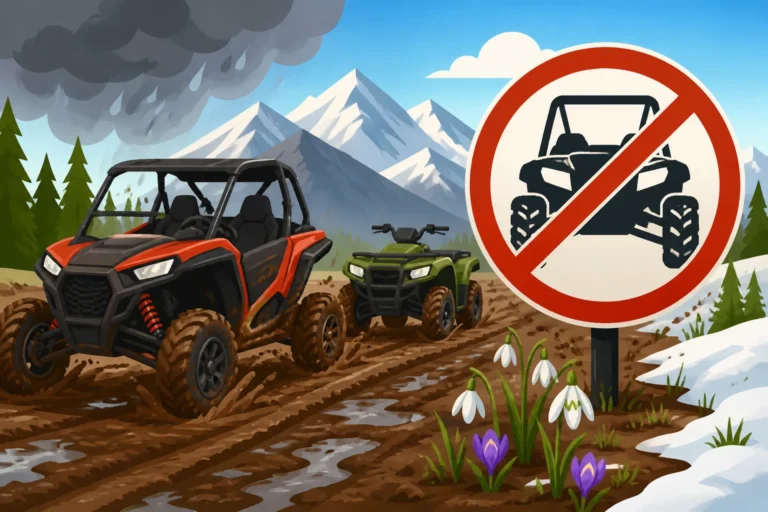
Open terrain can make it tempting to create a shortcut or carve a new line across the ground. Resist that impulse. Stick to routes and areas that are legally open, avoid damaging vegetation, and do not ride through wet or muddy ground when tires are likely to leave deep ruts. If conditions have changed after rain, reassess rather than assuming the ground will support traffic. [Riding a Gravel Road After a Rainstorm] offers useful reminders about how quickly surface conditions can change.
Give other vehicles plenty of room, especially where dust reduces visibility. Slow down near people, livestock, homes, and access roads. Pack out everything you bring in, including food wrappers and broken parts. Keep noise and speed in check near other visitors, and never assume that a quiet stretch is empty just because you cannot see anyone around the next rise.
Good riding habits help preserve the area for future trips. For a practical guide to minimizing impacts and sharing public riding areas, read [Staying The Trail Ethics in Colorado]. The same care applies when you are leaving the riding area: secure your machine and gear, check that nothing has been left behind, and make sure everyone in the group knows the route back to the highway or staging area.
Planning a smoother South Sand Wash ride
Build a realistic day plan
Set a conservative route based on the least experienced rider and the vehicle with the shortest practical range. A route that looks short on a map can take longer when the surface is loose, visibility is dusty, or the group stops to check navigation. Build in time for breaks, fuel checks, and unexpected delays. If you have a hard return time, choose a shorter ride rather than hoping to make up time later.
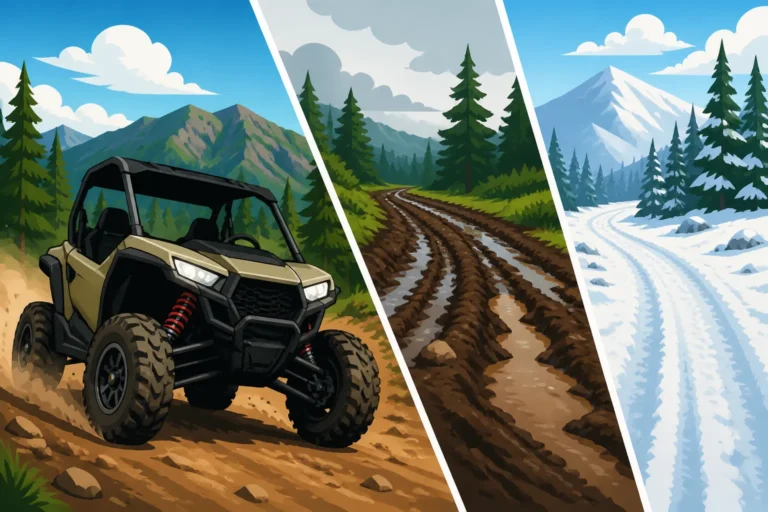
Check weather and land-manager notices shortly before you leave. Wind, rain, or other changing conditions can affect visibility, road access, and the way sand or dirt behaves under tires. If conditions look poor, be willing to change the plan or postpone the ride. A flexible day is better than pressing ahead into a route that no longer feels safe.
Let someone outside your group know where you plan to ride and when you expect to be back. Include your vehicle description and a contact plan. If your route changes substantially, update that person when you can. This simple step matters most when the group is traveling beyond dependable cell service.
Make navigation and access part of the plan
Plan where you will park or stage your vehicle, and verify that the spot is appropriate for your trailer and tow vehicle. Do not block gates, roads, or other access. If you are towing, secure your machine carefully and consider how you will turn around or leave if the staging area is busy. The advice in [Colorado Trailhead Parking and Staging] can help you think through access logistics before you arrive.
Use your navigation tools to stay oriented, not to justify riding beyond a boundary. onX Offroad can make it easier to keep an eye on your position relative to your saved route, but compare what you see with official maps and any signs on the ground. If the map and a posted notice appear to disagree, stop and resolve the uncertainty before proceeding. Do not let a dead phone battery or a missing signal leave the group without a way to find the way back.
South Sand Wash can be rewarding for riders who arrive prepared for exposed, open-country conditions. Confirm access and permit requirements, choose a route that fits your group, bring what you need to handle small problems, and stay inside the areas designated for riding. With those basics covered, you can spend less time sorting out avoidable surprises and more time enjoying the landscape.
Disclaimer
This article is for general informational purposes only and does not constitute professional advice. Laws, prices and regulations vary by location and change over time. Consult a qualified professional for guidance on your specific situation.