Where to Stage a Trailer for the Alpine Loop
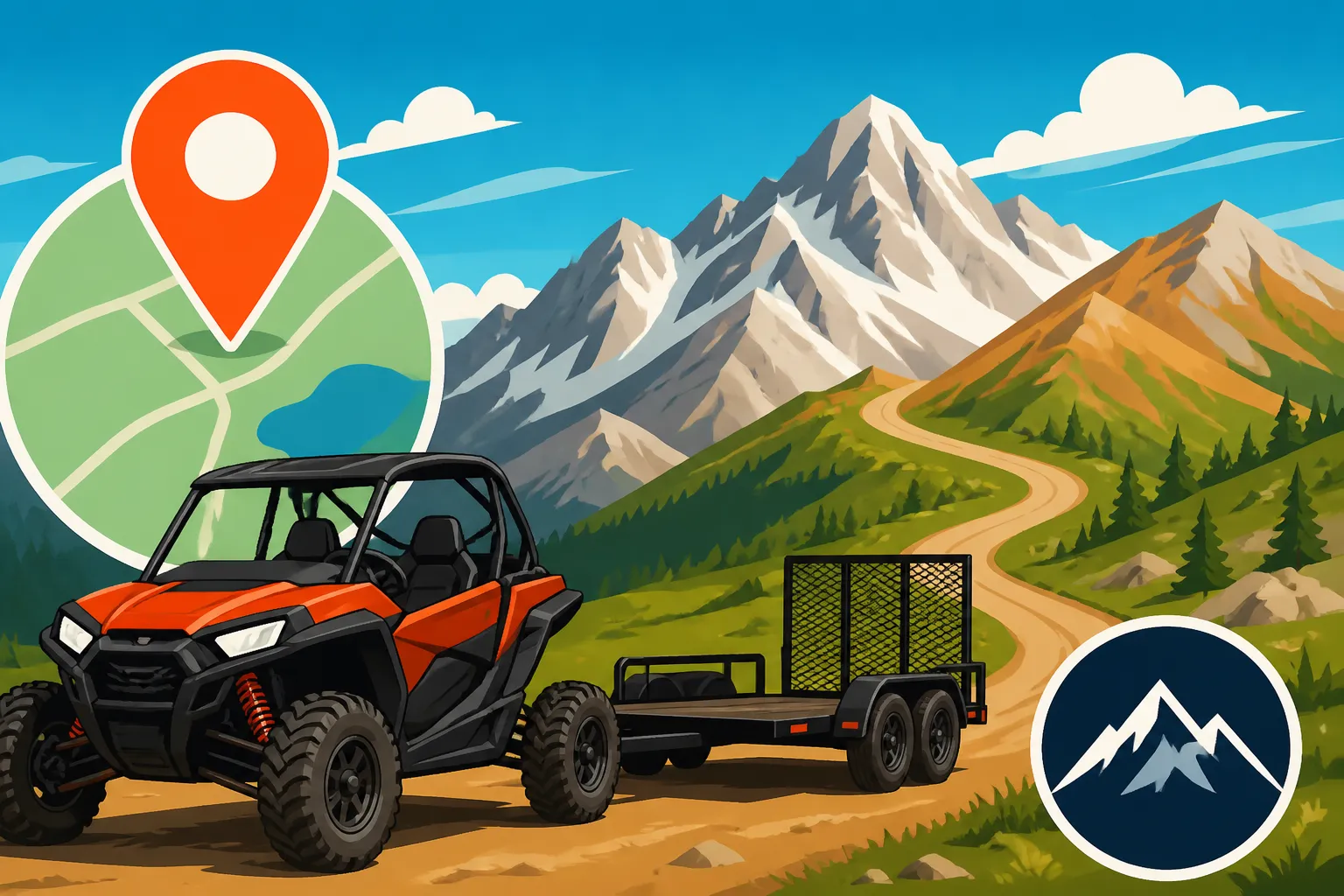
A full-size truck and trailer can turn an Alpine Loop day into a stressful puzzle if you arrive without knowing where the trailer can stay. Mountain-town parking is limited, trailhead turnarounds can be tight, and the rough high-country routes are no place to tow a long rig. This guide explains how to choose a practical staging base, protect your trailer, and plan the ride from there.
Choose a staging town before choosing a parking spot
The Alpine Loop links the communities of Ouray, Silverton, and Lake City with high-country roads and passes, including Engineer Pass and Cinnamon Pass. Your best place to leave a trailer depends on which route you plan to ride, whether you need overnight parking, and the size of your rig. A spot that works for a pickup and short utility trailer may be awkward or unsuitable for a toy hauler.
Think of staging as two decisions: where your trailer will remain, and how you’ll get your ATV or UTV from that spot to a legal route. Don’t assume a trailer can be left at a trailhead just because it fits in the parking area. Check whether parking is allowed, whether overnight stays are permitted, and whether the site has room for both your truck and trailer without blocking other visitors.
Ouray works well for west-side plans
Ouray can be a practical base if your ride begins on the Ouray side of the loop or you want lodging and services nearby. It is also a useful place to organize a route toward Engineer Pass. Before towing into town, look for a designated, permitted place to leave the trailer, such as a campground or a parking area that explicitly allows trailers. Confirm its rules directly; town-center parking and roadside spaces are not a dependable substitute for a staging plan.
If your itinerary includes trail access from the Ouray area, study where you’ll unload and how you’ll connect to your intended route. The relevant access and parking details are covered in [Alpine Loop Parking at Ouray](Alpine Loop Parking at Ouray) and [Engineer Pass From Ouray and Lake City](Engineer Pass From Ouray and Lake City). Treat a map pin as a starting point, not proof that a lot is open to trailer parking or suitable for your rig.
Ouray’s compact layout can make maneuvering feel more demanding than it looks on a map. If you’re pulling a long trailer, avoid arriving at a busy time without a confirmed destination. Call ahead to ask about trailer length, turning room, overnight rules, and whether you can leave the tow vehicle with the trailer while you ride. A quick confirmation is much easier than circling narrow streets after a long drive.
Lake City can suit an east-side itinerary
Lake City is a natural base for riders planning routes toward Cinnamon Pass or approaching the loop from the east. It may also make sense if you’re staying in the area and want to keep your tow vehicle and trailer at a campground or other approved location while you ride. Check the arrangement before you arrive, especially during busy summer periods when parking and lodging areas can fill up.
A route plan should account for the fact that reaching a pass from town is not the same as taking a trailer to the pass. Leave the trailer at your staging base, unload there if permitted, and ride the machine on the route that is open and appropriate for it. For route context, see [Cinnamon Pass From Lake City](Cinnamon Pass From Lake City) and [Riding From Lake City to the Alpine Loop](Riding From Lake City to the Alpine Loop).
If a proposed parking area is near a trailhead, confirm that the access road and parking space can accommodate your complete rig. A narrow entrance, steep approach, soft shoulder, or limited turnaround can make a seemingly convenient location a poor choice. [Colorado Trailhead Parking and Staging](Colorado Trailhead Parking and Staging) offers related planning considerations to keep in mind when comparing locations.
Silverton can be a useful base, but verify the details
Silverton may work for a trip that begins or ends near the town, but available trailer parking and local rules can differ from what you find in Ouray or Lake City. Do not assume that a public lot, street, or business parking area permits overnight trailer storage. Ask the property owner or town office about the specific space, and make sure you understand any restrictions before leaving your equipment there.
Your route choice matters, too. A ride that starts near Silverton may involve different access roads and timing than a ride beginning in Ouray or Lake City. Compare the planned route with current road and trail information, and allow for a return trip to the staging location. If you’re deciding whether to complete the loop in one outing, [Driving the Alpine Loop in One Day](Driving the Alpine Loop in One Day) can help you think through the distance and itinerary, even if you are riding an OHV rather than driving a highway vehicle.
Compare trailer-staging options
There is no universal best place to leave a trailer. The right choice depends on your rig, your overnight plans, and whether you need a direct connection to a legal OHV route. Use the table as a planning checklist, then verify the rules with the property owner or managing agency.
| Staging option | Best suited for | What to confirm before arrival |
|---|---|---|
| Campground or RV park | Riders staying overnight in the area | Trailer length, vehicle and trailer parking, unloading rules, and whether the rig can remain while you ride |
| Designated trailhead or staging area | Riders who want to start close to a route | Whether trailers are allowed, lot capacity, turning room, overnight restrictions, and current access conditions |
| Town parking area | Short stops when local rules expressly allow it | Trailer permission, time limits, overnight rules, and whether parking blocks traffic or business access |
| Private property with permission | Riders with a confirmed arrangement | Written permission, parking duration, access hours, security, and any restrictions on unloading or riding |
| Lodging property | Guests who have checked in advance | Whether the property accepts trailers, where to park, and whether the trailer may remain after checkout |
Campgrounds can simplify overnight parking
A campground or RV park can be convenient because you have a defined place to stay, room to organize gear, and a clearer answer about whether your trailer may remain on the property. But not every campground is designed for a large rig, and permission to camp does not automatically mean permission to store a trailer after checkout or leave it parked all day while you ride.
When you call, give the actual length of your truck and trailer together, not just the trailer’s advertised length. Ask whether the route into the property has tight turns or steep grades and whether there is room to park without needing to disconnect. If you are considering a larger setup, [Colorado Trailhead Parking That Fits a Toy Hauler](Colorado Trailhead Parking That Fits a Toy Hauler) is a useful reminder to account for the whole combination, not just the machine.
Also ask about unloading. Some properties may allow you to park but not unload or operate an OHV on site. You may need to take the machine to an authorized staging area before riding. Confirm where you can safely secure the ramp, whether you can leave your truck with the trailer, and whether any overnight or storage rules apply.
Trailheads are not automatic trailer storage
A designated trailhead or staging area can be an excellent starting point when it has space for your rig and the rules allow trailer parking. Still, a small parking area that accommodates passenger vehicles may not have a turnaround for a truck and trailer. A busy lot can also fill before you arrive, particularly on popular riding days.
Check signs at the location and look for any posted restrictions on overnight parking, camping, or unattended vehicles. If the rules are unclear, contact the managing agency rather than relying on another rider’s old social-media post or an outdated map pin. Local conditions can change, and a spot that worked one season may not be available or appropriate now.
If you have a toy hauler, measure the full rig and think through the exit as carefully as the entrance. Backing out onto a narrow road or trying to turn around on a steep grade can be risky. If there is no clear way to maneuver, choose a campground or approved lot with more room instead of hoping the trailhead will work out.
Private lots need clear permission
A business lot, vacant parcel, or roadside pullout may look like an easy solution, but appearance is not permission. Before leaving a trailer on private property, ask the owner or manager directly. Be specific about how long you plan to stay, whether your tow vehicle will remain, and whether you intend to unload your machine there.
Get the arrangement in writing when possible, especially for overnight or multi-day parking. A text or email can help avoid confusion about when you must move the rig or which part of the lot you may use. Never block a gate, driveway, loading area, or access needed by residents, workers, emergency vehicles, or other visitors.
Plan the ride from the trailer, not just the map
Once you have a confirmed staging spot, work backward from the ride. Check that your machine is permitted on the planned route, identify where you will unload, and estimate how long it will take to get back to the trailer. Mountain conditions, traffic, weather, and mechanical delays can all stretch a day beyond what the route looks like on a screen.
A route may connect towns on a map without creating a simple loop for every machine or rider. The correct direction, pass conditions, vehicle width, and current closures matter. Compare your plan with posted agency information and local guidance before setting out. [Alpine Loop Mileage and Direction of Travel](Alpine Loop Mileage and Direction of Travel) can help frame the route-planning questions, while [Where Colorado Trailhead Parking That Fits a Toy Hauler](Colorado Trailhead Parking That Fits a Toy Hauler) can help you think through the logistics of a larger tow rig.
Check legal access and current conditions
Do not assume that every road shown on a map is open to your ATV or UTV. Confirm the route’s status, vehicle restrictions, seasonal closures, and any local requirements before riding. An app such as onX Offroad can help you examine route connections and prepare a map for the trip, but use official notices and posted signs to confirm access and closures. A navigation line is not permission to ride.
Download maps before leaving reliable service, and save the locations of your staging spot, fuel stops, and planned turnaround points. In mountain terrain, cell coverage can be inconsistent. The onX Offroad map can be useful as a planning reference when reception drops, but keep a backup plan and do not rely on a single device or app for critical access information.
Build flexibility into the schedule. A pass may be slower than expected, weather can change quickly at elevation, and a group may need extra time for breaks or minor repairs. If your route plan only works when everything goes perfectly, shorten it. Getting back to the trailer with daylight and enough time to secure the machine is more important than checking off every segment.
Match the staging spot to the machine
Check your ATV or UTV’s width, length, and ground clearance against the intended route. A full-size side-by-side may not fit every narrow road or trail, and a trailer that is easy to tow on a highway may be difficult to maneuver on a rough access road. Review posted restrictions and ask local staff when a route’s suitability is unclear.
If you plan to ride from a campground or town base, find out whether there is a legal, practical connection to the route. You may need to trailer the machine to a permitted staging point rather than ride directly from your lodging. Do not ride along a road or through private property simply because it appears to connect two locations.
Before leaving the trailer, secure ramps, tools, fuel containers, and loose gear. Lock the hitch if appropriate, remove valuables from view, and take a photo of how the trailer is parked. A simple record helps if you return after dark or need to explain the location to someone in your group.
Use this arrival checklist
A few minutes of preparation can prevent the most common trailer-staging problems: arriving at a full lot, discovering overnight parking is prohibited, or realizing there is no room to turn around. Work through the checklist before the drive and again when you reach the staging area.
Before you tow into town
- Choose a base town that matches your planned route and overnight arrangements.
- Contact the campground, parking operator, business, or landowner and confirm trailer permission.
- Provide the combined length of your truck and trailer, and ask about turning room and access-road conditions.
- Confirm whether you can leave the tow vehicle and trailer parked while you ride.
- Check whether unloading is allowed at the property or whether you must use a separate staging area.
- Review route access, seasonal closures, and machine restrictions using current official information.
- Save directions to the staging location and a backup option in case the first choice is unavailable.
A useful place to start for general overnight logistics is [Overnight Trailer Parking in a Colorado Trail Town](Overnight Trailer Parking in a Colorado Trail Town). The key is to get permission for the exact arrangement you need. “There’s a parking lot nearby” is not the same as confirmed space for a truck, trailer, and unattended machine.
When you arrive
Walk or drive through the parking area slowly before committing to a tight space. Look for signs, soft shoulders, low branches, steep approaches, and any traffic that could make backing or turning difficult. If another vehicle is blocking the exit path, ask before unloading rather than assuming it will move later.
Park so the trailer does not obstruct a road, trail entrance, gate, or other vehicles. Keep the tow vehicle attached if that is allowed and makes your departure safer. If you need to unhitch, use a stable, permitted surface and secure the trailer against movement. Take a photo of the trailer’s location and note the nearest road or landmark.
Before the group rides away, make sure everyone knows the return plan. Share the staging location, identify a meeting point, and agree on what to do if riders become separated or the route takes longer than expected. Save the spot in your navigation tool; the onX Offroad app can help you keep a reference point, but also write down a nearby address or landmark in case devices run low on battery.
Keep a backup plan
A first-choice campground or lot may be full, closed, or unsuitable for your rig when you arrive. Choose a backup before leaving home, and confirm its rules as carefully as the primary location. A backup should be a real option—not an unverified pullout you hope will have space.
If no approved trailer parking is available near your preferred route, consider adjusting the itinerary, staying at a property with confirmed parking, or using a different legal staging area. Avoid leaving a trailer on the shoulder or at an unmarked access point simply because the day is already underway. That can create a hazard and may violate local restrictions.
The most reliable Alpine Loop plan is one that treats parking, access, and the ride as a single itinerary. Confirm where the trailer can stay, make sure the machine can legally reach the route, and leave enough time to return. With those details settled, you can spend less of the day worrying about your rig and more of it enjoying the ride.
Disclaimer
This article is for general informational purposes only and does not constitute professional advice. Laws, prices and regulations vary by location and change over time. Consult a qualified professional for guidance on your specific situation.