Who Pays After a Colorado OHV Collision
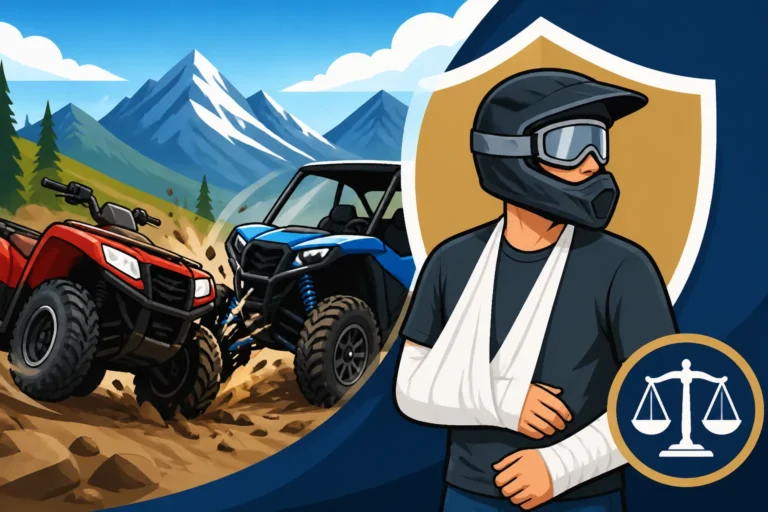
Getting into an off-highway vehicle (OHV) collision, whether it's a fender bender with another rider or a more serious incident, is every enthusiast's worst nightmare. Beyond the immediate shock and the potential for injury, one of the first, most stressful questions that pops into your head is, "Who's going to pay for all this?" It's a valid and often complicated concern, tangled up in questions of fault, insurance, and Colorado's specific rules. This guide is here to help you unravel that knot, walking you through the financial aftermath of a Colorado OHV collision and what you need to know to protect yourself.
Understanding Liability in Colorado OHV Collisions
When an OHV collision happens, whether you're out on a dusty trail in Taylor Park or navigating a designated county road near Lake City, figuring out who pays for what often boils down to establishing liability. This is the legal term for who is responsible for the accident.
The Concept of Fault and Negligence
At its core, fault in a collision means determining whose actions (or inactions) directly led to the incident. In legal terms, we often talk about "negligence." Negligence is essentially failing to act with the reasonable care that an ordinary person would exercise in a similar situation, and that failure causes harm to someone else.
Think about it this way: when you're riding your ATV or UTV, you have a responsibility to operate it safely and according to the rules of the trail or road. If you're speeding around a blind corner without regard for oncoming traffic, riding while distracted by your phone, or operating your machine under the influence, you're likely acting negligently. These actions can directly contribute to a collision. Conversely, if you're riding cautiously and another rider swerves into your path, their actions would point to their negligence.
Colorado follows a legal principle known as "modified comparative fault," often referred to as the 50% bar rule. This means that if you are found to be 50% or more at fault for the accident, you generally cannot recover damages from the other party. If you are less than 50% at fault, you can still recover damages, but your award will be reduced by your percentage of fault. This rule is a critical aspect to understand when a collision occurs, as it directly impacts who ultimately bears the financial burden.
When Multiple Parties Share Blame
It’s not always a clear-cut case where one person is entirely at fault. Sometimes, both parties involved in a collision contribute to the accident, even if one party's actions were more significant. This is precisely where Colorado's modified comparative fault rule really comes into play.
Let's imagine a scenario: You're riding your side-by-side on a narrow forest road. You come around a bend, and another rider, who was traveling slightly too fast for the conditions, collides with you. However, upon investigation, it's determined that while the other rider was going too fast, you also failed to signal your turn properly or perhaps were distracted for a moment. A judge or insurance adjuster might determine that the other rider was 70% at fault, and you were 30% at fault. In this instance, because your fault is less than 50%, you could still recover 70% of your damages (medical bills, machine repair costs) from the other rider's insurance or directly from them. If, however, they determined you were 60% at fault, you would likely recover nothing. This system is designed to fairly distribute responsibility and financial impact based on each party's contribution to the accident. It really underscores the importance of gathering detailed information at the scene, as every detail can sway the percentage of fault.
Insurance Coverage and What It Means for OHV Crashes
Insurance can feel like a labyrinth, especially when it comes to off-highway vehicles. Unlike passenger cars, where liability insurance is almost universally mandated, the requirements for OHVs in Colorado can be a bit more nuanced. However, relying solely on minimum requirements can leave you in a world of financial pain after a collision.
Why OHV Insurance is Crucial in Colorado
While Colorado doesn't legally mandate liability insurance for all registered OHVs in the same way it does for street-legal vehicles, carrying dedicated OHV insurance is absolutely vital for your financial protection. Think of it as your safety net. If you cause a collision and injure someone or damage their machine, your liability coverage will step in to cover those costs, up to your policy limits. Without it, you could be personally responsible for thousands—even tens of thousands—of dollars in medical bills, property damage, and legal fees.
Beyond liability, comprehensive OHV policies can offer a range of protections. Collision coverage, for example, pays for damages to your own machine if you hit another vehicle, an object (like a tree or a rock), or roll it over. Comprehensive coverage, on the other hand, protects against things like theft, vandalism, fire, or hitting an animal. Many riders invest in aftermarket parts from companies like SuperATV to enhance their machines. It's smart to ensure these upgrades, from a custom winch to heavy-duty bumpers, are adequately covered under your policy, as their replacement cost can add up quickly after an incident. Always confirm with your insurer how modifications are handled.
Then there's uninsured/underinsured motorist coverage, which is a lifesaver if you're involved in a collision with a rider who either has no insurance or not enough to cover your damages. While not always required, this coverage is arguably one of the most important to consider, given the varying insurance habits of other riders you might encounter on the trail. [Insuring an ATV in Colorado] is a topic worth diving deeper into to understand all your options.
When Your Homeowners or Auto Policy Might (or Might Not) Help
This is one of the biggest misconceptions I hear from new OHV owners: "My car insurance will cover it!" or "My homeowners insurance has me covered." Unfortunately, this is rarely the case when it comes to a collision out on the trail. Most standard auto insurance policies explicitly exclude coverage for off-road vehicles. They're designed for vehicles operating on public roads, not tearing through mud puddles or climbing rocky ascents.
Homeowners insurance policies are a bit different. They might offer some very limited coverage for your OHV, but it's usually tied to storage on your property or very specific, narrow scenarios, like if it's stolen from your garage. Once you take that machine off your property and onto a public trail or even a neighbor's field, your homeowners policy is almost certainly not going to cover a collision or liability if you injure someone. Imagine a situation where you accidentally clip a fence on a friend's property while riding. Your homeowners policy might help with the fence damage, but if you're injured, or someone else is, it's highly unlikely to extend to the medical bills or personal liability. It's a common and costly oversight, so always check the specifics of your policies, and don't assume.
Dealing with Uninsured or Underinsured Riders
Picture this worst-case scenario: You're involved in a significant OHV collision. Your machine is trashed, and you're dealing with injuries. You find out the other rider, who was clearly at fault, either has no insurance at all or only a minimal liability policy that won't even begin to cover your medical bills and property damage. This is a truly frustrating and frightening situation, and it highlights why carrying your own robust coverage is so critical.
If you have uninsured/underinsured motorist (UM/UIM) coverage on your OHV policy, this is where it steps in. Your own UM/UIM coverage can help pay for your medical expenses, lost wages, and damage to your machine up to your policy limits, even if the at-fault rider can't or won't pay. Without this coverage, you might be left pursuing legal action against the individual directly, which can be a long, expensive, and often fruitless endeavor if they have limited assets. Unfortunately, there are many riders out there who don't think about the consequences until it's too late, leaving you to shoulder the burden. This is a common pain point, and it's why I always recommend discussing UM/UIM options with your insurance provider to safeguard yourself from others' negligence. Your future self will thank you for the foresight. [Colorado ATV Liability Coverage Limits] are often set by the individual, and it's important to choose wisely.
What to Do Immediately After an OHV Accident
The moments right after an OHV collision are chaotic and stressful. Your adrenaline is pumping, and it's hard to think clearly. However, taking the right steps immediately after an accident can make a huge difference in the outcome of any insurance claim or legal proceedings later on.
Prioritizing Safety and Seeking Medical Attention
Your absolute top priority after any collision, no matter how minor it seems, is the safety and well-being of everyone involved. First, check yourself and any passengers for injuries. Even if you feel fine, injuries might not be immediately apparent due to adrenaline. Check on the other parties involved as well.
If anyone is injured or if the damage to vehicles is significant, call 911 immediately. Don't hesitate. Emergency responders can assess injuries, provide immediate care, and secure the scene. If it's safe to do so, move yourself and your machine out of the way of further danger, especially if you're on a shared trail or a county road where other vehicles might be passing. Even for seemingly minor bumps, it’s wise to get checked out by a medical professional as soon as possible. Some injuries, like whiplash or internal bruising, can manifest hours or even days after the event, and having medical documentation from the start strengthens any future claims.
Gathering Information and Documenting the Scene
Once safety and immediate medical needs are addressed, the next crucial step is to gather as much information as possible. This is where your phone becomes your best friend.
- Exchange Information: Get the other rider's (or riders') full name, contact information (phone and email), and insurance details (company and policy number). Also, note down the make, model, and VIN (Vehicle Identification Number) of their OHV.
- Take Photos and Videos: Snap as many pictures and videos as you can. Get wide shots of the overall scene, showing the positioning of the machines, and close-ups of all damage to both vehicles. Photograph any visible injuries, skid marks, trail conditions, relevant signage, and anything else that might have contributed to the accident. Don't forget photos of your own machine, especially aftermarket accessories from SuperATV, to document pre-existing condition or damage.
- Witness Information: If anyone else saw the collision, get their names and contact information. Their impartial account can be incredibly valuable.
- Police Report: If law enforcement responds, they will typically create an accident report. Get the report number and the name of the responding officer. This official documentation is incredibly important. Even if police aren't called to the scene for minor incidents, it's a good idea to file a [Colorado OHV Crash Reporting Rules] report yourself if required or advisable by your insurer.
Not Admitting Fault at the Scene
This is a critical piece of advice: do not admit fault at the scene of the accident. In the immediate aftermath, emotions are high, and you might not have a clear understanding of exactly what happened. Saying something like, "Oh, I'm so sorry, that was my fault," even if you genuinely feel that way in the moment, can significantly jeopardize your ability to recover damages later.
Stick to the facts when talking to others involved, witnesses, or law enforcement. Describe what happened, not who was to blame. For example, instead of saying, "I should have slowed down more," say, "I was traveling at X speed when the other machine appeared." Let the investigation, insurance adjusters, and potentially legal professionals determine fault based on all the evidence. Your priority is to ensure everyone's safety and gather information, not to self-incriminate or make assumptions about liability.
Navigating the Claims Process and Potential Legal Action
After the initial shock and the information-gathering phase, the real work begins: navigating the insurance claims process. This can feel daunting, especially if you're dealing with injuries or significant damage to your beloved machine.
Filing a Claim with Your Insurance Company
As soon as you've addressed immediate safety and medical needs, contact your insurance company. The sooner you report the incident, the better. They will open a claim and assign an adjuster to your case. Be prepared to provide all the information you gathered at the scene: date, time, location, details of other parties, witness information, photos, and any police report numbers.
Your adjuster will guide you through the next steps, which may include having your OHV inspected for damage and arranging for medical evaluations if you were injured. Be honest and thorough in your communication. Remember, your insurance company is there to protect you according to the terms of your policy, but you also need to advocate for yourself. Keep detailed records of all communications, including dates, times, names of people you spoke with, and a summary of the conversation.
Dealing with the Other Party's Insurance
If another party was at fault, you'll also likely be interacting with their insurance company. It's important to remember that their primary goal is to protect their client (the at-fault rider) and minimize payouts. They might try to get you to admit fault, offer a quick lowball settlement, or question the extent of your injuries or damages.
Be polite but firm. Provide factual information, but again, avoid admitting fault or speculating. Direct them to your own insurance company for complex discussions about liability if you have legal representation. They are not on your side in the same way your own insurer is. It's often advisable to let your own insurance company handle the negotiations with the other party's insurer if you have collision coverage, as they have experience with these situations.
When to Consider Legal Counsel
For minor dents and scrapes, you might be able to handle the claims process directly with the insurance companies. However, there are several situations where hiring legal counsel, specifically an attorney experienced in OHV accidents, becomes highly advisable:
- Serious Injuries: If you or a passenger suffered significant injuries requiring extensive medical treatment, rehabilitation, or leading to lost wages, a lawyer can help ensure you receive fair compensation for all your damages.
- Disputed Liability: If there's a disagreement over who was at fault, or if the other party's insurance company is trying to place a significant portion of blame on you, an attorney can gather evidence, negotiate, and present your case effectively.
- Uninsured/Underinsured Motorist Claim Complications: While your own UM/UIM coverage is a lifesaver, dealing with your own insurer on these claims can sometimes be complex, especially if they try to minimize the value of your damages.
- Multiple Parties Involved: Collisions involving more than two machines or multiple injured parties can quickly become a legal tangle that requires professional navigation.
- Lowball Settlement Offers: If an insurance company offers a settlement that doesn't seem to cover your costs, a lawyer can assess whether it's fair and negotiate for a better outcome.
An attorney can protect your rights, deal with the mountains of paperwork, and advocate for the best possible outcome, allowing you to focus on your recovery.
Common Scenarios and Who Bears the Cost
Understanding liability and insurance is one thing, but how does it play out in real-world collision scenarios? Let's look at a few common situations to illustrate who typically bears the financial brunt.
Single-Vehicle Accident You Hit a Tree or Rock
This is perhaps the most straightforward scenario. You're riding alone, misjudge a turn, or hit an unseen obstacle, and your machine collides with something in the environment – a tree, a rock, or even rolls over.
- Damage to Your Machine: This will typically be covered by your collision coverage, assuming you have it on your OHV insurance policy. Without collision coverage, you're on the hook for all repair or replacement costs. If you've accessorized with heavy-duty protection from SuperATV, those parts might need replacing, and your collision coverage should help here.
- Medical Bills: Your personal health insurance would cover your medical expenses. If you have Personal Injury Protection (PIP) or Medical Payments (MedPay) coverage on your OHV policy (which is less common than in auto policies but sometimes an option), it could help cover medical costs regardless of fault.
- Damage to Property: If you hit private property (like a fence or shed), your liability coverage might step in, but generally, single-vehicle incidents are about damage to your own machine and yourself.
Collision with Another OHV on a Trail
This is where the concept of fault becomes paramount. Two machines collide, and determining who was negligent is key.
- Damage to Machines: The at-fault rider's liability insurance should cover the damage to the other rider's machine, up to their policy limits. Conversely, if you are found at fault, your liability insurance pays for their damages. Your collision coverage would pay for your own machine's damage, regardless of fault (though your deductible would apply). If both parties are found partially at fault, Colorado's comparative fault rules come into play, reducing the payout proportionally.
- Medical Bills: The at-fault rider's liability insurance would cover the medical expenses of the injured innocent party. Again, if you're injured and the other party is at fault, their insurance is the primary source. If you have MedPay or PIP, that can provide immediate coverage for your injuries. If the other rider is uninsured or underinsured, your UM/UIM coverage becomes essential for your medical bills and property damage. [What Insurers Ask After an ATV Is Stolen in Colorado] is a separate concern, but ensuring your machine is properly insured can prevent this type of headache if it's involved in a collision and then stolen.
Striking a Pedestrian or Property
This can quickly become a very expensive scenario, even more so than an OHV-on-OHV collision, because of the potential for severe personal injury to a pedestrian or significant damage to someone's home or vehicle.
- Medical Bills for Pedestrian: Your liability insurance is the primary source of coverage for the pedestrian's medical bills, lost wages, and pain and suffering. These costs can be substantial, emphasizing the need for robust liability limits.
- Damage to Property: Your liability insurance would also cover the cost to repair or replace the damaged property (e.g., a parked car, a fence, a mailbox).
- Your Own Machine Damage/Injuries: Your collision coverage would pay for your OHV damage, and your health insurance or MedPay/PIP would cover your injuries.
Damage to a Rented OHV
Renting an OHV in Colorado is a popular way to experience the trails, but it comes with its own set of rules regarding damage. [What a Colorado UTV Rental Costs] often includes options for damage waivers or insurance.
- Rental Agreement: Most rental companies have very clear language in their agreements about who is responsible for damage. You are typically responsible for any damage incurred during your rental period, regardless of fault, unless you purchased a specific damage waiver or rental insurance through them.
- Damage Waivers: These are often not full-coverage insurance and may have significant deductibles or exclusions (e.g., they might not cover negligent operation, riding off-trail, or damage to tires). Read the fine print carefully!
- Your Own Insurance: Your personal OHV policy or even your auto policy (rarely, but worth checking for liability) might offer some coverage for a rented machine, but it's not guaranteed. Most personal policies have exclusions for rental recreational vehicles. Always confirm with your personal insurer before you rent. Without specific rental coverage, you'll likely be paying out of pocket for any damage to the rented machine.
Here's a quick summary table of common collision types and who usually pays:
| Collision Type | Damage to Your OHV | Damage to Other OHV/Property | Your Medical Bills | Other Party's Medical Bills |
|---|---|---|---|---|
| Single-Vehicle (e.g., hit tree) | Your Collision Coverage (if you have it) or Out-of-Pocket | N/A | Your Health Insurance / MedPay (if applicable) | N/A |
| OHV-on-OHV (You At Fault) | Your Collision Coverage (with deductible) | Your Liability Coverage | Your Health Insurance / MedPay (if applicable) | Your Liability Coverage |
| OHV-on-OHV (They At Fault) | Their Liability Coverage or Your UM/UIM / Collision Coverage (with subrogation) | N/A | Their Liability Coverage or Your UM/UIM / Health Insurance | N/A |
| OHV-on-OHV (Shared Fault) | Your Collision Coverage / Proportional from Their Liability | Proportional from Your Liability | Your Health Insurance / Proportional from Their Liability | Proportional from Your Liability / Their Health Insurance |
| Striking Pedestrian/Property | Your Collision Coverage (with deductible) | Your Liability Coverage | Your Health Insurance / MedPay (if applicable) | Your Liability Coverage |
| Rented OHV Damage | Rental Damage Waiver / Your Personal OHV Policy (check exclusions) / Out-of-Pocket | N/A (assuming single vehicle or covered by another party) | Your Health Insurance / MedPay (if applicable) | N/A (if you're at fault, their liability covers) |
Remember, knowing the rules of the trail, such as [Colorado OHV Rules on Forest Service Roads] and being aware of [Colorado Alcohol Limits for OHV Operators], are crucial steps to preventing these scenarios in the first place. But if a collision does happen, understanding who pays can help you navigate the aftermath with a clearer head.
Disclaimer
This article is for general informational purposes only and does not constitute professional advice. Laws, prices and regulations vary by location and change over time. Consult a qualified professional for guidance on your specific situation.